
Waikiki snorkeling: Living Coral or Bare Rock?
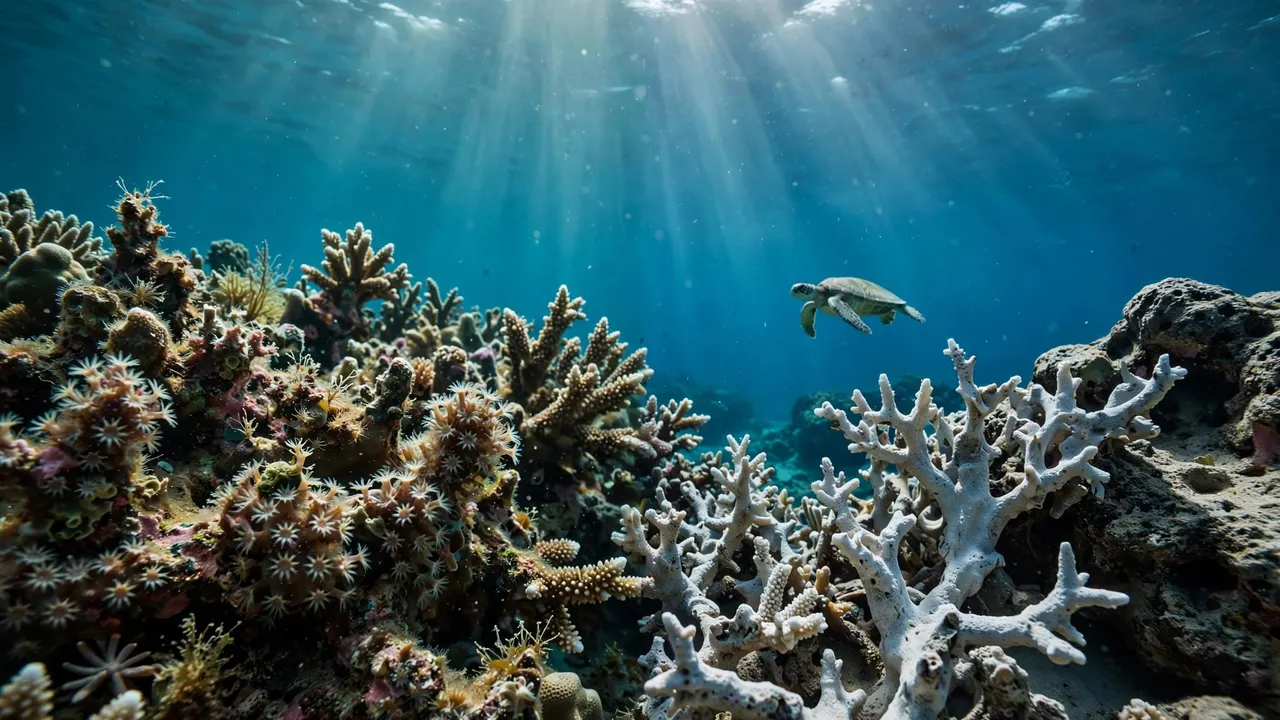
You can sometimes recognize living coral during Waikiki snorkeling, but a rocklike appearance alone doesn’t tell you what’s alive. Living coral contains tiny animals, while the hard structure beneath them can remain after they die.
At Living Ocean Tours, our guided ocean outings pair reef exploration with respectful observation. Start by understanding the difference between living tissue and the skeleton underneath it.
Key takeaways for your reef visit
- Coral colonies contain small animals called polyps, which build the hard skeleton of reef-building corals.
- A coral-shaped structure doesn’t prove that living tissue still covers it.
- Color alone can’t reliably distinguish healthy coral, bleached coral, exposed skeleton, and rock.
- During Waikiki snorkeling, observation never requires touching, standing on, or moving anything on the reef.
Your goal isn’t to label every underwater surface. Recognizing the limits of your view helps you appreciate the reef without risking damage or swimming beyond your comfort level.
What Waikiki snorkeling can reveal about coral
Living animals cover a hard skeleton
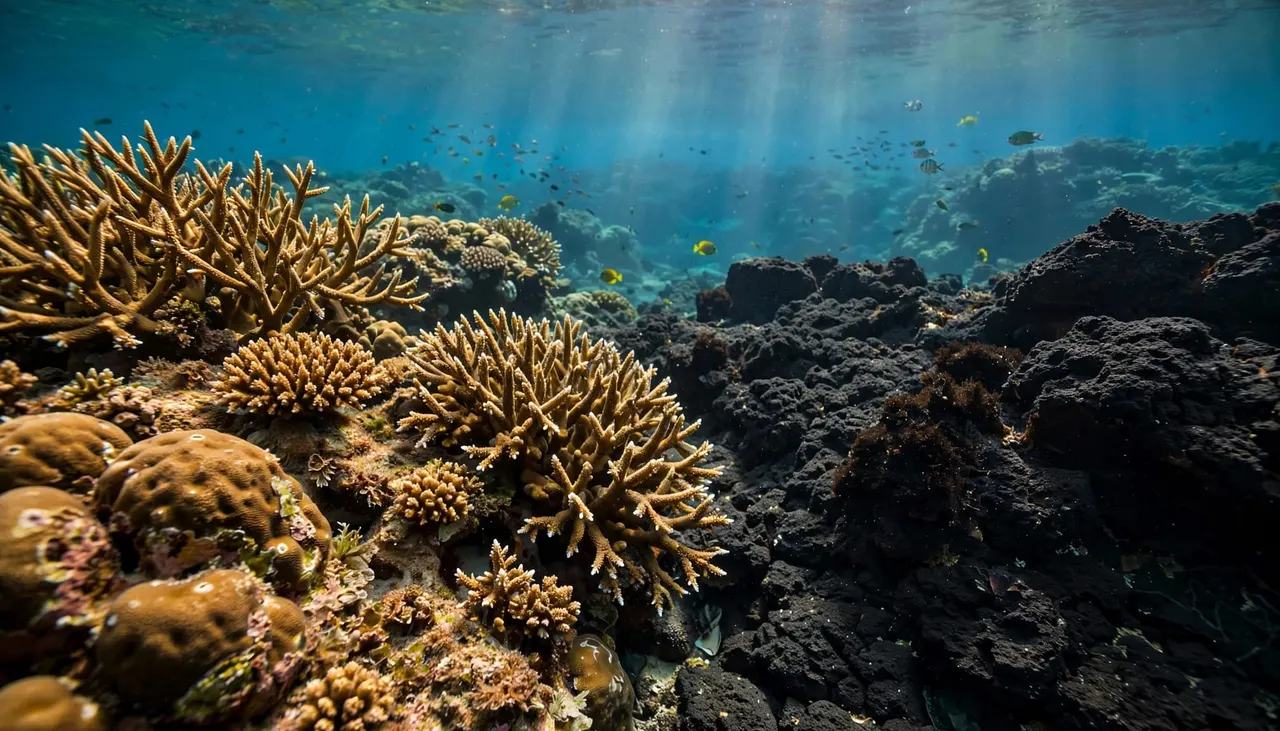
Reef-building corals produce calcium carbonate skeletons. Their living tissue sits over that hard framework, so what looks like one solid object contains many individual animals.
Each animal, called a polyp, has a mouth surrounded by tentacles. In many reef-building species, neighboring polyps live together as a colony. NOAA’s explanation of what makes a coral reef describes this relationship between coral colonies and their tiny inhabitants.
If you can recognize living polyps, you’re observing animal life. However, those details may be too small or distant to distinguish while you float at the surface.
The skeleton doesn’t establish whether coral is alive
A coral’s hard framework can remain after its tissue dies. Therefore, recognizing a coral structure and recognizing living coral are different observations.
You might confidently identify an object as coral skeleton without knowing whether living tissue covers every part of it. A colony can also have living portions beside areas where tissue has been lost.
Bare rock lacks coral tissue, but an underwater surface isn’t necessarily bare because you can’t see anything moving. Small organisms and thin coverings can escape your notice.
When details aren’t visible, leave the identification open. You can still enjoy the habitat without assigning it a health label.
Why appearance alone can mislead you
Brightness doesn’t measure coral health
You don’t need to see brilliant colors to appreciate living coral. Color depends on several factors, including coral tissue, associated organisms, lighting, and your viewing conditions.
Many shallow-water reef-building corals contain microscopic algae called zooxanthellae. These algae use sunlight to produce energy and share some of it with their coral hosts. They also contribute to coral coloration.
However, you can’t see that partnership working with your naked eye. An appealing color doesn’t establish that a colony is healthy, and a subdued appearance doesn’t establish that it’s dead.
During Waikiki snorkeling, treat color as something you noticed rather than a diagnosis. The difference matters when you’re describing a sighting afterward.
White doesn’t automatically mean dead
Coral bleaching happens when stressed corals lose much of their associated algae or the algae’s pigments. The pale skeleton becomes more visible through the coral’s tissue.
Bleached coral can still be alive. Some corals recover when conditions improve, while prolonged stress can lead to death.
Exposed coral skeleton can also look white. Consequently, a pale patch alone doesn’t tell you whether you’re seeing living bleached tissue or skeleton without tissue.
Bleaching and death aren’t interchangeable. A white-looking surface doesn’t give you enough information to decide which has occurred.
You don’t need to resolve that uncertainty during your swim. Give pale surfaces the same hands-off treatment you give every other part of the reef.
Observe coral without touching it
Keep your body and equipment clear
Touch isn’t an identification tool. Pressing a finger against a surface won’t give you a useful answer, and contact can damage living tissue.
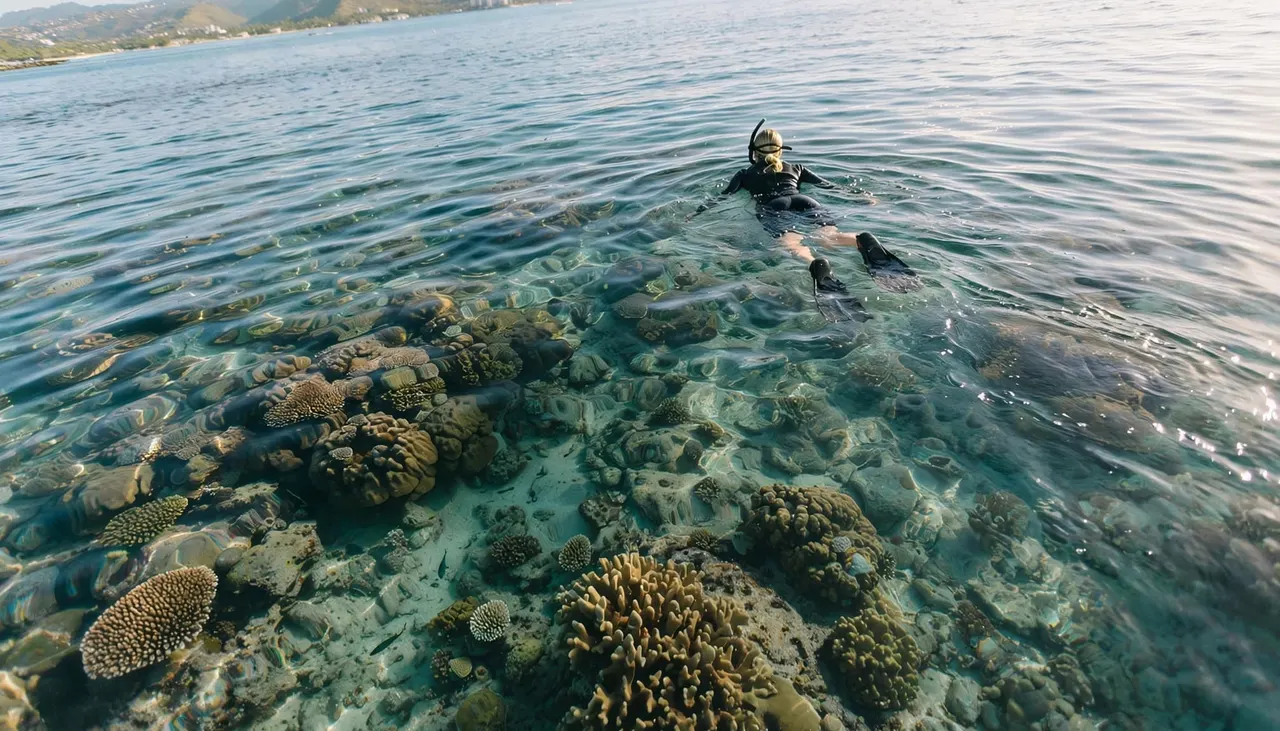
Your fins deserve as much attention as your hands. When you stop swimming, notice whether your legs drop toward the bottom. Keep enough clearance that a kick or passing swell won’t push you against the reef.
Also, secure camera straps and loose accessories. Hawaii DLNR’s coastal-resources guide identifies careless equipment contact and standing on reefs as sources of damage.
These habits matter throughout your Waikiki snorkeling outing, including moments when you’re watching fish rather than looking directly at coral.
Take a break before observation becomes uncomfortable
Use flotation according to your crew’s instructions. If your mask leaks or your fins feel awkward, ask for help rather than reaching toward the bottom.
Tell your guide when you’re tired, nervous, or uncomfortable. Returning to the boat is a sensible choice, even when something interesting has caught your attention.
Stay with your buddy and within the group’s swimming boundaries. Looking up periodically helps you maintain your position instead of drifting away while studying one patch.
Never stand on a surface because it looks like rock. Your identification might be wrong, and other reef organisms can occupy areas without obvious coral cover.
Notice more without swimming closer
Describe what you can actually see
Useful observations don’t require a species name. You can describe where an object sits, whether you see living polyps, and what remains unclear.
Separate the observation from the conclusion. Saying that you saw a pale patch on a larger colony is more precise than declaring the whole colony dead.
Similarly, watching fish gather beside a structure tells you that animals use that space. It doesn’t establish whether coral tissue covers the surface beneath them.
Share those details with your guide when it’s safe to talk. Your guide can respond to what you observed without needing you to approach again or retrieve anything.
For families, this makes a satisfying shared activity: compare observations after your swim rather than competing to get the closest view.
Use photographs as memories, not proof
A photograph can preserve details you missed during your Waikiki snorkeling experience. However, camera settings and editing can change how a reef appears.
White balance affects color, while shadows can hide tissue and small animals. A photograph alone may not settle whether a particular patch was alive.
Take your picture from a comfortable position, then return your attention to your surroundings. Avoid descending toward the reef or extending your camera into a crevice for extra detail.
A wider image often records the habitat more usefully than an extreme close-up. It also leaves room between your equipment and the reef.
Explore with our professional snorkel guides
Get comfortable before focusing on the reef
At Living Ocean Tours, we’re the only tour company on Oahu with professional snorkel guides in the water with guests. You have someone to approach when equipment concerns or uncertainty interrupt your swim.
Our departures leave Kewalo Basin Boat Harbor near Waikiki. Before entering, tell our crew about your swimming confidence and any concerns about open water.
Our snorkeling tours give you a guided way to explore offshore habitat. Follow the briefing and your guide’s boundaries; professional support doesn’t remove ocean risks.
You can also take breaks instead of feeling pressured to keep watching wildlife.
Choose reef observation at Turtle Canyons
Our Turtle Canyon Snorkel Tour visits the natural turtle-cleaning-station area off Waikiki. Alongside the possibility of seeing turtles, you can appreciate the surrounding reef community.
Let the animals determine the encounter. Watch without touching, feeding, chasing, or blocking their movement.
For your coral observations, start with the broader habitat rather than expecting to identify every colony. Notice what you can see comfortably, then discuss your questions with your guide.
When you’re ready to arrange that reef time, you can CHECK AVAILABILITY for your travel dates.
Frequently asked questions about living coral
Can you tell whether coral is alive by touching it?
Touching coral can injure its tissue, and it isn’t a reliable identification method. Keep your hands away, even if the surface appears lifeless. If you can’t distinguish living tissue from the surface, leave the question unanswered and continue observing without contact.
Is every hard underwater surface part of a coral colony?
Hard surfaces can include rock, coral skeleton, and other materials. They may also support organisms that aren’t visible from your viewing position. During Waikiki snorkeling, hardness alone doesn’t tell you what you’re looking at. Avoid reaching down to test a surface.
Do you need to see individual polyps to enjoy the reef?
You can appreciate the reef’s structure and watch how animals use it without resolving tiny anatomical details. Seeing individual polyps can add interest, but it isn’t a requirement for a rewarding outing. Your comfort, position, and awareness of your group come first.
Keep your reef curiosity hands-off
Living coral is a community of animals supported by a hard skeleton. Recognizing that difference gives you a better starting point than judging whether something looks colorful or rocklike.
During Waikiki snorkeling, accept what distance leaves uncertain. Observe without contact, keep your fins clear, and describe what you actually see.
You don’t need a perfect identification to leave the reef undisturbed and return with a better understanding of it.


