
Waikiki snorkeling: Why Reef Fish Form Schools
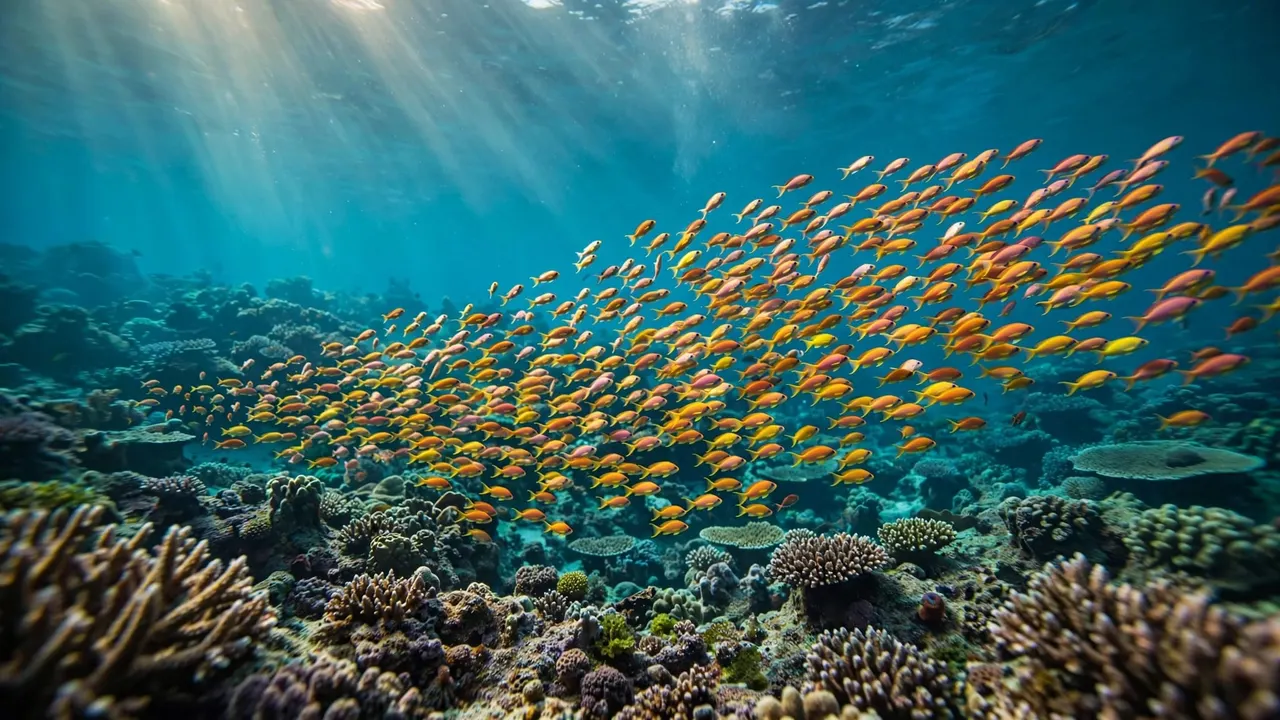
During Waikiki snorkeling, reef fish form schools mainly to reduce their risk of being eaten and improve access to food. Coordinated swimming can also help some species conserve energy.
With us at Living Ocean Tours, you can watch these behaviors while exploring Oahu’s offshore reefs. A group that turns together, gathers above coral, or spreads across a feeding patch gives you clues about its needs.
Start by noticing how the fish move, rather than counting how many you see.
What a Fish School Means During Waikiki snorkeling
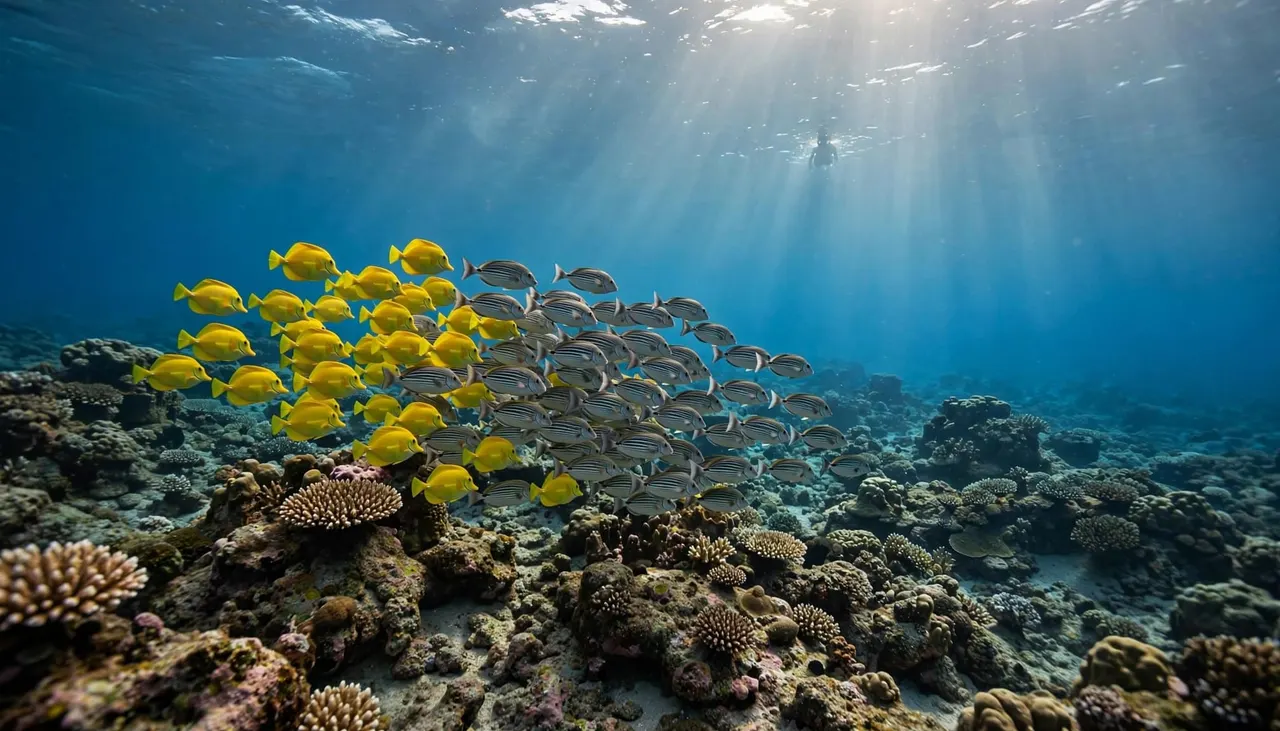
Schooling and gathering are different behaviors
You might call any group of fish a school, but biologists make a useful distinction. A shoal is a social group. A school is a group whose members swim in coordinated directions.
When fish hover around one coral head, they may share shelter without moving as a school. However, when they align their bodies and travel together, you’re watching schooling behavior.
A group can switch between these patterns. Fish may spread out while feeding, then gather tightly when something approaches. Watch their direction and spacing to recognize that change.
Each fish responds to nearby neighbors
You don’t need to look for a permanent leader at the front. Fish coordinate by responding to nearby individuals and their surroundings.
Their eyes help them track position and movement. Meanwhile, the lateral line, a sensory system along the body, detects water motion nearby.
Because neighbors respond to one another, a change can pass through the group quickly. That’s why a school can appear to turn as one unit. You see a shared movement produced by many individual responses.
How Schooling Helps Fish Avoid Predators
A group changes the odds of an attack
For a fish exposed above the reef, nearby companions can provide several advantages. More individuals can notice danger, and an attacking predator has more possible targets.
The dilution effect describes the potential reduction in each individual’s chance of being targeted within a group. It doesn’t make every position equally safe. Fish near an exposed edge may face different risks than those surrounded by neighbors.
You may also notice that similarly sized fish stay together. Standing out in appearance or movement can make an individual easier to follow.
Protection is therefore one reason many fish maintain coordinated spacing, especially when crossing open water between reef structures.
Moving bodies can complicate a predator’s pursuit
A predator often needs to isolate one target. Overlapping fish, changing directions, and shifting spacing can make that task harder.
This is commonly called the confusion effect. However, a large school can also attract attention, so grouping involves trade-offs.
When you see fish compress into a tighter formation, disturbance may be involved. A nearby swimmer, another fish, or an approaching predator could prompt the response.
You can’t identify the cause from shape alone. Instead, watch the surrounding water and the group’s next movement. A brief contraction followed by relaxed spacing tells you more than a single underwater photograph.
Food and Swimming Efficiency Also Matter
Groups can help fish find feeding opportunities
During Waikiki snorkeling, you may see a group spread across rock surfaces or gather above a reef edge. Those arrangements can reflect different feeding needs.
Algae-grazing fish search suitable surfaces, while plankton-feeding fish position themselves where drifting food passes. Nearby companions can provide information about where feeding opportunities exist.
However, more fish also mean more competition. A group may loosen when individuals need room to feed, then travel together to another patch.
Watch their mouths and body positions. Repeated pecking at a surface suggests grazing or picking food, while repeated strikes into open water suggest a different feeding strategy. Direction alone won’t tell you what they’re eating.
Coordinated movement can reduce swimming costs
Swimming through water takes energy. Under some conditions, fish can benefit from the water movements created by neighboring swimmers.
The 2024 eLife reviewed preprint Energy conservation by collective movement in schooling fish examines this relationship. Its findings support energy conservation as a possible benefit of coordinated movement.
That doesn’t mean every group you encounter is schooling to save energy. Species, swimming speed, and formation all affect the result.
For your reef observations, treat efficiency as one possible advantage alongside feeding and protection. Fish can gain several benefits from the same behavior, and those benefits can change as the group moves.
Reef Fish Groups You Might Notice Near Waikiki
Your Waikiki snorkeling experience can include fish with very different social habits. Some species gather regularly, while others spend more time alone or in pairs.
These examples help you recognize useful patterns without promising a particular sighting.
| Reef fish | Group behavior you may notice | What to watch |
|---|---|---|
| Bluestriped snapper | Compact groups near reef structure | Whether the group rests or travels together |
| Convict surgeonfish | Groups grazing across reef surfaces | Repeated feeding movements and changing spacing |
| Sergeant majors | Groups in the water column | Individuals holding position or taking drifting food |
| Butterflyfish | Pairs or small groups in some species | Close associations rather than a large synchronized school |
The useful comparison is behavior, not crowd size. Several butterflyfish near one coral head don’t necessarily form a coordinated school.
Also, familiar reef residents such as wrasses and triggerfish may move independently through the same habitat. Their presence doesn’t mean a school has broken apart.
Notice whether neighboring fish match one another’s direction. Then compare that movement with fish exploring crevices or defending small areas. Both social grouping and solitary behavior have a place in the reef community.
Why Coral Habitat Changes a School’s Shape
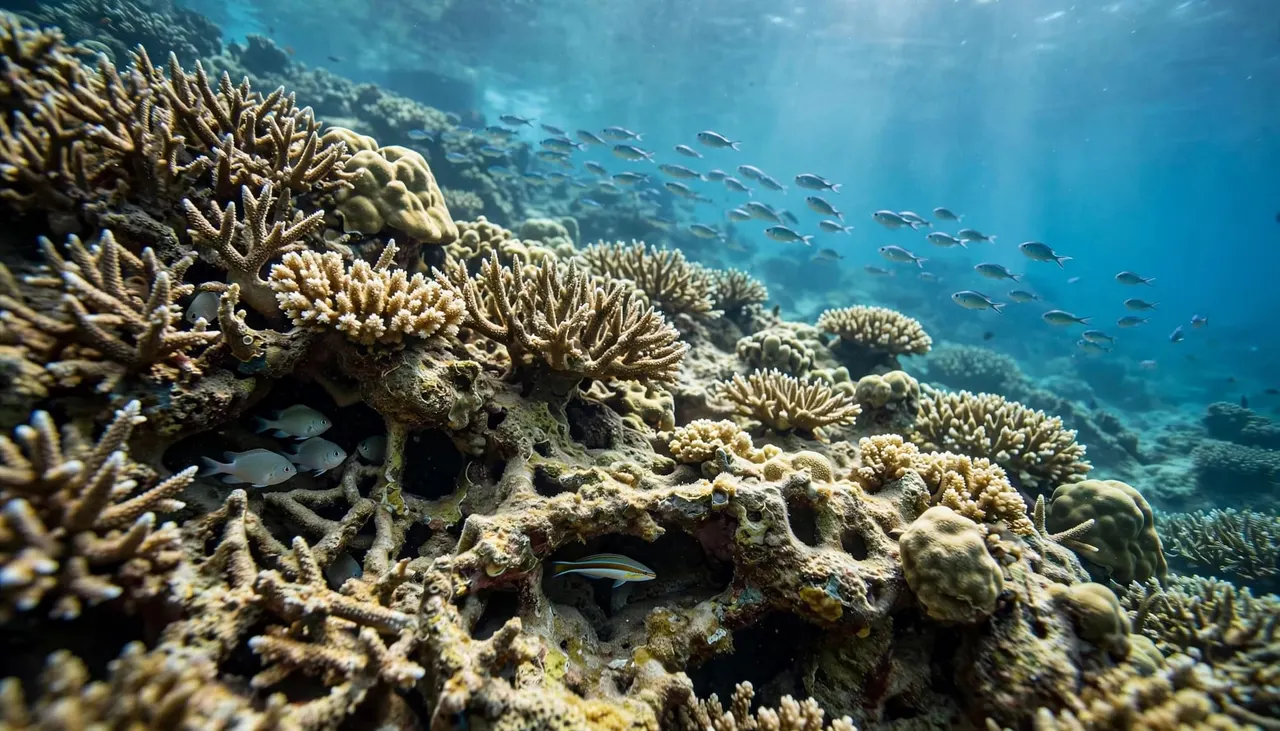
Coral reefs give fish feeding surfaces, resting areas, and shelter. The corals themselves are colonies of tiny animals called polyps, not underwater rocks.
During Waikiki snorkeling, the reef’s shape helps explain where fish gather. Crevices offer hiding places, while open areas provide room for coordinated movement.
A group above a coral head may spread out as individuals approach shelter. Conversely, fish leaving that shelter may regroup before crossing exposed water.
Water movement matters, too. Plankton-feeding fish can gather where currents carry food past the reef. As conditions shift, the same fish may change their position or spacing.
You may also spot sea urchins, crabs, or a moray eel among the reef’s openings. These animals share the habitat without belonging to the passing school.
Watch the relationship between fish and structure. A school isn’t moving across an empty background. Its route connects places where individuals can feed, hide, and interact. Often, that route is more revealing than the group’s color.
How to Watch Fish Schools Without Disrupting Them
You get a better view of natural behavior when you give fish space. Pursuing a school often causes the very changes you’re trying to understand.
Use this simple observation sequence:
- Settle into a comfortable float beside your buddy, within your guide’s designated area.
- Watch the group’s overall direction before focusing on an individual fish.
- Notice whether fish feed, hover, or travel, while keeping your fins clear of the reef.
- Let the group pass rather than following it into deeper water or away from your companions.
A relaxed float doesn’t mean ignoring the ocean. Remain aware of currents, your distance from the boat, and your own comfort.
If fish repeatedly scatter as you approach, increase your distance. You’re more likely to observe their usual spacing when you stop influencing it.
Never feed fish to draw a school closer. Feeding can alter natural behavior and make wildlife associate people with food.
Likewise, don’t touch, stand on, or kick coral. Keep enough clearance that a wave or an unexpected fin movement won’t cause contact.
If turtles appear nearby, observe without chasing or blocking their movement. Hawaii’s Division of Boating and Ocean Recreation explains that protected marine species in Hawaii include animals covered by state and federal laws.
Your best underwater photograph comes second to respectful positioning and a comfortable swim.
Explore Waikiki’s Reefs With Professional Snorkel Guides
At Living Ocean Tours, we depart from Kewalo Basin Boat Harbor, minutes from Waikiki. We’re the only Oahu tour company with professional snorkel guides in the water with you.
You receive gear and instruction before entering the ocean. During your Waikiki snorkeling outing, that support helps you get comfortable and focus on observing marine life.
Our boats also provide shaded seating, onboard restrooms, and dry storage for a comfortable return after your swim.
Choose Turtle Canyons for cleaning-station wildlife
Our Turtle Canyon Snorkel Tour visits a natural turtle-cleaning area along the Waikiki coastline. The trip costs $79.
While turtles attract attention, you can also watch the surrounding reef fish. Fish gathering around a cleaning interaction have a different purpose than a school traveling together.
Choose this outing when turtles and reef exploration are your main interests.
Choose the Deluxe cruise for reef time and family activities
Our Deluxe Waikiki Snorkeling and Wildlife Cruise visits Rainbow Reef and includes 90 minutes of snorkeling. This trip also costs $79.
You can combine wildlife observation with a boat-mounted waterslide, water trampoline, and floating lily pad. It’s a practical choice when your family wants reef exploration and additional water activities.
Neither outing promises a particular fish school. You explore the reef community present that day.
Let the School Reveal the Reef’s Daily Life
Fish schools give you a moving view of survival, feeding, and social coordination. During Waikiki snorkeling, their spacing and direction can reveal more than their numbers.
Give each group room, keep your fins clear of coral, and watch what changes as fish approach shelter or food. Patient observation lets you appreciate the reef’s activity without interrupting it.
A school becomes more interesting when you notice what its members are doing together.


