

You’re probably staring at Waikiki’s water right now, or planning a trip and trying to answer one simple question. Should you just grab rental gear and walk in from the beach, or book a proper waikiki snorkel tour?
That choice decides almost everything. It affects how relaxed you feel in the water, what marine life you’re likely to see, how much energy the kids still have afterward, and whether the morning feels smooth or stressful. For families and first-timers, the wrong choice usually isn’t dramatic. It’s more often a tiring swim, a foggy mask, a rough exit, and a lot less reef life than expected.
Waikiki can absolutely deliver a beautiful snorkel day. The trick is choosing the version of Waikiki snorkeling that matches your group, your comfort level, and the conditions that day.
Table of Contents
- Waikiki Snorkeling From Shore vs A Guided Boat Tour
- Why Living Ocean Tours is Your Best Bet in Waikiki
- Encounters in the Blue What You'll See at Turtle Canyons
- Snorkel Smart Essential Safety and Ocean Etiquette
- Timing Your Trip Best Seasons and Conditions for Waikiki Snorkeling
- FAQ and Your Ultimate Waikiki Snorkel Packing List
Waikiki Snorkeling From Shore vs A Guided Boat Tour
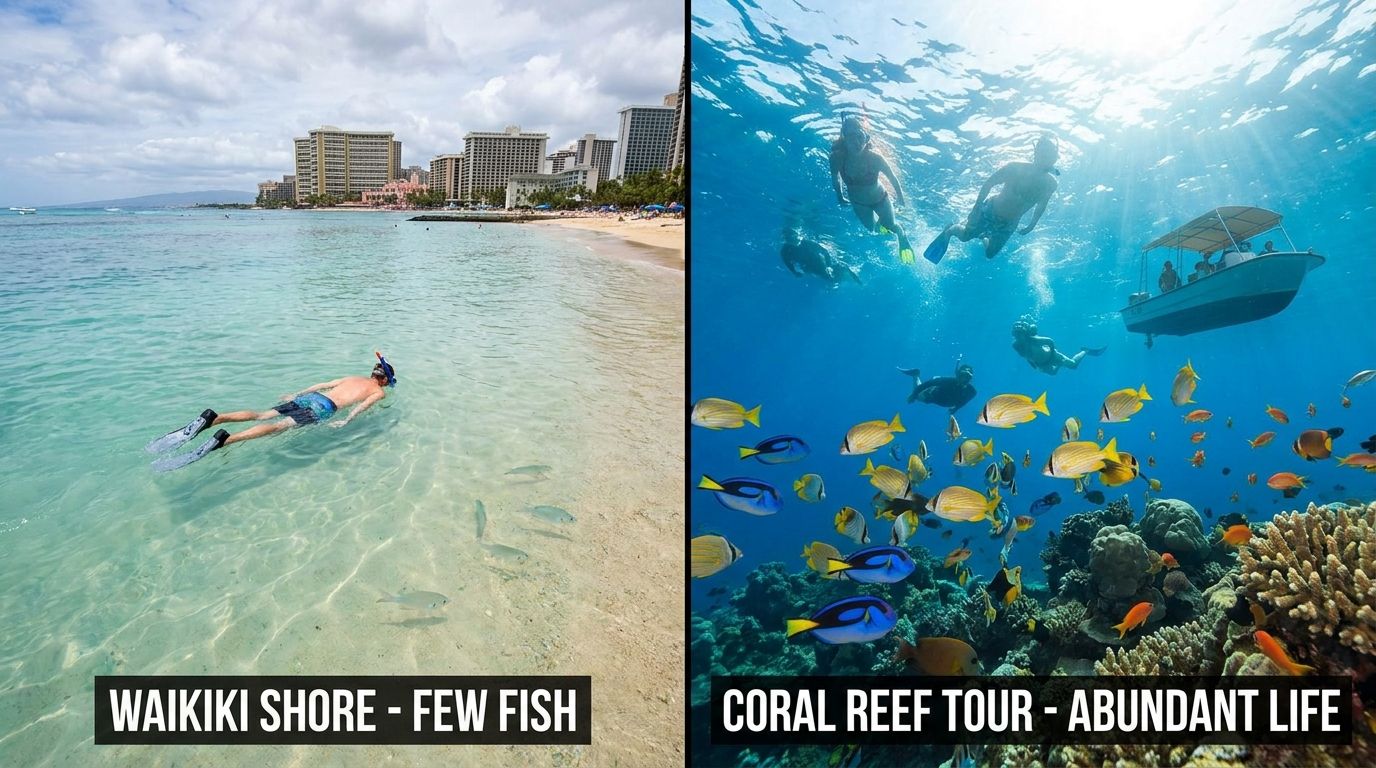
A shore snorkel sounds easy. You walk down, rent gear, and head in when the water looks calm. That works for confident swimmers who know how to read entry points, current, and exits.
For most families, that simple plan gets complicated fast. Waikiki beaches can be crowded, the reef can be patchy, and some popular access points look gentler from the sand than they feel once you’re drifting.
Shore entry sounds convenient
The biggest advantage of beach snorkeling is flexibility. You can go when you want, stay as long as you want, and keep the cost lower if you already have gear.
The downside is that shore conditions decide the whole experience. At Sans Souci Beach, swimmers report it can be “twice as hard to get back in” because of strong directional flow, which is exactly the kind of hidden hazard that surprises beginners and families most (Honolulu Travels on Waikiki shore current issues).
Practical rule: If your group includes a nervous swimmer, a child, or anyone who tires quickly in open water, don’t judge a snorkel spot by how calm it looks from the beach.
Boat tours remove the hardest parts
A guided boat tour skips the part that gives beginners trouble. No dragging fins down the beach. No guessing which entry is best. No fighting your way back to shore when the current lines up against you.
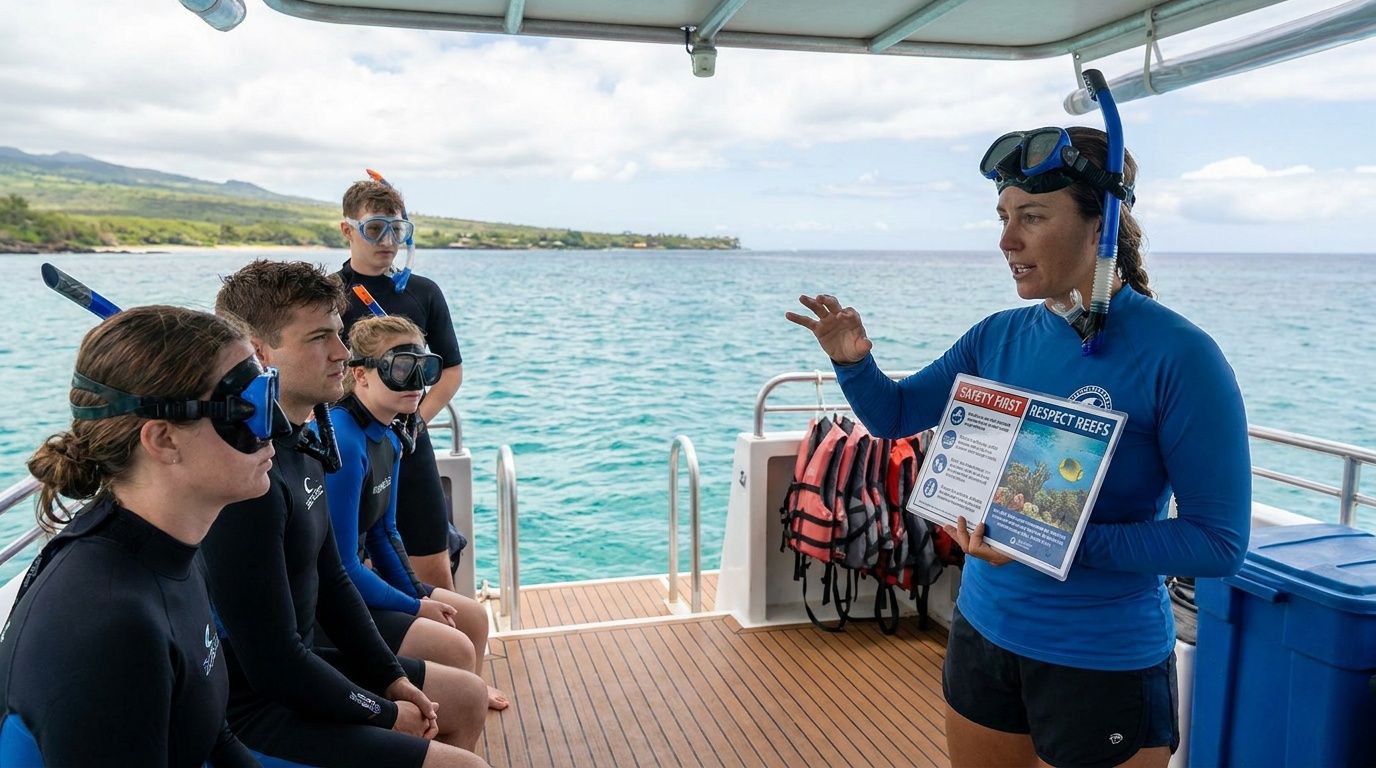
Instead, you board, get fitted properly, listen to the safety briefing, and enter the water where the crew already knows how the site is moving that day. That’s a much better setup for a first waikiki snorkel.
Here’s the side-by-side version:
| Option | What works | What usually doesn't |
|---|---|---|
| Shore snorkeling | Flexible timing, easy to add to a beach day, fine for experienced swimmers | Harder entries and exits, current surprises, fewer consistent wildlife encounters |
| Guided boat tour | Easier access, crew support, cleaner offshore water, better wildlife locations | Less spontaneous, requires booking ahead |
A lot of visitors think “shore” means safer because you’re close to land. That isn’t always true. Land can make things trickier when surf, rock walls, and sideways current all meet in the same small area.
Families usually have a better day offshore
Offshore snorkel sites tend to feel more focused. You’re there to snorkel, not to manage bags, crowds, beach space, and logistics all at once.
If you want a fuller breakdown of how the two experiences compare, this guide on Waikiki snorkeling from shore vs boat lays it out clearly.
For first-timers, boat tours usually win on three things that matter most. Safer access, better wildlife, and a much easier day overall.
Why Living Ocean Tours is Your Best Bet in Waikiki
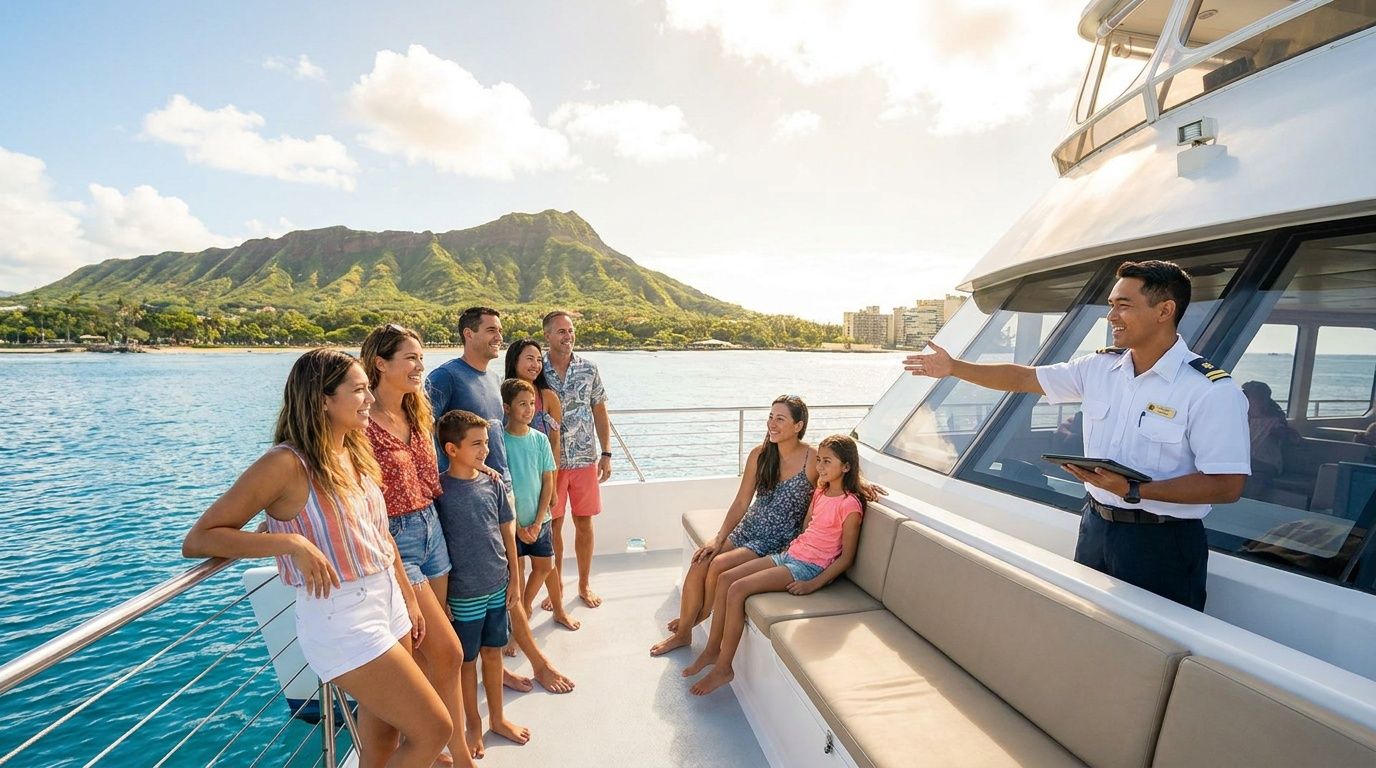
When visitors want a boat-based waikiki snorkel, they usually want the same things. Easy boarding, clear instruction, solid gear, patient crew, and a trip that works for both excited kids and cautious adults.
The operator most travelers will run into quickly is Living Ocean Tours, which the author's brief identifies as the top rated and most reviewed snorkel company on Oahu. If you want to browse the company overview first, this page on Waikiki boat tours is a useful starting point.
What kind of trip fits your group
Not every family wants the same day on the water. Some want turtles and reef fish. Some want a broader ocean outing with extra onboard fun. Some want sunset instead of snorkel masks.
That’s why it helps to pick the trip by group style, not just by the word “snorkel.”
The best tour choice is usually the one that fits your least confident traveler, not your most adventurous one.
When each tour makes sense
If your main goal is seeing turtles, the most direct option is the Turtle Canyons Snorkel Excursion. It’s the straightforward choice for travelers who want the classic Waikiki turtle snorkel experience without overcomplicating the morning.
If you’re traveling with kids or a mixed group where not everyone wants to snorkel the whole time, the Deluxe Waikiki Snorkel & Wildlife Cruise gives the day a broader appeal with built-in water fun.
Some visitors realize they’d rather stay dry and just enjoy the coast. In that case, the Waikiki Sunset Cruise is the better fit, and Sunset Cruise Waikiki is another useful page to compare the vibe before booking.
Winter visitors get a different bonus. Jan-Mar is humpback season, so a Waikiki whale watching tour can be the right call if your group prefers wildlife viewing from the boat instead of time in the water.
A practical way to choose:
- For turtle priority: Book the turtle-focused trip.
- For mixed ages and energy levels: Choose the deluxe snorkel cruise.
- For couples or non-snorkelers: Go sunset.
- For winter wildlife: Pick whale watch.
That’s usually the cleanest way to avoid booking a trip that looks good on paper but doesn’t fit your group in real life.
Encounters in the Blue What You'll See at Turtle Canyons
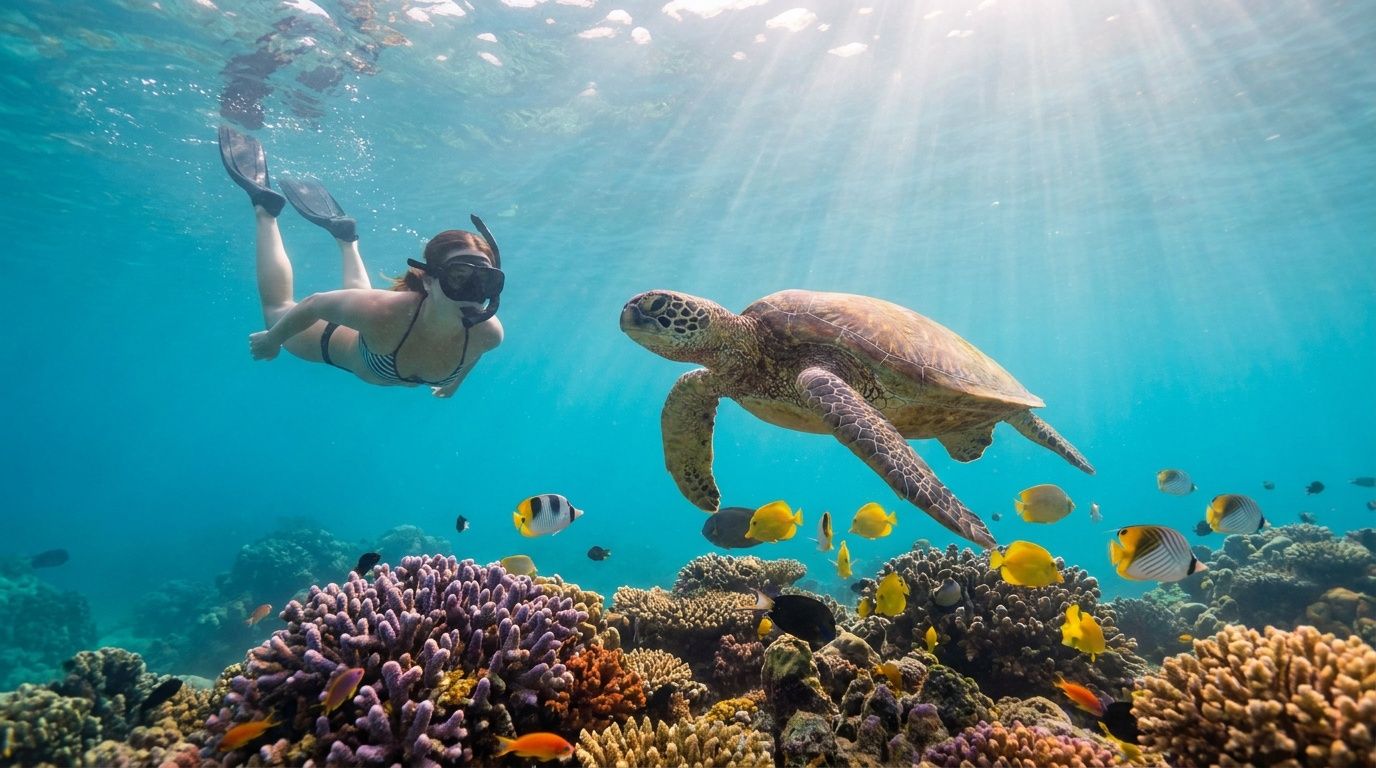
Turtle Canyons is the part of the waikiki snorkel experience that people remember years later. Not because it feels staged, but because it doesn’t. You’re floating over reef, looking down through blue water, and then a turtle slides into view like it belongs there. Because it does.
This site is known as a natural cleaning station where Hawaiian green sea turtles gather while cleaner fish remove parasites. That behavior is a big reason guided tours can report a 95% turtle sighting success rate, with water that often has over 50 feet of visibility (Cool Hawaii on Turtle Canyons conditions and sightings).
Why turtles gather here
A lot of visitors assume turtle sightings are random luck. At Turtle Canyons, there’s more pattern to it than that.
The turtles use the area because the reef community there supports that cleaning behavior. Small fish do their work. The turtles circle through. Snorkelers who stay calm at the surface often get the best view because they’re watching the routine instead of chasing it.
For a closer look at the reef life around this site, this page on Turtle Canyon Oahu marine life is worth a read.
Stay flat, breathe slowly, and watch the reef come to you. That approach works better than swimming hard all over the site.
What the reef feels like underwater
The turtles are the headline, but they’re not the whole show. A healthy Turtle Canyons session usually includes schools of reef fish moving through the coral structure, flashes of yellow butterflyfish, parrotfish working the reef, and Hawaii’s state fish, the humuhumunukunukuāpuaʻa, if you’re lucky.
The best part for beginners is that you don’t need to dive down to enjoy any of it. Surface viewing is often the right move. It lets you conserve energy, settle your breathing, and take in the whole scene.
A good turtle sighting isn’t a chase. It’s more like being allowed into the edge of a wild routine for a few minutes. That’s why this spot works so well for families. Kids get the excitement, adults get the awe, and nobody has to turn the swim into a hard workout.
Snorkel Smart Essential Safety and Ocean Etiquette
Snorkeling in Hawaii is beautiful, but it isn’t something to take lightly. Visitors accounted for 90% of snorkeling-related fatalities between 2012 and 2021, and snorkeling was the leading cause of tourist drownings in Hawaii during that period (Living Ocean Tours on snorkeling safety in Waikiki).
That doesn’t mean you should be scared of a waikiki snorkel. It means you should respect it.
Safety habits that actually matter
Strong swimmers get into trouble when they treat snorkeling like pool swimming. It’s different. You’re face down, breathing through a snorkel, getting excited, and sometimes staying out longer than your body wants.
Use these habits every time:
- Take the flotation device: A vest isn’t a sign of weakness. It saves energy and keeps you relaxed.
- Listen to the briefing: Good crews explain entry, exit, signals, and what to do if you feel off.
- Speak up early: If you feel anxious, tired, cold, or short of breath, tell the crew right away.
- Stay with the group: Distance creates problems fast in open water.
- Keep the first few minutes easy: Let your breathing settle before you start kicking around.
A calm snorkeler sees more fish than a rushed one.
How to treat turtles and reef the right way
Safety and etiquette go together. Calm people make better decisions around wildlife and coral.
A few rules matter more than all the others:
- Give turtles space: Keep a 10 foot turtle buffer as noted in the seasonal clarity guidance from Living Ocean Tours.
- Never touch coral: Even light contact can damage living reef.
- Use reef-safe sunscreen: Zinc-based products are the better choice for the marine environment.
- Don’t stand on the reef: If you need help, signal for help. Don’t try to solve it with your feet on coral.
- Let wildlife choose the distance: If an animal changes course because of you, back off.
The best snorkelers in Hawaii aren’t the ones who charge after every sighting. They’re the ones who move gently, stay aware, and leave the reef exactly as they found it.
Timing Your Trip Best Seasons and Conditions for Waikiki Snorkeling
Waikiki snorkeling runs year-round, but conditions don’t stay the same all year. If you want the easiest, clearest waikiki snorkel, timing matters.
Summer mornings are usually the sweet spot
Summer (Jun-Aug) is generally the best season for visibility in Waikiki, with morning water clarity often exceeding 50 feet because the seas are calmer (Living Ocean Tours seasonal Waikiki clarity guide).
That lines up with what captains and guides see all the time. Early departures are usually easier for beginners because winds are lighter, the ocean surface is cleaner, and everyone gets in before the day heats up.
If you’re trying to plan around your trip dates, this month-by-month guide to Oahu snorkeling conditions by month helps narrow things down.
Winter can still be worth it
Winter brings trade-offs. More swell can mean murkier water on some days, especially nearshore.
But winter has its own payoff. Jan-Mar is humpback whale season, so visitors can combine a snorkel-focused trip with a separate wildlife outing if the family wants variety. That’s often the smarter move than forcing a marginal snorkel day.
A simple booking rule works well:
- If your trip is in summer: prioritize morning snorkel departures.
- If your trip is in winter: stay flexible and consider whale watching as a backup or add-on.
- If you only have one open day: book earlier in your stay if possible, so you have options if weather shifts.
Good Waikiki snorkeling is rarely about luck alone. It’s usually about matching the day’s conditions to the right kind of trip.
FAQ and Your Ultimate Waikiki Snorkel Packing List
FAQ
Do I need to be a strong swimmer to join a tour?
No. Many beginners do well on guided trips because flotation, instruction, and crew support take a lot of pressure off. What matters most is being honest about your comfort level.
Is shore snorkeling good enough for kids?
Sometimes, but it depends on the child and the conditions. For many families, boat tours are easier because they remove the messy part of shore entry and exit.
What if I get seasick?
Plan ahead. Eat light, hydrate, and use your preferred remedy before boarding if you know you’re sensitive on boats.
Can grandparents or non-snorkelers still enjoy the trip?
Usually, yes. Some families choose broader cruises because not everyone wants the same amount of in-water time.
If you want a practical pre-trip checklist, this Waikiki snorkeling packing list is a helpful reference.
Ultimate packing list
Bring the basics and keep it simple:
- Swimsuit: Wear it under your clothes so boarding is easy.
- Towel: A quick-dry one is easiest to manage.
- Reef-safe sunscreen: Put it on before you board.
- Hat and sunglasses: The ride out can be bright.
- Change of clothes: Especially helpful if you’re heading to lunch after.
- Waterproof phone case or camera: Only if you’ll use it without fussing.
- Light snack and water: Check the tour details first, but it’s smart to start hydrated.
- Any motion-sickness item you trust: Don’t wait until you feel bad.
A good waikiki snorkel day doesn’t require a pile of gear. It requires the right plan, the right conditions, and a crew or setup that matches your group.
If you want a Waikiki ocean day that’s easier on beginners, better for families, and centered on responsible wildlife viewing, take a look at Living Ocean Tours.


