
What Causes Waikiki rainbows on a Boat Tour?
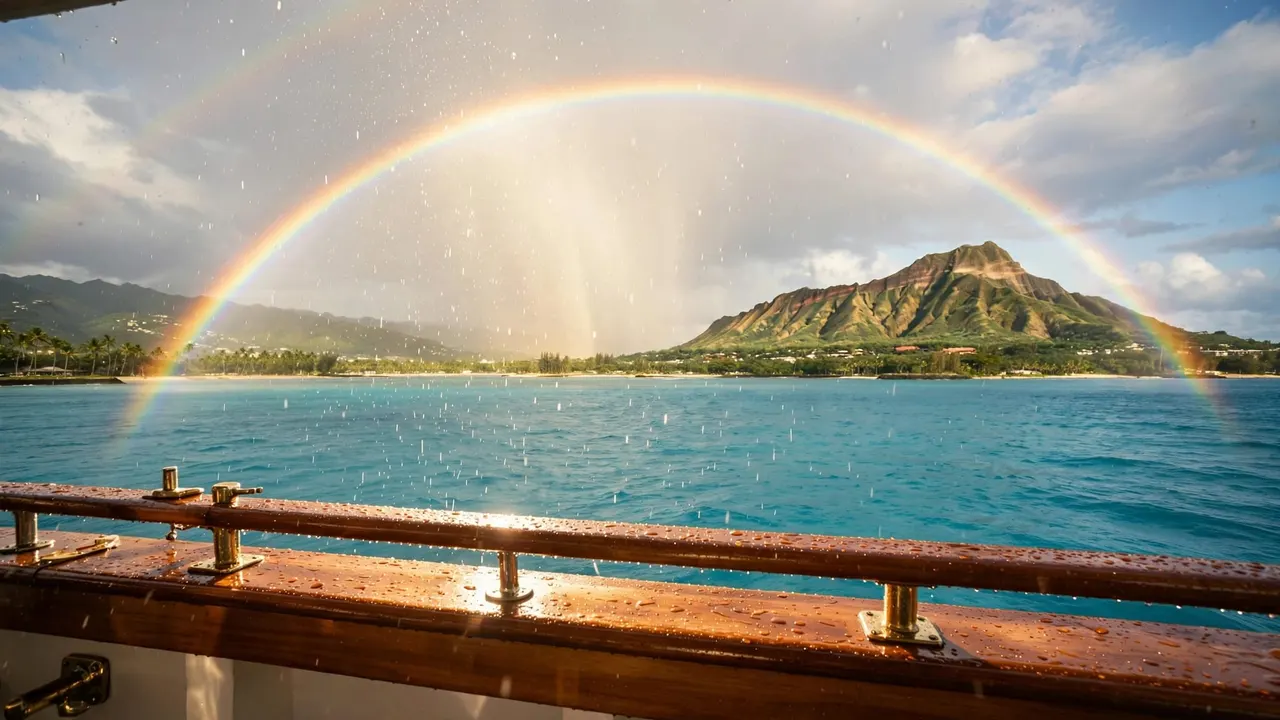
Waikiki rainbows form when sunlight bends and reflects inside airborne raindrops, separating white light into visible colors. You see the arc when the sun is behind you and illuminated rain is ahead.
During your outing with us at Living Ocean Tours, a passing shower can add a colorful surprise to the coastal view. However, the viewing angle matters as much as the rain, and a rainbow never guarantees calm water.
Start with how light travels through a raindrop, then use the sky around you to know where to look.
Key Takeaways
- You need sunlight behind you and sunlit raindrops ahead to see a typical rainbow.
- Hawaii’s trade winds and mountain showers can place rain close to clear, sunny skies.
- A boat’s changing position affects your view, but no departure guarantees Waikiki rainbows.
- Follow crew directions on wet decks, and judge snorkeling conditions separately from the colors overhead.
How Waikiki rainbows Form Inside Raindrops

Sunlight bends and separates into colors
Sunlight looks white, but it contains a range of colors. When it enters a raindrop, it slows and changes direction. This bending is called refraction.
Different wavelengths bend by different amounts, so the drop separates the colors. Some light then reflects from the drop’s inner surface before bending again as it exits.
NOAA’s explanation of rainbow formation describes this interaction between sunlight and water droplets. Although one drop separates colors, the arc you see involves countless drops across your field of view.
Your position determines the visible arc
Only light leaving droplets at the right angle reaches your eyes as a rainbow. That’s why rain and sunshine can share the sky without producing an arc where you’re looking.
Your position establishes the geometry. As you move, different droplets send the right colors toward you.
The rainbow therefore isn’t a fixed object hanging over one hotel or reef. Its apparent endpoint shifts with your viewpoint, so you can’t reach a spot where it touches the water.
In a primary rainbow, red forms the outer edge and violet appears along the inner edge. The colors blend continuously rather than forming seven separate stripes.
Why Waikiki Can Have Sunshine Beside a Shower
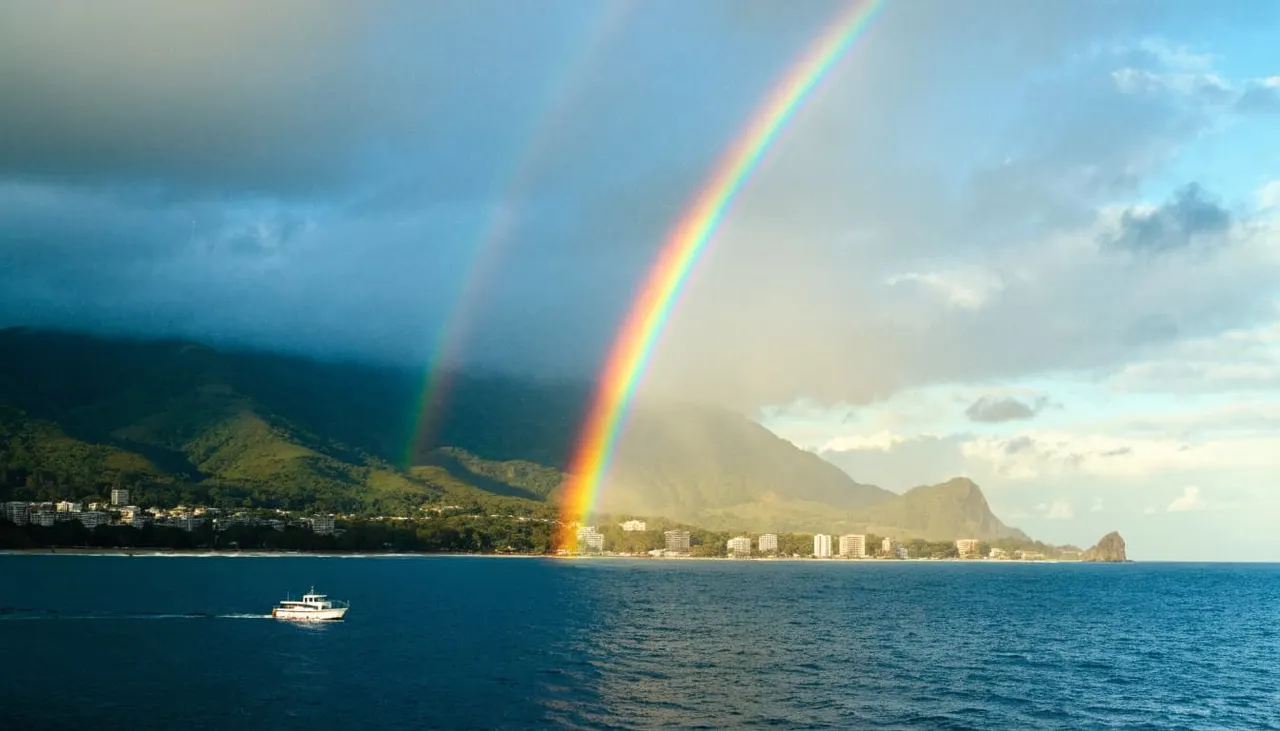
Trade winds carry moisture toward mountain slopes
Hawaii’s familiar trade winds bring moist air toward the islands. When that air rises along mountain slopes, it cools, and moisture can condense into clouds and rain.
NOAA describes this mountain-rainfall process as part of Hawaii’s climate. On Oahu, the Ko’olau Range helps shape the contrast between wetter mountain areas and drier surroundings.
Waikiki sits on the island’s south shore. You can therefore have sunshine along part of the coast while showers hang over inland slopes or another stretch of shoreline.
Patchy clouds leave room for direct sunlight
A uniform blanket of thick clouds can block the direct sunlight needed for a bright rainbow. Broken clouds, however, can leave a clear path between the sun and falling rain.
That combination helps explain why Waikiki rainbows sometimes appear beside blue sky. The rain doesn’t need to fall on your boat. It needs to occupy the right part of your view while sunlight reaches the droplets.
From offshore, you may notice a rain curtain against the mountains more easily because buildings no longer interrupt that particular sightline.
Where to Look When a Rainbow Appears Offshore
Put the sun behind you
Look away from the sun toward rain or misty-looking shower curtains. Avoid staring toward the sun while searching.
According to National Geographic’s rainbow explanation, the familiar primary rainbow involves an angle of about 42 degrees. That angle describes the viewing geometry, not a particular compass bearing.
The center of the rainbow lies opposite the sun. A lower sun can place more of the arc above the horizon, provided illuminated droplets fill enough of the sky.
Your boat’s heading doesn’t change this rule. The sun’s position determines where you should look.
Let the boat’s movement change your perspective
As the vessel turns, the coastline, rain curtain, and rainbow may shift across your view. One side of the boat won’t remain the ideal viewing position throughout the outing.
For photographs, include some ocean or shoreline beneath the arc. Those familiar features give the sky a sense of scale.
If you’re photographing Waikiki rainbows, start with your phone’s standard lens. Switch to a wider view only if the arc won’t fit. Keep the horizon level, wipe spray from the lens, and stay within the passenger areas the crew has opened.
What Double Rainbows and Fading Colors Mean
A second, fainter arc can appear outside the primary rainbow. It forms when sunlight reflects twice inside the droplets before leaving them.
That extra reflection changes the color order. In the secondary arc, red appears on the inner edge and violet on the outer edge.
The National Weather Service’s rainbow guide explains the refraction and internal reflection behind these optical displays. A double rainbow depends on light paths through droplets, not on two separate rainstorms.
You might also notice a darker-looking band between the arcs. This feature, called Alexander’s dark band, results from how the drops distribute light toward your eyes.
Meanwhile, brightness can change quickly. A cloud may cover the sun, the shower may move, or fewer droplets may occupy the right viewing angle.
If Waikiki rainbows fade while you’re watching, the storm hasn’t necessarily ended. The light, rain, and your position may simply no longer line up. Likewise, a partial arc doesn’t mean anything is missing from the physics; illuminated rain may cover only part of the necessary view.
A Rainbow Doesn’t Tell You Whether the Ocean Is Safe
A colorful sky gives you information about light and airborne water. It doesn’t tell you the strength of a current or how much swell is reaching a reef.
Wind can create short, uneven surface chop even while sunshine brightens the coastline. Meanwhile, swell can arrive from weather systems far beyond the shower you’re watching.
A rainbow can appear over water that’s unsuitable for snorkeling. Treat the sky display and the ocean assessment as separate things.
Heavy rain also creates a different concern: runoff. Water carrying sediment and other material can enter the ocean near streams, storm drains, and harbor areas.
Avoid entering water that looks brown, smells unusual, or contains floating debris. Clear-looking water, however, still doesn’t guarantee safe currents or an easy entry.
Onboard, follow the captain’s directions about seating, deck movement, and any route changes. Keep your phone secure rather than stepping into a wet passageway for a better angle.
A light layer and small dry bag help you stay comfortable during passing showers. If you enter the water, give turtles and other wildlife space, and keep your hands and fins away from coral.
Enjoy the Coast With Living Ocean Tours
When you join us at Living Ocean Tours, your departure begins at Kewalo Basin Boat Harbor, just minutes from Waikiki. You can enjoy the changing coastal scenery without making a rainbow the sole purpose of your outing.
We’re the only tour company with professional snorkel guides. If you’re new to snorkeling, that guided support helps you approach the experience with clear instructions and a crew to turn to.
Our boats also have shaded seating, onboard restrooms, and dry storage, useful comforts when sunshine gives way to a passing shower.
Explore our Waikiki boat tour options to choose an experience centered on what you enjoy most. Keep rainbow viewing as a welcome possibility rather than a promised part of the itinerary.
Your captain makes the final call on conditions, and our approach to wildlife stays simple: observe without touching. That leaves room for a memorable ocean outing while respecting the animals and reef around you.
Frequently Asked Questions About Coastal Rainbows
Can you see a rainbow without getting wet?
Yes. The raindrops producing the rainbow can be some distance ahead while your boat remains outside the shower. You need sunlight to reach those droplets and the correct angle to see the returning colors. Rain falling directly on you isn’t required.
Do you need a heavy downpour?
No. A lighter shower can supply enough droplets for a visible rainbow when the sunlight and viewing angle line up. Heavy rain can actually make the display harder to see if thick clouds block the sun or the rain obscures your view.
Can you see a complete rainbow circle from a boat?
From a normal passenger-deck viewpoint, you generally see an arc rather than the entire circle. The rest extends below your visible horizon. Full-circle rainbows require a suitable elevated viewpoint and illuminated droplets below you, conditions more commonly associated with views from aircraft than a coastal boat ride.
Enjoy the Colors Without Chasing a Guarantee
Waikiki rainbows depend on sunlight, raindrops, and your viewing angle coming together. Understanding that combination helps you look in the right direction when a shower passes nearby.
Keep your footing secure, follow the crew’s guidance, and let ocean conditions determine any swimming plans. The rainbow is a welcome extra, while the coastline and time on the water remain the heart of your outing.


