
Waikiki boat tour stroller: What Can You Bring?
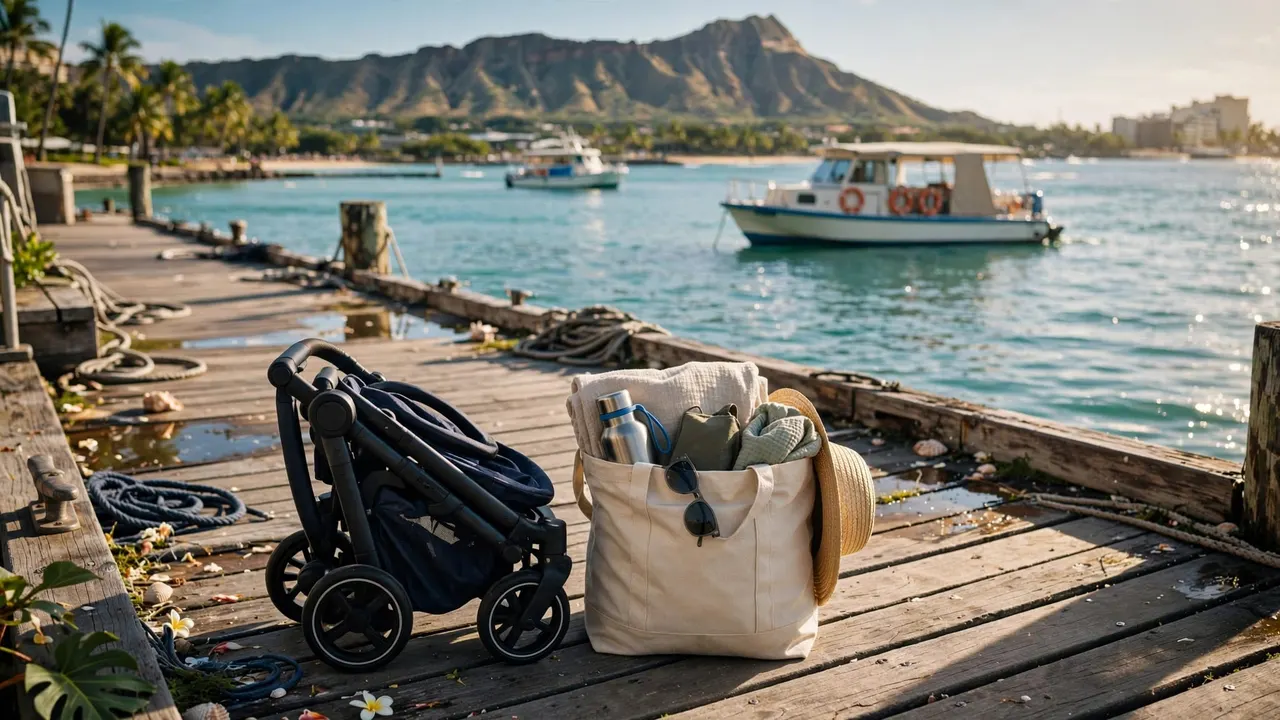
You can bring a stroller on a Waikiki boat tour only when the operator’s arrangements allow it. A stroller that’s useful on land isn’t automatically suitable for boarding, storage, or seating aboard a moving boat.
At Living Ocean Tours, your child must be at least 3 years old to join any of our tours. Your Waikiki boat tour stroller plan starts with that age requirement, followed by a realistic approach to carrying belongings and supervising your child.
Separate what helps you reach the harbor from what your family needs during the cruise.
Key Takeaways for Families With Strollers
- Stroller permission varies by operator; a compact folding design doesn’t automatically mean a stroller can come aboard.
- Our tours welcome children ages 3 and older, and guests under 18 must travel with a paid adult.
- Shaded seating, restrooms, and dry storage support family comfort, but dry storage isn’t a promise of stroller storage.
- Pack essentials in a separate bag so your outing doesn’t depend on access to a stroller basket.
The simplest family setup keeps your child close, your belongings manageable, and shared deck areas clear.
Waikiki boat tour stroller rules start with the operator
Bringing a stroller to the harbor is different from boarding
Your stroller may help with the walk before departure, especially when your child tires easily. However, that convenience doesn’t establish whether it can travel aboard the boat.
There isn’t one stroller rule covering every Waikiki excursion. Vessel layout, available space, and operating procedures differ. A compact stroller takes up less room than a full travel system, but its size alone doesn’t establish permission.
Keep your plans independent of onboard stroller access. Your child should be comfortable using the boat’s passenger seating rather than relying on a stroller throughout the outing.
Our age requirement comes first
Our minimum age is 3 for every tour. Babies and toddlers under 3 can’t join, even if you have a stroller, carrier, or other travel equipment.
Guests under 18 must accompany a paid adult, and a guardian must complete their liability waiver. These requirements help you decide whether an ocean outing fits your whole family before planning equipment.
Our Oahu snorkeling and boat tours give eligible families several ways to enjoy the coastline. Choose around your child’s readiness rather than assuming every child who meets the age minimum wants the same experience.
Before You Leave the Hotel
Pack a bag that works without the stroller
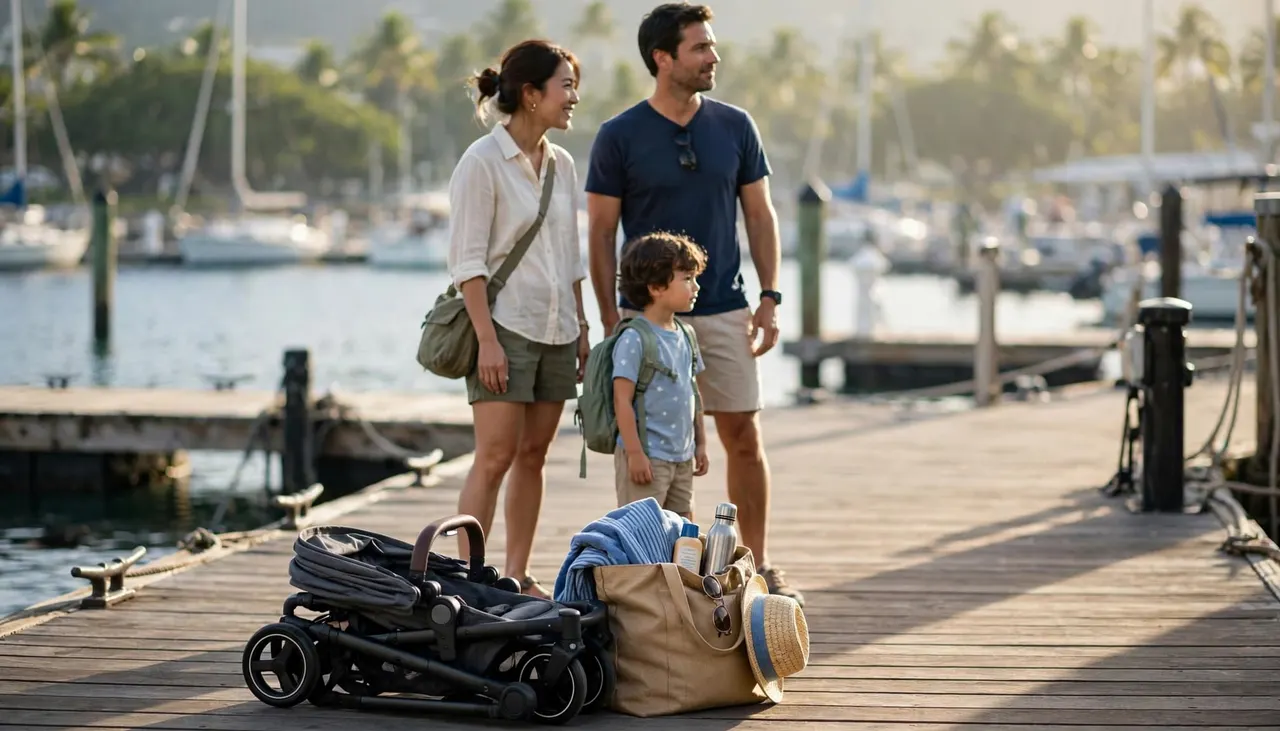
Keep everything you need during the trip in one manageable bag. That includes sun protection, a light cover-up, a change of clothes, and any necessary medication.
Avoid leaving essential items scattered through the stroller basket. Otherwise, separating yourself from the stroller also separates you from the things your child needs.
A water-resistant bag helps with splashes, although it isn’t necessarily waterproof. Leave unnecessary valuables at your accommodation, and keep a small comfort item within easy reach. Choose something that won’t roll away or become another loose object to manage.
Leave room in your schedule
Our departures begin at Kewalo Basin Boat Harbor in Honolulu, near Waikiki. Give your family enough time for the journey, the walk from your arrival point, and getting organized before boarding.
Have your child dressed for the outing before leaving your accommodation. Comfortable footwear with grip is more useful around the harbor than shoes that slip off easily.
Also, avoid building the day around a tired child’s last burst of energy. A rested child can listen, settle into a seat, and enjoy unfamiliar surroundings more comfortably. Keep the rest of your schedule light enough for a meal and downtime afterward.
Plan for Boarding Without Relying on Wheels
Keep one adult focused on your child
When two adults travel together, divide responsibilities. One can manage belongings while the other stays beside the child and follows crew directions.
If you’re the only accompanying adult, reduce what you carry. A bulky bag, loose toys, and several separate items compete for your attention.
Wait for the crew’s boarding instructions rather than moving ahead to claim a seat. Once aboard, give yourself time to settle your child before sorting belongings. An unhurried start also makes it easier to hear the safety briefing.
Separate mobility needs from ordinary luggage
A stroller used for everyday convenience and a device needed because of a disability raise different access considerations. Disability-related access involves ADA Title III regulations, rather than ordinary luggage planning.
Don’t treat general amenities as proof of a particular access arrangement. A restroom aboard a vessel doesn’t describe the full route to it, and open deck space doesn’t establish where equipment can remain.
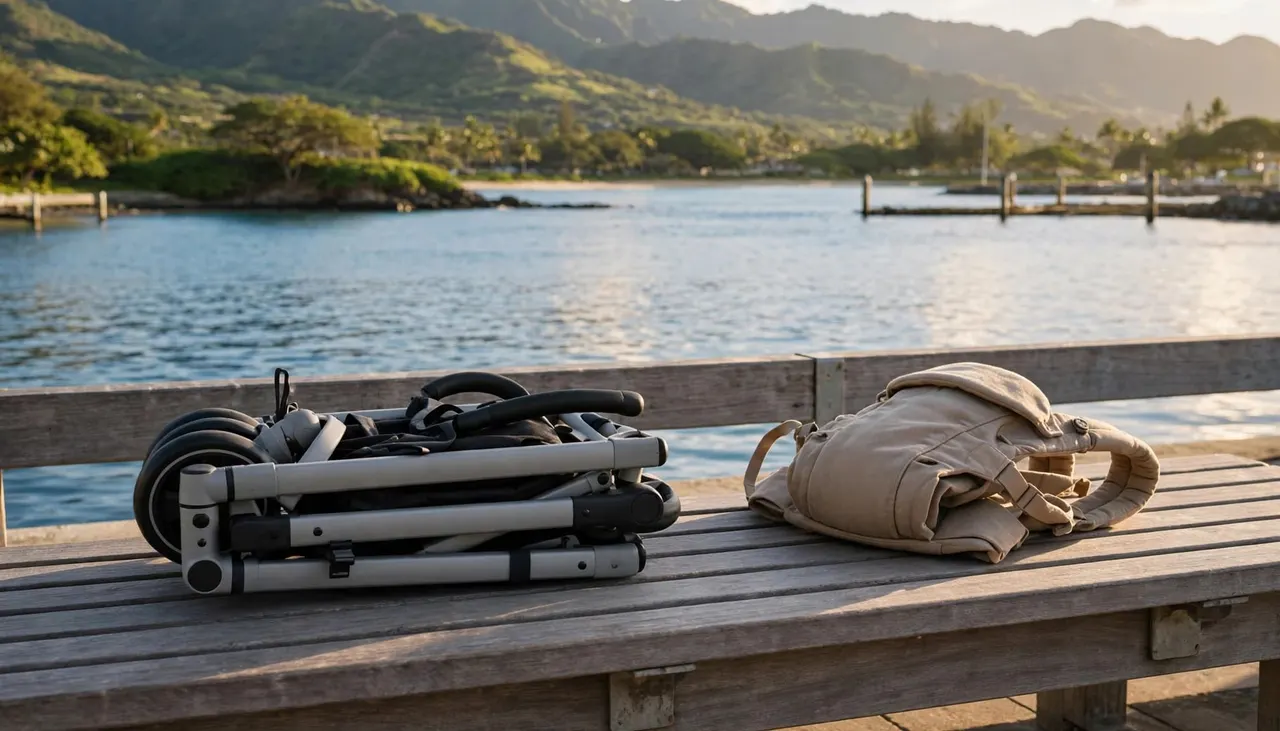
Likewise, carrying a child in a soft carrier doesn’t replace the boat’s seating, supervision, or safety procedures. Keep the focus on following crew instructions throughout boarding and the ride.
What Makes Your Child Comfortable Aboard
Use the boat’s amenities, not a stroller setup
Our Coast Guard-inspected double-decker vessels, Coral Kai and Lokahi, have shaded seating, onboard restrooms, dry storage, and heavy-duty ladders for water access.
Those features help you manage a family outing. Shade gives your child a break from direct sun, while a restroom reduces one common source of worry.
However, dry storage doesn’t mean stroller storage. It also doesn’t mean you should pack enough equipment for every possible situation.
Lokahi has a SeaKeeper stabilization system designed to reduce rolling. That can improve comfort, but you should still plan for motion aboard a boat. For a child prone to seasickness, a pediatrician can recommend an age-appropriate approach.
Give children clear, simple rules
Before departure, explain that the deck is a shared working space. Your child needs to stay close, avoid running, and leave stairs, seating areas, and water-entry equipment clear.
During the ride, follow the crew’s directions about sitting and moving around. Hold your child’s hand near stairs and railings, and keep bags where directed.
Wildlife viewing also takes patience. Give other passengers room, and teach children to observe animals without touching, feeding, chasing, or crowding them.
A stroller brake isn’t a substitute for the crew’s instructions about seating, supervision, or equipment aboard a moving vessel.
Choose an Outing That Fits Your Child’s Pace
Your child’s swimming confidence matters more than how enthusiastic the adults feel. Some children love masks and fins; others prefer watching the water from a comfortable seat.
For snorkeling, we’re the only tour company with professional snorkel guides. You receive instruction and support, while your child still needs an accompanying adult’s attention.
Guide support doesn’t replace parental supervision. If one adult wants to snorkel while a child stays aboard, another responsible adult needs to remain with that child. Decide that arrangement before anyone enters the water.
You also don’t need to make every part of the trip a test of confidence. Staying aboard can be the right choice when a child feels anxious, tired, or uninterested in swimming.
For families traveling with a child under 3, a shore-based day is the suitable alternative to our tours. A relaxed walk, lunch, or time at your accommodation avoids trying to fit an infant into an outing with an older minimum age.
When your family is ready, choose the experience that suits your least comfortable traveler. Everyone else can enjoy the ocean without pressuring that person to do more.
FAQ About Strollers on Waikiki Boat Tours
Is there a standard Waikiki boat tour stroller policy?
No single stroller policy covers every operator and vessel. A folding stroller’s convenience on land doesn’t establish whether it can board or remain aboard during a cruise.
Keep stroller use separate from your child’s eligibility and the boat’s safety arrangements. For our tours, the minimum age is 3, regardless of which travel equipment you use.
Will a compact Waikiki boat tour stroller fit in dry storage?
Our boats have dry storage, but that amenity isn’t a stated stroller-storage arrangement. Don’t build your packing plan around placing a stroller there.
Instead, keep your child’s essentials together in a separate bag. You’ll have an easier time settling into passenger seating when you don’t need to unpack a stroller basket first.
Can a child stay aboard instead of snorkeling?
Your child doesn’t need to enter the water to enjoy the ride. Staying aboard is a reasonable choice when swimming feels uncomfortable or your child needs a break.
An accompanying adult must continue supervising. Professional guides support the snorkeling experience, but they don’t take over your responsibility for a child who remains on the boat.
Can you bring a baby if you leave the stroller behind?
Our minimum age remains 3, whether you travel with a stroller, a carrier, or neither. Leaving equipment at the hotel doesn’t change that requirement.
If your family includes a baby, choose a shore activity together or have an adult remain ashore with the baby while eligible family members join the tour.
Keep Your Family’s Boat Day Simple
A good Waikiki boat tour stroller plan separates getting to the harbor from spending time aboard. Start with your child’s age, then keep belongings manageable and follow the crew’s directions.
Your family’s comfort depends on attention and a suitable pace, not how much equipment you bring. With realistic expectations and room for your child to rest, you can focus on enjoying the coastline together.


