
Waikiki Boat Tour in Rainy Weather: What to Expect
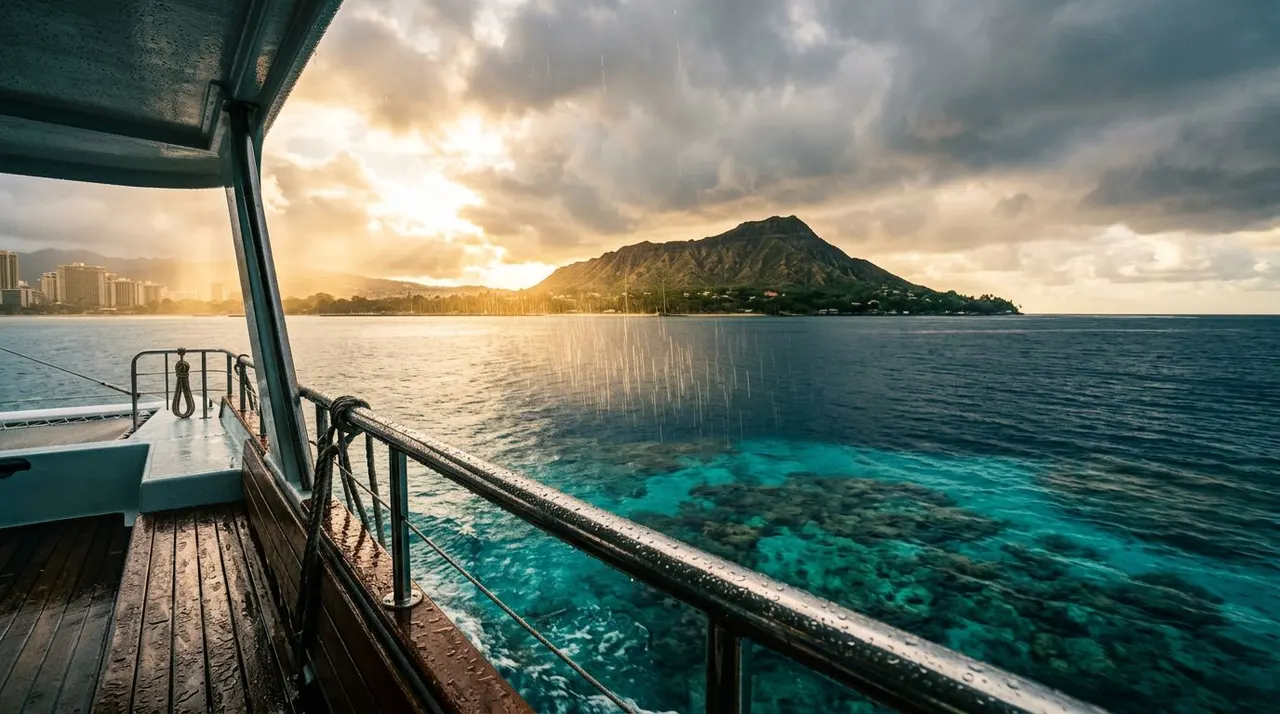
A rainy forecast doesn’t automatically ruin your Waikiki boat tour. On Oahu, a passing shower can move across the coast while the ocean remains calm, bright, and comfortable a few minutes later.
If you’re planning a Waikiki boat tour, you need to know what rain changes, what stays the same, and when the crew may adjust the trip. Your comfort depends on the type of weather, the condition of the sea, and the tour you choose. With the right clothing and realistic expectations, a wet morning can still lead to excellent reef views, turtle sightings, and dramatic coastal scenery.
What Rain Usually Looks Like on a Waikiki Boat Tour
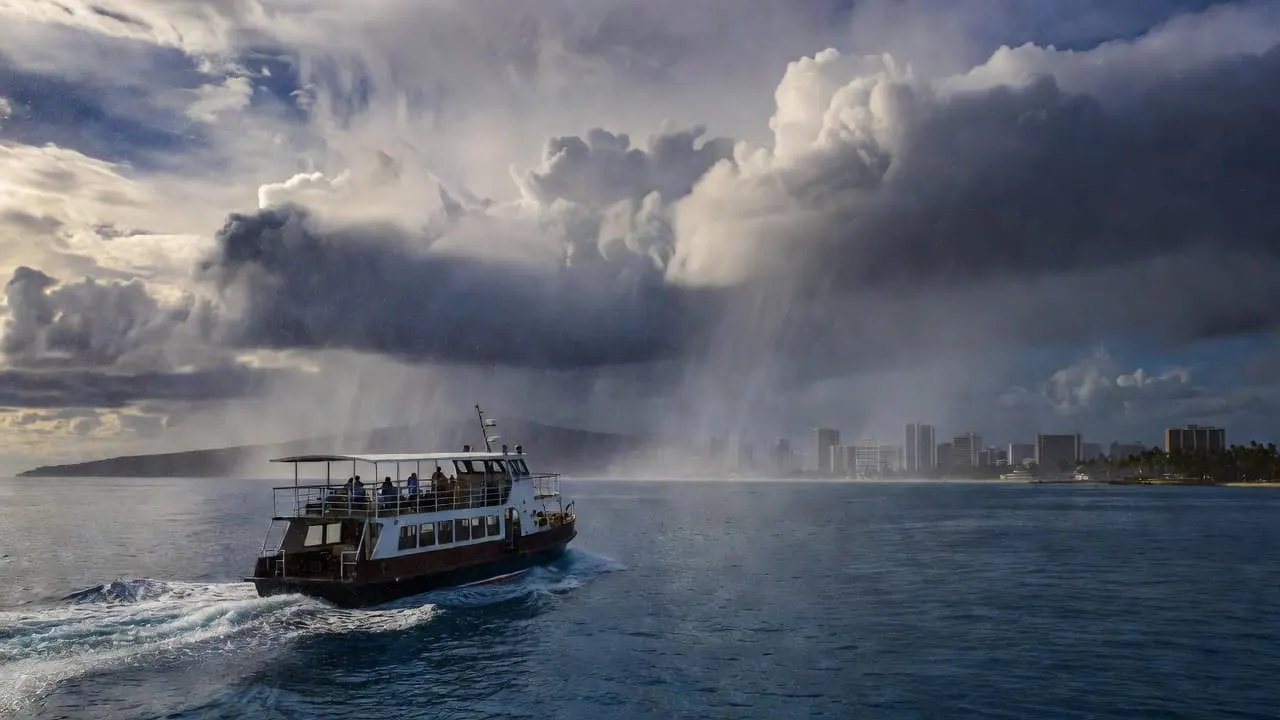
Waikiki rain often arrives in short bursts rather than as a steady downpour. A shower may pass over Diamond Head, move offshore, and leave sunshine behind it. Rain can also fall over the mountains while the coastline stays dry.
That pattern matters because the weather at your hotel may not match conditions at Kewalo Basin Boat Harbor or Turtle Canyon. A gray sky over Waikiki doesn’t always mean rough water. Likewise, a sunny beach doesn’t guarantee calm conditions farther offshore.
A local Waikiki seasonal weather guide describes brief tropical showers and warm ocean temperatures during parts of the year. Those conditions are common enough that boat crews plan for changing skies as part of normal operations.
Once you’re underway, you may notice rain before you feel wind or waves. The drops can be light and warm, especially during a brief trade-wind shower. On the other hand, a Kona low can bring longer periods of rain, stronger winds, lower visibility, and rougher seas.
Your captain watches the full picture, not one weather app icon. The decision depends on marine forecasts, radar, wind, swell, lightning risk, and visibility. If conditions remain safe, the boat may depart or continue with a slightly adjusted route. If the sea becomes unsafe, the operator may delay, shorten, reschedule, or cancel the trip.
A rainy beach forecast tells you very little about the water until you check wind, swell, visibility, and lightning risk.
The best approach is to check your confirmation details and contact the operator on the day of your tour. Ask about the current marine conditions rather than relying only on the forecast displayed for your hotel.
How the Crew Handles Rain and Changing Sea Conditions
A professional crew doesn’t judge the trip by rain alone. They look at whether guests can move safely, whether the boat can maintain a comfortable ride, and whether the water offers enough visibility for the planned activity.
On a snorkeling trip, the captain may choose a more sheltered route or wait for a shower to pass. The crew can also change the order of activities. For example, guests may begin with a coastal cruise before entering the water, allowing the team to watch conditions near the reef.
Lightning requires extra caution. If thunderstorms move into the area, the crew may keep guests onboard, return to the harbor, or postpone the trip. Reduced visibility also matters near reefs, harbor entrances, and other boats.
Rain can make decks slippery, so follow crew instructions when moving between shaded seating, stairs, and the swim platform. Use handrails and avoid carrying loose items while walking. Staff members may ask you to wait before entering or climbing out of the water.
Living Ocean Tours departs from Kewalo Basin Boat Harbor, a short drive from Waikiki Beach. Its Coast Guard-inspected double-decker boats, the Coral Kai and Lokahi, include shaded seating, restrooms, dry storage, and heavy-duty ladders for water entry. Those features become useful when rain arrives during a trip.
The Lokahi also has a SeaKeeper vessel stabilization system. The system helps reduce rolling, which can make the ride more comfortable for guests who are sensitive to motion. It doesn’t remove every effect of wind or waves, but a steadier boat can make a meaningful difference.
Living Ocean Tours is also the only tour company with professional snorkel guides. The guides help beginners with equipment, water entry, breathing technique, and safe spacing around marine life. If you’re nervous about snorkeling in wet weather, that direct support matters more than clear skies alone.
Conditions can change after departure, so a safe crew may adjust plans without making the entire day feel disappointing. You might spend more time sightseeing, remain in a protected area, or enjoy the boat’s upper deck while the shower passes.
What You’ll See and Feel During Rain
Rain changes the mood of a boat ride. The coastline can look more textured, with dark volcanic slopes, green mountains, and silver streaks across the ocean. Clouds may soften the light around Diamond Head and create strong color contrast along the shore.
A passing shower can also produce a quick rainbow. Sunlight behind the rain may brighten the water while the clouds remain overhead. These moments are difficult to schedule, but they often create memorable photographs.
You may feel cooler after getting wet, even when the air temperature is warm. Wind on an open deck can add to that chill. Bring a light layer, towel, and dry change of clothes, especially if you’re traveling with children.
Covered seating gives you a place to wait out heavier rain. Still, the best views may be on the open deck when the clouds break. Keep phones and cameras protected in a waterproof pouch, and store loose hats or towels before the boat picks up speed.
Rain may affect visibility from the boat, but it doesn’t always affect wildlife activity. Hawaiian green sea turtles still use natural cleaning stations, and tropical fish remain around the reef. Visibility underwater depends more on runoff, surface conditions, sunlight, and water movement than on a few minutes of rain.
After heavy rain, runoff can carry sediment toward nearshore areas. That may make the water less clear, especially near the coast. A crew may move to a different snorkeling location if the original site has poor visibility.
For broader local context, a local sea-condition reminder advises visitors to prepare for rapidly changing conditions and reduced visibility during passing showers. You should treat that as a reminder to stay flexible, not as a prediction for every tour.
Is Snorkeling Safe and Enjoyable in the Rain?
Swimming in rain can feel strange at first because you see drops striking the surface while you’re already surrounded by water. Once your face is below the surface, the rain itself usually becomes irrelevant. Your experience depends on visibility, current, water movement, and your comfort level.
The professional snorkel guides at Living Ocean Tours explain how to use the mask and snorkel before you enter. Beginners can stay close to the guide, use flotation support, and take their time on the ladder. You don’t need advanced swimming skills to enjoy a guided outing, but you should follow the operator’s safety requirements and tell the crew about any concerns.
A calm, rainy day can produce good snorkeling conditions. Cloud cover may reduce surface glare, which sometimes makes it easier to look into the water. However, very heavy rain, muddy runoff, strong current, or poor visibility can reduce the quality of the experience.
Don’t touch turtles, coral, fish, or other marine life. Keep a respectful distance and let animals move freely. The safest approach is simple: observe, don’t touch, and avoid standing on the reef.
Rain also creates a few practical challenges. Masks may fog if they aren’t prepared correctly. Wet hands can make small items harder to manage. Use the boat’s storage areas and listen when guides explain where to leave shoes, bags, and cameras.
If you’re traveling with young children, consider their tolerance for wind and wet clothing. A short shower may be exciting, but a prolonged downpour can make a child cold or uncomfortable. Pack a warm layer for the ride home and choose a tour with shaded areas and easy access to restrooms.
The ocean may look darker under clouds, but color can return quickly when sunlight breaks through. Your guide can point out reef features, fish, and turtle behavior even when the sky stays gray.
Which Waikiki Boat Tour Fits a Wet Forecast?
Your best option depends on what you want from the day. A snorkel trip suits guests who care most about marine life. A deluxe cruise gives you more time on the boat and more activities. A sunset cruise works well when you want scenery, conversation, and a slower pace.
Turtle Canyon Snorkel Excursion
The Turtle Canyon Snorkel Excursion is a strong choice when snorkeling is your priority. The trip focuses on a natural underwater cleaning station where Hawaiian green sea turtles often appear. Living Ocean Tours reports a 95% success rate for spotting turtles on this experience, although wildlife sightings can never be guaranteed.
A rainy forecast doesn’t automatically cancel the value of this tour. If the sea remains safe and the reef has usable visibility, you can still enjoy tropical fish, coral formations, and turtle habitat. The guides also help first-time snorkelers stay calm and comfortable.
Read the details for the Turtle Canyon Snorkel Excursion before booking. Look for the meeting time, age requirements, equipment information, and weather policy. Then check the current schedule before you leave your hotel.
Deluxe Waikiki Snorkeling and Wildlife Cruise
The Deluxe Waikiki Snorkeling and Wildlife Cruise gives you more ways to enjoy the outing if rain passes through. The Lokahi includes a water slide, water trampoline, and floating lily pad, along with shaded seating and a cash bar.
This option works well for families and mixed groups. Strong swimmers can enjoy the water features, while guests who prefer to stay dry can watch the coastline from the deck. The boat’s SeaKeeper stabilization system also supports a more comfortable ride when the ocean has light movement.
The cruise visits a less-crowded reef when conditions allow. Your guides still make the final call based on safety and visibility. Review the Deluxe Waikiki Snorkeling and Wildlife Cruise details so you can compare the trip length and inclusions with your schedule.
Waikiki Sunset Cruise
Rain can create a dramatic sunset, but clouds may also block the horizon. If your main goal is a guaranteed orange sun dropping into the ocean, no operator can promise that result. If you want a relaxed boat ride with coastal views, a sunset cruise can still be enjoyable under a textured sky.
Living Ocean Tours offers Waikiki sunset cruises with BYOB and cash-bar options. You can settle into the covered seating during a shower, then move outside when the clouds open. Bring a jacket or dry layer because evening wind can feel cooler after rain.
The Waikiki Sunset Cruise is a good fit for couples and families who want less time in the water. It also gives non-swimmers a comfortable way to enjoy the coast.
Living Ocean Tours combines guided ocean access with practical comfort. You can browse all ocean tours in Honolulu to compare snorkeling, wildlife, and sunset options before choosing the trip that matches your forecast.
What to Pack for a Rainy Boat Trip
A small amount of preparation makes a wet outing much easier. Pack items that help you stay warm, protect your belongings, and change comfortably after the trip.
Bring a swimsuit beneath quick-drying clothes, even if rain is already falling at the harbor. Add a lightweight long-sleeve layer, towel, sunglasses, reef-safe sunscreen, and a dry shirt. A rash guard can provide warmth and sun protection without adding much weight.
Use a waterproof phone pouch or dry bag for your phone, wallet, room key, and prescription items. Avoid bringing valuables you don’t need. Secure hats and loose cover-ups because wind can carry them overboard.
Water shoes can help you move across wet surfaces, although you should follow the operator’s footwear instructions. Flip-flops may feel unstable on slick steps. Children benefit from an extra towel and a complete change of clothes.
Don’t apply sunscreen carelessly before snorkeling. Choose a reef-conscious product and keep it away from your eyes and mask. Ask the crew if you’re unsure about what to use.
Your packing list should include:
- A light rain jacket or windbreaker
- A towel and dry clothes
- A waterproof pouch for essentials
- Reef-safe sunscreen
- A reusable water bottle
- Motion-sickness medication, if you normally use it
- A warm layer for the ride back
Take medication according to its label and give it enough time to work before departure. If you have a history of seasickness, choose a stable seating area, look toward the horizon, and avoid reading during the ride.
How to Decide Whether to Keep Your Reservation
Don’t cancel solely because your phone shows a rain icon. Check the marine forecast, contact the tour operator, and ask whether the trip is expected to run as scheduled. The crew has more useful information about the actual harbor and offshore conditions than a general city forecast.
Ask four direct questions:
- Is the trip operating on its scheduled route?
- Are snorkeling conditions expected to support safe visibility?
- What happens if the captain changes the itinerary?
- What does the weather cancellation policy cover?
Read the policy before you arrive. Operators may handle rain, unsafe seas, lightning, and guest cancellations differently. A cancellation caused by unsafe conditions is not the same as a guest deciding not to attend because clouds are present.
Give yourself extra time to reach Kewalo Basin. Wet roads can slow traffic, and you may need time to find parking or walk from your pickup point. Arriving late can create stress before the boat even leaves.
If the forecast looks uncertain, book earlier in your vacation when possible. That gives you more room to reschedule if conditions change. Keep one land-based backup activity available, but don’t assume the boat trip will fail before the crew makes a decision.
A discussion about Waikiki during a Kona low shows why island weather deserves attention beyond a simple rain percentage. Longer weather systems can affect wind, visibility, and sea conditions differently than a brief shower.
Conclusion
A rainy Waikiki boat tour can still deliver a rewarding day on the ocean. Passing showers may add clouds, cooler wind, and changing visibility, but they don’t automatically prevent safe snorkeling or coastal sightseeing.
Your best preparation is simple: check marine conditions, follow the captain’s guidance, pack dry layers, protect your belongings, and choose a tour with shaded seating and professional snorkel guides. When the sea remains safe, a wet forecast may become part of the memory rather than the reason you stayed ashore.


