
Waikiki boat tour life jackets: Adult and Kid Rules
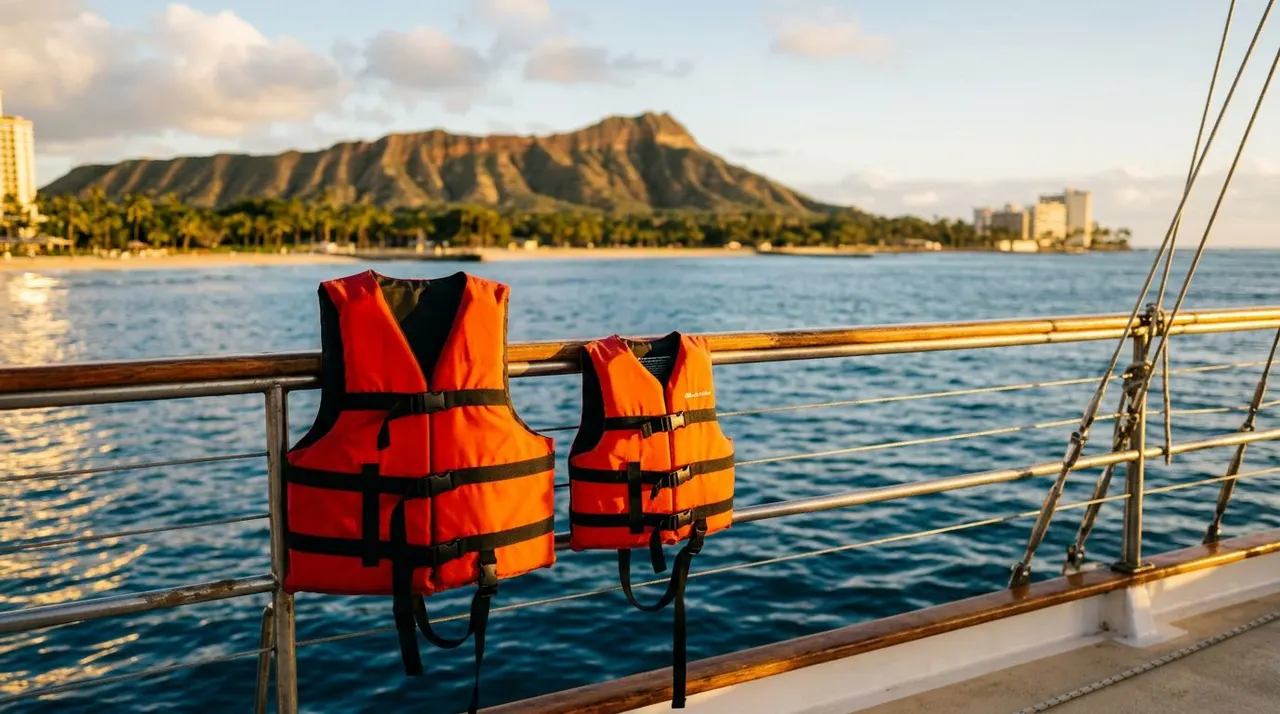
When you search for Waikiki boat tour life jackets, you need more than a simple yes or no. Hawaii has clear requirements for children, while adult rules depend on the vessel, activity, and crew instructions.
The short version is simple: every passenger needs access to a properly sized, USCG-approved wearable PFD, and children under 13 generally must wear one while the boat is underway. You can enjoy your tour with less stress when you know what to expect before boarding.
Waikiki boat tour life jackets: the rule in plain English
Hawaii and U.S. Coast Guard rules focus on two things: having the right flotation device onboard and wearing it when required. A life jacket, also called a personal flotation device or PFD, must fit the person using it. One oversized adult vest cannot safely substitute for properly fitted child equipment.
For adults, a commercial tour boat generally must carry a USCG-approved wearable PFD for every person onboard. Adults don’t always have to wear those jackets while seated on deck, but the gear must be readily available. Your captain or crew can also require you to wear one at any time.
Children under 13 face a stricter rule. They generally must wear a properly fitted, USCG-approved life jacket whenever the vessel is underway on ocean waters. Hawaii also applies the rule when a boat is anchored offshore in a non-designated offshore mooring area. Exceptions can apply when a child is below deck or inside an enclosed cabin.
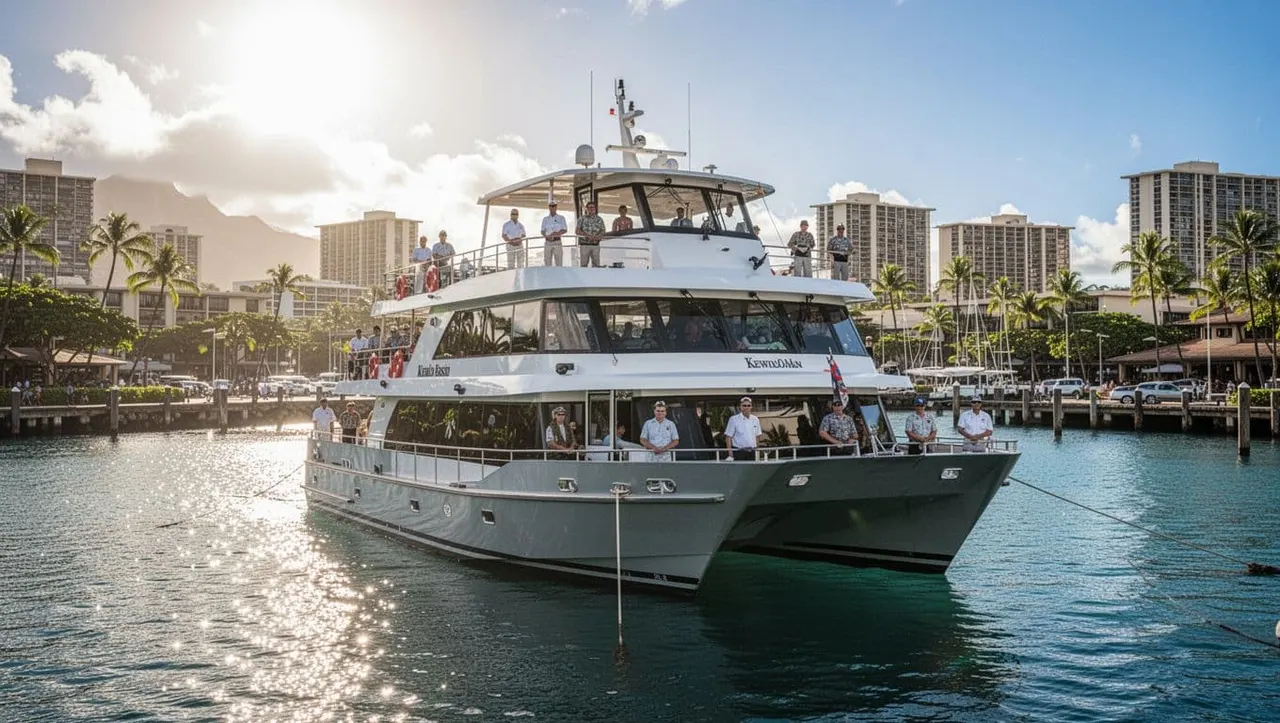
The U.S. Coast Guard’s life jacket guidance also emphasizes that a vessel must have an approved wearable PFD for each person onboard. Commercial passenger vessels may follow additional equipment standards, so your tour operator’s instructions always matter.
If your child is under 13, plan for the life jacket to stay on while the boat is moving. Bringing a favorite swim vest doesn’t replace the operator’s approved safety gear.
A boat that is 16 feet or longer may also need a Type IV throwable flotation device under Hawaii’s general boating rules. That item is for emergency use and doesn’t replace the wearable jacket assigned to each passenger. You don’t need to manage this equipment yourself, but you can expect a properly operated tour boat to carry the required gear.
Life jacket rules for kids under 13
The under-13 rule is the most important detail for families booking a Waikiki boat tour. Your child may be a strong swimmer, but swimming ability doesn’t remove the legal requirement to wear a PFD while the vessel is underway.
A boat can move quickly, stop suddenly, or encounter a wake from another vessel. Even a calm afternoon can change when wind increases or the boat turns toward open water. A properly fitted life jacket keeps a child positioned for flotation if they fall overboard or need help in the water.
How child PFD sizing works
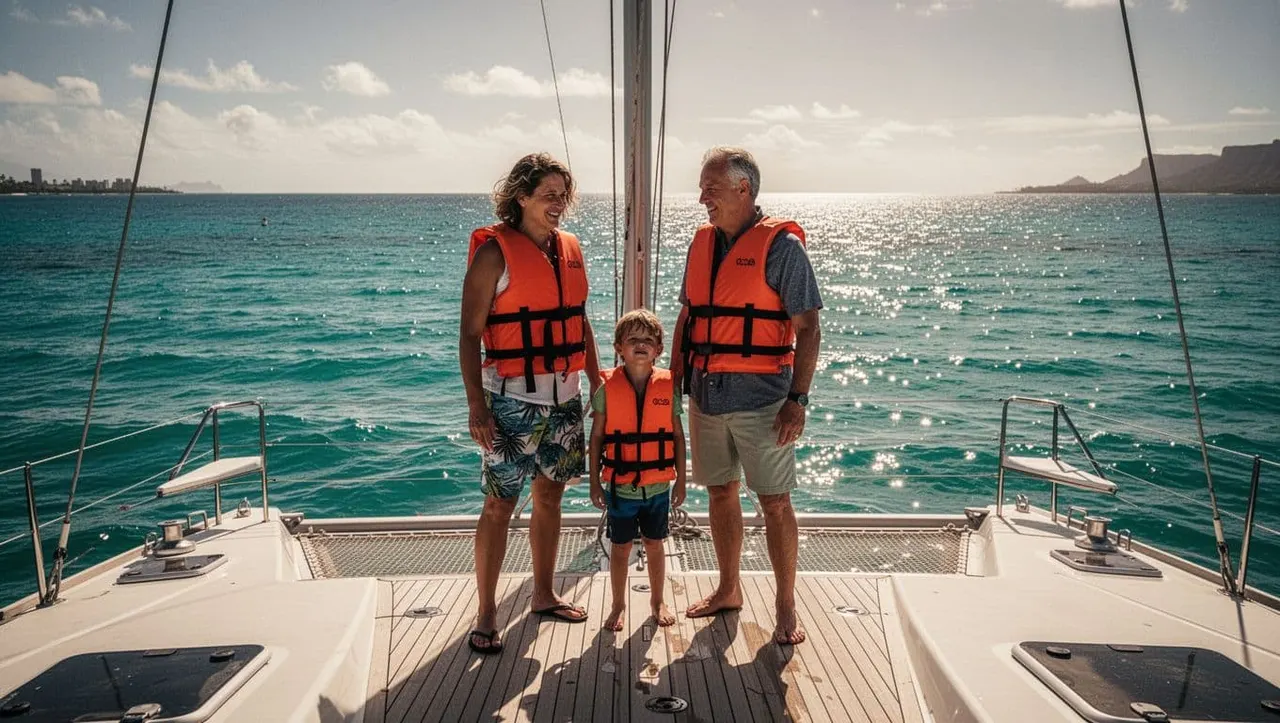
Life jackets are sized by body weight and, depending on the design, chest measurement. Hawaii safety guidance commonly groups sizes into ranges such as:
- Infant sizes for children under 30 pounds.
- Child sizes for children weighing 30 to 50 pounds.
- Youth sizes for children weighing 50 to 90 pounds.
Those ranges are a starting point, not a substitute for trying the jacket on. Your child’s weight, chest size, and body shape all affect the fit. Infant jackets often include a crotch strap or leg strap to help keep the vest from riding up over the child’s face.
A good fit feels snug without restricting breathing. The jacket should not slide over your child’s head when you lift gently at the shoulders. Fasten every buckle, secure every strap, and ask a crew member to check the fit before the boat leaves the harbor.
Children may complain about the feel at first. Give them a few minutes to adjust while you remain at the dock. A shirt with smooth fabric underneath can reduce rubbing, and a calm explanation usually works better than waiting until the boat is moving.
Life jackets during dock time and water activities
The exact wear policy can vary while your boat is tied to the dock. Once the boat leaves Kewalo Basin Harbor, however, you should expect your child to keep the PFD on unless the crew gives different instructions for a safe, enclosed area.
Swimming and snorkeling create a second safety situation. Your child may wear a life jacket, a USCG-approved PFD, or a snorkel vest chosen by the crew. These products are not automatically interchangeable. A snorkel vest can help a swimmer rest at the surface, but some swim aids are not approved as life-saving equipment.
Tell the crew if your child is nervous, cannot swim, tires easily, or has never snorkeled. Professional guides can choose the appropriate flotation support and stay close during water entry. You shouldn’t remove or loosen a child’s vest because it looks uncomfortable without asking first.
What adults need to know about wearing a PFD
Adult guests usually need a properly sized PFD available onboard, but Hawaii does not generally require every adult to wear one for the entire cruise. The rule changes when the crew gives an instruction, when you participate in a water activity, or when the vessel’s operating policy requires continuous wear.
You may want to wear a life jacket even when the law doesn’t require it. Consider wearing one if you are a weak swimmer, feel unsteady on a moving deck, have a medical concern, or plan to enter the water. Guests who feel seasick can also benefit from sitting in a stable area and following crew directions instead of moving around the boat.
Commercial tours use equipment suited to passenger operations. U.S. Coast Guard guidance identifies Type I offshore life jackets as appropriate for commercial vessels and passenger-for-hire operations in conditions where rescue may take time. The crew decides which approved PFD is appropriate for the vessel and activity.
Your jacket should sit firmly against your chest. Loose straps allow the vest to shift during a fall, while an oversized jacket can ride up around your face. Keep the PFD accessible if you aren’t wearing it, and don’t place a towel, bag, or dry-clothing bundle on top of it.
Ask these questions before departure:
- Will adults keep the jackets on during the cruise?
- Which flotation equipment should you wear while snorkeling?
- Are all child and youth sizes available onboard?
- Where should you sit if you feel seasick or unsteady?
- What should you do if you need a different size?
A reputable crew will answer without making you feel inexperienced. Safety questions are normal, especially when you’re traveling with children.
What a safe Waikiki operator should provide
Before you compare boats, look for clear information about safety equipment, age limits, water-entry procedures, and crew qualifications. A tour page should explain whether life jackets and snorkel vests are provided. You should also find a direct way to ask about child sizes and special needs.
Living Ocean Tours operates from Kewalo Basin Boat Harbor, a short distance from Waikiki Beach in Honolulu. The company offers Coast Guard-inspected, custom-built double-decker vessels named the Coral Kai and the Lokahi. Both boats have shaded seating, onboard restrooms, dry storage, and sturdy ladders for water entry.
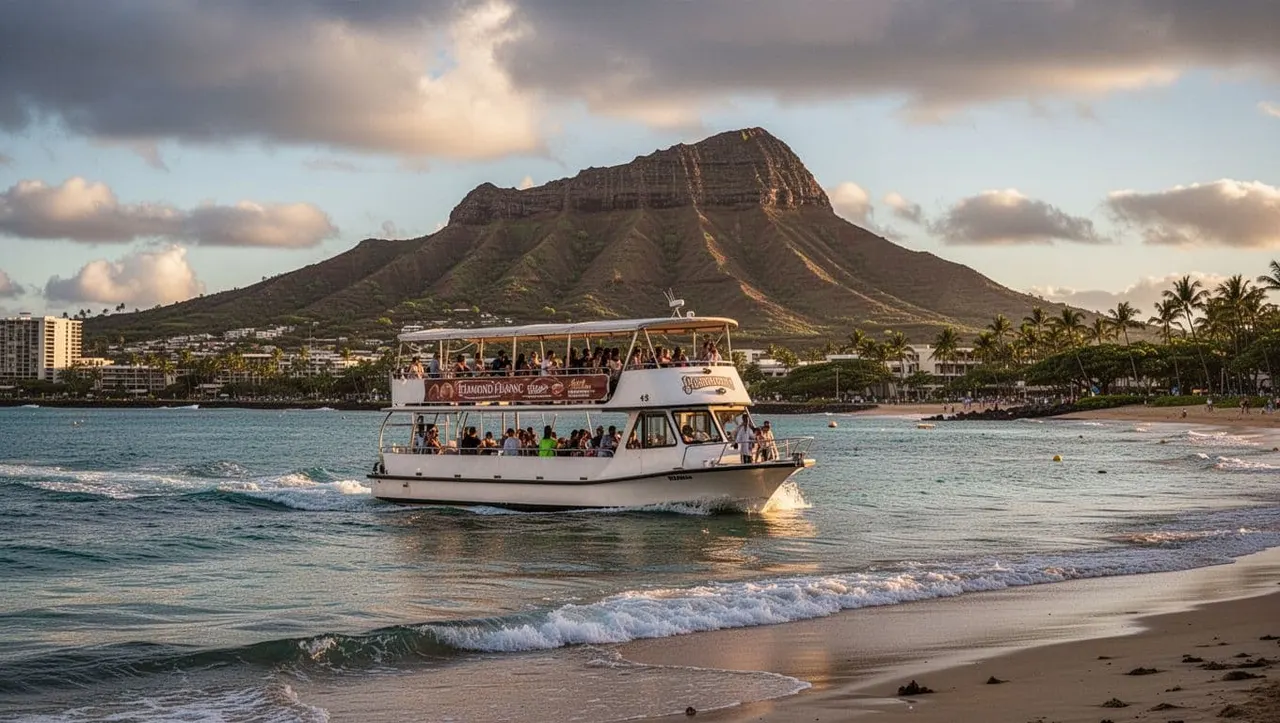
The Lokahi includes a SeaKeeper stabilization system that reduces rolling motion. That feature can make the ride more comfortable for families and guests who worry about seasickness. The Coral Kai has generous open-deck space, so you can enjoy the coastline while keeping a clear path to the crew and safety equipment.
Living Ocean Tours is also the only tour company with professional snorkel guides. Those guides help first-time snorkelers, families, and guests who need extra support in the water. You can browse the company’s Waikiki snorkel tours with life jackets to compare the available experiences.
The company provides life jackets and snorkel vests on its tours. Still, you should share your child’s age, weight, swimming experience, and any concerns when you book. That information helps the crew prepare for your group.
Life jackets and snorkeling are different safety questions
A boat ride and a snorkeling session require different decisions. While you are on deck, the PFD protects you during the boat’s movement. Once you enter the water, the crew may provide a snorkel vest that lets you float comfortably while you look down at the reef.
You should tell your guide how comfortable you feel before entering the water. A first-time snorkeler may need a flotation aid, close supervision, or a slower route from the ladder. Strong swimmers still need to follow the guide’s directions because currents, boat traffic, and changing visibility affect the experience.
Use the ladder and keep both hands available as you enter or leave the water. Don’t jump from a height unless the crew specifically allows it. Water slides, trampolines, and floating platforms also require you to wait for a clear landing area and follow the posted or spoken instructions.
Living Ocean Tours’ Turtle Canyon Snorkel Excursion visits a natural cleaning station where Hawaiian green sea turtles are often seen. The company reports a 95% success rate for turtle sightings, although wildlife encounters can never be guaranteed. You can review the Turtle Canyon Snorkel Tour details before choosing the trip.
The right behavior around turtles matters as much as your flotation gear. Keep a respectful distance, observe without touching, and never chase an animal for a closer photograph. Sunscreen, fins, hands, and loose equipment should stay away from coral and marine life.
Family-friendly flotation on a deluxe cruise
If your group wants more activity between snorkeling sessions, the Deluxe Waikiki Snorkeling and Wildlife Cruise visits a less-crowded reef and includes a boat-mounted water slide, water trampoline, and floating lily pad. Each activity has its own entry and exit instructions, so listen before you climb, slide, or jump.
You can read about the Deluxe Waikiki Snorkeling and Wildlife Cruise and ask how flotation gear works for your child’s age and swimming level. A child who feels confident on a slide may still need help returning to the ladder after entering the water.
How to prepare for a Waikiki boat tour
You don’t need to pack a bulky life jacket for most guided boat tours. Operators usually provide approved equipment, including child sizes. You can bring a personal PFD if you prefer, but contact the company first to confirm that the jacket meets its requirements and works with the planned activity.
Wear a swimsuit or quick-drying clothing, and bring a towel, reef-conscious sunscreen, sunglasses with a strap, and a dry change of clothes. Secure hats and loose items before the boat accelerates. Avoid carrying valuables onto the swim deck unless the boat provides dry storage.
Arrive early enough to check in without rushing. At Kewalo Basin, you can use the time before departure to identify the restroom, listen to the safety briefing, and let your child try on the assigned PFD. A relaxed fitting at the dock is easier than a rushed fitting after the boat leaves.
When you board, tell the crew about:
- A child who is below or above the typical weight range for their age.
- Limited swimming ability or fear of deep water.
- Motion sickness, balance problems, or a recent injury.
- Pregnancy, medical devices, or any condition that affects water activities.
- A need for extra time on the ladder or at the water-entry platform.
You don’t need to share private medical details with the whole group. Speak with a crew member quietly before departure. The information helps the team place you where you can stay comfortable and receive help quickly.
Never sit on, step over, or place heavy gear on stored life jackets. Keep aisles, ladders, and exits clear. If the crew asks you to change seats or move away from an edge, respond promptly. Those instructions protect your group and help the crew monitor everyone onboard.
Quick reference for adults, children, and tour boats
The table below gives you a practical starting point before your Waikiki booking.
| Passenger or situation | What you should expect |
|---|---|
| Adult on deck | A USCG-approved wearable PFD is available onboard. The crew may require you to wear it. |
| Child under 13 | Wear a properly fitted PFD while the boat is underway, with limited below-deck or enclosed-cabin exceptions. |
| Child entering the water | Follow the guide’s instructions about a life jacket, snorkel vest, or other approved flotation aid. |
| Infant or small child | Ask in advance about the correct weight range, fit, and minimum age for the tour. |
| Boat 16 feet or longer | Hawaii rules may also require a Type IV throwable flotation device. |
| Strong swimmer | Follow the same boat and water-entry rules. Swimming skill doesn’t replace required equipment. |
| Personal flotation device | Confirm with the operator that it is approved, correctly sized, and suitable for the activity. |
The most important step is to confirm the policy before you arrive. The Boating Safety life jacket requirements explain the basic expectation that each person has access to an approved, properly fitting device. Your tour operator can then explain the vessel-specific rules.
You can also review general life jacket safety information about fit, availability, and proper use. Keep in mind that commercial tours may carry equipment selected for passenger operations rather than the same gear you use on a private recreational boat.
Choose a tour with clear safety guidance
Good safety information shouldn’t make your vacation feel complicated. It should tell you what the operator provides, what your child must wear, and how the crew handles water activities before you pay.
For Waikiki boat tour life jackets, focus on the details that affect your family directly. Check the minimum age, ask about weight-based sizes, confirm whether kids wear PFDs underway, and find out what flotation support is used during snorkeling. If your child has never been on a boat, professional instruction can make the first trip far more comfortable.
Living Ocean Tours combines guided ocean activities with practical onboard amenities at Kewalo Basin. Its professional snorkel guides support beginners and help families follow safe, respectful practices around Hawaii’s reef life. When you choose the right equipment and listen to the crew, you can spend less time worrying about flotation and more time enjoying the Pacific.
Conclusion
Waikiki boat tour life jackets are part of a safe, enjoyable day on the water. Adults generally need an approved PFD available, while children under 13 usually need to wear one whenever the boat is underway. Proper fit, clear crew instructions, and the correct flotation aid for snorkeling matter more than bringing the biggest vest you can find.
Before you book, share your family’s ages, weights, swimming experience, and concerns with the operator. Once your child is fitted and your crew explains the rules, you can settle in, watch Diamond Head pass by, and enjoy the ocean with confidence.


