
Waikiki boat tour: What to Expect in Choppy Water
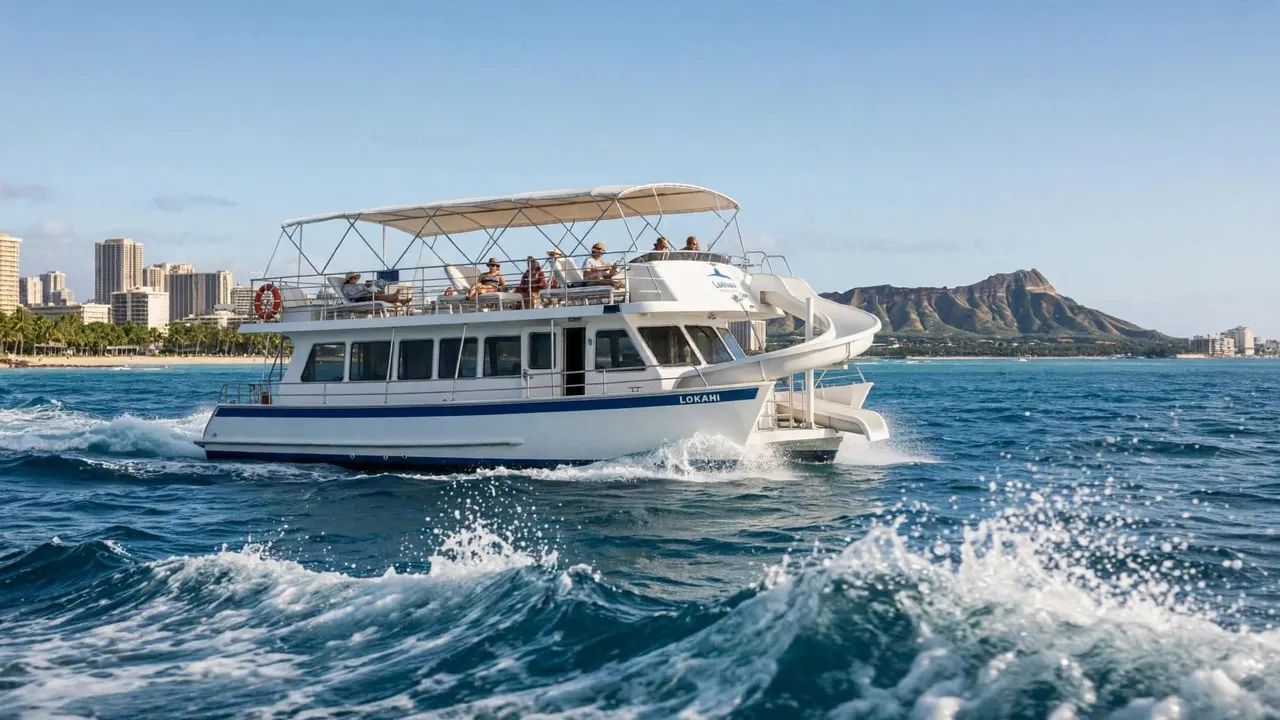
Your Waikiki boat tour can feel different beyond the harbor entrance, even when the beach looks calm. Living Ocean Tours departs from Kewalo Basin Boat Harbor, near Waikiki, where sheltered dock water doesn’t reveal every offshore condition.
A comfortable outing starts with preparation, a suitable boat, and clear communication with your crew. Start by understanding what affects the ride, then plan your seat, schedule, and snorkeling expectations.
Key Takeaways Before You Board
- A sunny beach forecast doesn’t tell you how wind, swell, and passing boat wakes will affect your route.
- The Lokahi’s SeaKeeper system helps reduce side-to-side roll, but it doesn’t remove all ocean movement or guarantee freedom from seasickness.
- Your comfort depends on preparation and seating as well as the boat. Tell the crew early if you feel nauseated, dizzy, or uneasy.
- Snorkeling depends on conditions at the site, so follow the crew’s water-entry instructions rather than assuming swimming will happen as planned.
What Choppy Water Means for Your Waikiki boat tour
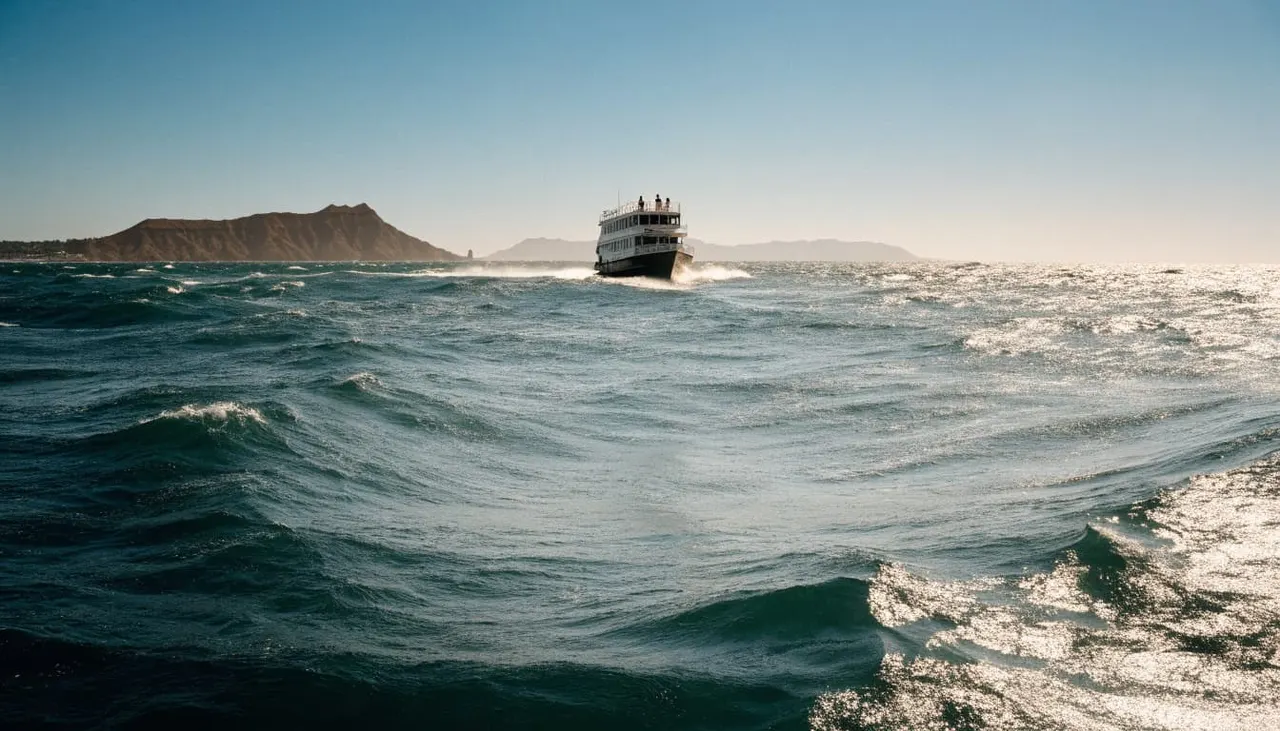
“Choppy” describes surface conditions, but it doesn’t tell you exactly how a particular vessel will ride. Wind, swell direction, speed, and your position aboard all matter.
Wind waves and swell affect the ride differently
Wind can create shorter surface waves, while ocean swell carries wave energy across longer distances. When they meet at different angles, the water can feel less predictable than it looks from shore.
Meanwhile, wakes from other vessels can add movement along a busy coastal route. Your captain accounts for these conditions when choosing course and speed.
You shouldn’t expect one fixed sensation throughout the outing. The ride can change as the boat turns, leaves sheltered water, or approaches a snorkeling stop. Conditions at the dock are only part of the picture.
Rolling and pitching are different motions
Roll is side-to-side movement. Pitch is the bow and stern moving up and down. Understanding the difference helps you ask useful questions about stabilization and seating.
A system that reduces roll doesn’t remove every motion caused by waves. Likewise, a roomy deck doesn’t automatically mean a motion-free ride.
If movement worries you, ask the crew where to sit before departure. A position near the vessel’s center often feels steadier than a far-forward seat. Let comfort guide your choice rather than choosing the bow for photos.
Check Marine Conditions, Not Just the Beach Forecast
Before leaving your hotel, check conditions for the water you’ll visit. A temperature-and-rain forecast gives you only part of the information.
Use the forecast for the relevant coastal waters
The National Weather Service’s Hawaiian Coastal Waters Forecast includes wind, seas, swell details, and weather information. Read the current forecast rather than relying on yesterday’s screenshot.
Different forecast zones describe different waters, so don’t apply a windward-shore forecast to a Waikiki departure without checking the route.
You also shouldn’t turn one wave-height number into a personal safety verdict. Vessel characteristics, wave direction, and local conditions affect the captain’s assessment. Contact the operator when you need advice about your specific departure.
Let the operator explain advisories and departure decisions
A Small Craft Advisory covers a marine zone. Conditions at one point may differ from the broader forecast, so an advisory needs context.
Ask whether your departure is operating and whether the planned activity may change. The operator can explain how the forecast relates to the vessel and route.
Don’t assume that another boat leaving the harbor means yours should follow. Different vessels and activities require different assessments. Your most useful answer comes from the team responsible for your outing, close to departure time.
Choose Comfort Features That Matter Offshore
For your Waikiki boat tour, ask about the assigned vessel rather than assuming every departure has identical equipment. Living Ocean Tours operates the Coral Kai and Lokahi.
Confirm stabilization, seating, and access
Both are custom-built, Coast Guard-inspected double-decker vessels with shaded seating, onboard restrooms, dry storage, and sturdy water-entry ladders. These features give you practical places to rest and organize belongings.
The Lokahi also has a SeaKeeper stabilization system that helps limit side-to-side roll. Confirm its assignment if stabilization matters to your group.
However, keep your usual motion-sickness precautions. No stabilizer removes every effect of wind, swell, speed, or passing wakes. Also, ask about steps and restroom access before booking if anyone has mobility concerns.
Ask how the crew supports your group
Living Ocean Tours describes itself as the only tour company with professional snorkel guides. For a first-time snorkeler, the useful questions concern the guidance you’ll receive before entry and while swimming.
Ask about mask checks, flotation, water-entry instructions, and support for different swimming abilities. You should understand the plan before deciding to enter.
You can browse the company’s Honolulu ocean tour options to choose an activity that fits your group. Then confirm vessel features and current departure arrangements directly.
Prepare Before Motion Sickness Starts
Your Waikiki boat tour will be easier to manage when you arrive rested and organized. Preventive choices are more useful than waiting until nausea becomes intense.
Eat lightly and discuss medication beforehand
Have a familiar, light meal before check-in, and drink water during the day. Avoid a heavy, greasy meal and skip alcohol before a snorkeling outing.
If you’re prone to motion sickness, talk with a doctor or pharmacist before traveling. Some preventive medicines cause drowsiness, and suitability differs for adults and children.
Follow the product directions and medical advice that apply to you, including timing. Don’t wait until boarding to work out which medication is appropriate or assume that someone else’s remedy suits your needs.
Pack for spray, sunshine, and a moving deck
Bring sun protection, secure sunglasses, and a light layer for the breeze. If you plan to snorkel, wear your swimsuit and bring a towel and cover-up.
Keep any needed medication accessible instead of burying it beneath other belongings. Store loose items where the crew directs, leaving walkways clear.
For families, organize children’s essentials before departure so you aren’t searching through bags while the boat moves. Check your confirmation for the meeting point and boarding instructions. You’ll depart from Kewalo Basin, not directly from Waikiki Beach.
What to Do When the Boat Starts Rocking
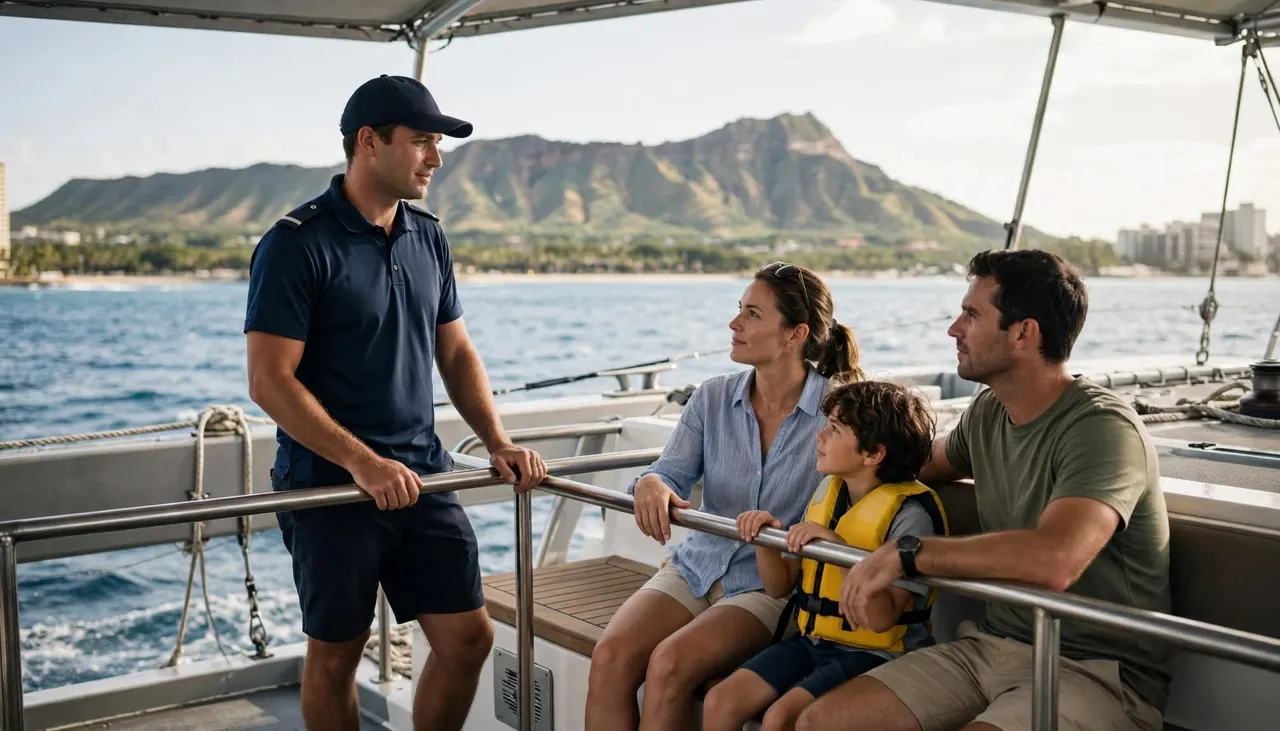
Stay seated when the crew asks, especially during turns or when crossing a wake. If you need to move, wait for guidance and use the handrails.
Double-decker boats offer different viewing areas, but stairs require attention. Keep one hand available for the rail, watch your footing, and avoid carrying a collection of loose belongings between decks.
If you begin feeling warm, dizzy, nauseated, or anxious, tell a crew member early. They can recommend a seating position and help you decide whether to rest.
Looking toward the horizon and getting fresh air may help. Put your phone away rather than reading messages or scrolling while your body adjusts to movement.
For children, stay nearby and explain crew instructions in simple language. Ask a crew member to repeat any announcement you missed.
A photo spot that feels manageable while you’re seated may be harder to use safely when you stand. Follow the crew’s instructions before changing position.
If you feel severely unwell, describe your symptoms clearly rather than assuming every problem is ordinary seasickness.
Snorkeling Requires a Separate Comfort Check
Feeling comfortable during the crossing doesn’t automatically mean you’re ready to swim. At the stop, listen to the briefing and assess how you feel.
Follow the entry plan instead of rushing
Wait for the crew’s instructions before approaching the ladder or swim platform. Check your mask fit and understand the entry and return procedures.
If you’re already nauseated, dizzy, or exhausted, tell the crew before entering. You may stay aboard while others snorkel rather than pushing through discomfort.
Once in the water, follow guide directions and stay aware of your surroundings. If you feel unwell, alert the guide and return with assistance as directed. Your goal is a comfortable swim, not using every available minute.
Give wildlife room, even when the water moves
Keep a respectful distance from Hawaiian green sea turtles. NOAA recommends staying at least 10 feet, or 3 meters, away in Hawaii.
Don’t touch, chase, or feed wildlife. Also, avoid standing on coral or reaching toward the reef to steady yourself.
Surface movement can make it harder to maintain your position, so follow your guide’s spacing instructions. Let animals approach or leave on their own terms. Observing without interference protects the encounter for your group and the marine life you’re there to see.
Leave Room for Weather-Related Changes
Before booking a Waikiki boat tour, ask what happens if weather prevents the planned activity. Understand the operator’s terms for delays, rescheduling, cancellations, and refunds before paying.
A departure delay, changed route, or adjusted water activity can be a sensible response to conditions. However, you should receive clear information about what the change means for your booking.
Keep the rest of your day flexible. Avoid scheduling an airport transfer or timed attraction immediately after the expected return.
For a broader view of available weather information, use the NWS Honolulu marine products. Then contact the operator for departure-specific guidance.
Clear expectations help you handle a change without guessing at the dock. They also give you time to decide whether the revised outing fits your family’s plans.
Frequently Asked Questions
Will a stabilized boat prevent seasickness?
A stabilizer can reduce rolling motion, but it doesn’t guarantee that you’ll avoid seasickness. Your sensitivity, seating position, and sea conditions still matter. Confirm the assigned vessel, prepare before departure, and tell the crew promptly if you feel uncomfortable.
Can you enjoy a Waikiki boat tour without snorkeling?
You can stay aboard while other guests snorkel, according to Living Ocean Tours’ guidance. Tell the crew your preference so you understand where to sit during the stop. You’ll still have coastal scenery and ocean air, although staying aboard doesn’t remove boat motion. Choose your activity around your comfort level rather than pressure to swim.
A Comfortable Ocean Day Starts With Realistic Expectations
Your Waikiki boat tour doesn’t need perfectly flat water to be rewarding, but comfort has limits. Choose suitable vessel features, prepare before boarding, and speak up when something feels wrong.
Let the crew assess conditions and guide your movements aboard and in the water. With realistic expectations and a flexible schedule, you can give Waikiki’s coastline your attention without forcing yourself through an uncomfortable experience.


