
Waikiki Boat Tour: What to Do During a Sudden Rain Shower
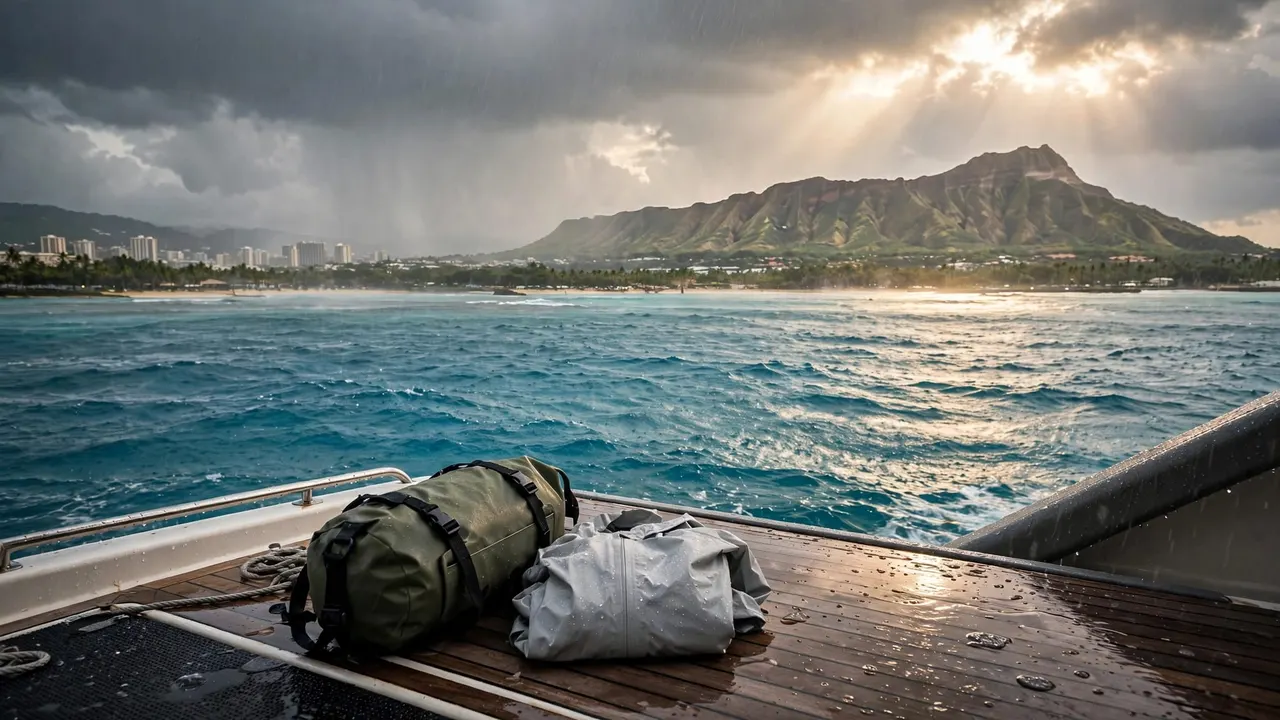
A passing shower doesn’t have to sink your ocean plans. On a Waikiki boat tour, rain matters less than the wind, swell, visibility, and the captain’s assessment of conditions beyond the harbor.
You can stay comfortable by packing for spray, listening carefully, and leaving room in your schedule for a route change or delay. A little flexibility helps you enjoy Waikiki’s coast even when the sky turns gray.
Key Takeaways
- Check the marine forecast before you leave your hotel, because rain alone doesn’t tell you how the water will feel.
- On any Waikiki boat tour, follow crew instructions before moving around wet decks or entering the water.
- Pack a light layer, secure footwear, reef-safe sunscreen, and a small dry bag for essentials.
- Let the captain make the final call on snorkeling, route changes, delays, or cancellations.
- Watch Hawaiian green sea turtles and other wildlife from a respectful distance. Never touch coral or marine animals.
When a Waikiki Boat Tour Meets Sudden Rain
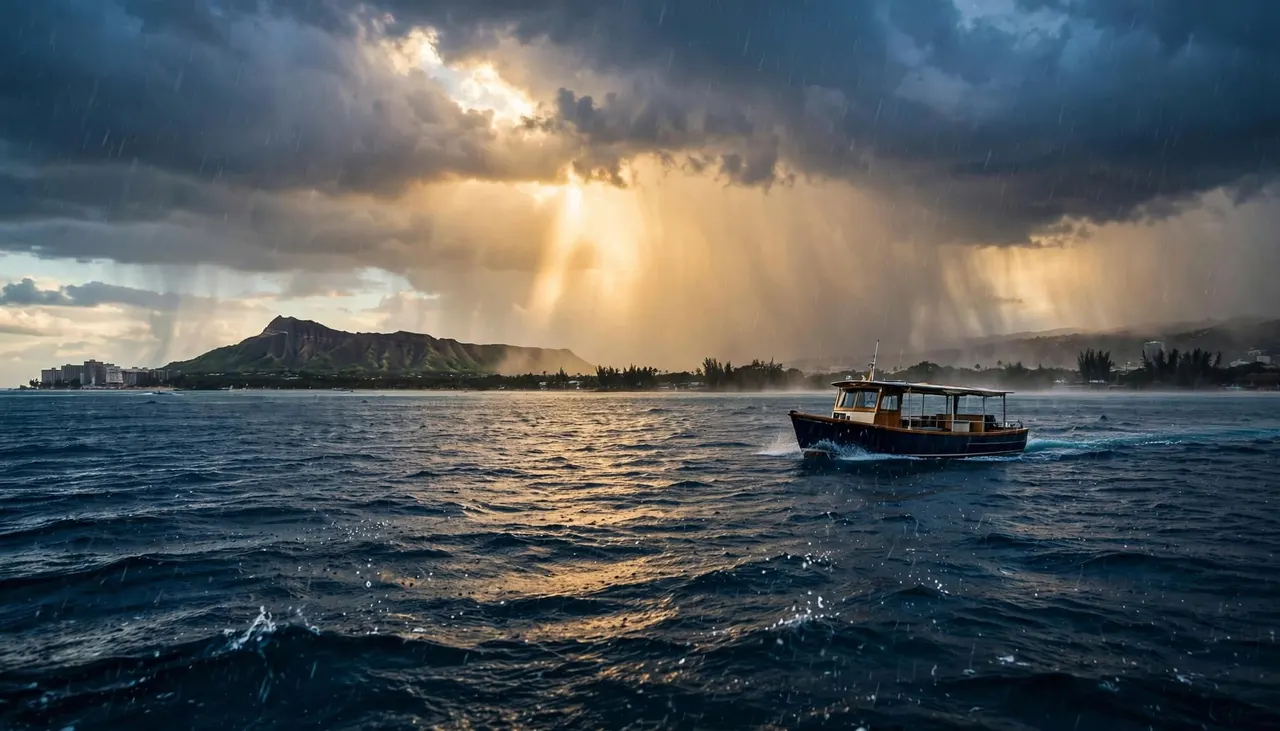
Rain can make the coastline look dramatic, with low clouds around Diamond Head and sunlight breaking through offshore. Still, your crew looks beyond the view. Wind, wave direction, swell period, currents, and visibility affect how safely the boat can travel and how comfortable you will feel.
A bright hotel balcony view can also be misleading. Kewalo Basin may look calm while the ocean outside the harbor has stronger wind or choppier water.
Check rain, wind, and seas together
Before you head to the harbor, look at the National Weather Service marine products, not only a phone weather app. Marine forecasts include conditions that matter offshore, including wind direction, wave height, and seas.
You can also review the current Oahu leeward waters forecast. A forecast that mentions isolated showers may still support a pleasant outing. However, stronger winds and rising seas can change the plan quickly.
Let the captain decide what happens next
A brief pause at the dock often means the crew is checking conditions outside the breakwater. That delay is better than rushing into an uncomfortable ride or a poor snorkel stop.
Keep dinner reservations, rideshares, and timed attractions flexible after your cruise. The captain may adjust the route, wait for a weather window, shorten a water activity, or cancel when conditions aren’t suitable.
Rain is one data point. Offshore wind, swell, visibility, and safe water entry matter more than whether droplets are hitting the deck.
What to Do During the First Few Minutes of Rain
A sudden shower can make decks slick, especially around stairs, railings, and water-entry areas. Stay seated or hold a railing while the boat is moving, and avoid rushing to the other side for a photo.
Your crew may ask you to remain in place while they assess the weather. Keep bags, sandals, water bottles, and loose snorkel gear out of walkways. A clear path matters when passengers need to move safely between decks.
Protect the items that can’t get wet
Put your phone, wallet, room key, medication, and spare clothing in a small dry bag before departure. Close the bag fully and store it where the crew directs you.
If you bring a camera, use a strap and secure it before the rain starts. Don’t stand near the rail with an unsecured device when the boat is rolling or changing speed.
Tell the crew if you need help
Speak up early if you feel cold, dizzy, seasick, or unsure about moving around the boat. You should also ask questions about flotation, ladder use, emergency communication, and the day’s revised plan.
A rain shower can make first-time snorkelers nervous. Clear guidance from the crew gives you a better sense of whether to stay aboard or prepare for the water.
Decide Whether Snorkeling Still Makes Sense
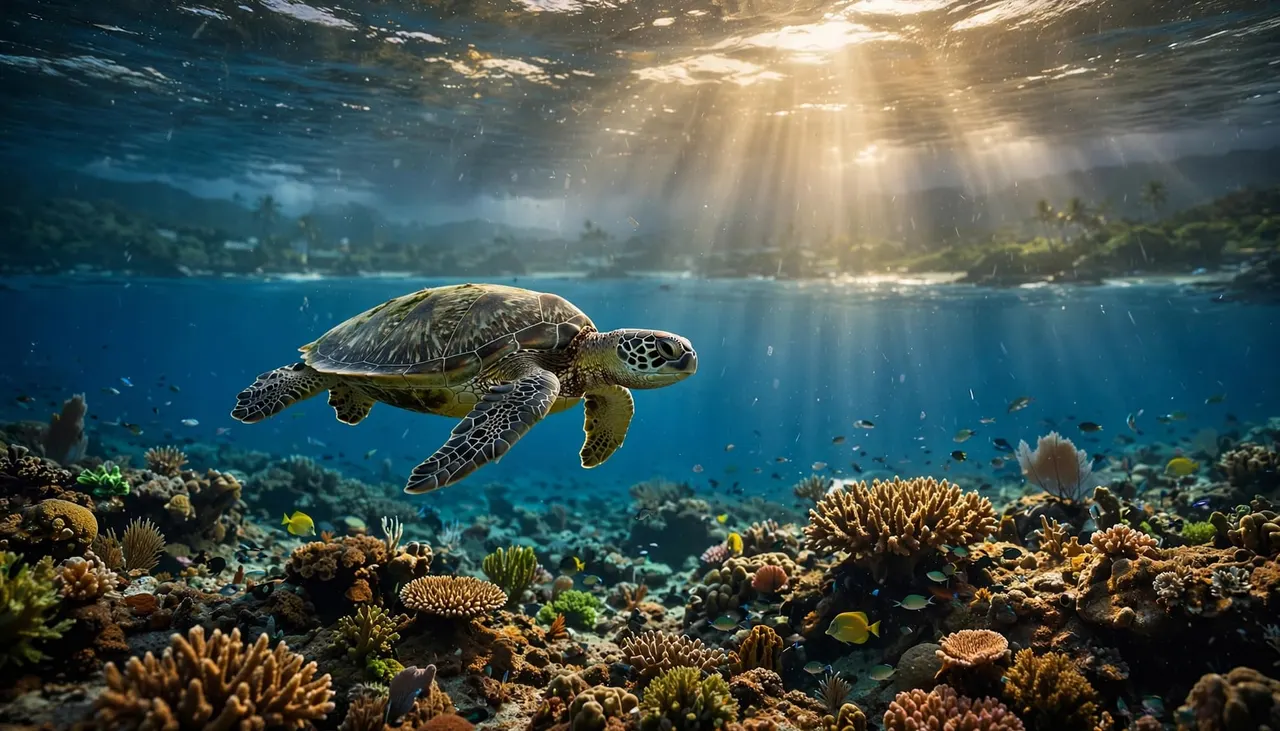
Light rain doesn’t automatically make snorkeling unsafe. Yet rain can reduce visibility, and wind-driven chop can make water entry harder. Your captain and professional guides will decide whether the site remains appropriate.
Don’t pressure yourself to enter the water because you packed a swimsuit. You can enjoy the coastal ride, watch the conditions, and choose the level of activity that feels right for you.
Follow the water-entry briefing
If the crew approves snorkeling, listen to the full briefing before stepping toward the ladder. Ask for help with your mask, fins, flotation, and entry technique if you need it.
Living Ocean Tours is the only tour company with professional snorkel guides. That direct in-water support helps families, beginners, and experienced swimmers feel more prepared when conditions are changing.
At the reef, float calmly and keep your fins clear of coral. Observe Hawaiian green sea turtles without touching, chasing, or blocking their path.
Know the weather policy before you book
For the Turtle Canyon snorkel excursion, heavy rain or unsafe conditions may lead to an operator cancellation. If you booked directly and the operator cancels for weather, you can request a full refund or choose a new date when space is available.
Provide a text-capable phone number when you book, then watch for updates by email and text. You should also review the current Hawaiian coastal waters forecast on the morning of your trip.
When Turtle Canyons is the experience you want most, reserve a date with enough room in your vacation plans for a weather adjustment. You can CHECK AVAILABILITY before your preferred departure fills.
Choose a Boat Built for Changing Conditions
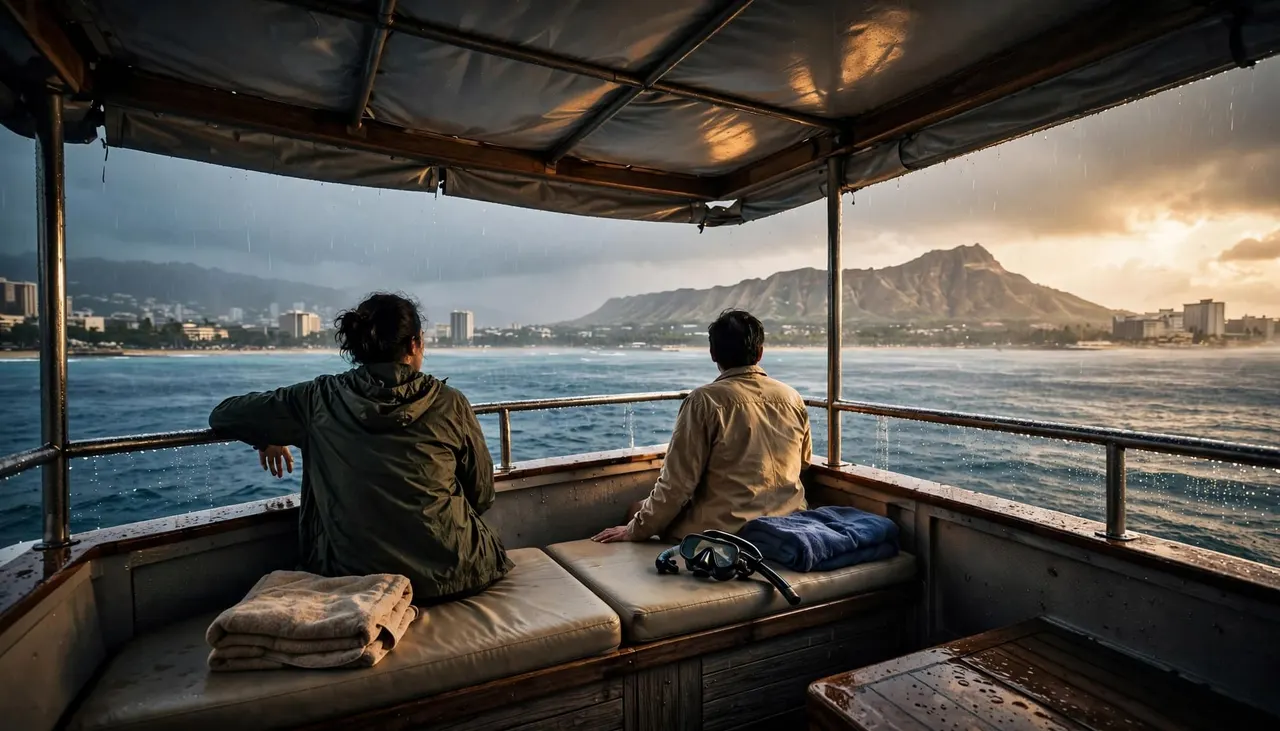
Living Ocean Tours departs from Kewalo Basin Boat Harbor, minutes from Waikiki. Its Coast Guard-inspected double-decker boats, the Coral Kai and Lokahi, offer shaded seating, restrooms, dry storage, and heavy-duty ladders for water entry and exit.
You can browse its Waikiki boat tours for guided snorkeling, wildlife cruises, and scenic time along the coast. Those practical boat features matter when a shower arrives and you need a place to sit, store gear, and wait for crew direction.
Look for practical comfort features
The Lokahi has a SeaKeeper stabilization system that helps reduce side-to-side roll. It can’t remove all ocean movement, but it can make the ride feel steadier when water conditions aren’t glassy.
You can learn more about the Lokahi and Coral Kai tour boats, including their deck layouts and onboard amenities. Choose a comfortable seat, keep a layer close by, and use railings when the crew says it is safe to move.
Consider a water-free outing
If weather makes snorkeling less appealing, a scenic ride can still be a memorable part of your Waikiki boat tour. You can watch the shore, scan for seabirds, and take in Diamond Head without entering the water.
The Deluxe Waikiki snorkeling cruise travels from Kewalo Basin toward Diamond Head and may visit Rainbow Reef when conditions allow. Wildlife sightings are always possible, but never guaranteed.
Pack for Sun, Spray, and a Passing Shower
The smartest rain plan starts before you leave your room. Wear a swimsuit you can move in, plus footwear with grip for the dock. Skip oversized hats and loose bags that can blow or slide across the deck.
Bring only what you need:
- A light rain layer or cover-up for a cooler ride back to shore.
- Reef-safe sunscreen, sunglasses with a strap, and a secure hat.
- A compact dry bag for your phone, room key, medication, and small valuables.
- Water


