
Boat Tour Waikiki: Mobility Scooter Questions Before You Book
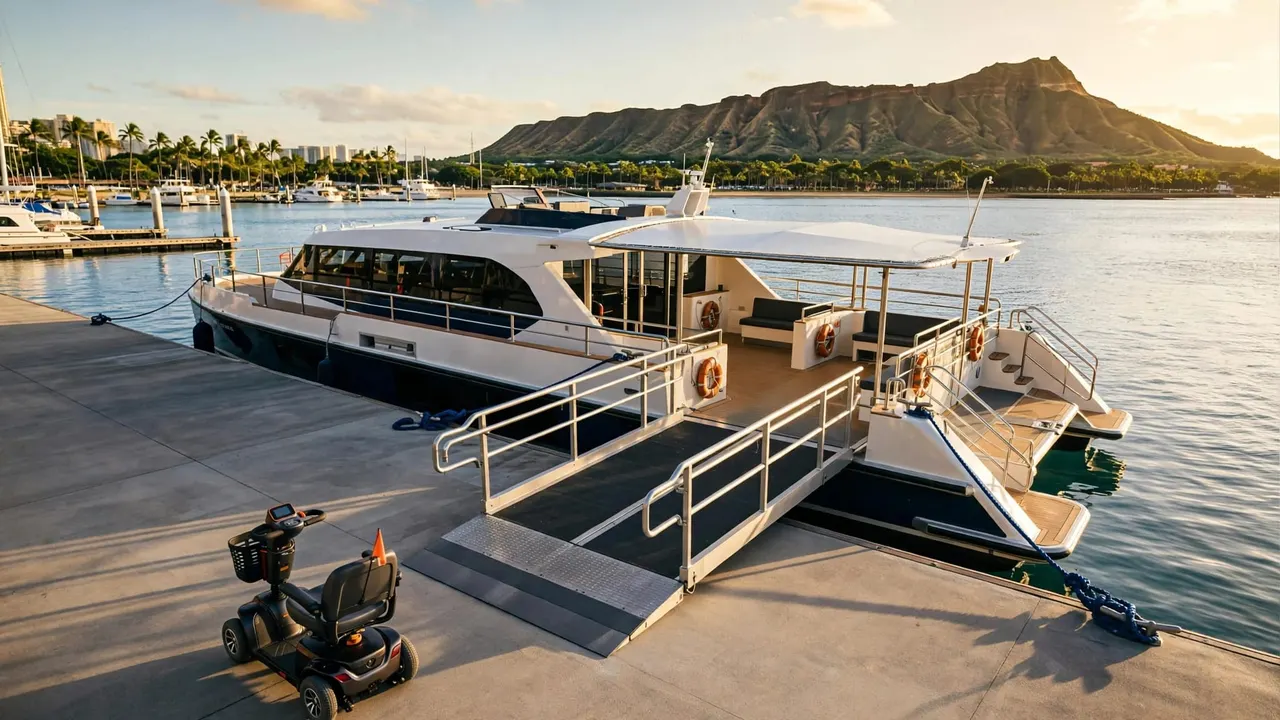
A mobility scooter can change how you explore Oahu, but it also changes what you need to confirm before a Waikiki boat tour. A harbor path, a moving gangway, a doorway, and a boat’s deck layout all matter more than a scenic vessel photo.
Living Ocean Tours departs from Kewalo Basin Boat Harbor near Waikiki with snorkeling, wildlife, sunset, fireworks, and seasonal whale-watching outings. Before you reserve, get clear answers about your scooter and the exact boarding process.
Key Takeaways for Scooter Users
- Treat every Boat Tour Waikiki booking as an individual access question, even when the operator has roomy decks or onboard restrooms.
- Ask about the full route, starting with parking and ending at your seat on the vessel.
- Share your scooter’s folded and unfolded dimensions, weight, battery type, and whether you can transfer to a regular seat.
- Get the boarding, storage, and restroom plan in writing before you pay.
- Choose a sightseeing cruise if entering the water or climbing a swim ladder isn’t realistic for your mobility needs.
- Never assume a crew can lift, carry, secure, or operate a mobility scooter unless the company confirms that plan in advance.
Why a Mobility Scooter Needs Its Own Booking Plan
A mobility scooter is different from a foldable walker or a manual wheelchair. It has a larger turning radius, added weight, a battery, and a need for secure parking while the boat moves.
Several third-party listings describe some Living Ocean Tours products as “not wheelchair accessible.” That language does not answer every scooter question, but it does mean you should confirm the exact vessel and boarding route before booking. A general warning about small boats is also common across Oahu, because some trips require guests to step down into the vessel and may not accommodate wheelchairs or scooters. Review Oahu boat-access considerations as a reminder to ask the operator directly.
Amenities do not prove scooter access
Living Ocean Tours uses Coast Guard-inspected double-decker vessels, the Coral Kai and Lokahi. Both offer shaded seating, onboard restrooms, dry storage, and sturdy ladders for water entry.
Those comforts can improve your time offshore. However, they do not confirm that a scooter can cross the gangway, fit through an entry point, turn on deck, or reach a restroom.
Boarding is the make-or-break moment
The dock-to-boat gap can change with tide, wake, and vessel movement. A ramp that looks manageable from shore may still have an angle or surface that does not work for your specific scooter.
Ask whether you must step onto the boat, whether you can remain seated on your scooter, and whether the scooter can travel onboard. Do not rely on a verbal “it should be fine.”
A scooter-friendly harbor route means little if the final step from dock to vessel requires a transfer that you cannot safely make.
Start at Kewalo Basin Boat Harbor
Living Ocean Tours lists its departure point at Kewalo Basin Boat Harbor, 1125 Ala Moana Boulevard, Slip B-01, Honolulu, HI 96814. The harbor is close to Waikiki, yet the last part of your trip requires more planning than a rideshare drop-off.
Arrive early enough to park, locate the slip, use the restroom if needed, and speak with the crew before other guests begin boarding. The company recommends confirming your booking details, and about 30 minutes early gives you useful time at the harbor.
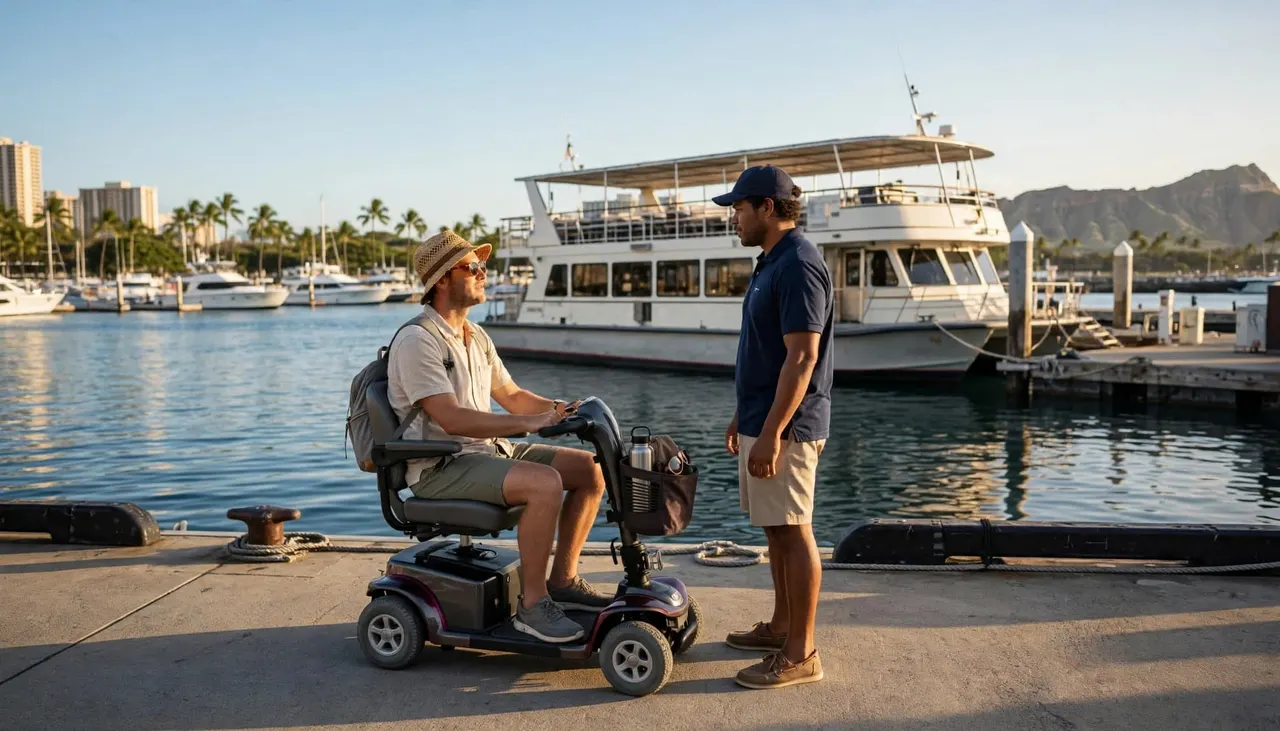
Ask about the route from vehicle to dock
Find out where accessible parking or drop-off is located in relation to Slip B-01. Ask whether the route includes curbs, uneven pavement, steep grades, loose gravel, narrow gates, or crowded dock areas.
A companion can help with bags and directions, but don’t plan on them lifting or controlling the scooter unless that is normal and safe for both of you. Bring only essentials in a small, secure bag so your lap, basket, and deck pathways stay clear.
Confirm the gangway and dock conditions
Ask the operator to describe the gangway surface, width, slope, handrails, and transitions at both ends. Also ask whether conditions change substantially with the tide or the vessel assigned that day.
You need a straightforward answer about whether the scooter can cross under typical conditions. If the answer depends on weather, tides, or the specific boat, ask what backup options are available before you arrive.
Mobility Scooter Questions to Ask Before Paying
A short email can prevent an expensive and disappointing morning at the harbor. Give the reservations team the facts they need to assess your request.
Include the make and model if you have it. If you do not, measure the scooter at its widest point and note its total length and height. Mention whether it folds, breaks down into lighter pieces, or remains assembled.
Questions about getting aboard
Ask these questions in one message, then save the response with your booking confirmation:
- Can my mobility scooter travel from the dock onto the assigned vessel?
- Will I need to transfer from my scooter to a fixed seat before boarding?
- Are any steps required between the dock, gangway, boat entrance, seating area, or restroom?
- Can a companion stay with me during boarding if I need extra time?
- What happens if sea conditions make the boarding gap or gangway angle less suitable?
Avoid vague requests for “accessible seating.” Explain what you can and cannot do safely. That gives the operator a real basis for answering.
Questions about storage and battery safety
If the scooter cannot remain beside your seat, ask where it will go. Confirm whether storage is protected from spray, whether the crew expects it to fold, and whether the area stays clear during the cruise.
You should also ask whether there is a weight limit, battery restriction, charging policy, or tie-down procedure. Do not expect crew members to lift, move, or secure your device unless they have agreed to that plan.
Living Ocean Tours asks guests with mobility needs to discuss device dimensions, batteries, storage, and transfer expectations ahead of time. Their boat accessibility information is a useful starting point, but your own confirmation remains essential.
Choose a Waikiki Boat Tour That Fits Your Mobility
The best outing depends on whether you want to snorkel, relax above the water, see the sunset, or look for winter whales. For scooter users, the activity level after boarding matters as much as the boarding process itself.
Living Ocean Tours offers Waikiki snorkeling and boat tours aboard its double-decker vessels. The Coral Kai has broad open-deck viewing space. The Lokahi includes shaded seating, dry storage, restrooms, a cash bar, and a SeaKeeper stabilization system designed to reduce boat roll.
Turtle Canyons requires a realistic transfer plan
The Turtle Canyons Snorkel Excursion lasts about two hours, with roughly one hour in the water. Living Ocean Tours reports a 95% turtle-sighting success rate, although wildlife sightings always depend on conditions and animal behavior.
The company is the only tour company with professional snorkel guides. You receive direct help with gear fit, buoyancy, reef etiquette, and water entry. Still, you must be able to manage the swim platform and ladder if you plan to snorkel. Confirm that your scooter plan works before you book a turtle-focused departure.
The deluxe cruise adds more activity
The Deluxe Waikiki Snorkeling and Wildlife Cruise runs about 2.5 hours and visits a less-crowded reef. It also includes a waterslide, water trampoline, and floating lily pad.
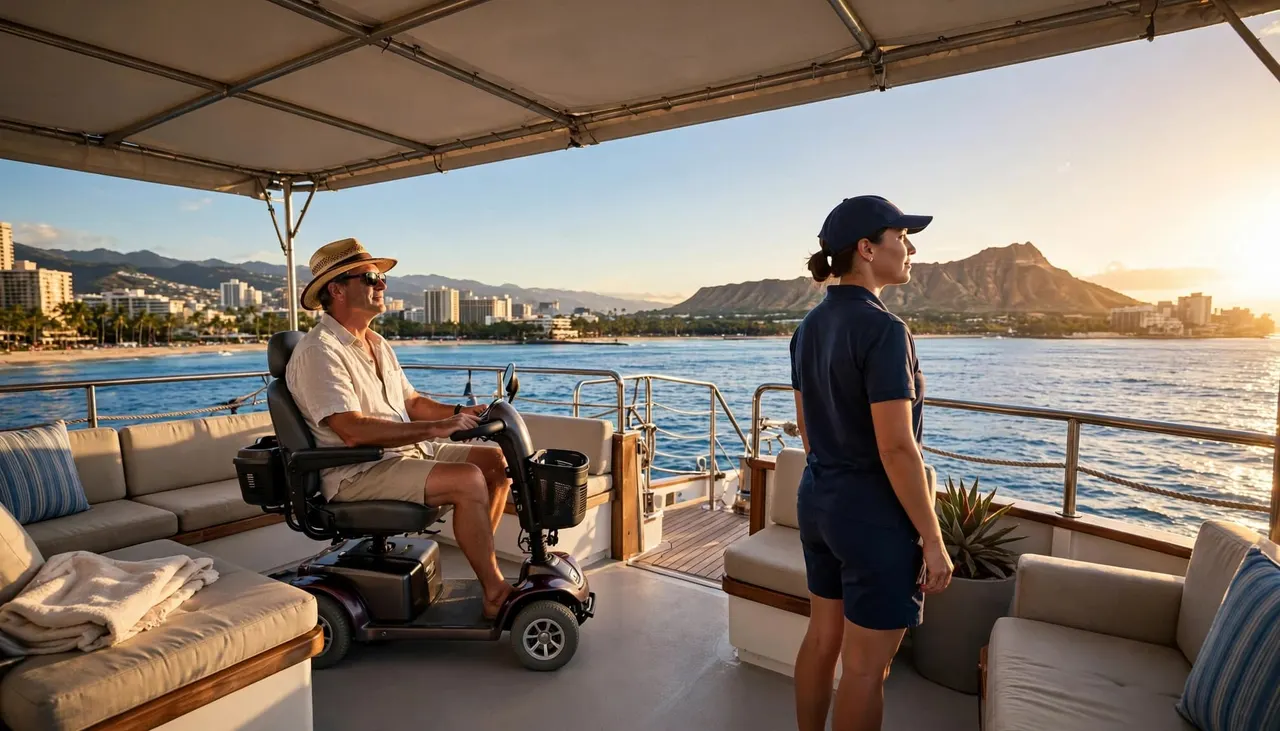
That makes it a strong choice for active families, yet these features also mean more guests may be moving around wet deck areas. If you will remain aboard while others swim, ask about a comfortable seating location, clear paths to the restroom, and scooter storage away from the activity zone.
Sightseeing Cruises May Be the Better Match
A cruise that stays above water can remove the need to manage fins, a swim platform, and a ladder. It does not remove the need to confirm scooter boarding, but it may better suit your day once you are onboard.
The main comfort questions remain the same: Can you board, reach your seat, use a restroom, and keep your scooter secure? Ask whether the crew can reserve a practical location after they have confirmed the vessel.
Waikiki sunset views without the swim ladder
The Waikiki Sunset Cruise lasts about 90 minutes. It offers time to watch Waikiki, Diamond Head, and the changing evening light without planning a water entry.
Because you will spend the entire trip on deck, confirm shade availability, seating access, and your route to the restroom. A light layer can also make the ocean breeze more comfortable after sunset.
Friday fireworks need an evening comfort plan
The Friday Night Waikiki Fireworks Cruise is a one-hour scenic ride toward the Hilton Hawaiian Village area, where the fireworks launch.
Night departures can involve lower light at the dock and cooler wind on the water. Bring a light jacket, secure your belongings, and ask how the crew handles scooter boarding after dark.
Whale Watching Brings Different Considerations
Living Ocean Tours runs seasonal humpback whale-watching trips from January through March. The trip lasts about 90 minutes, and the open-water route can bring more noticeable movement than a nearshore cruise.
The Waikiki whale watching tour gives you time to scan the horizon for humpbacks with views of Waikiki and Diamond Head. If motion affects you, ask whether the Lokahi is scheduled and where you can sit closest to the vessel’s center.
The SeaKeeper system can reduce roll, but it does not make the ocean motionless. Pack any doctor-approved motion-sickness medication, eat lightly beforehand, and tell the crew early if you need to sit down.
Make Your Day at the Harbor Easier
Bring a charged phone, a small bag, sun protection, water if allowed, and any medication you need during the cruise. Keep a light layer within reach because the breeze can feel cooler once the boat leaves the harbor.
Wear footwear with grip for the dock. Wet surfaces, ropes, and moving vessels require patience, even when the water looks calm. Keep the boarding area open and wait for direct crew instructions.
If you are traveling with family, designate one person to handle bags and another to stay near you. That leaves you free to focus on the gangway, your scooter, and the crew’s directions.
Your confirmation should include the departure time, harbor location, assigned meeting point, contact number, and the access plan you discussed. If any part is unclear, call again before leaving your hotel.
FAQ: Mobility Scooters and Boat Tours in Waikiki
Can I bring a mobility scooter on a Waikiki boat tour?
You can only bring one if the operator confirms that your exact scooter can travel from the dock onto the assigned boat and be safely stored or positioned onboard. Do not assume a scooter is allowed because a boat has open decks or restrooms.
Can I snorkel if I use a mobility scooter?
You may be able to snorkel if you can safely transfer, manage the required steps, use the swim platform, and climb the ladder back aboard. The scooter itself does not enter the water. Discuss your mobility needs with the operator before booking a snorkel tour.
Should I choose a sunset cruise instead?
A sunset cruise may fit better if you want ocean views without a water entry. You still need to confirm your boarding and seating plan, but you will not need fins, a swim ladder, or a wet return to the deck.
A Confident Boat Tour Waikiki Booking Starts With Details
A memorable boat day begins with an honest access conversation, not a guess at the dock. Confirm the harbor route, gangway, transfers, scooter storage, seating, and restroom access before you reserve.
When you have a clear plan, you can focus on the Pacific views, fresh air, and the kind of Waikiki time that feels relaxed rather than rushed.


