
Waikiki Boat Tour: What Happens When the Rudder Turns
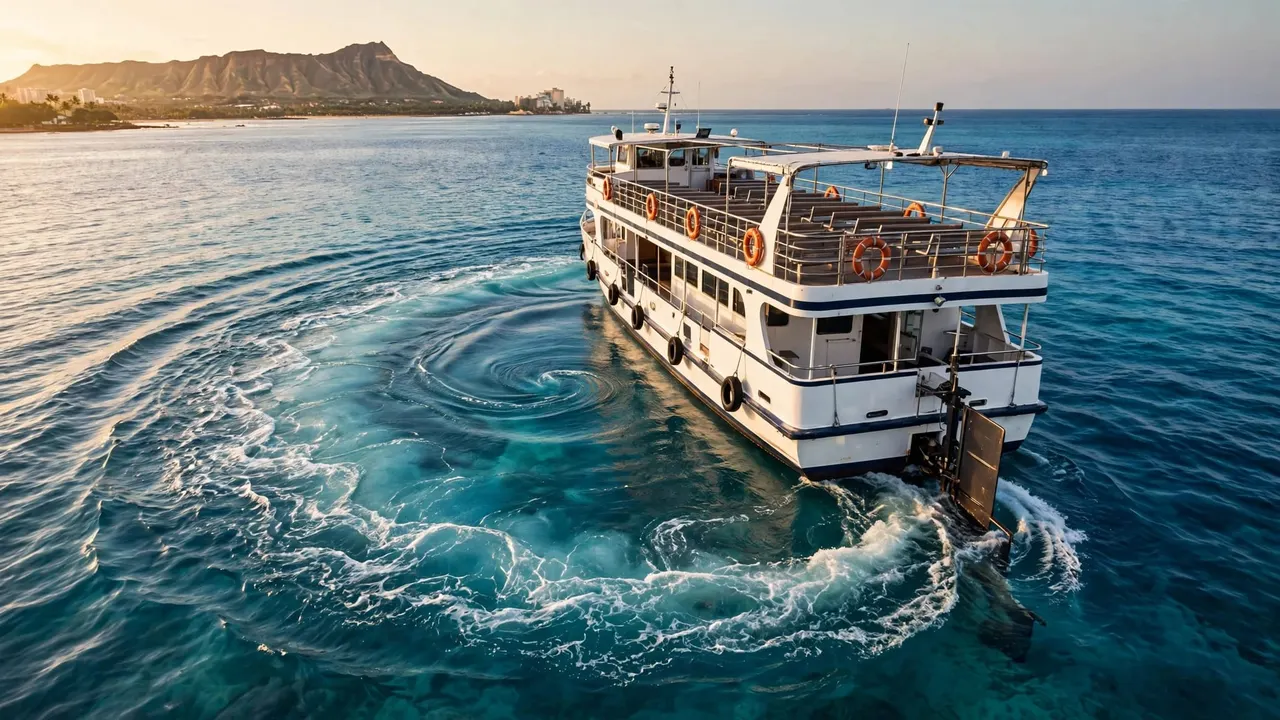
A smooth turn can feel almost effortless from the deck, yet a lot happens beneath the waterline. On a Waikiki boat tour, the captain uses the rudder, engine power, water movement, and local conditions to guide the boat safely along Oahu’s coast.
Living Ocean Tours departs from Kewalo Basin Boat Harbor, minutes from Waikiki, on Coast Guard-inspected double-decker vessels built for comfort and clear ocean views. You can relax with a crew that knows these waters, and if you snorkel, you also get the only tour company with professional snorkel guides.
Once you understand what the rudder does, every gentle curve past Diamond Head or toward Turtle Canyons becomes more interesting.
What a Rudder Does on a Waikiki Boat Tour
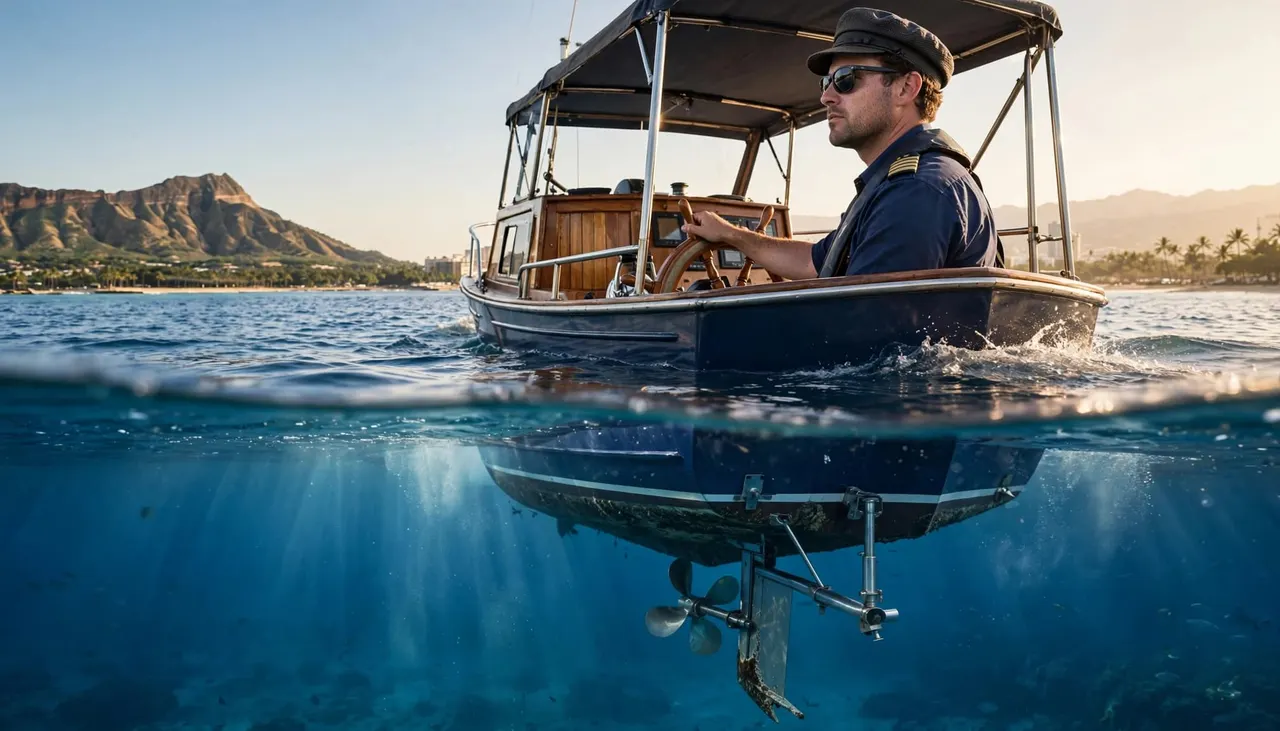
The rudder is a flat blade near the stern, usually behind the propeller. When the captain turns the wheel, a steering system angles that blade to port or starboard.
As water passes across the angled rudder, the rudder redirects that flow. The redirected water creates sideways force at the stern, which swings the boat into its new heading.
The stern moves first
If a captain commands a right turn, the rudder shifts to direct water in a way that pushes the stern left. The bow then arcs right through the water.
You may notice the turn gradually rather than instantly. A passenger boat carries momentum, and the captain avoids abrupt movements that could make the ride uncomfortable.
The wheel is not the rudder
The wheel controls the rudder through cables, hydraulics, or electronic systems. Therefore, turning the wheel changes the rudder angle, but the boat still needs water moving past that blade before it can respond well.
That is why boats steer more decisively while underway than while drifting. Even then, a skilled captain uses small wheel inputs instead of cranking hard into every turn.
Propeller Wash Gives the Rudder Its Bite
Forward motion sends water along the hull, but the propeller adds a powerful stream of water behind the boat. This propeller wash hits the rudder directly.
With the engine engaged, the rudder can work even before the boat gains much speed. That extra flow helps a captain make controlled adjustments when leaving the harbor or lining up for a mooring.
Why engine speed matters
More throttle usually means more water moves across the rudder. As a result, the rudder can create more turning force.
However, more power is not always the right answer. Near docks, swimmers, reefs, or marine life, a captain uses minimal power and allows time for the boat to answer the helm.
A rudder does not pull the bow around. It redirects water at the stern, and the boat’s momentum carries the bow through the turn.
On a Waikiki boat tour, this patient handling makes the ride feel calm even when the boat changes course around a point, a floating object, or another vessel.
Why You Feel a Turn on Deck
You may feel your body lean slightly outward during a curve. That sensation comes from inertia. Your body wants to keep moving in the original direction while the boat changes its path.
A well-planned turn feels gradual because the captain considers speed, sea conditions, passenger movement, and available space. The boat’s hull also matters. Wider vessels with a stable design tend to feel different from narrow, fast-moving craft.
Where you sit changes the sensation
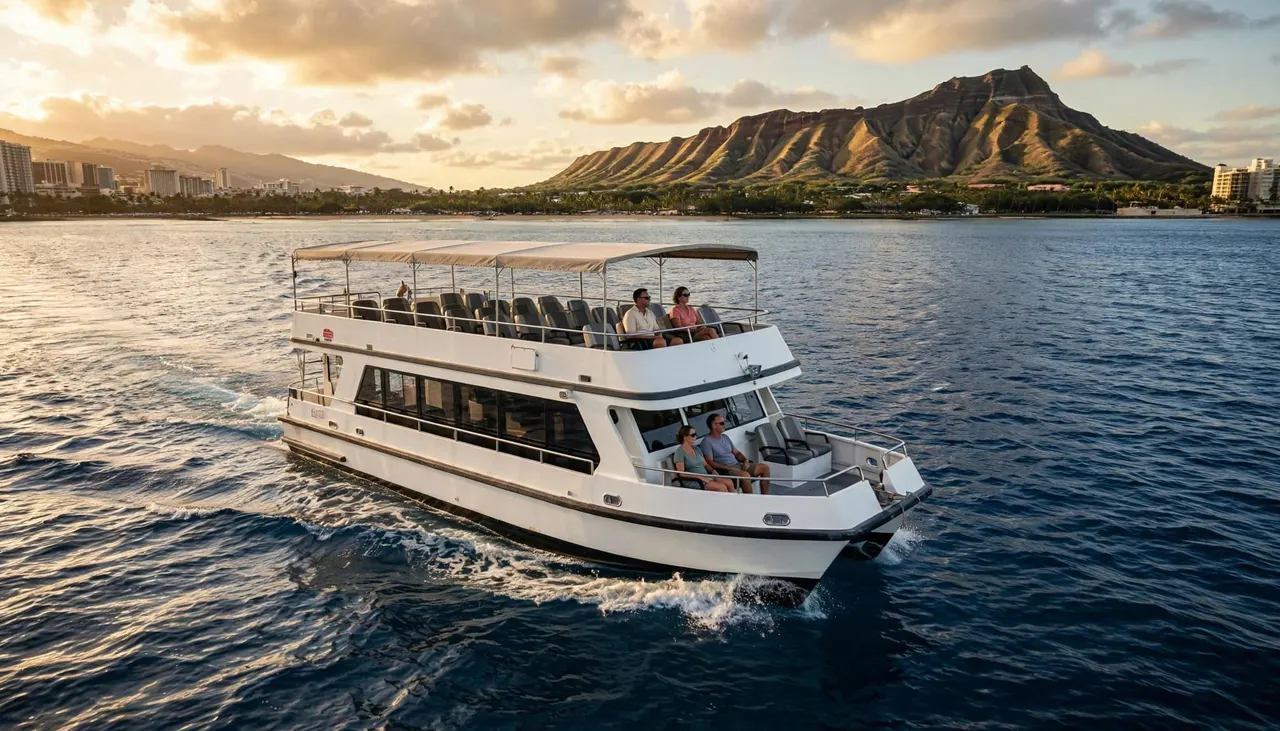
Seats near the stern can make you more aware of propulsion and small steering changes. On an upper deck, you may notice the boat’s gentle roll more clearly because you sit farther above the waterline.
Still, comfortable seating, shaded areas, and a captain’s measured handling make a major difference. Living Ocean Tours’ Lokahi also has a SeaKeeper stabilization system, which reduces rolling motion and helps many guests feel steadier underway.
Low-Speed Steering Takes More Skill
A rudder needs moving water to create force. At slow speeds, the boat has less flow over the rudder, so it responds more slowly to a wheel turn.
Harbor maneuvering requires close attention because the captain balances engine thrust, rudder angle, wind, and current. The boat may pivot differently in reverse, and reverse steering can feel less predictable than forward motion.
Wind can move the boat before the rudder can
A breeze catches the high sides of a double-decker vessel. Meanwhile, current can carry the hull sideways even when the rudder points straight.
Captains plan for both forces before approaching a dock. They leave room, use short controlled bursts of power, and avoid rushing a maneuver. You may hear a change in engine sound or see a small correction at the wheel, but the goal remains the same: a smooth, precise arrival.
Ocean Swell Changes the Captain’s Approach
The waters off Waikiki often look inviting and bright, yet the Pacific is always in motion. Wind chop, long-period swells, wake from other boats, and currents can all influence how a vessel turns.
A captain reads the surface before committing to a course. A visible line of darker water may show current. A sequence of swells can signal that the boat should cross at a different angle. Those decisions protect comfort and maintain safe spacing from shoreline features.
Small corrections work better than big ones
A captain rarely holds the rudder hard over for long. Instead, they begin a turn, watch the boat’s response, then ease the rudder toward center as the bow reaches the desired heading.
This prevents oversteering. It also helps keep drinks steady, snorkel gear secure, and guests comfortable as the boat travels along the coast.
For an easy introduction to responsible boat handling, you can also review BoatUS guidance on wind and current at low speed. The principle is simple: water and wind keep affecting the vessel until it is safely secured.
Careful Turning Protects Waikiki’s Marine Life
A tour boat’s route should respect the ocean as a living habitat. Captains reduce speed and make deliberate course changes when wildlife appears near the surface.
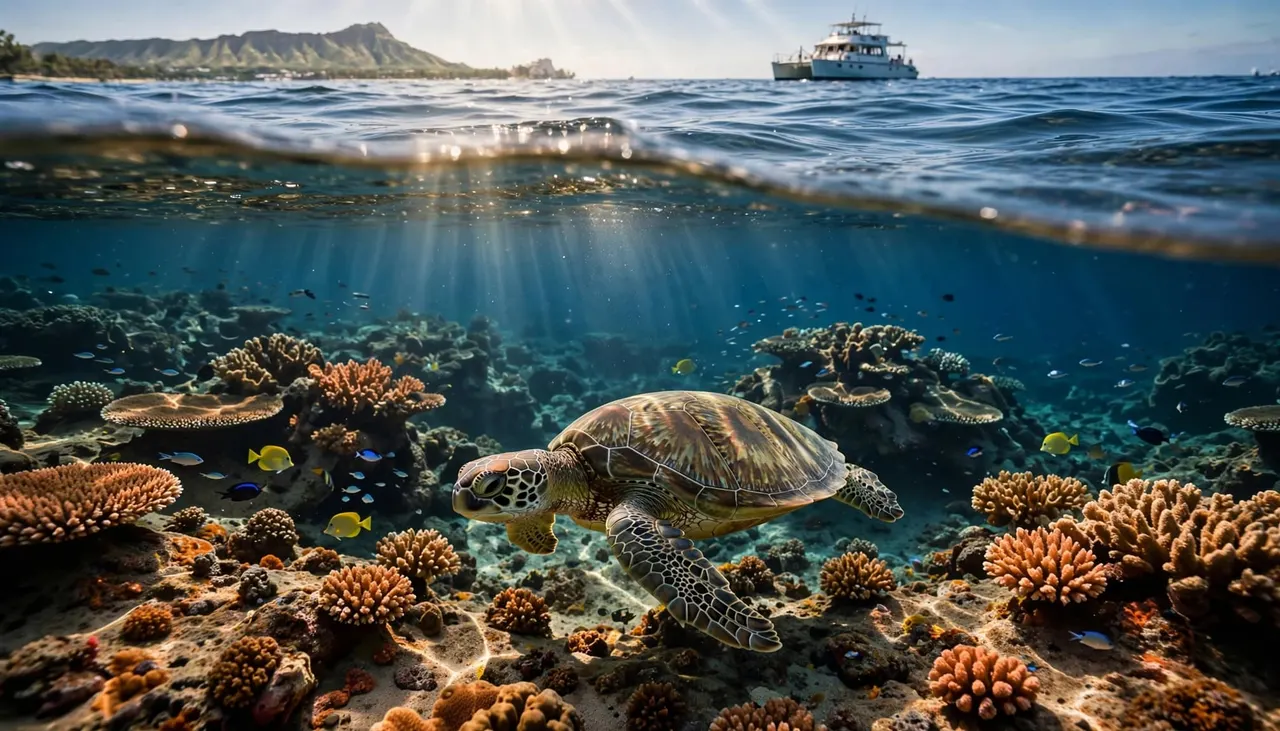
That care matters around Hawaiian green sea turtles, dolphins, and seasonal humpback whales. Boats should never crowd animals, cut across their path, or turn wildlife viewing into a chase.
Observe wildlife without approaching it
The best turtle encounter happens when you give the animal space to behave naturally. When you snorkel, keep your hands to yourself, avoid blocking its route, and let your guide set the pace.
NOAA’s Hawaii wildlife-viewing guidance advises you never to touch, chase, or feed protected marine animals. That standard applies from the boat deck to the reef.
During whale season, captains also plan wide, respectful turns. NOAA’s marine life distance guidelines help keep boaters and wildlife safe.
How a Good Captain Plans Each Turn
You might only see the captain turn the wheel, but several choices happen at once. They scan ahead, check nearby boats, judge wave direction, and select a speed that fits the moment.
Before the boat enters a turn, the captain considers these practical factors:
- The boat’s speed, momentum, and available turning room.
- Wind direction and current near the hull.
- Swell direction, which can affect the ride during the curve.
- Other vessels, swimmers, floating debris, and wildlife.
- The comfort of guests who may be walking, taking photos, or preparing to snorkel.
Clear communication also helps. Crew members may ask you to remain seated during a maneuver or wait before moving toward the ladder. Those simple requests give the captain and crew room to manage the boat safely.
Snorkel Trips Show Rudder Control at Work
A snorkel cruise combines scenic travel with careful positioning. The captain must approach the reef area slowly, select a safe place to stop, and keep the vessel clear of sensitive coral.
The Turtle Canyon snorkeling tour heads along the Waikiki coast toward a reef known for Hawaiian green sea turtles. Once the boat arrives, professional snorkel guides provide instruction and support, which is especially reassuring if you are snorkeling for the first time.
The captain’s controlled approach gives everyone a safer entry point. Then, your guide helps you enjoy the reef while respecting the turtles’ space.
You can also CHECK AVAILABILITY for a Turtle Canyons outing that fits your Waikiki schedule.
A Stable Ride Lets You Enjoy the View
The rudder handles direction, while the boat’s hull and stabilization features affect how the ride feels. On a spacious double-decker vessel, you have room to spread out, take in Diamond Head, and watch the color of the water change beyond the shoreline.
The Deluxe Waikiki snorkeling and wildlife cruise adds a less-crowded reef experience, a waterslide, a water trampoline, and a floating lily pad. It is a strong match for water-loving families and active couples who want more time to play between reef views.
Prepare for the best time on board
Eat a light meal before departure if you are prone to motion sickness. Look toward the horizon while underway, drink water, and choose a lower-deck seat near the boat’s center if you want the least motion.
Bring reef-safe sunscreen, a towel, and a secure strap for your sunglasses. Most importantly, listen to the crew’s safety briefing before entering the water.
For a family-friendly day on the water, you can CHECK AVAILABILITY for the deluxe cruise.
Sunset and Whale Cruises Need Patient Steering
Evening cruises reveal a different side of boat handling. As the sun lowers, visibility changes, harbor traffic shifts, and the captain maintains careful awareness of lights, sea conditions, and nearby vessels.
On a Waikiki sunset cruise, a gentle turn can open a wide view of the shoreline as the sky turns orange, pink, and gold. You can settle into the scenery because the crew handles the details of safe navigation.
Winter brings another reason for slow, thoughtful maneuvering. A Waikiki whale watching tour gives you a chance to look for humpbacks from January through March. Humpbacks are generally present in Hawaiian waters from November through May, according to the Hawaiian Islands Humpback Whale National Marine Sanctuary.
Final Thoughts on Rudders and Waikiki Boat Rides
A rudder looks simple, but it guides every graceful change of direction you feel offshore. Its effect depends on water flow, engine power, hull momentum, weather, and the judgment of the captain at the helm.
When you board a Waikiki boat tour, look past the wheel for a moment. Beneath the stern, that modest blade helps guide you toward reef time, wildlife sightings, and a better view of Oahu’s coast with care and control.


