
Waikiki Boat Tour Tripod Tips for Safe Photos
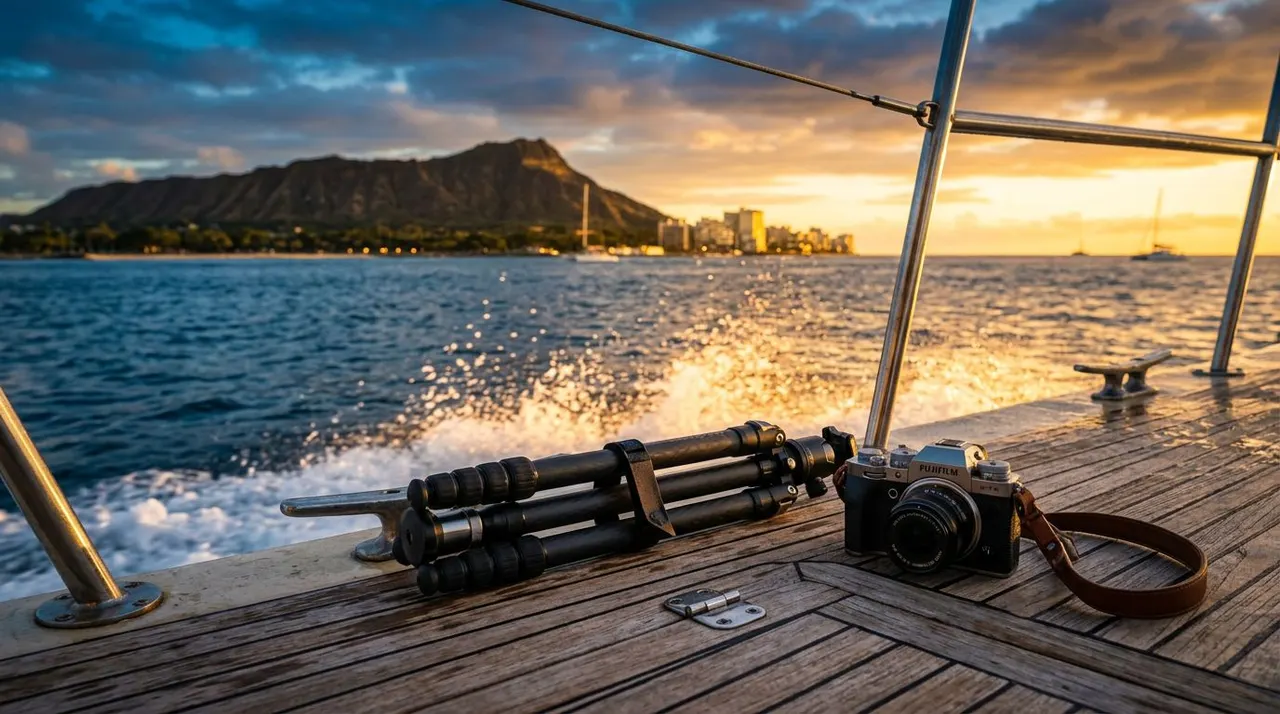
Want steady sunset photos without losing your balance on deck? On a Waikiki boat tour, a tripod can help you capture the coastline, Diamond Head, whales, and fireworks, but only when you choose compact gear and store it carefully.
Living Ocean Tours welcomes cameras and GoPros on its tours, though its published guidance doesn’t list tripods as a separate item. You should confirm with the crew when you check in. With the right setup, you can bring useful camera support without creating a hazard for yourself or other guests.
Can You Bring a Tripod on a Waikiki Boat Tour?
Yes, you can usually bring a small, collapsible tripod onboard. However, a full-size studio tripod may be too large for a busy passenger deck. Your gear must stay clear of stairs, walkways, boarding areas, ladders, and crew workspaces.
Living Ocean Tours departs from Kewalo Basin Boat Harbor at 1125 Ala Moana Boulevard, Slip B-01. The company operates custom-built, Coast Guard-inspected double-decker vessels with shaded seating, dry storage for small items, restrooms, and heavy-duty water-entry ladders.
What the published guidance says
The company’s current packing guidance welcomes a camera or GoPro and prohibits drones. It also encourages you to pack light and avoid bulky beach bags. That guidance suggests a compact tripod is more practical than a long, heavy model.
Because storage is intended for small personal items, don’t assume you can bring a large camera case or leave an extended tripod beside your seat. Ask the crew where they want you to store it before the boat leaves the harbor.
Why tripod size matters
A folded travel tripod takes up little room and can fit inside a small camera bag. A tall tripod with wide legs can obstruct passengers, shift when the boat moves, or catch wind on an open deck.
The safest choice is a tabletop tripod, compact travel tripod, or small clamp mount. Keep it folded until the crew confirms that you have a suitable place to use it.
Why Boat Photography Needs a Different Setup
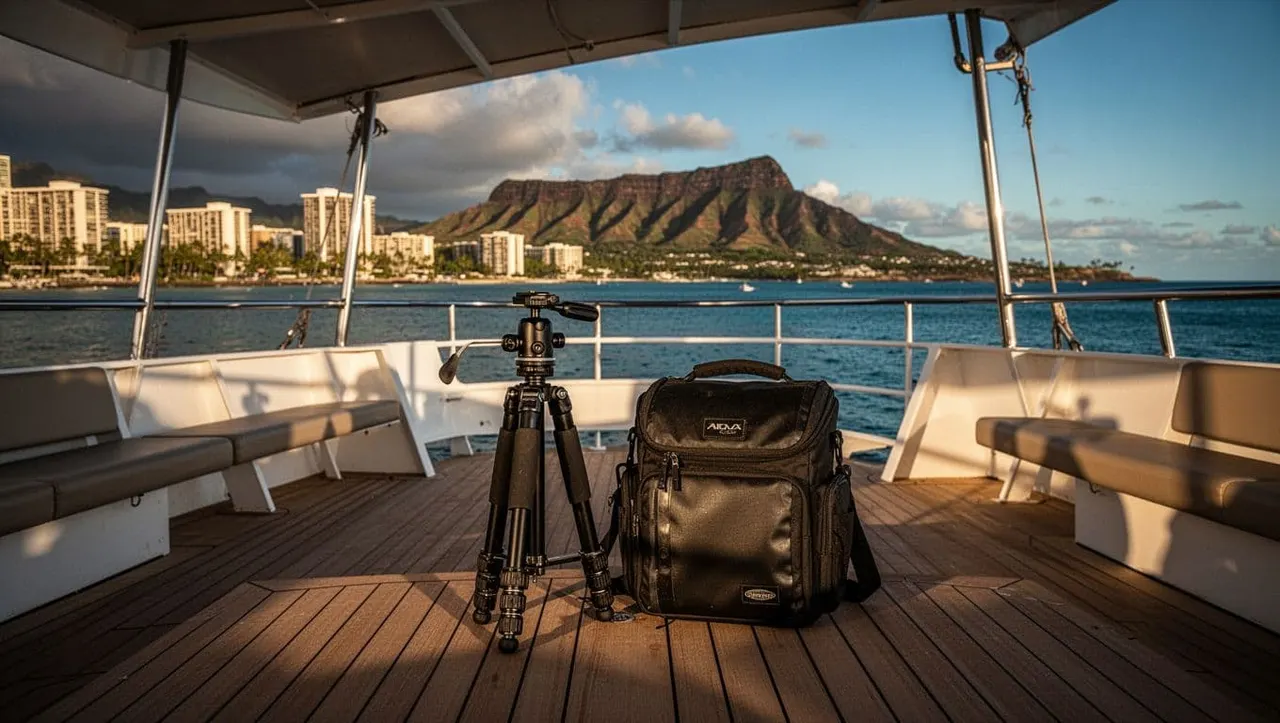
A boat deck doesn’t provide the same stability as a hotel balcony or paved lookout. Even on a comfortable vessel, the ocean creates gentle movement. Wind, engine vibration, passenger traffic, and changing direction can affect every exposure.
A tripod helps with low-light shots, but it won’t remove all movement from the scene. You still need a fast enough shutter speed when photographing people, birds, whales, or water spray.
Account for movement and wind
Set your camera on a stable surface only after the boat reaches a calm section of the route. Keep the tripod low and close to the center of the deck rather than near the rail.
Wind can shake a lightweight tripod. Hang nothing from its center hook unless the crew approves it and the item cannot swing. A swinging bag can make the tripod less stable instead of adding weight.
For general passenger safety, review the Hawaii DLNR boating safety guidance before your trip. You don’t need to operate the boat to benefit from understanding basic safety practices.
Protect your camera from salt spray
Saltwater mist can reach the deck even when the weather looks calm. Use a waterproof pouch, rain sleeve, or small dry bag for your phone and camera accessories.
Keep lens cloths in a sealed pocket. A microfiber cloth becomes useful when spray leaves small spots across your lens. Avoid changing lenses in exposed areas, especially when the boat is moving at speed.
Choose the Right Tripod for a Waikiki Boat Tour
Your camera setup should match the activity. A tripod that works for a hotel-room time-lapse may be awkward during a snorkeling cruise or fireworks trip.
The best option is small enough to carry with one hand, quick to fold, and stable enough for your camera or phone. You should also be able to pack it away quickly if the crew asks guests to move.
| Tripod option | Best use | Main caution |
|---|---|---|
| Tabletop tripod | Phone or lightweight camera photos | Needs a level, approved surface |
| Compact travel tripod | Sunset and coastline photos | Secure the legs before shooting |
| Small clamp mount | Fixed rail or seat-area use, with crew approval | Never attach it where it blocks access |
| Full-size tripod | Large cameras on spacious private charters | Bulky and more likely to obstruct traffic |
Start with a compact model
A folded tripod under 12 inches is easier to carry and store than a long professional model. Look for rubber feet, locking leg sections, and a quick-release plate that keeps your camera secure.
A phone mount can work well for family photos and short video clips. If you use one, choose a mount with a strong locking screw rather than a loose spring clip.
Skip fragile or complicated accessories
Avoid large gimbals, long extension poles, and loose lighting equipment unless you have arranged a private charter. These accessories require more space and can become difficult to manage when the vessel changes speed.
Bring one camera, one tripod, and only the accessories you expect to use. A simple kit gives you more freedom to watch the ocean instead of guarding your equipment.
How to Carry and Store Your Tripod Safely
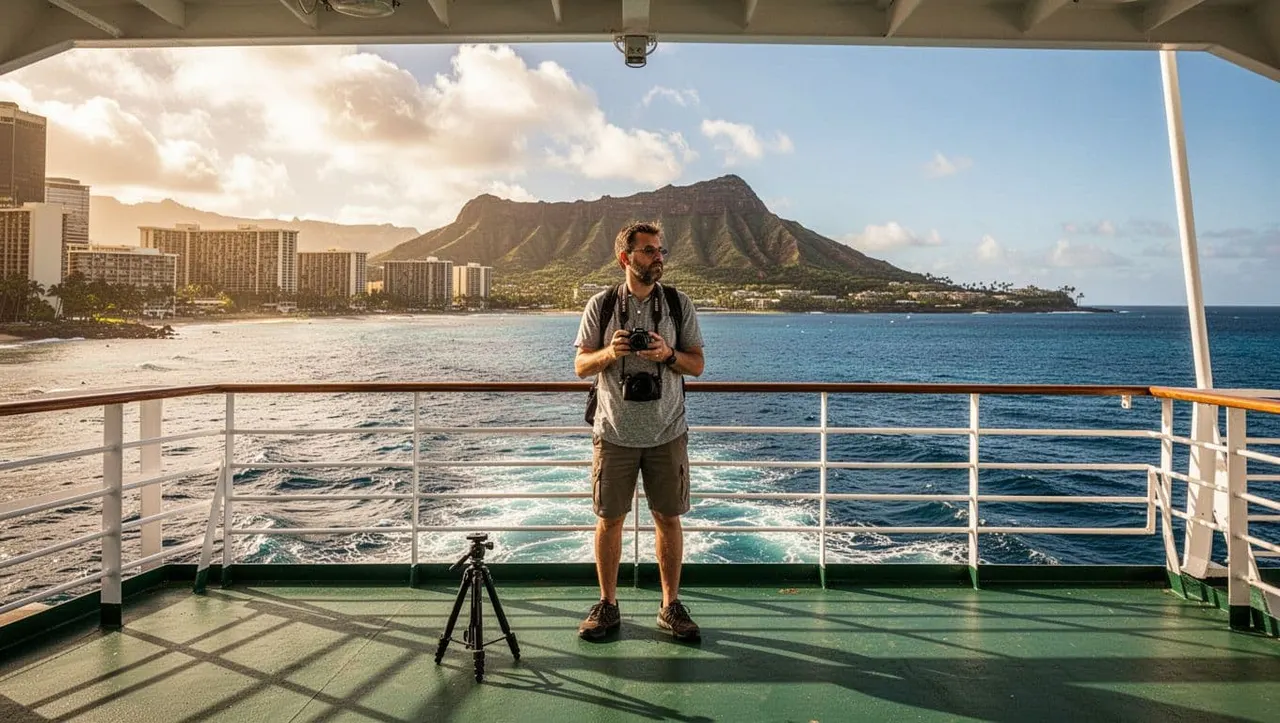
The safest tripod is one that stays packed while you board. Keep it inside a small camera bag or carry case until you reach your seat or an area the crew approves.
Don’t place it across a bench, beside a boarding gate, at the top of a stairway, or near a water-entry ladder. Those areas need to remain open throughout the trip.
Secure gear before the boat moves
After boarding, ask a crew member where to place your camera bag. Living Ocean Tours provides dry storage for small items, but that space isn’t designed for checked luggage or oversized cases.
Close every zipper before leaving your bag unattended. Keep memory cards, batteries, and phones in waterproof compartments. If you bring a soft-sided cooler, ask whether it can fit in an approved shaded or dry area. Don’t use it as a secure place for expensive camera equipment.
The Hawaii personal watercraft checklist also provides a useful reminder to keep safety equipment and access areas clear.
Use the tripod only when conditions allow
Ask before opening the tripod. Crew members know which part of the deck has the least traffic and how the vessel is operating that day.
Keep the legs fully inside your assigned space. If the boat accelerates, turns, or encounters rougher water, collapse the tripod immediately. Never leave it standing while you walk away.
A handheld camera often produces better results than a tripod placed in an unsafe position. The photo matters, but safe movement around the deck matters more.
What Living Ocean Tours Provides Onboard
Living Ocean Tours operates from Kewalo Basin, minutes from Waikiki Beach. Its fleet includes the Coral Kai and Lokahi, custom-built double-decker vessels with shaded seating, onboard restrooms, dry storage, and sturdy ladders for entering and exiting the water.
The Lokahi includes a SeaKeeper stabilization system that reduces rolling motion. That added stability can make camera use more comfortable, especially for guests who prefer to remain on deck.
Living Ocean Tours is the only tour company with professional snorkel guides. You receive clear instructions before entering the water, which helps first-time snorkelers and families feel comfortable during the activity.
The company also asks you to observe marine life without touching it. Keep cameras, selfie sticks, and tripods away from turtles, coral, and other wildlife. The best underwater encounter gives animals plenty of room to move naturally.
You can compare the company’s Waikiki ocean tours before choosing the trip that fits your camera plans.
If you already know your travel dates, you can review tour openings below.
Best Snorkeling Tours for Camera Travelers
Snorkeling trips offer the most memorable wildlife photos, but they aren’t the best time to set up a tripod. Keep your tripod stored while you swim and use a waterproof camera or GoPro for underwater images.
Turtle Canyon Snorkel Excursion
Living Ocean Tours’ Turtle Canyon Snorkel Excursion visits a natural cleaning station known for Hawaiian green sea turtle encounters. The company reports a 95% success rate for spotting turtles at this location.
You receive snorkeling equipment and guidance from professional snorkel guides. Bring a towel, reef-friendly sunscreen, and a waterproof pouch for your phone. Full-face masks aren’t allowed on this tour for safety reasons.
Your tripod is most useful before departure and after returning to the boat. Use it for a group photo with Diamond Head in the background, then store it before you enter the water. You can CHECK AVAILABILITY for current departure times.
Deluxe Waikiki Snorkeling and Wildlife Cruise
The Deluxe Waikiki Snorkeling and Wildlife Cruise gives your family more time to enjoy the boat between water activities. The Lokahi features a boat-mounted waterslide, water trampoline, and floating lily pad.
A small waterproof camera works better than a tripod during this outing. Keep your tripod folded while guests use the slide and water equipment. The crew needs open access to ladders and activity areas.
This option suits families who want wildlife viewing, snorkeling, and time to relax on deck. Check the schedule through CHECK AVAILABILITY.
Best Cruises for Tripod Photography
A sunset, whale watching, or fireworks cruise gives you more opportunities to photograph the horizon from the deck. Even so, you should keep the tripod low, compact, and out of passenger traffic.
Waikiki Sunset Cruise
The Waikiki Sunset Cruise is the strongest choice for tripod photography. The changing light over Waikiki and Diamond Head gives you time to capture wide landscape images before darkness arrives.
Use a compact tripod during the calmest part of the ride. Set your camera to a two-second timer so pressing the shutter doesn’t shake the image. Keep one hand near the tripod when the boat moves, and fold it immediately if the crew asks guests to change position.
The BYOB sunset option allows canned beverages, but glass bottles aren’t permitted. You can CHECK AVAILABILITY for available sailing times.
Whale watching cruise
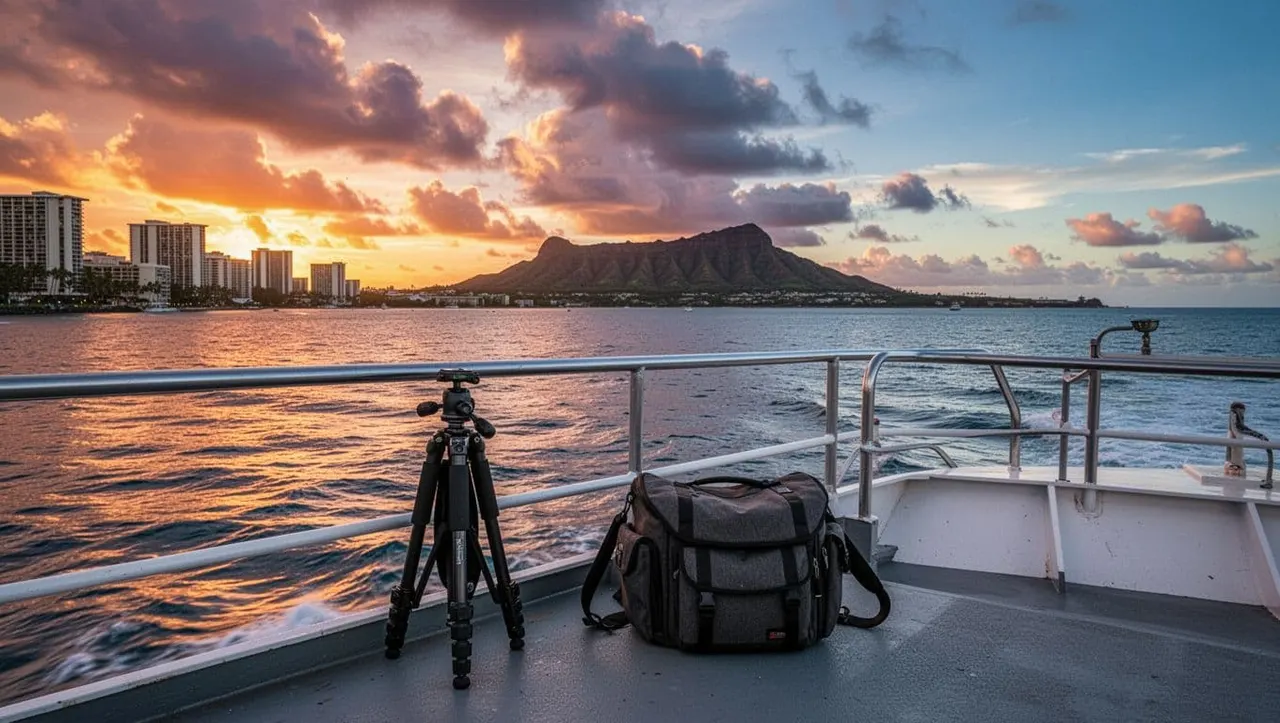
Humpback whale watching tours run seasonally from January through March. A tripod can help with stable horizon shots, but it won’t guarantee sharp whale photos because whales appear quickly and the boat may be moving.
Use a fast shutter speed and keep your camera ready. A monopod or handheld grip may be more useful than a full tripod when you need to follow an animal across the water. Review the whale watching tour details and check current dates through CHECK AVAILABILITY.
Friday Night Waikiki Fireworks Cruise
The Friday Night Waikiki Fireworks Cruise is ideal for wide shots of the skyline and fireworks. Bring a light jacket because evening temperatures can feel cooler on the water.
Fireworks photography often needs a steady camera and slower shutter speed. Use a tripod only after the crew approves your location. Keep the legs away from the rail, stairs, and seating paths. For many guests, a small phone tripod or stabilized camera produces the easiest setup.
You can review Friday night departure options through CHECK AVAILABILITY.
How to Get Better Photos Without Blocking the Deck
The best boat photos come from preparation, not from carrying every accessory you own. Charge your batteries before leaving the hotel and set your camera to the mode you plan to use.
Use the right settings
For moving wildlife, start with a fast shutter speed. Continuous shooting can help when a whale surfaces or a turtle rises for air. Use a wider lens for family photos and coastline scenes.
At sunset, lower the ISO only when the boat and subject remain steady. If the deck moves, a sharp image with a little grain is better than a blurred image with perfect color.
Turn off the camera flash around marine wildlife. Flash can disturb animals and rarely improves photographs in open water.
Choose your position carefully
Stay behind the rail and follow crew instructions about where you may stand. A clear view is helpful, but you don’t need to claim one spot for the entire trip. Move aside so other guests can enjoy the scenery.
Keep the sun, horizon, and Diamond Head in mind when you frame a shot. During wildlife trips, watch the water instead of looking through your screen the entire time. A guide may spot an animal before your camera does.
For guests who plan to operate a boat themselves, the free Hawaii State Boating Safety Course covers navigation, handling, and safety equipment. As a tour passenger, your main responsibility is to keep your belongings secure and follow the crew’s directions.
What to Pack for a Tripod-Friendly Boat Trip
Pack a small camera bag rather than a large beach tote. You can carry the bag more easily during boarding and place it in approved storage without blocking other guests.
Bring:
- A compact tripod or phone mount
- A waterproof pouch for your phone and spare batteries
- A lens cloth and protective camera cover
- A towel, sunscreen, hat, and sunglasses for snorkeling trips
- A light jacket for evening cruises
- A water bottle, plus canned drinks only if you’re joining the BYOB sunset cruise
Drones aren’t allowed. Full-face masks aren’t allowed on snorkeling tours, and glass bottles aren’t allowed on the BYOB sunset cruise. Hawaii’s boating laws and regulations provide additional background on safe conduct around vessels and passengers.
A tripod is useful only when it stays out of the crew’s path. If you can’t fold it quickly and secure it safely, leave it behind.
Final Thoughts
You can bring a tripod on a Waikiki boat tour when you choose a compact model, confirm its use with the crew, and keep it away from stairs, ladders, rails, and walkways. Living Ocean Tours provides comfortable, stabilized vessels with dry storage for small items, but space remains limited on shared passenger decks.
For the best results, use a tripod during calm sunset or skyline scenes, then switch to a handheld or waterproof camera during snorkeling and wildlife encounters. Your most memorable photos will come from staying safe, respecting marine life, and keeping your attention on the Pacific.


