
Waikiki Boat Tour: Are Surfboards Allowed Onboard?
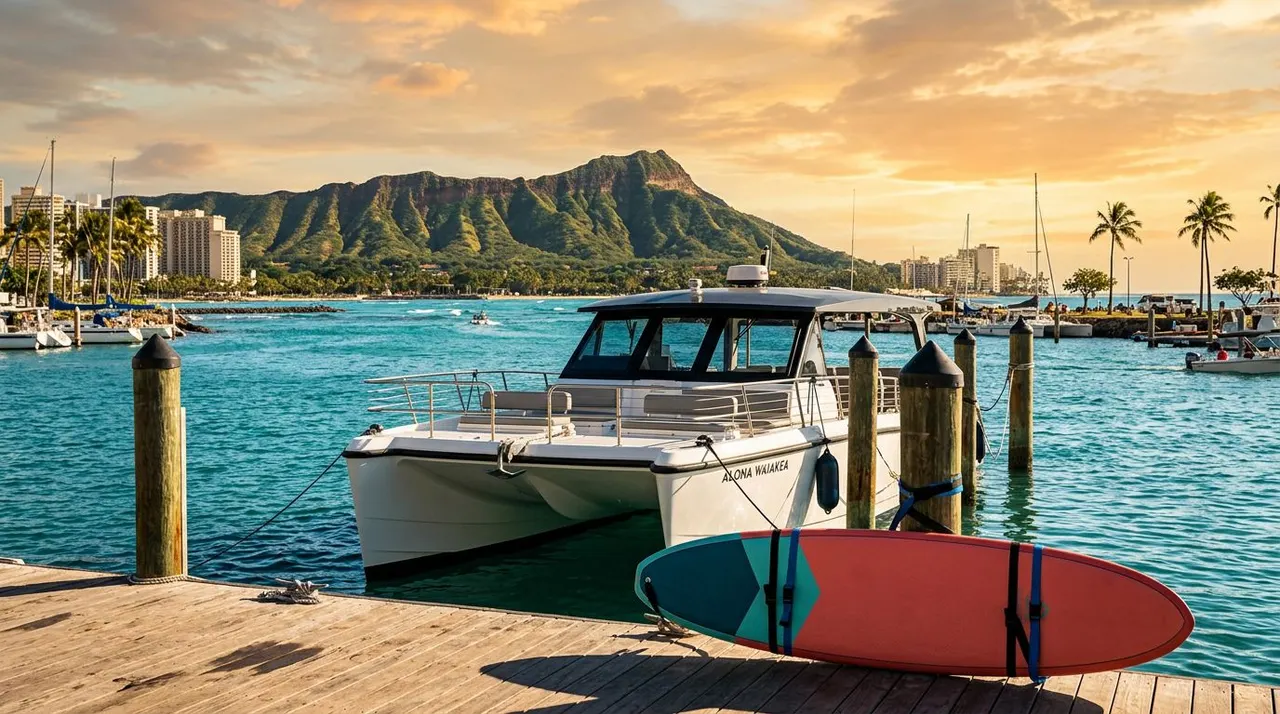
A surfboard can complicate an otherwise easy ocean outing. If you’re booking a Waikiki boat tour, you need to know whether your board can come aboard before you arrive at the harbor.
There isn’t one Hawaii-wide rule that guarantees space for surfboards on commercial passenger boats. The answer depends on the operator, vessel design, available storage, passenger capacity, and the day’s conditions. Before you book a surf-and-cruise schedule, confirm the policy directly and plan your gear around the boat.
Can You Bring a Surfboard on a Waikiki boat tour?
Sometimes, but you shouldn’t assume that a full-size board is welcome onboard. Commercial tour boats often carry snorkeling equipment, coolers, safety gear, personal bags, and a full group of passengers. A longboard or stand-up paddleboard can take up valuable deck space and create problems during boarding.
The operator makes the final decision
As of August 2026, Hawaii’s boating and harbor materials don’t establish a blanket passenger right to carry a surfboard on a tour boat. Those rules focus on vessel operations, permits, harbor access, and safety requirements. Individual companies set their own policies for oversized personal gear.
A small board might fit on one vessel but create an obstruction on another. A private charter may offer more flexibility than a shared snorkeling trip. Even then, the captain can refuse an item if it can’t be secured properly or affects safe movement around the boat.
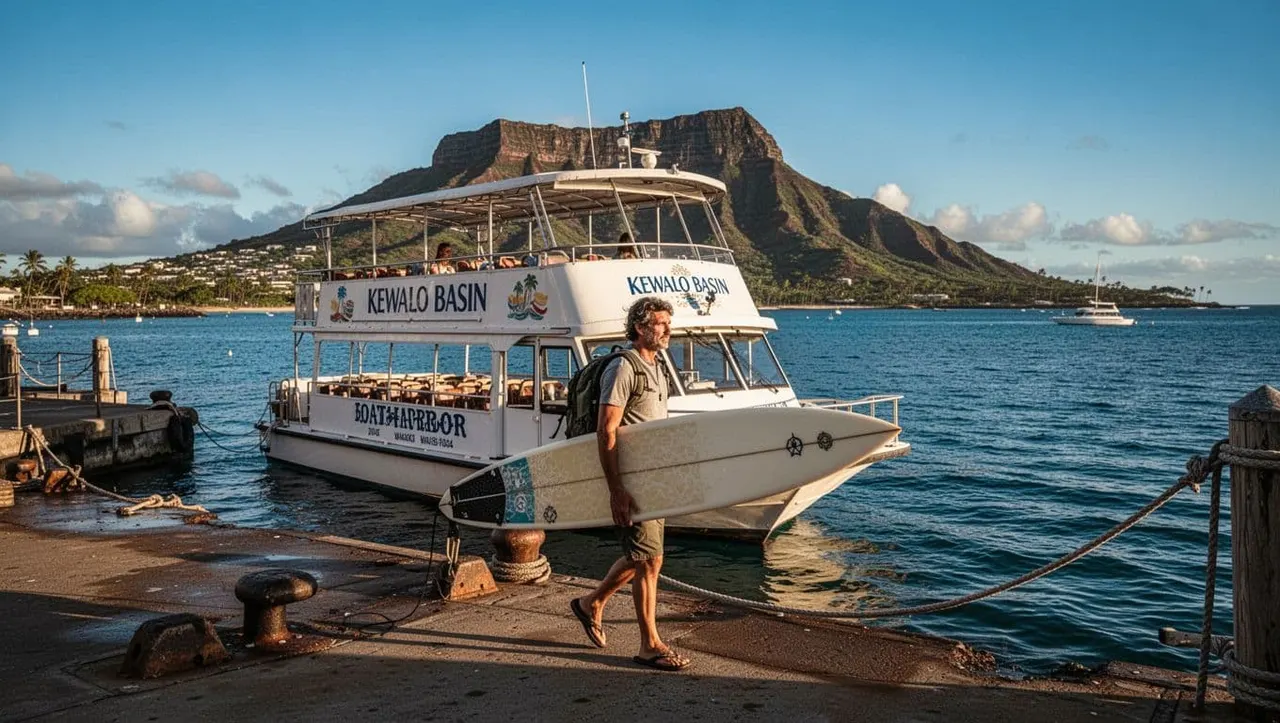
You should also ask about the difference between carrying a board to the harbor and taking it on the vessel. Kewalo Basin allows commercial passenger operations, but harbor access doesn’t automatically mean every boat accepts large personal equipment.
A board must have a safe place to ride
If a company approves your surfboard, the crew should tell you where it will go. The board may need to stay in a secured storage area, away from stairs, railings, boarding points, and emergency equipment.
Never place a board across a walkway or leave it loose on an open deck. Wind, wake, and passenger movement can shift unsecured gear. Your board can also become a tripping hazard or damage other equipment.
A verbal “yes” without storage details isn’t enough. Ask whether the board needs a bag, whether the fins must come off, and whether the crew limits the number of boards per departure.
Why Full-Size Surfboards Are Difficult on Passenger Boats
A tour boat is designed around safe passenger movement, not open board storage. Even a spacious double-decker vessel has working areas that must remain clear for boarding, snorkeling, supervision, and emergency response.
The issue becomes more serious when several guests bring bulky equipment. A surfboard’s length can extend across seating areas or block access to ladders. A stand-up paddleboard or foil board may also be heavier and harder to secure than a standard shortboard.
Deck space isn’t the same as storage space
Open deck areas are useful for sightseeing, but they aren’t automatically safe places for surfboards. Railings, seats, shade structures, ladders, and narrow passages divide the available space.
Your board also needs protection from other guests. A fin can snag a bag, a leash can catch on hardware, and a waxed deck can make a board difficult to handle when wet. The crew needs to account for these details before allowing the equipment onboard.
Passenger comfort matters, too. A board that takes up several seats can reduce usable space for your family or other guests. The operator may decide that the board isn’t practical for a busy departure, even if it physically fits.
Load balance affects the whole boat
A large item changes how people move and where weight sits on the vessel. Crew members consider more than the board’s size. They also look at its weight, location, movement, and effect on access.
That doesn’t mean one surfboard will destabilize a tour boat. It does mean the captain needs control over where equipment goes. A board should never be stored in a way that interferes with safety procedures or places unnecessary weight on one side of the vessel.
You can avoid most confusion by treating a surfboard as oversized gear, not as a normal beach bag.
What to Ask Before You Book Your Waikiki Boat Tour
A quick call or email can save you from bringing a board all the way to the harbor, only to leave it behind. Ask these questions before paying for your reservation:
- Does this specific departure accept full-size surfboards?
- What are the maximum length, width, and weight limits?
- Where will the board be stored during the trip?
- Does the board need a protective bag, removed fins, or a leash secured separately?
- Is there an additional equipment fee?
- Can the operator refuse the board if conditions or passenger numbers change?
- Does the policy apply to shortboards, longboards, soft-top boards, SUPs, and foil boards?
Ask about the exact departure
Tour companies may use more than one vessel. They may also change boats based on scheduling, maintenance, passenger numbers, or weather. A policy that applies to one vessel may not apply to another.
Give the operator useful details. Tell them the board type, approximate dimensions, whether it has a bag, and how many people in your group will bring equipment. If you have a large family beach setup, mention that as well.
Don’t rely on a general website statement such as “personal items allowed.” That phrase usually describes normal bags, towels, and small belongings. It may not include a nine-foot longboard.
Get storage details in writing
A written answer gives you a clear plan for arrival. Save the email or message with your reservation details, especially if you speak with someone several weeks before your trip.
A board is only truly allowed when the crew has approved both the item and its storage location.
If the answer is unclear, ask the same question in a more direct way: “Can I bring one six-foot surfboard on this shared boat, and where will it be secured?” A specific question usually produces a more useful answer.
What Kewalo Basin Rules Mean for Your Surfboard
Living Ocean Tours operates from Kewalo Basin Boat Harbor, located at 1125 Ala Moana Boulevard in Honolulu, a short drive from Waikiki Beach. The harbor is a commercial waterfront facility with passenger vessels, charter boats, and other marine activity.
Because several operators share the harbor, your boarding process is controlled by the company running your trip. Check-in instructions, parking guidance, arrival times, and gear policies can vary.
Harbor regulations focus on vessel operations
Hawaii’s boat harbor information from DOBOR covers public harbor management and boating facilities. It doesn’t create a general rule that requires every commercial passenger boat to accept surfboards.
The state’s current administrative materials also contain specific rules for commercial water activities. You can review the Hawaii administrative rules for commercial water activities, but those regulations shouldn’t be read as a passenger baggage policy.
Safety requirements remain the priority. For general background on personal flotation devices and Hawaii boating rules, see this Hawaii boating law guide. Your tour crew will give you the instructions that apply to that vessel and activity.
Arrive early if you’re carrying unusual gear
Kewalo Basin is an active harbor rather than a beach rental counter. You may need to find parking, walk to the correct vessel, check in, and wait for the crew to inspect your equipment.
Arriving early gives the operator time to decide where the board can go. It also prevents a last-minute argument at the boarding gate. If the company can’t accept it, you’ll have more time to return the board to your hotel, rental shop, or vehicle.
Keep your board out of traffic lanes while you wait. Don’t lean it against emergency equipment, block a ramp, or leave it where another passenger could trip.
Living Ocean Tours Boat Setup and Gear Policy
Living Ocean Tours departs from Kewalo Basin and offers ocean excursions along the Waikiki coastline. Its Coast Guard-inspected, custom-built double-decker vessels are the Coral Kai and the Lokahi.
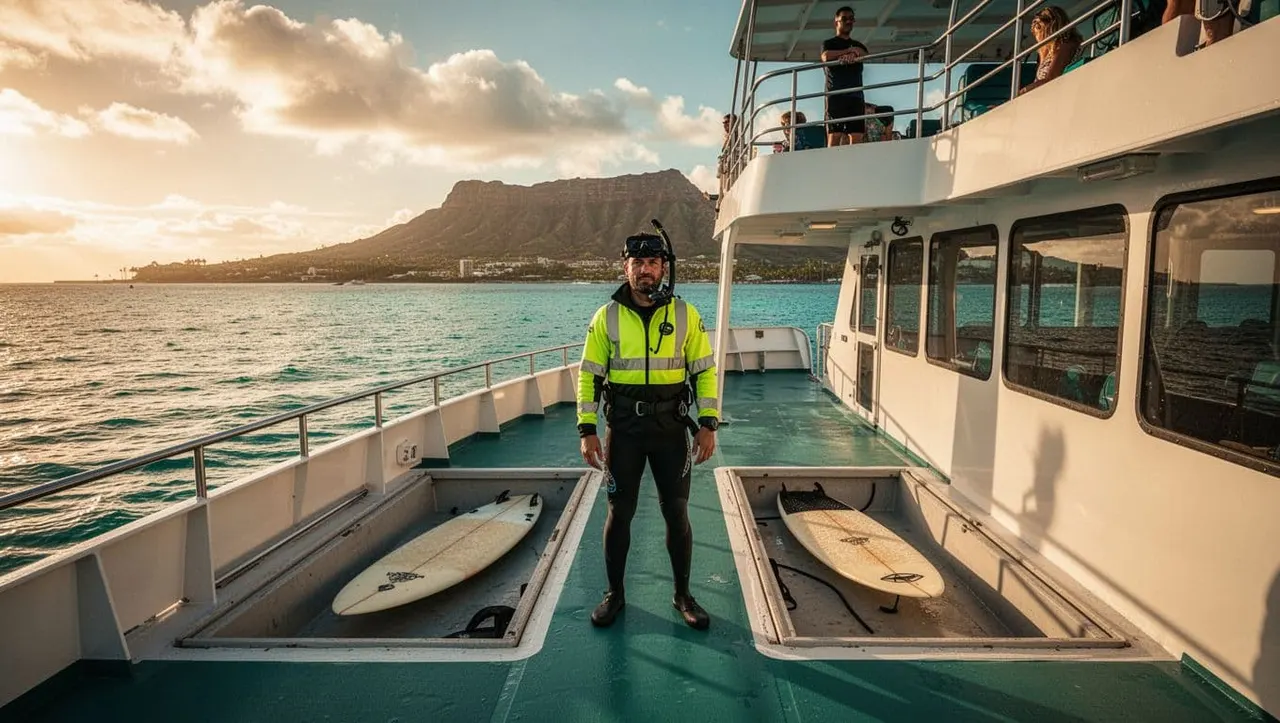
Both boats include shaded seating, restrooms, dry storage, and heavy-duty ladders for water entry. The Coral Kai has open-deck space for sightseeing. The Lokahi includes a SeaKeeper stabilization system, which helps reduce rolling and can make the ride more comfortable for guests who are sensitive to motion.
Dry storage doesn’t guarantee surfboard storage
The boats’ dry-storage areas are useful for personal belongings and smaller equipment. However, dry storage doesn’t automatically mean there is room for a full-size surfboard.
Contact Living Ocean Tours before arrival with your board’s dimensions. The crew can tell you whether the item fits the specific vessel and departure. If the board can’t ride safely, you can enjoy the tour without carrying it onboard.
Living Ocean Tours is also the only tour company with professional snorkel guides. That matters when you’re more focused on seeing Hawaii’s marine life than managing bulky beach gear. Guides help first-time snorkelers, families, and experienced swimmers follow safe water-entry and wildlife-viewing practices.
For a look at the company’s available Honolulu ocean tours near Waikiki, compare the trip type, departure time, and onboard activities before choosing your day.
Which Living Ocean Tours Trip Works Best With a Surf Day?
A surfboard usually fits better into your beach schedule than your boat schedule. Living Ocean Tours offers two daytime experiences that let you enjoy the Waikiki coast without needing to bring a board onboard.
Turtle Canyon Snorkel Excursion
The Turtle Canyon Snorkel Excursion takes you to a natural underwater cleaning station known for Hawaiian green sea turtle sightings. Living Ocean Tours reports a 95% success rate for spotting turtles there, although wildlife sightings can never be guaranteed.
The company supplies snorkeling gear and provides professional guides for all skill levels. That makes the trip a good choice when you want to keep your attention on the reef, tropical fish, and respectful wildlife viewing.
You should leave your surfboard at your hotel or rental location unless the crew approves it in advance. The boat already provides the equipment you need for the water activity. When you want to compare this option with other Turtle Canyon ocean tours, check the departure details before reserving.
You can CHECK AVAILABILITY for the Turtle Canyon Snorkel Excursion.
Deluxe Waikiki Snorkeling and Wildlife Cruise
The Deluxe Waikiki Snorkeling and Wildlife Cruise visits a less-crowded reef and adds water activities for guests who want more time to play. The Lokahi features a boat-mounted waterslide, water trampoline, and floating lily pad.
Those amenities give you a better reason to leave the surfboard behind. You can snorkel with guidance, enjoy the vessel’s open areas, and use the onboard water features without managing a separate board.
Families should ask about age requirements and activity participation before booking. Children ages three and older can enjoy Living Ocean Tours’ family-friendly experiences, while the crew provides safety guidance for beginners.
Check Deluxe Waikiki snorkeling availability before your preferred date fills.
How to Plan a Surf Session and Boat Excursion
You can enjoy both activities during your Honolulu vacation. The easiest plan is to separate them by time and location instead of trying to carry every item onto the boat.
Surf before the boat trip
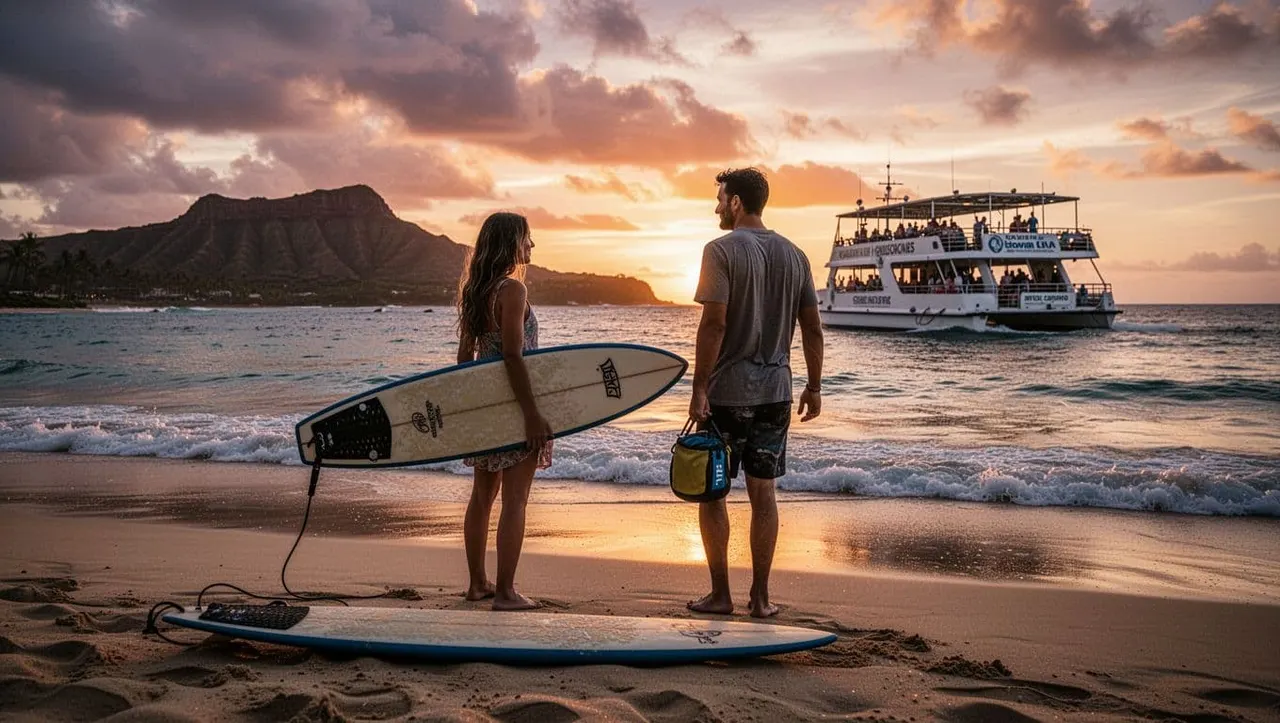
If your priority is catching waves, schedule your surf session first. Afterward, return a rented board or place your personal board somewhere secure before traveling to Kewalo Basin.
Leave enough time for a shower, dry clothes, transportation, parking, and tour check-in. Wet boardshorts and sandy towels can also make the boat less comfortable for you and other guests.
This plan works well when your boat departure is later in the day. You can surf while the beach is your main focus, then switch to snorkeling or sightseeing without carrying extra equipment.
Take the boat first, then surf
A morning snorkeling trip can work well before an afternoon beach session. You may feel tired after swimming, though, so choose this order only if you still have energy for the water.
The same approach works for couples who want separate activities. One person can enjoy a guided ocean tour while the other spends time at the beach, then you can meet afterward.
| Your plan | Likely board decision | Better choice |
|---|---|---|
| Surf before a shared snorkel trip | The board may not be accepted | Return or store it before check-in |
| Take a daytime tour, then surf | Carrying it may be inconvenient | Keep it at your hotel or rental location |
| Book a private charter | The captain may have more flexibility | Confirm storage and tie-down space |
| Join a sunset sightseeing trip | Open-deck space may be needed for guests | Leave the board behind |
The simplest itinerary is the one that keeps the board off the passenger deck unless the operator has approved it.
What to Bring Instead of a Full-Size Board
Most Waikiki boat excursions are easier when you pack light. Bring only the items you need for the activity and protect them from spray, sun, and saltwater.
Pack compact ocean essentials
Your day bag can include:
- A swimsuit, rash guard, or lightweight cover-up
- Reef-conscious sunscreen applied before boarding
- A towel and dry change of clothes
- A refillable water bottle
- A waterproof phone pouch or small dry bag
- Sunglasses with a secure strap
- Motion-sickness medication if you already use it
Living Ocean Tours supplies snorkeling equipment on its snorkel excursions, so you don’t need to carry your own mask, fins, or flotation gear unless you have a specific personal preference.
Small bags belong in designated storage areas or under your seat. Keep walkways, ladders, and crew workspaces clear throughout the trip.
Protect Hawaii’s marine environment
A surfboard isn’t the only item that needs careful handling. When you snorkel near Turtle Canyon, observe Hawaiian green sea turtles and reef life without touching, chasing, feeding, or blocking their path.
Use reef-safe habits in and out of the water. Secure loose items, avoid standing on coral, and follow the guide’s instructions about distance from wildlife. A professional snorkel guide can help you recognize when an animal needs more space.
These habits protect the reef and make the encounter safer for everyone. The best ocean memory is one where the wildlife remains calm and undisturbed.
Quick Answers Before You Reserve
Is a shortboard more likely to be accepted than a longboard?
A shortboard may be easier to store, but acceptance still depends on the vessel and departure. Don’t assume that a smaller board qualifies automatically.
Tell the operator the board’s exact length and width. A shortboard with bulky fins, a hard case, or several other items may still create storage problems.
Can the crew hold my surfboard at the harbor?
You shouldn’t assume the harbor or tour company provides unattended board storage. Kewalo Basin is a working commercial facility, not a guaranteed luggage-check service.
Ask whether the operator offers a designated storage option. If not, arrange storage through your hotel, rental shop, vehicle, or another secure location before check-in.
Can I bring a surfboard on a sunset or sightseeing cruise?
Possibly, but the answer remains operator-specific. Sightseeing boats need clear deck space for passengers who want to view the coastline, take photos, and move safely around the vessel.
If you’re considering a Waikiki boat tour after surfing, contact the company before reserving. Tell the crew what you’re bringing and ask for approval for that exact departure.
Does a private charter make surfboard transport easier?
A private charter can provide more control over space and scheduling, but it doesn’t remove safety requirements. The captain still needs to secure the board and keep emergency routes clear.
Ask about board storage when you request the charter. Share the number and type of boards, along with any other bulky equipment in your group.
Choose Your Boat Day Around Comfort and Safety
A surfboard isn’t automatically prohibited on every Waikiki boat tour, but it also isn’t automatically accepted. The operator must consider storage, passenger movement, vessel capacity, and safe boarding before approving oversized gear.
For most shared snorkeling trips, leaving your board behind is the easier choice. You can surf before or after the excursion, then enjoy Living Ocean Tours’ professional guides, stable boats, dry storage, and ocean activities without carrying a full-size board across the deck.
When you ask the right questions before booking, you avoid surprises at Kewalo Basin and spend more time enjoying the Pacific. Plan the surf session and boat excursion as separate parts of your day, and both experiences will feel far more relaxed.


