
Waikiki blue green water: Why It Looks Turquoise
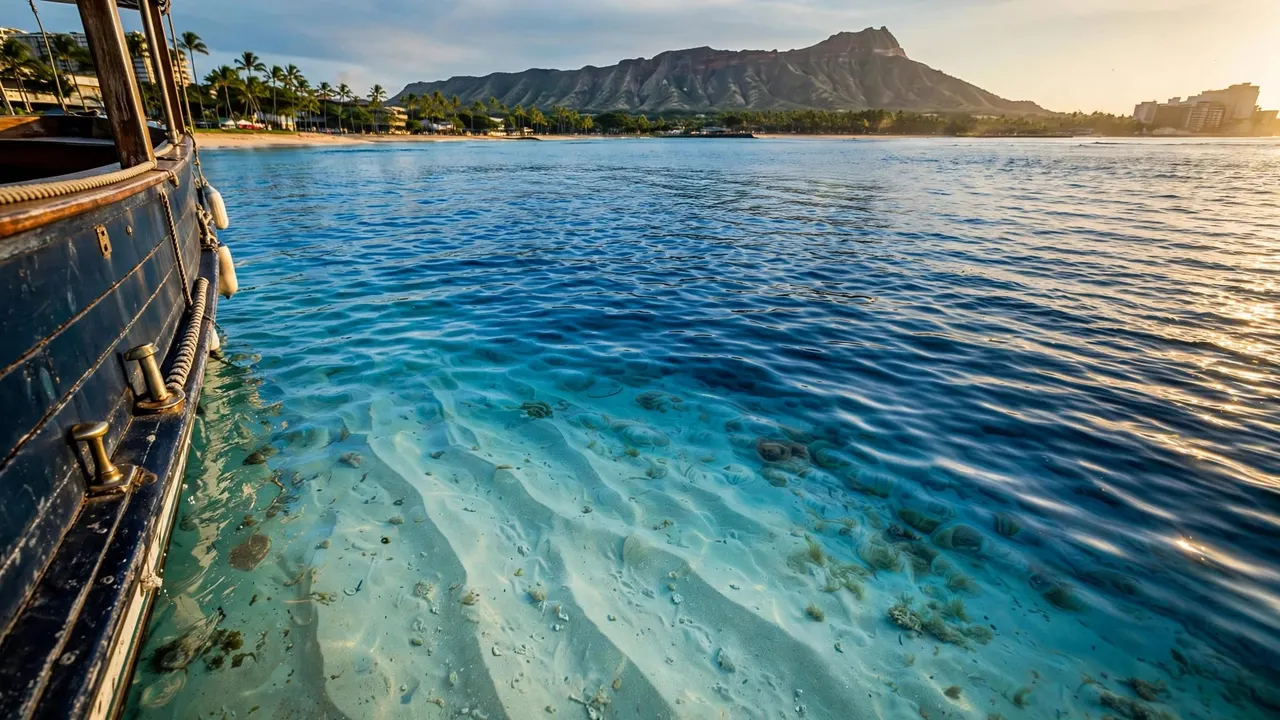
Waikiki’s shoreline looks blue-green because seawater filters sunlight, while shallow bottoms send some light back toward your eyes. With us at Living Ocean Tours, you get a wider view of Waikiki blue green water than the beach alone offers.
The color you see depends on light and depth, plus the seafloor and your viewing angle. Once you recognize those ingredients, the changing bands beside your boat become easier to understand.
Key Takeaways
- Sunlight contains different colors, and water absorbs them at different rates.
- A light-colored seabed can brighten shallow water, while deeper water often looks richer blue.
- From a boat, your changing angle reveals color patterns that blend together when viewed from the beach.
- Beautiful water doesn’t tell you everything about swimming conditions. Follow your captain’s and crew’s directions before entering.
What gives Waikiki blue green water its color?
Water filters the sunlight
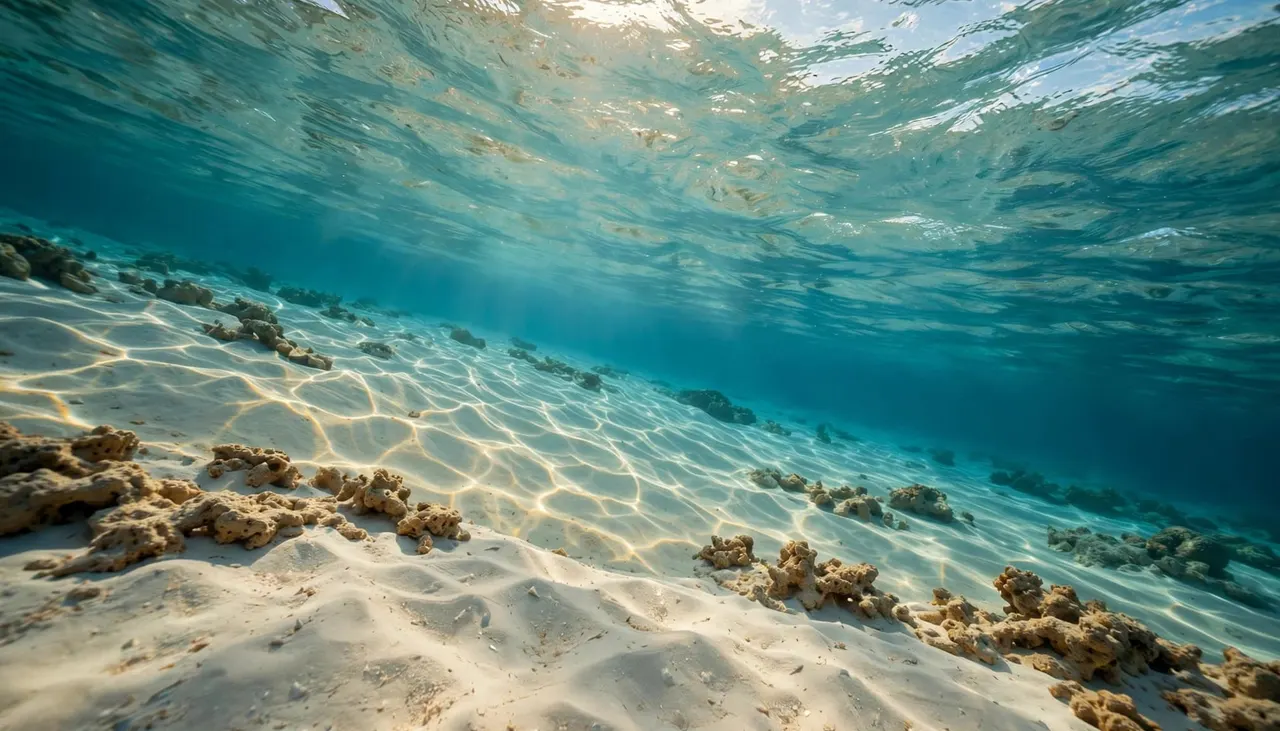
Sunlight looks white, but it contains a range of visible colors. When that light enters seawater, water absorbs some wavelengths more readily than others.
Red and orange light fade sooner than blue as light travels through the water. As NASA PACE’s ocean color explanation describes, clear open-ocean water returns mostly blue light while quickly absorbing the red portion of sunlight.
That filtering helps explain why you see blue across broad stretches of ocean. The effect comes from the water itself, although the surface and everything beneath it also influence your view.
The light returning to you matters
You don’t see only sunlight reflected off the surface. Some light enters the water, interacts with material below, and travels back upward.
In shallow areas, the seabed can contribute strongly to that returning light. Pale sand reflects more light than a dark bottom, so water above it can look brighter.
Meanwhile, the distance that light travels changes the colors that survive the journey. NOAA’s light and color factsheet explains why blue wavelengths reach farther through water than warmer colors.
Your turquoise view is the combined result of these processes, rather than a single blue or green ingredient.
How depth and the seabed change the view
Shallow bottoms can brighten the water
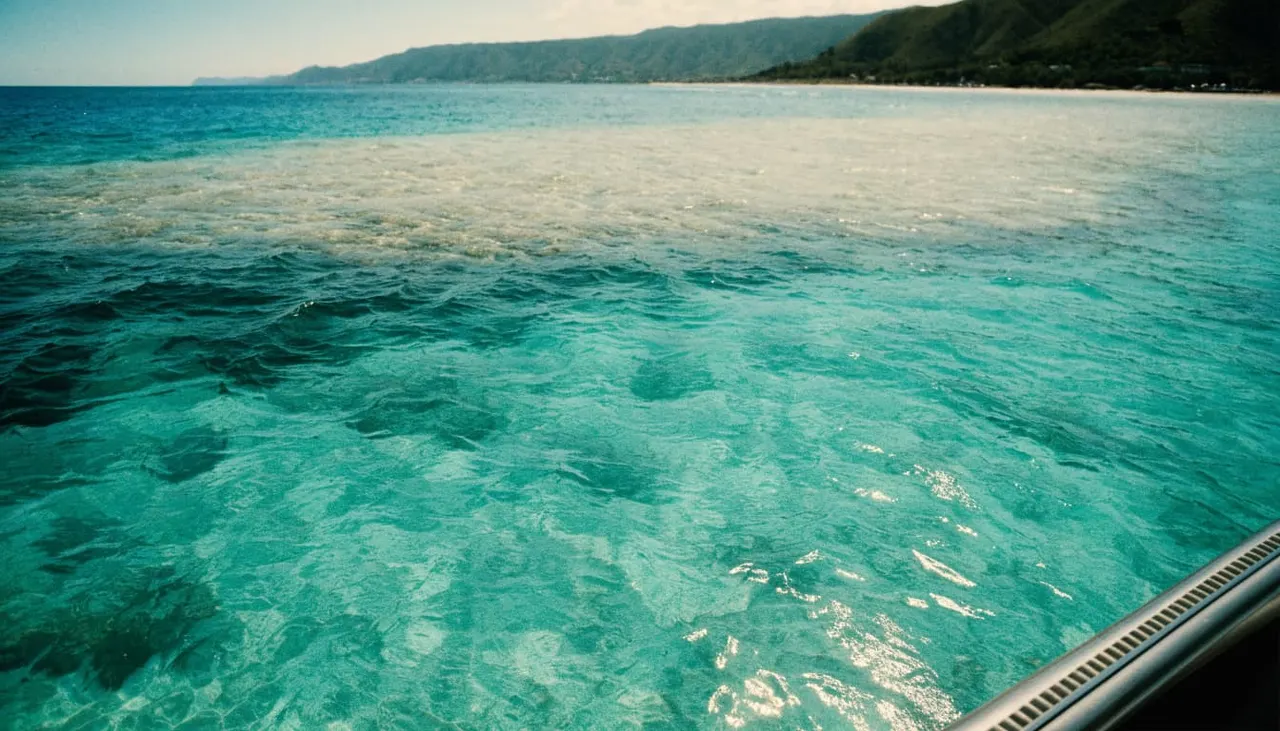
Where sunlight reaches a light-colored bottom, some of it reflects upward through the water again. That extra returning light can create a bright, luminous appearance.
The Woods Hole Oceanographic Institution’s explanation of why the ocean looks blue describes how sunlight bouncing off a sandy seabed contributes to brilliant shallow-water colors.
The appeal of Waikiki blue green water comes partly from seeing these bright areas beside darker water. However, you can’t identify the exact bottom material from color alone.
A darker patch could involve depth, bottom texture, shadow, or several factors together. Treat the pattern as scenery rather than an underwater map.
Deeper water reduces the bottom’s influence
As water gets deeper, less light completes the trip to the bottom and back. Eventually, the seabed contributes little to the view from above.
You then see more of the color produced by light interacting with the water column. That often gives deeper areas a fuller blue appearance.
These transitions don’t have to form straight lines. Underwater terrain changes shape, so the colors can appear as bands, irregular patches, or gradual blends.
From your boat, those neighboring shades make the shoreline’s underwater setting easier to appreciate without revealing every feature below.
Why the colors stand out from a boat
A higher viewpoint separates the patterns
At beach level, you look across the surface at a shallow angle. Reflections, breaking waves, and the distance between you and offshore water can blend the view.
From a boat, you can look more directly downward into nearby water. That different angle can make contrasts between bright shallows and darker areas easier to notice.
You also see a broader sweep of coastline. Instead of one narrow strip beyond the sand, your view can include foreground water, the beachfront, and the volcanic ridges behind it.
That wider composition helps explain why the same ocean can feel more colorful offshore.
Movement keeps changing the picture
As your boat travels, your position changes relative to the sun, shoreline, and underwater terrain. A patch that looked dark a moment ago may brighten when the angle shifts.
Surface ripples also tilt toward and away from you. Each small slope reflects light differently, which creates moving highlights across the water.
You don’t need to interpret every change. Watch one area for a few moments, then compare it with the water farther away.
A moving patch of brightness may come from changing reflections, not a change in water depth beneath the boat.
That distinction helps you enjoy the shifting colors without assuming each shade outlines a different reef feature.
How daylight changes the blue-green appearance
Direct light brings out underwater detail
When enough sunlight enters shallow water, bottom features can contribute more visibly to the scene. You may notice greater contrast between light and dark areas.
However, the brightest part of the surface isn’t always the easiest place to see below it. Strong glare can overwhelm the returning light from underwater.
Look slightly away from the sun’s reflected path. You may find a more readable patch beside the dazzling highlights.
There’s no single viewing direction that works throughout a moving trip. As the boat changes course, the useful angle changes too.
The sky contributes without creating all the color
Water reflects some light from the sky, so sky conditions affect its surface appearance. A cloud passing overhead can soften the brightness or make a patch look grayer.
Still, a blue sky isn’t the whole explanation for blue ocean water. Selective absorption within the water remains part of the process.
Near the end of the day, warmer light and longer reflections change the overall scene. You may notice more sparkle, silhouettes, or reflected sky color.
If turquoise water is your priority, daylight gives you a better opportunity to see the seabed’s contribution than fading evening light.
Photograph the color without missing the ride
To photograph Waikiki blue green water, start with your position rather than your camera settings. A small change in angle often makes more difference than extra zoom.
Keep the horizon level and include some coastline for context. A frame filled entirely with water may capture the shade beautifully, but it won’t show where you are.
Polarized sunglasses can help you notice areas with less surface glare. If you use a polarizing camera filter, rotate it while watching the image because its effect changes with your angle.
Avoid pushing saturation until every patch becomes bright teal. Natural variation between pale turquoise, blue-green, and darker blue gives the scene its depth.
Secure your phone or camera, and move only where the crew allows. Don’t lean beyond the rail for a clearer view.
Finally, take a few frames and put the camera away. Watching the colors shift across a wider area is part of the experience a still photograph can’t capture.
See the shoreline with Living Ocean Tours
If Waikiki blue green water is part of your vacation wish list, choose an ocean outing that gives you time to appreciate the coast.
On our Waikiki snorkeling and ocean tours, you can enjoy the beachfront from offshore and choose an experience that includes reef exploration. We welcome families, so your outing can bring together ocean-loving adults and younger guests.
You don’t have to spend the whole ride searching for wildlife or taking pictures. The changing water itself offers something to watch between the bigger moments.
Before entering the ocean, follow your crew’s instructions. A striking color doesn’t establish the current, depth, or suitability of an area for swimming.
If you snorkel, observe wildlife without touching or chasing it. Keep your fins clear of the reef, and tell the crew promptly if you feel uncomfortable.
Choose your ocean outing below.
Frequently Asked Questions
Is the green color always caused by algae?
No. You can’t identify the cause of a greenish shade simply by looking at it from the boat.
Light filtering through shallow water, reflections from the bottom, and surface conditions can all affect the appearance. Ocean color can also respond to particles and living material, but a turquoise patch doesn’t establish that algae caused it.
Can you see Waikiki blue green water on every trip?
You shouldn’t expect identical colors on every outing. The view depends on sunlight, surface reflections, your position, and the water beneath the route.
Even during one ride, a bright patch can change as the boat moves. Enjoy the full range of colors rather than looking for one fixed shade.
Does bright turquoise mean the water is safe to enter?
Color alone doesn’t establish safety. A beautiful surface doesn’t tell you the strength of a current or how comfortably you’ll manage a swim.
Enter only when your crew directs you to do so. If you feel uneasy, tell them early and use the flotation support they recommend.
Enjoy the color, understand the view
Waikiki’s blue-green shoreline reflects the combined effects of sunlight, water, and the seabed. From a boat, your changing angle makes those effects easier to notice.
Look for the contrast between bright shallows and deeper blue, then watch how reflections move across both. You’ll leave with more than a colorful photo: you’ll understand the view that made you reach for your camera.


