
Waikiki beach nourishment: A Boat Tour View

Waikiki beach nourishment has helped maintain the sandy shoreline you see today by placing sand where waves and currents have moved it away. With Living Ocean Tours, you can view that shoreline alongside the hotels, reefs, and volcanic ridges that surround it.
The beach is a changing coast, shaped by both ocean forces and human decisions. A boat ride gives you room to see those pieces together.
How Waikiki beach nourishment works
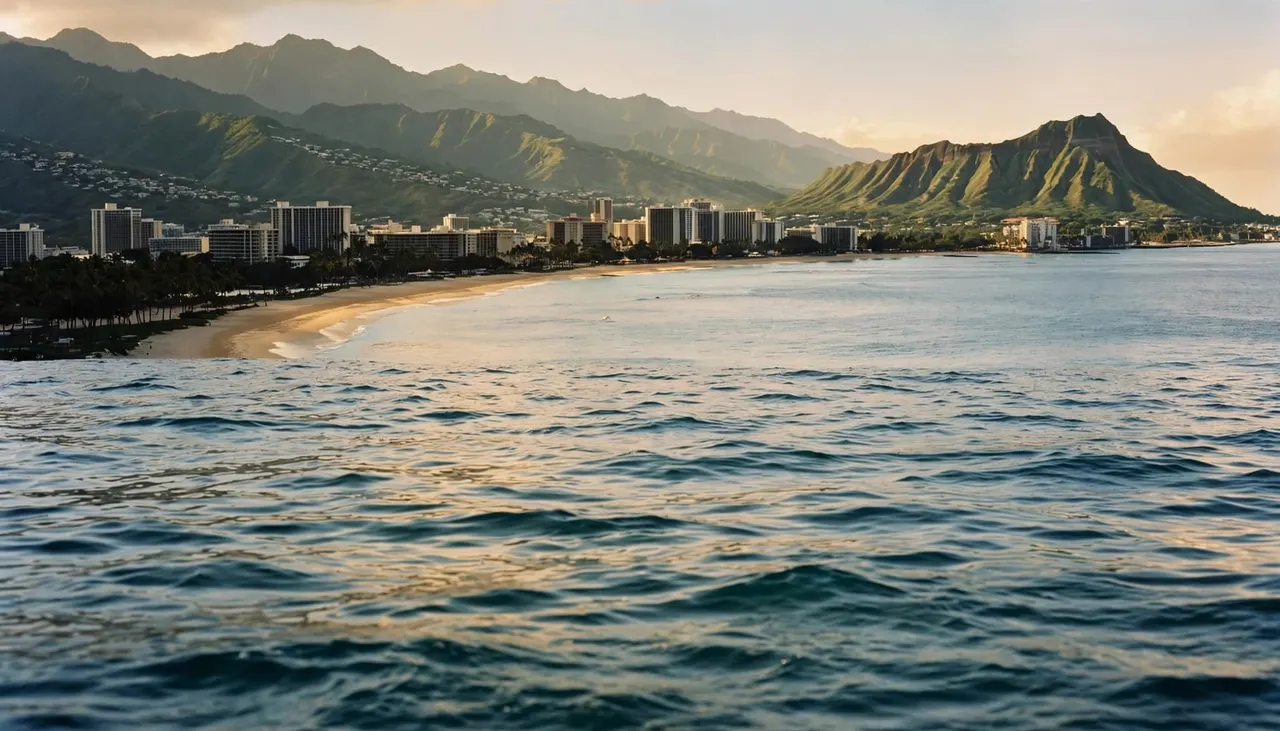
Beach nourishment adds sand to a beach to increase its width or replace sand that has moved elsewhere. At Waikiki, some projects have recovered sand that accumulated offshore and returned it to the beach.
A wider stretch of sand gives you more room to walk, sit, and reach the water. It can also provide a buffer between waves and beachfront development. However, nourishment doesn’t hold every grain in place. Waves and currents continue to move sand after a project ends.
Sand placement takes planning
Before sand goes onto a beach, planners must consider where it will come from, how it will reach shore, and what effects the work could have on the surrounding water and habitat.
The placement method depends on the project. In 2012, workers recovered sand from offshore deposits, pumped it toward shore, and allowed water to drain before placing it along Royal Hawaiian Beach.
A wider beach still changes
A nourished beach doesn’t keep one fixed shape. Its width can vary along the shore and change over time as water moves sand offshore or along the coast.
That’s useful context when you’re looking from a boat. The pale strip between the water and the hotels is part of an active shoreline, even on a calm day.
Waikiki’s shoreline has a long history of sand placement
The coastline you see today has changed over generations. Long before Waikiki became a resort district, Native Hawaiians lived, farmed, and spent time near a landscape that included wetlands and waterways.
Hotels later changed the beachfront. The Moana Hotel opened in 1901, followed by the Royal Hawaiian Hotel in 1927. Construction of the Ala Wai Canal in the 1920s altered drainage and helped make more land available for development.
Decades of beach work
According to Hawaii’s Department of Land and Natural Resources, more than 400,000 cubic yards of sand were placed on Waikiki Beach from about 1930 through the late 1970s.
That history helps explain why you shouldn’t read the present beach as a shoreline untouched by development. The hotels and roads are easy to recognize from offshore. Earlier sand placement is less visible, although it has also shaped the coast you enjoy.
The 2012 Royal Hawaiian project
One major Waikiki beach nourishment project took place at Royal Hawaiian Beach in 2012. It covered roughly 1,730 feet of shoreline and used sand recovered from deposits about 2,000 feet offshore.
The work placed about 24,000 cubic yards of sand and widened the dry beach by approximately 35 to 40 feet. Those figures describe the project at the time, rather than a promise that the beach has remained the same width since.
Why sand moves along Waikiki
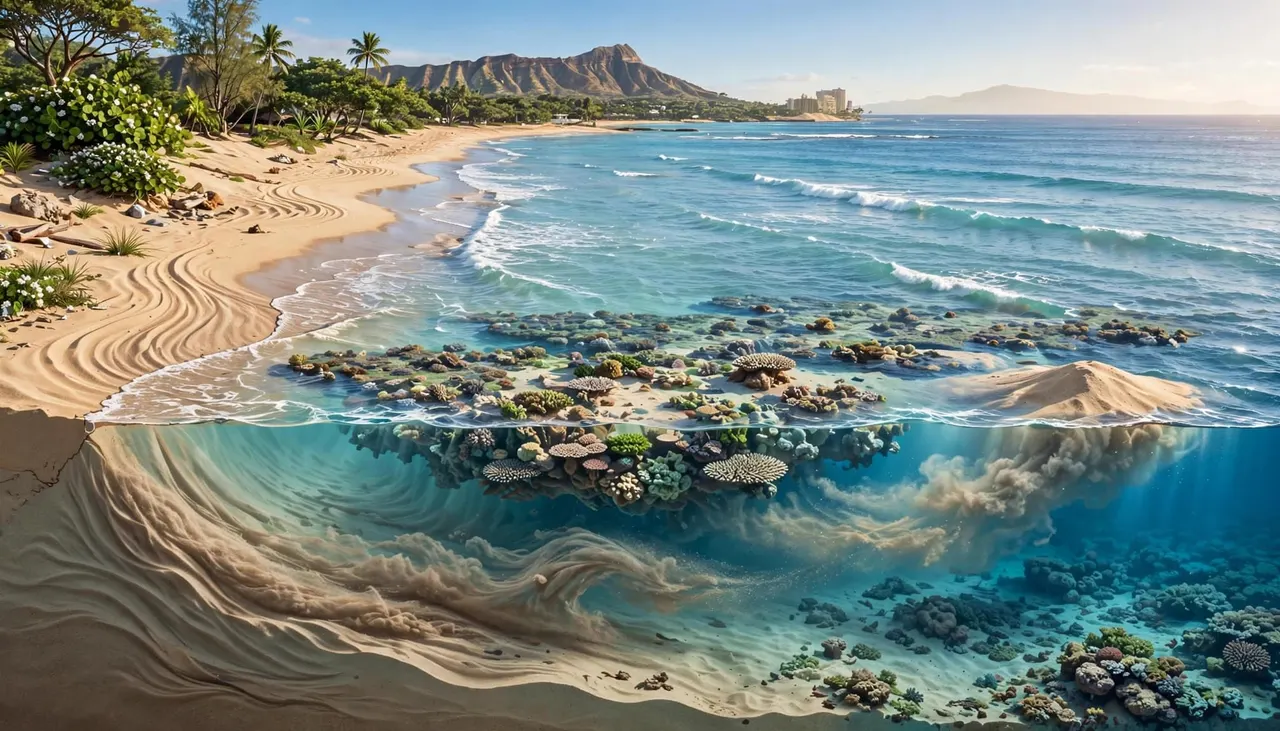
Sand doesn’t stay neatly at the waterline. Waves can lift and shift it, while currents carry it along the shore or toward deeper water. The amount and direction of movement depend on local conditions.
Waves, currents, and the reef
Waikiki’s nearshore reef influences how waves reach the beach. As waves pass over shallow areas, they can break and lose energy before reaching shore. Even so, water continues to move across the reef and around the beach.
A state-commissioned monitoring report described apparent long-term sand movement across the reef flat toward a deeper channel. That helps explain why sand that leaves the dry beach may be found offshore rather than on the next patch of beach.
Changes you can see from the water
On a boat tour, you may notice that water color changes between the beach and open ocean. Depth, the seafloor, sunlight, and surface conditions can all affect what you see.
Color alone won’t tell you where sand is moving or identify a nourishment site. Instead, use the view to appreciate how much coastal activity takes place beyond the strip of sand where you laid your towel.
What groins do along the shoreline
Sand placement is one part of managing Waikiki’s beach. Structures called groins can also influence where sand collects.
A groin extends outward from the shoreline and can interrupt some of the sand moving along the coast. At Royal Hawaiian Beach, monitoring found that the groin helped retain sand by limiting movement toward the neighboring Halekulani beach area.
That doesn’t mean a groin stops erosion throughout Waikiki. Its effects depend on its location and the movement of sand around it. Changes on one stretch of coast also deserve attention alongside conditions nearby.
From offshore, you may be able to distinguish a structure extending into the water from a natural change in the beach’s outline. Your view depends on the boat’s position, distance, and sea conditions, so a particular structure may not be visible on every trip.
A wider beach can require both added sand and attention to where that sand moves afterward.
What you can notice on a Waikiki boat tour
A view from the water puts Waikiki’s beach into a larger frame. Instead of looking along the sand from one spot, you can see portions of the shoreline against the buildings behind it and Diamond Head farther east.
Follow the line of the beach
As your perspective changes, look for places where the pale beach appears wider or narrower. Notice how the shoreline curves and where buildings sit close behind it.
Those observations can help you picture the space available for beachgoers. They don’t establish the cause of a particular patch’s width, though. A distant view can’t tell you when sand was placed there or how much has moved.
Look beyond the resort skyline
Diamond Head gives you a recognizable landmark for orienting yourself. Closer to the water, reef areas and the changing color of the ocean add another layer to the scene.
Keep an eye on how your view shifts as the boat travels. Buildings may overlap from one angle and separate from another, while a stretch of beach can become easier to see as the distance changes. Weather, light, and the captain’s route all influence the view.
A scenic cruise gives you a fresh perspective on Waikiki beach nourishment, but it isn’t necessarily a narrated tour of shoreline engineering or a visit to a project site.
Why beach nourishment involves tradeoffs
A wider beach offers welcome space for residents and visitors. It can also help protect the shoreline behind it when waves reach farther up the coast. Those benefits matter in a busy area where public beach access and ocean recreation share limited space.
However, moving sand is a substantial undertaking. Projects require equipment, funding, and attention to the marine environment. Work in or near the water can disturb sediment, so project planning must consider water quality and nearby habitat.
Protecting room for people
Waikiki’s beach is more than a hotel view. It’s a place to swim, surf, gather, and spend time outdoors. A narrow beach can leave less room for those activities, particularly when waves reach higher up the shore.
Adding sand can improve that space, but the benefit depends on how the beach changes after placement. Monitoring helps managers understand whether sand remains where it’s useful.
Caring for the nearshore environment
The reef and water around Waikiki support marine life as well as recreation. As a visitor, you can help by observing animals without touching or chasing them. If you snorkel, avoid standing on coral or disturbing the seafloor.
Those habits won’t determine the outcome of a nourishment project. They do help you enjoy the same coastal environment with care.
What Waikiki’s beach plans tell you
Waikiki beach nourishment is an ongoing management issue rather than a single finished project. The Department of Land and Natural Resources reports that work at Kuhio Beach was completed in 2021.
State plans also describe additional work at Kuhio Beach. Proposals include moving sand back from the outer swim basins, restoring channels, filling depressions, and widening the beach. Plans also describe replacing a temporary sandbag groin with a rock groin.
These are planned actions, not proof that every proposed change has already happened. Project schedules and conditions can change.
For you as a beachgoer, the larger lesson is that the shoreline receives continued attention. Sand placement, structures, and monitoring each address different parts of the problem. None removes the need to understand how the coast responds over time.
See the coast with Living Ocean Tours
Our trips depart from Kewalo Basin Boat Harbor, west of Waikiki. You can enjoy the coastline on the way out and watch how your view changes as the boat moves. The route depends on conditions, and you won’t need to identify a project site to appreciate the beach’s wider setting.
Our Waikiki Sunset Cruise is a 90-minute outing for guests ages 3 and up. It starts at $49 per person, with BYOB and cash-bar options on different departures.
If you’d rather spend time in the water, our snorkeling trips include support from professional snorkel guides. Beginners can ask the crew for help and enjoy marine life by watching without touching.
For an evening on the coast, CHECK AVAILABILITY.
Questions about Waikiki beach nourishment
Is Waikiki’s beach entirely natural?
Waikiki has a long natural and human history, but its present shoreline has also been shaped by development, coastal structures, and repeated sand placement. You can see the developed coast from offshore, although individual projects aren’t always identifiable from a boat.
Does nourishment stop erosion?
No. Added sand can widen a beach, but waves and currents continue to move it. Monitoring and future management may be needed as the shoreline changes.
Can you see a nourishment project on a boat tour?
You can see portions of Waikiki’s shoreline, depending on the route and conditions. A scenic cruise doesn’t guarantee a view of a worksite or commentary about a particular project.
See Waikiki as a changing shoreline
Waikiki beach nourishment helps maintain the sand where you walk and enter the water, while the ocean continues to reshape it. The beach you see today carries both that ongoing movement and a long history of coastal decisions.
From a boat, you can take in the whole coastal setting at once. The sand, reef, skyline, and Diamond Head each add something to your view.


