
Turtle Snorkeling Oahu: The View From the Surface
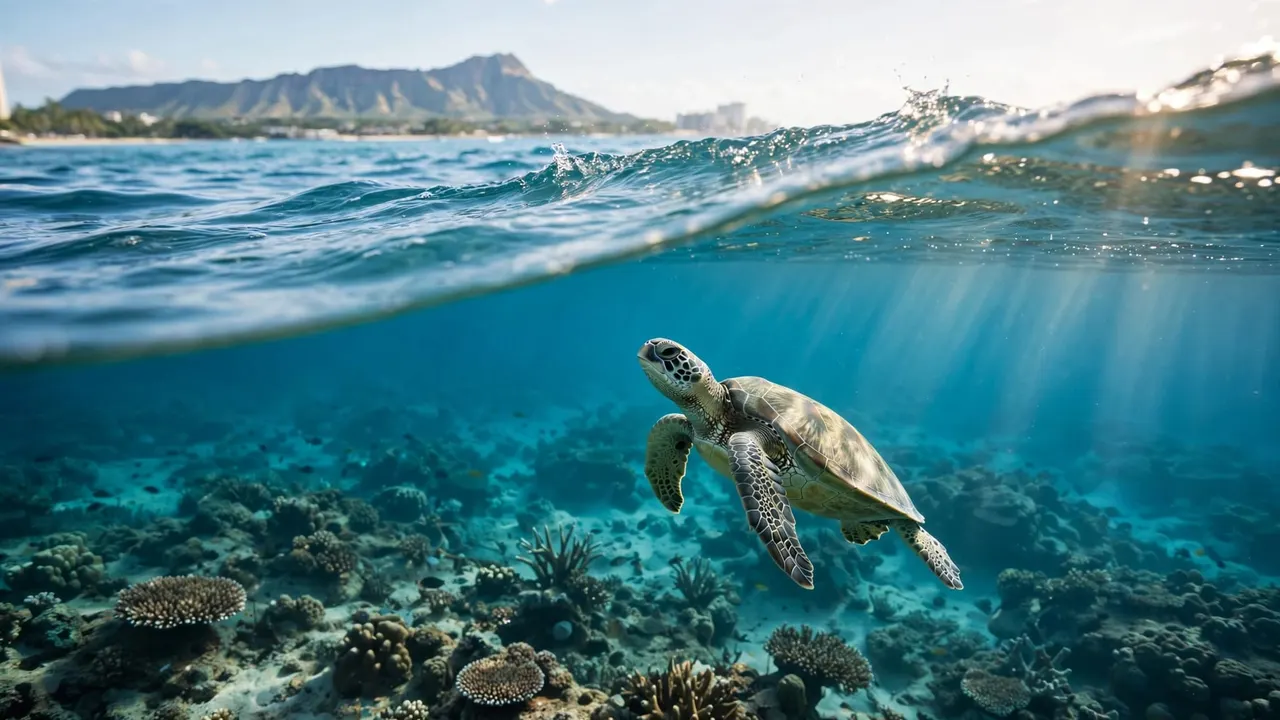
You don’t need a close-up to notice how a sea turtle moves. With Living Ocean Tours near Waikiki, you can plan a turtle-focused outing around surface observation, with professional guidance nearby.
Turtle snorkeling tours on Oahu let you watch reef wildlife without making diving part of your plan. Before you enter, it helps to understand your position in the water and the space turtles need to follow their own routes.
Key Takeaways for Your Surface Snorkel
- Surface snorkeling gives you a view into the water below, but visibility and wildlife activity vary.
- Give Hawaiian green sea turtles at least 10 feet of space, and keep their route to the surface open.
- Ask for help with equipment and flotation before leaving the boat’s immediate area.
- Choose a guided outing around your swimming comfort, and remember that the full excursion includes more than snorkeling time.
What the Turtle Snorkeling Oahu Offers Looks Like
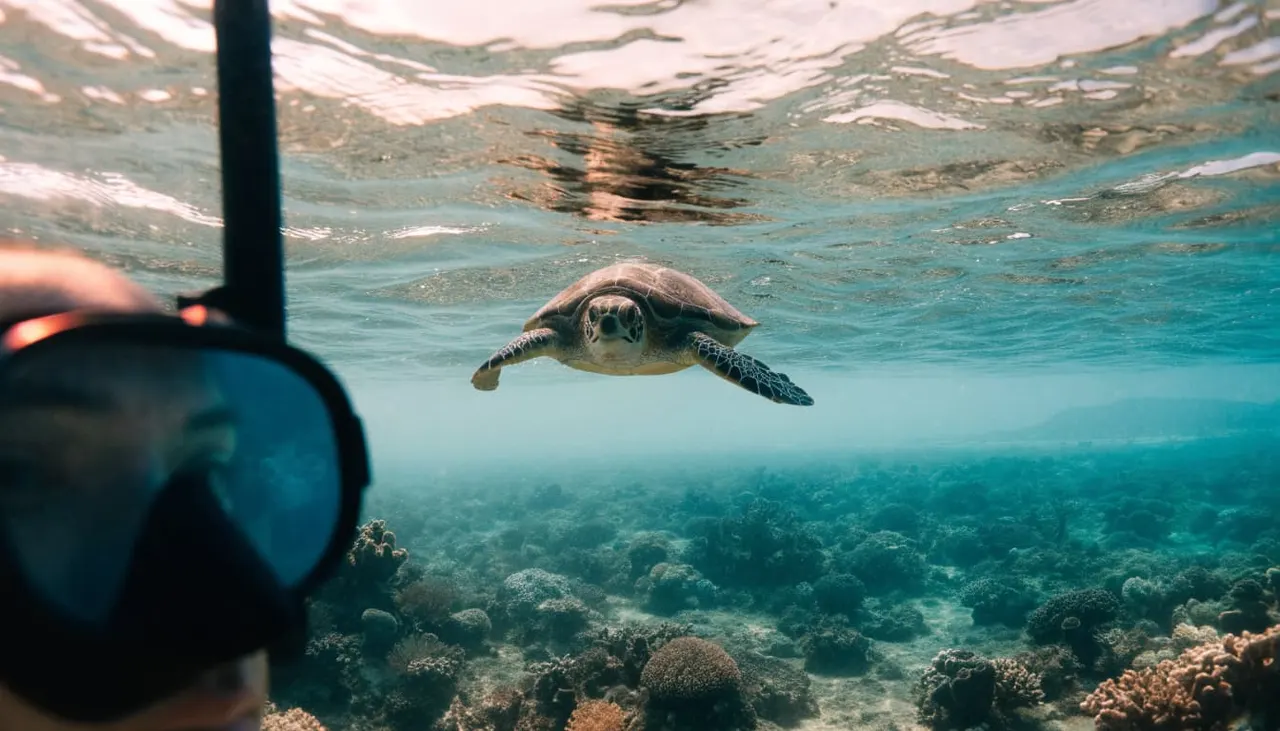
Your viewpoint changes when you look down through a mask. Instead of watching the coastline, you’re looking into a water column with reef habitat below.
You see the animal within its surroundings
A turtle may cross open water, pause near reef fish, or travel beyond your view. From the surface, you can watch how its position changes relative to the reef.
That wider scene matters. A turtle near small fish may be behaving differently from one swimming steadily away.
However, floating doesn’t guarantee clear visibility or a particular encounter. Surface chop, light, water clarity, and the animal’s location all affect what you can see. Let the day’s conditions shape your expectations rather than treating a photograph as a preview.
Your own position becomes part of the experience
While your face is down, keep track of your guide, companions, and the boat. Look up periodically, using the orientation method explained during your briefing.
You also need to notice where other snorkelers are moving. A group can close a turtle’s open route without intending to.
Before entering, ask where you should stay and how to signal for assistance. Those details deserve your attention before wildlife does. If you lose your bearings, seek help rather than following another swimmer without knowing their destination.
Watch Turtle Behavior Without Interrupting It
The turtle snorkeling Oahu is known for often centers on Hawaiian green sea turtles, called honu. Turtle Canyons, offshore from Waikiki, has natural cleaning-station habitat where turtles may visit.
A cleaning station is a place to observe
At a cleaning station, small reef fish may remove algae and other material from a turtle’s shell and skin. You may notice fish gathering around an animal that pauses or moves slowly.
Watch the interaction without swimming into the gathering. The turtle and fish need room to continue their activity.
Also, don’t assume every pause means cleaning. Resting, traveling, and feeding are different behaviors. Look at what the animal is doing over time rather than assigning a story to one moment. Your guide can help explain what you’re seeing.
A surfacing turtle needs a clear route
Sea turtles breathe air. If a turtle begins moving upward, leave space above it and avoid gathering around its anticipated surfacing point.
Keep your companions from forming a ring around the animal, too. Your position should leave it options.
Hawaii’s sea turtle protection information explains that all sea turtles in the state have federal and state protections. Respectful observation means allowing natural behavior, including departure. When a turtle swims away, let the encounter end.
Give Honu Room at the Surface
Distance applies in the water, even when a turtle seems calm. NOAA’s Hawaii marine wildlife viewing guidance recommends staying at least 10 feet, or 3 meters, from sea turtles on land and in water.
Keep space even when a turtle approaches
A turtle’s movement can change your separation quickly. If one approaches, avoid reaching toward it or treating its proximity as permission to interact.
Create space calmly when conditions allow, and follow your guide’s direction. Don’t chase the animal after it passes.
You should never touch, feed, or crowd a turtle. The same restraint applies when several people are watching together. Your individual distance can look acceptable while the group blocks multiple escape routes.
A turtle needs an open route to breathe and leave, not just a gap between its shell and your fins.
Let your camera work within the distance
Plan your photograph around the recommended buffer. Don’t close the gap because the turtle looks small on your screen.
A wider image can include the reef and the surrounding water. However, put the camera aside whenever it distracts you from your position or companions.
NOAA’s advice on sharing the sea with wildlife reinforces giving turtles space. A memorable image should come from an encounter you observed respectfully.
Settle Your Equipment Before Watching Wildlife
Your surface snorkel still requires attention to equipment, swimming ability, and conditions. Professional guidance and flotation support don’t remove those responsibilities.
Practice the basics near your guide
Tell the crew if you’ve never used a snorkel, feel uneasy in open water, or need help selecting flotation. Ask how to clear your snorkel and what to do if your mask leaks.
Check that your mask seal sits against your face without trapped hair. Then follow the crew’s instructions for entry and practice near the designated area.
Don’t wait until you’ve followed the group to mention a problem. If breathing through the snorkel feels uncomfortable, stop and ask for help. You can also return to the boat when you’ve had enough.
Agree on a plan with your companions
Couples should discuss whether they want to stay together throughout the swim. Families need a clear supervision plan before children enter.
Ask the crew about age requirements, swimming expectations, and the flotation options appropriate for each person. An eligible age doesn’t automatically establish readiness for open water.
Meanwhile, confident swimmers should still follow the same boundaries as everyone else. Familiarity with snorkeling doesn’t tell you the current conditions at an unfamiliar reef. Keep fins clear of coral, stay within the designated area, and use the agreed signal when you need assistance.
Choose a Guided Turtle Canyons Outing
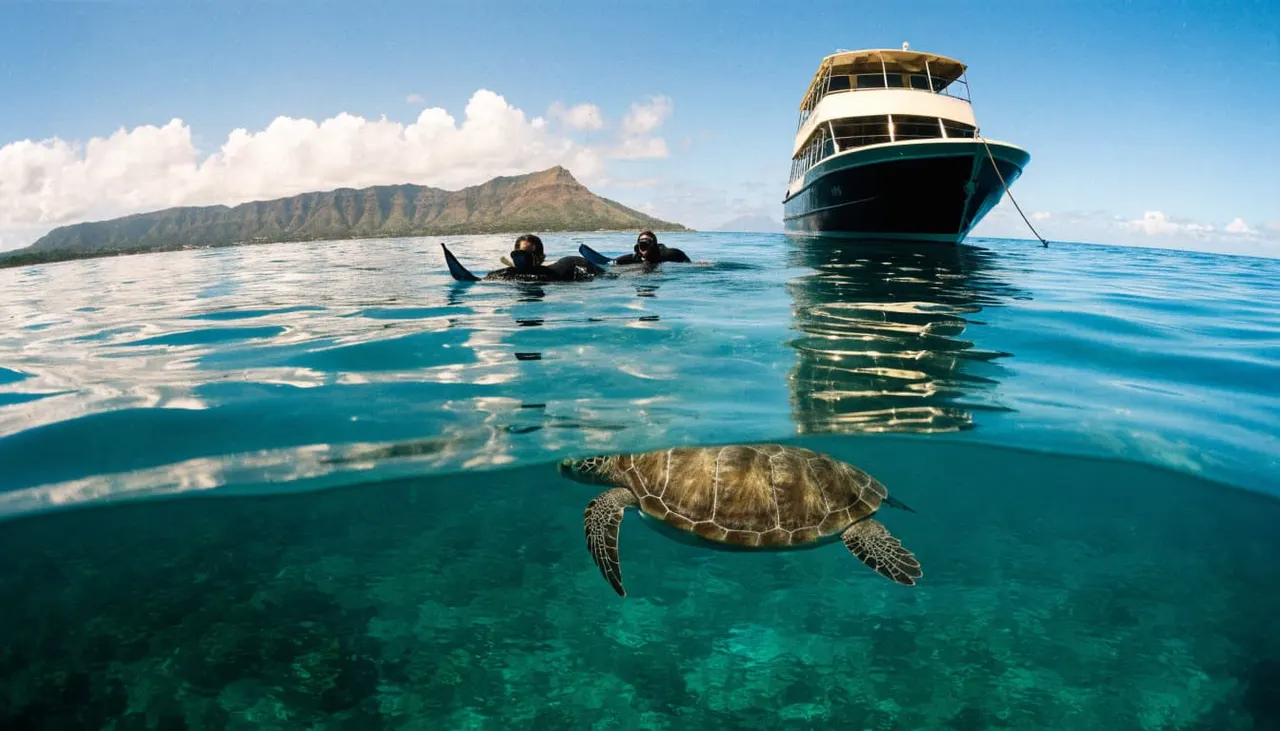
For the turtle snorkeling Oahu visitors plan near Waikiki, Living Ocean Tours departs from Kewalo Basin Boat Harbor. The company describes itself as the only Oahu tour company with professional snorkel guides.
That in-water support gives you someone to ask about mask fit, flotation, wildlife etiquette, and your return to the boat. Tell the crew about swimming nerves or motion sickness before departure.
The Turtle Canyons Snorkel Excursion focuses on offshore reef habitat where green sea turtles may visit cleaning stations. You reach this site by boat, rather than entering directly from Waikiki Beach.
Living Ocean Tours reports a 95% historical turtle-sighting rate. That company-reported figure isn’t a guarantee for your departure, because wildlife activity and ocean conditions vary.
The company describes the excursion as roughly two hours, with approximately 45 to 60 minutes in the water. Confirm the current itinerary before booking, and distinguish the scheduled outing from your personal swim time.
You can compare its Waikiki ocean tour options before deciding whether a turtle-focused excursion suits your group. When turtles are your priority, choose a departure that leaves room for harbor arrival and a relaxed return.
Plan Your Day Around the Whole Excursion
A snorkeling reservation includes time outside the water. Check-in, briefing, equipment preparation, travel, and boarding again all take part of your day.
For turtle snorkeling Oahu vacation plans, avoid placing another reservation immediately after the advertised return. Allow time to dry off, gather belongings, and travel from the harbor.
Bring a secure swimsuit, towel, sun protection, and a reusable water bottle. A rash guard provides coverage while you’re in the water. Keep loose valuables to a minimum, and ask where belongings should go aboard.
If boats bother you, discuss motion sickness precautions with a pharmacist or clinician before your trip. Don’t assume a calm-looking harbor tells you how the offshore ride will feel.
Living Ocean Tours describes shaded seating, restrooms, dry storage, and sturdy boarding ladders across its double-decker fleet. Confirm the arrangements for your departure rather than assuming every vessel has identical features.
Finally, review the current cancellation policy and arrival instructions. A clear plan lets your group arrive prepared without making the outing feel rushed.
Frequently Asked Questions
Do you have to dive underwater to watch turtles?
You can observe from the surface without planning a dive. What you see depends on visibility, the turtle’s position, and the day’s conditions. Follow your guide’s instructions rather than descending to pursue an animal.
Can a first-time snorkeler join a guided outing?
Discuss your experience and swimming comfort with the operator before booking. Ask about instruction, flotation, and in-water support. Your decision should reflect both your ability and the crew’s assessment of conditions.
How close can you get to a Hawaiian green sea turtle?
NOAA recommends at least 10 feet, or 3 meters, on land and in water. Also, keep the turtle’s route to the surface open and never touch, feed, or chase it.
Does floating mean you can stop paying attention?
You still need to monitor your location, companions, and changing conditions. Look up periodically and stay within the designated area. Signal your guide if you feel uncomfortable, lose your bearings, or want to return.
Let the Turtle Set the Pace
Your surface view can hold plenty to observe without a close approach. Give honu room to behave naturally, and keep your own position in mind throughout the swim.
Choose guidance that fits your experience, prepare before entering, and accept the encounter the ocean offers. When a turtle leaves your view, let it go rather than turning observation into pursuit.


