
Turtle Snorkeling Oahu: What Turtle Vision Looks Like Underwater
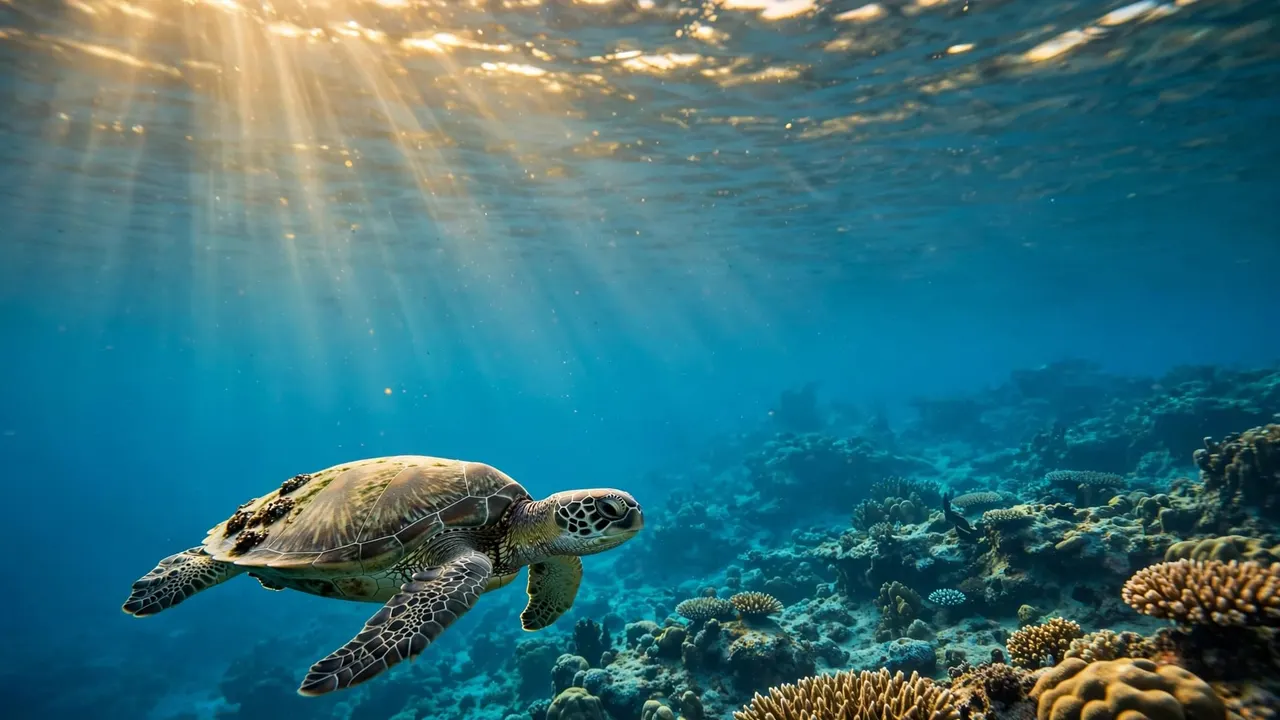
A Hawaiian green sea turtle can glide past your mask and make the rest of the reef disappear for a moment. During turtle snorkeling Oahu, you are looking at a wild honu in its home, but you can’t know exactly how that animal experiences the scene through its own eyes.
Living Ocean Tours departs from Kewalo Basin Boat Harbor, minutes from Waikiki, for wildlife-focused reef trips with fitted gear, flotation support, and the only professional snorkel guides in the water with you. A patient, respectful approach gives you the best chance to watch normal turtle behavior.
Key Takeaways for a Better Turtle Encounter
- You can’t recreate a turtle’s exact underwater view with a human mask or camera.
- Hawaiian green sea turtles, called honu, are the sea turtles you are most likely to encounter on Hawaii’s reefs.
- Water clarity, sun angle, reef depth, and distance affect what you see during turtle snorkeling Oahu.
- Stay at least 10 feet, or 3 meters, from every sea turtle, and keep its route to the surface open.
- A turtle’s calm movement, resting posture, or slow rise does not invite closer contact.
The clearest turtle sighting is one where the animal keeps resting, feeding, or swimming as though you were never there.
What Turtle Snorkeling Oahu Can Show You About Vision
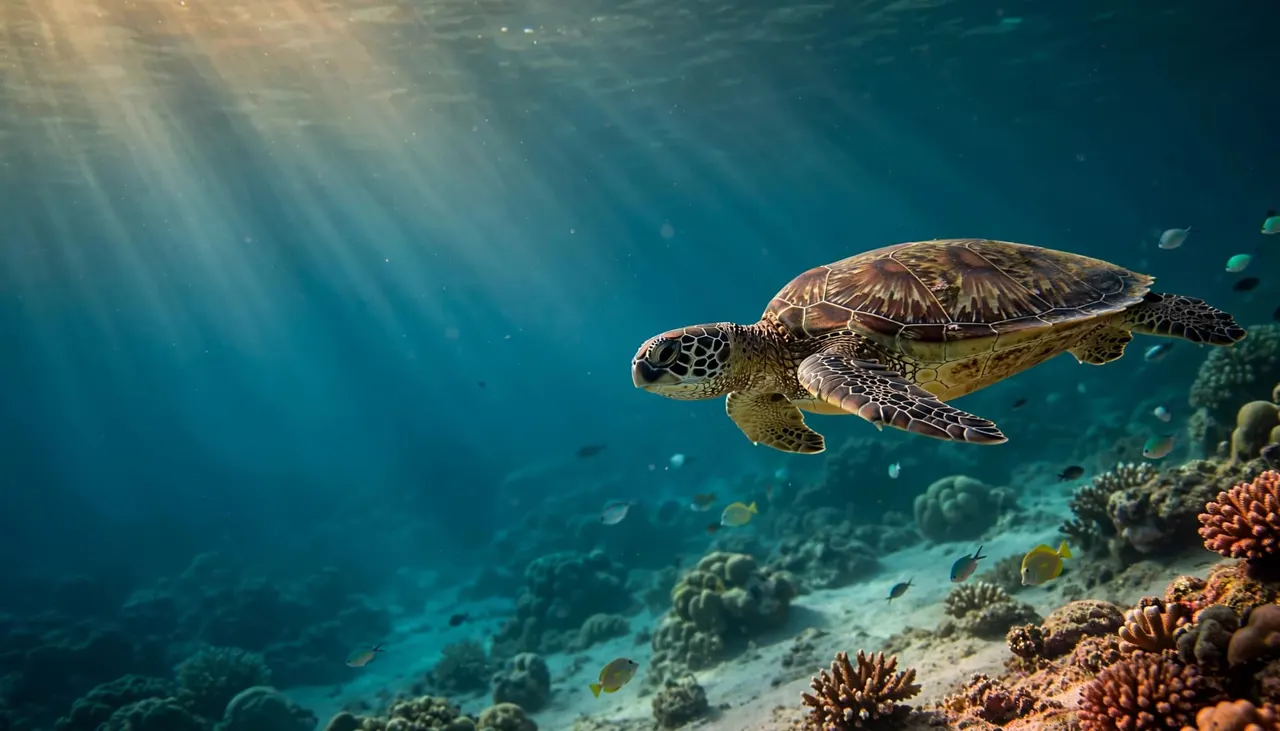
A turtle’s eye is visible in many close encounters, especially when it lifts its head while cruising over the reef. Still, an eye contact moment shouldn’t be treated as proof that the turtle sees the same colors, detail, or depth that you do.
The honest answer is simple: no one can turn a snorkel photo into a precise turtle-eye view. Your mask, the changing light, and the water between you all shape what you see.
What available facts can confirm
Hawaiian green sea turtles are commonly called honu, and they are the sea turtle species most often seen on Hawaii’s reefs and beaches. The Hawaii Department of Land and Natural Resources sea turtle information also distinguishes the green turtle from the less commonly encountered hawksbill, known as honu ‘ea.
A honu’s eyes help it move through an active reef, yet the animal’s full visual experience remains outside a snorkeler’s view. You can observe its behavior without claiming to know its point of view.
Watch behavior instead of guessing perception
Look for a turtle’s direction, pace, and position near the reef. A honu may drift above coral, pause near a ledge, or head upward for air. Each action tells you more about its immediate needs than a close look at its eye.
When a turtle changes course, hold your place. If it rises, leave a wide corridor above it. Green turtles are marine reptiles with lungs, so every turtle needs room to reach the surface.
Underwater Light Changes Every Reef Scene
The water around Waikiki can appear brilliant from the boat, then look different after you put your face below the surface. Light shifts with clouds, depth, waves, sand, and the position of the sun. Those changes affect your own view of turtles and coral.
Distance can hide useful details
At a respectful distance, you may recognize a turtle’s oval shell, front flippers, and steady motion. However, you may not see fine marks or small injuries. Water visibility can also make a turtle appear closer or farther away than it is.
Keep your camera ready before the turtle arrives. A quick photo from a distance preserves the moment without turning the encounter into a chase. If you want a closer image later, crop the photograph rather than swimming into the turtle’s space.
A reef is more than one animal
Turtles often draw your attention first, yet fish activity can explain part of the scene. At a natural cleaning station, reef fish may gather near a turtle and remove algae or other material from its shell and skin.
Several turtles near the same reef don’t prove they traveled there together. They may be using the same productive habitat for resting, feeding, or cleaning while moving independently through the area.
Turtle Canyon Is Wild Reef Habitat
Turtle Canyons sits offshore from Waikiki and is accessible by boat. The area is known for reef habitat where Hawaiian green sea turtles may stop at natural cleaning stations, but the turtles decide when they arrive and when they leave.
For turtle snorkeling Oahu visitors, that unpredictability is part of the experience. You are entering a living reef, not an aquarium or a staged animal encounter.
What a Turtle Canyons outing includes
The Turtle Canyons snorkel excursion takes you along the Waikiki coast to this offshore reef. Living Ocean Tours reports a 95% turtle-sighting rate, although wildlife sightings always depend on conditions and animal behavior.
Tour information describes an approximately two-hour outing, with roughly 45 to 60 minutes in the water. A short boat ride gives you more time to settle into the ocean, practice your breathing, and observe the reef without rushing.
Why guides matter in the water
Living Ocean Tours is the only tour company with professional snorkel guides. That matters when you are new to open-water snorkeling, helping a child adjust a mask, or deciding whether current conditions feel right for you.
The crew can help you fit your gear, use flotation support, and stay oriented around the reef. You can also tell a guide if you notice fishing line, a fresh wound, uneven flipper movement, or obvious difficulty swimming. Don’t attempt a rescue or remove debris yourself.
See Turtles Without Changing Their Behavior
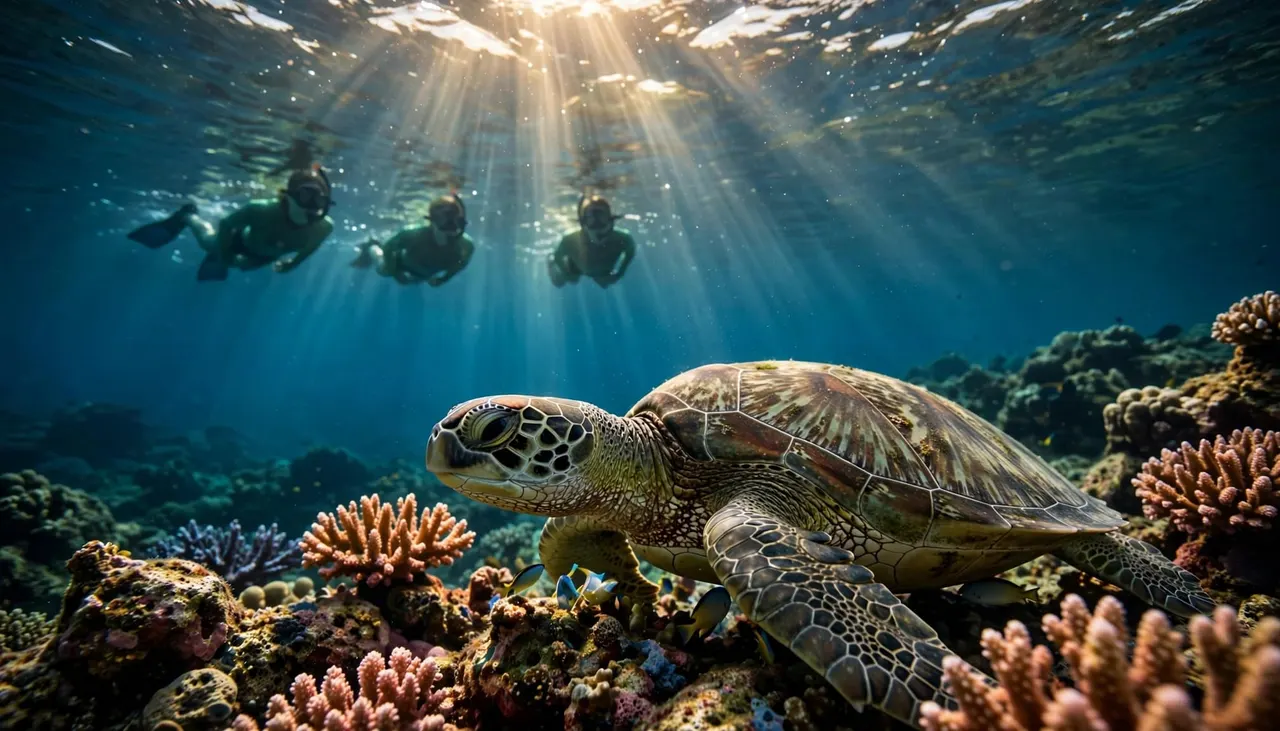
The best wildlife encounters feel calm because you let the animal control the distance. A turtle swimming near you has chosen its path. It hasn’t asked you to follow.
Keep a 10-foot buffer
NOAA guidance recommends staying at least 10 feet away from sea turtles in Hawaii, both in the water and on shore. Leave more room when visibility is poor or when other snorkelers are nearby.
Never touch, feed, chase, ride, block, or surround a turtle. Keep your fins well above the reef, because coral is living habitat and even a brief touch can cause damage or stir sand into the water.
Let a turtle pass on its own terms
Float with your body horizontal and move only when you need to reposition safely. Slow, small fin kicks help you conserve energy and avoid disturbing coral below you.
If a honu heads toward the surface, don’t swim underneath it. If it approaches your group, stay still and let it choose its route. Your patience can turn a brief glimpse into a longer, more natural observation.
Prepare for a Relaxed Snorkel Day
Turtle snorkeling Oahu feels more comfortable when you plan for the ocean, not only the photo. Tell the crew if you are a first-time snorkeler, prone to seasickness, traveling with children, or unsure about swimming in deeper water.
Choose comfort over pressure
A flotation vest can help you remain calm at the surface and keep your fins clear of the reef. Secure camera straps and loose gear before you enter the water. Then listen when a guide asks swimmers to return to the boat.
You always have permission to skip the water. Watching the reef from the deck can still be a rewarding choice when you don’t feel comfortable, conditions change, or your child needs a break.
Book a trip built around turtle habitat
Living Ocean Tours operates Coast Guard-inspected double-decker vessels with shaded seating, onboard restrooms, dry storage, and sturdy water-entry ladders. The Turtle Canyons trip is a strong fit when reef wildlife is the main reason you came to Oahu.
You can review Turtle Canyon snorkeling tours in Waikiki before choosing a departure. When you are ready to reserve a wildlife-focused outing, CHECK AVAILABILITY.
Frequently Asked Questions
Can you know what turtles see underwater?
You can’t know a turtle’s exact visual experience from your snorkel mask, video, or a close encounter. Water conditions also change how you see the reef. Focus on what you can observe reliably, including the turtle’s movement, breathing route, and relationship to nearby coral and fish.
Will you always see turtles at Turtle Canyons?
No wildlife sighting is guaranteed. Living Ocean Tours reports a 95% turtle-sighting rate for its Turtle Canyons excursion, but the animals and ocean conditions set the terms each day. Turtle snorkeling Oahu is more rewarding when you treat every sighting as a privilege.
Why does a turtle suddenly swim toward the surface?
Green turtles breathe air. A turtle may rest below, cruise past coral, and then begin a steady ascent to breathe. Its trip upward isn’t an invitation to follow, so give it a clear, open path.
What else might you see near the reef?
Tropical reef fish are common, and you may also spot rays, eels, spinner dolphins, or seabirds depending on conditions. A turtle may be the highlight, but the wider reef community makes the swim feel complete.
A Better View Starts With Space
A turtle encounter becomes more memorable when you stop trying to make it closer. Turtle snorkeling Oahu gives you a chance to watch honu move through a reef on their own terms.
Give each turtle room to rest, surface, and swim away. Your best view is the one that leaves the animal’s natural behavior unchanged.


