
Turtle Snorkeling Oahu: Protect Curly Hair in Salt Water
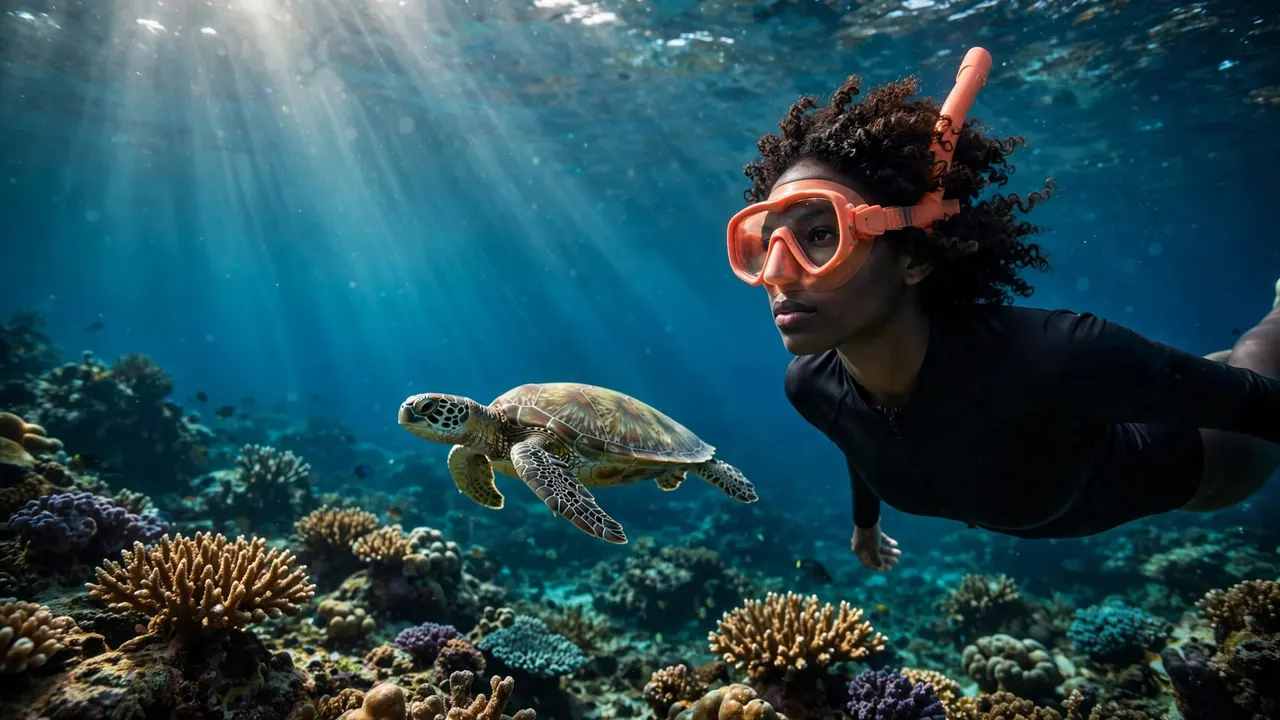
Salt water can make your curls look beautifully defined for an hour, then leave them dry, tangled, and difficult to detangle. With a little prep, you can enjoy turtle snorkeling Oahu without sacrificing your wash day.
Living Ocean Tours departs from Kewalo Basin Boat Harbor, minutes from Waikiki, with guided ocean experiences built for first-time snorkelers, families, and confident swimmers. You get professional guidance, comfortable boats, and time to enjoy the reef instead of worrying about logistics.
Your best beach-hair routine starts before you board the boat.
Start With a Guided Turtle Snorkel Experience
A relaxed snorkel trip gives you more time to focus on the water, your comfort, and your hair routine. Living Ocean Tours offers Waikiki snorkeling tours that include gear, instruction, dry storage, shaded seating, restrooms, and sturdy ladders for getting in and out of the ocean.
The company is the only tour company with professional snorkel guides. That matters when you want help clearing your mask, adjusting your fins, or feeling settled in open water. On the Turtle Canyons route, the crew visits a natural turtle cleaning station and reports a 95% turtle-sighting success rate.
If you want a short, guided outing with time in the water, reserve your spot for the Turtle Canyons experience through CHECK AVAILABILITY.
Why Turtle Snorkeling Oahu Can Dry Out Curly Hair
Ocean water contains salt and minerals that pull moisture from your strands. Sun, wind, snorkeling masks, and repeated wetting can add friction, especially around your crown and ends.
Salt lifts the cuticle
Your curl pattern may look more textured after a swim because salt adds grip. However, that rough feeling often means your hair needs moisture. If you already have color-treated, porous, coily, or fragile hair, the effect can show up faster.
Repeated exposure can leave curls dull, stiff, or prone to breakage. A gentle rinse and conditioner after swimming help prevent that dry, straw-like feel. General swim-care advice also recommends rinsing promptly and restoring moisture with conditioner, as outlined in this hair-care guide for swimmers.
Tangling starts before you notice it
Long curls move freely in current, while loose ends rub against a mask strap, rash guard, or life vest. By the time you climb back aboard, small knots can become a full detangling project.
The goal is not to keep every curl perfectly defined. You want to reduce friction so your hair stays manageable after a memorable morning in the Pacific.
Prep Your Curls Before You Board
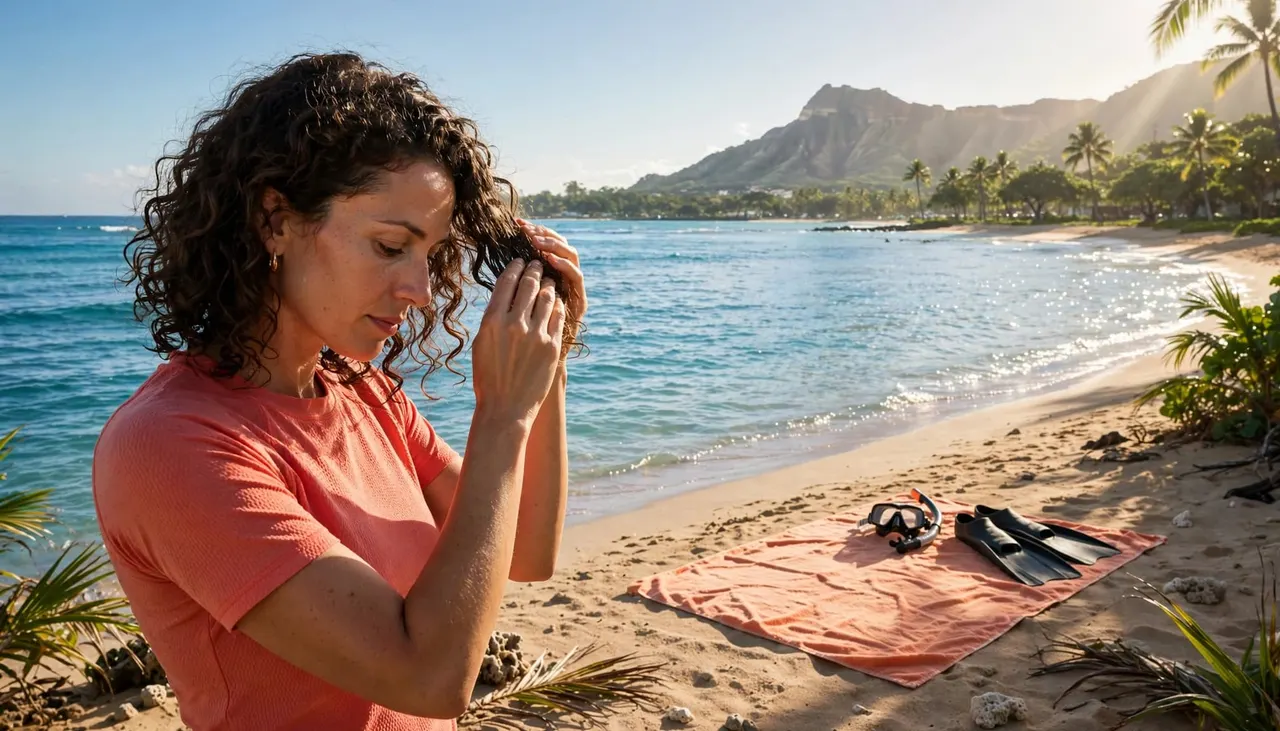
Your hair is less likely to absorb salt water when it is already saturated with clean fresh water. Hotel showers, public beach showers, or a bottle of water can all work before you head to the harbor.
Wet hair with fresh water first
Dampen your hair thoroughly, especially the ends and underside near your neck. Then apply a small amount of leave-in conditioner from mid-length to ends. Choose a lightweight formula that gives slip without leaving a heavy film in the ocean.
If your hair is fine or easily weighed down, use less product and focus on the ends. For dense curls or coils, a richer leave-in can make detangling easier later.
Avoid spraying loose aerosol products near the boat or reef. Keep any hair product in your bag, apply it before departure, and wash your hands afterward.
Pick a low-friction style
A loose braid, two loose braids, or chunky twists usually work better than a high bun. A tight style can pull at your scalp once it gets wet, while a loose style can unravel in the water.
Use a soft, snag-free tie. Skip metal clasps, sharp clips, and styles that place a bulky knot directly under your mask strap. If you wear a swim cap, test it at home first. Some caps flatten curls, but they can help if you want more coverage.
Fresh-water prep is simple, but it makes the post-snorkel rinse far more effective because your hair starts out less thirsty for salt water.
Keep Curls Comfortable While You Snorkel
A good mask fit protects more than your view. It also prevents constant hair adjustments that can pull strands into the seal and cause leaks.
Set your mask strap over the right section
Part your hair before putting on your mask. Place the strap over the smoothest, most secure part of your style, often low on the back of your head. If curls sit under the silicone, lift them out gently before entering the water.
Once you are swimming, resist the urge to keep fixing your hair. Repeated pulling creates knots and can loosen your style. If the mask leaks, signal a guide and take a moment to reset it.
Use a rash guard for added coverage
A long-sleeve rash guard limits sun exposure on your shoulders and reduces contact between your hair and bare skin. It also helps you stay comfortable during boat rides, when wind can rough up damp curls.
Pack a microfiber towel or a soft cotton T-shirt for afterward. Rough terry towels can create frizz when you rub wet curls hard. Instead, press and squeeze out excess water.
Respect the Honu While You Swim
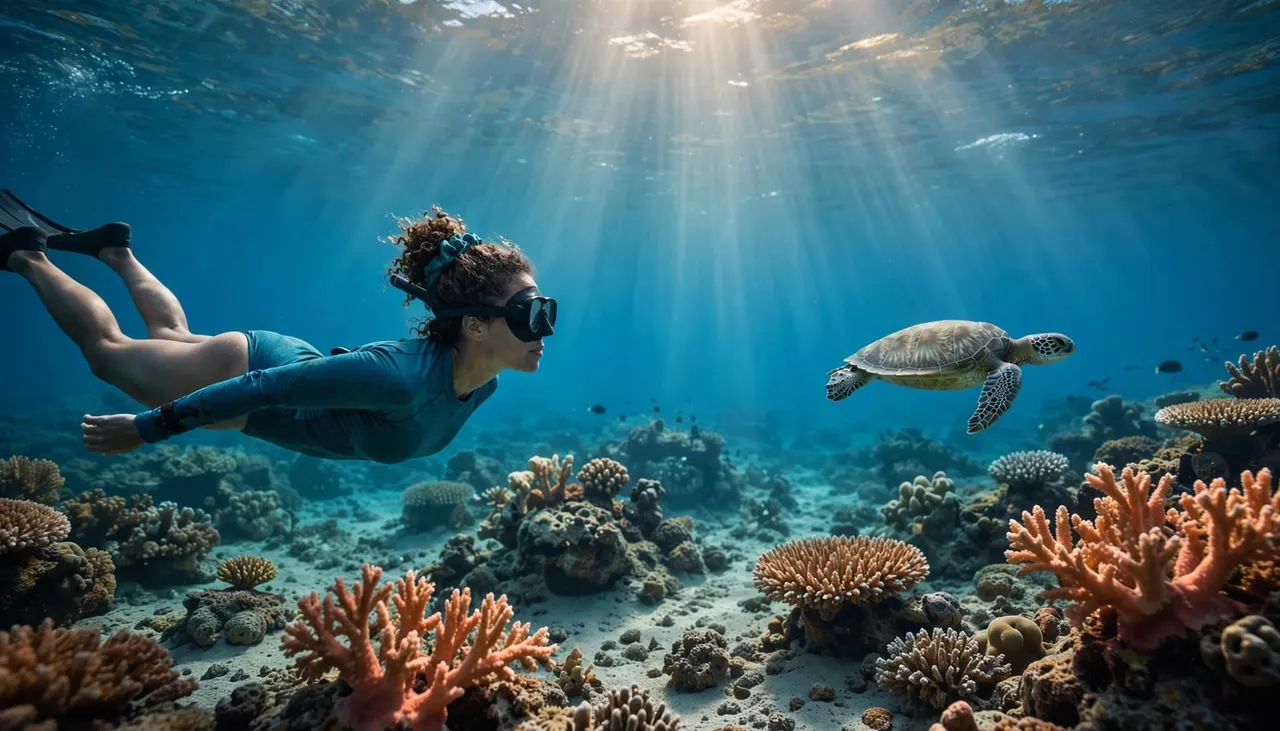
The best turtle encounter happens on the turtle’s terms. Hawaiian green sea turtles, called honu, often glide over reef areas or rest while cleaner fish remove algae and small organisms from their shells.
Give every turtle room to move
Stay at least 10 feet away, whether you see a turtle in the water or resting on shore. Hawaii’s Protected Species Program gives that distance as the public viewing guideline.
Never touch, feed, chase, corner, ride, or swim directly above a turtle. If one swims toward you, remain calm and let it choose its own path. Move away slowly if you cannot keep a respectful distance.
Your hair routine should support that approach. A secure braid or twist keeps curls out of your eyes, so you can watch your surroundings without sudden movements or frantic adjustments.
Let guides set the pace
During turtle snorkeling Oahu trips, professional snorkel guides can point out wildlife while helping you stay oriented. Follow their route, listen when they ask the group to spread out, and avoid standing on coral.
A great photo is never worth interrupting a turtle’s feeding, resting, or cleaning behavior. You will remember the quiet moment of seeing a honu glide past far longer than a rushed close-up.
Rinse Salt Water Out Before It Sets
Do not wait until bedtime if you can avoid it. Rinse your hair with fresh water shortly after you leave the ocean, even if you plan to wash it later at your hotel.
Start with a long fresh-water rinse
Let water run through the roots, nape, and ends. Use your fingers to separate sections gently while the water flushes out salt. Do not rake aggressively through curls that feel rough or knotted.
After rinsing, apply leave-in conditioner or a small amount of detangling product. This step restores slip before your hair dries in the trade winds.
Wash and condition when you return
Use a gentle, moisturizing shampoo if your hair feels coated, itchy, or stiff. If you snorkel several times during your trip, a clarifying wash may help, but using one after every swim can leave curls even drier.
Follow with a deep conditioner, then detangle in sections with your fingers or a wide-tooth comb. If dry ends remain a problem, use a little oil or curl cream after conditioning. This guide to repairing dry hair also recommends rinsing salt water and conditioning after a swim.
Pack a Small Beach-Hair Kit
You do not need a suitcase full of products. A compact kit keeps your curls comfortable without filling your dry bag.
- Bring a travel-size leave-in conditioner and apply it before and after your swim.
- Pack two snag-free hair ties, because one always seems to disappear near the water.
- Add a microfiber towel or soft T-shirt for blotting instead of rubbing.
- Keep a wide-tooth comb in your hotel room for post-rinse detangling.
- Use a broad-brim hat after snorkeling to shield damp hair and your scalp from direct sun.
If you develop persistent scalp irritation, unusual shedding, or breakage that does not improve, a board-certified dermatologist can help. The American Academy of Dermatology can help you find qualified skin and hair specialists.
Consider Ear Health Before Ocean Snorkeling
Curly-hair prep should not distract you from your ears. If you have ear tubes, recent ear surgery, recurring ear infections, drainage, or ear canal eczema, ask your ENT about Honolulu snorkeling before your trip.
A medical okay for a chlorinated pool does not automatically cover ocean snorkeling, underwater play, or diving. Your ENT can advise you based on your tube type, recovery, past infections, and current ear health.
Congestion, allergies, a cold, or sinus pressure can also make equalizing uncomfortable. If symptoms appear before your tour, choose comfort over forcing a snorkel session. The ocean will still be there when you feel well.
Make the Ocean Day Easy on Your Curls
Turtle snorkeling Oahu should leave you with great photos, a calm ocean memory, and curls that recover easily. Fresh-water prep, a loose protective style, and a prompt rinse do most of the work.
When you pair that routine with respectful wildlife viewing and a guided boat trip, you can focus on the reef instead of worrying about knots. Healthy curls and responsible snorkeling belong on the same ocean day.


