
Turtle Snorkeling Oahu: Prepare Kids for Deep Water
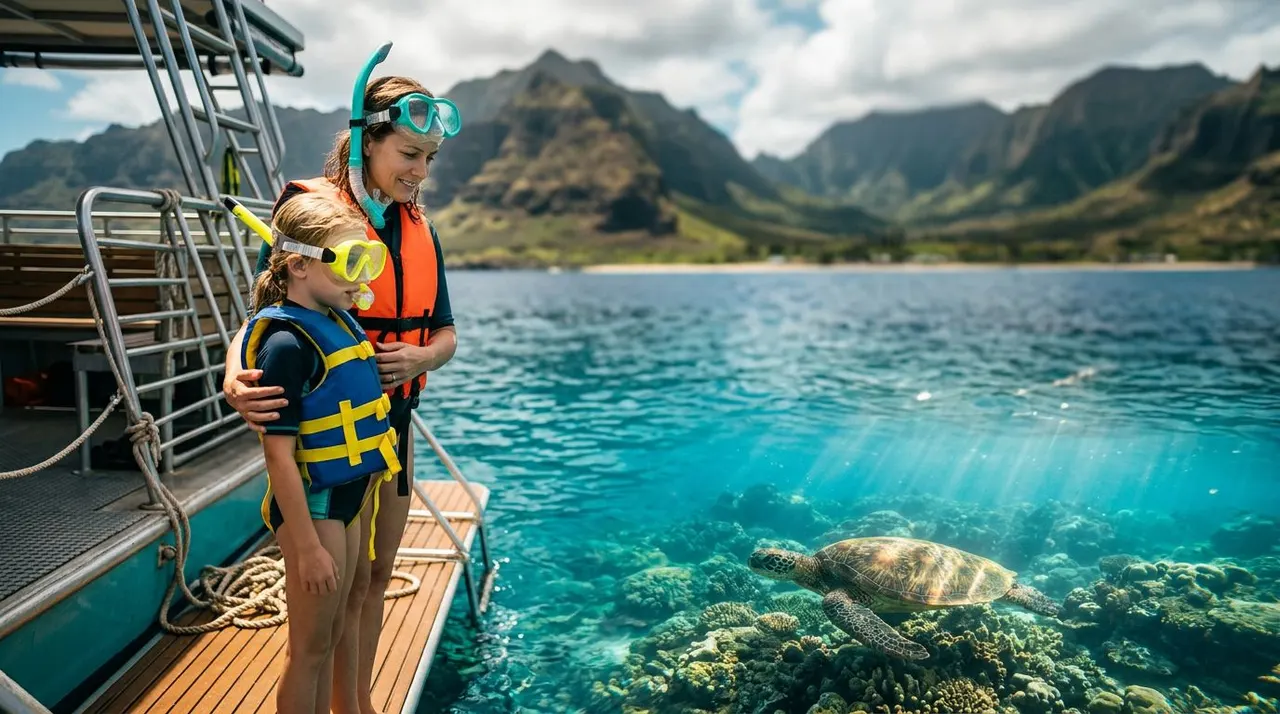
Deep water can feel intimidating when your child first looks over the side of a boat. With the right preparation, however, turtle snorkeling Oahu becomes a calm, exciting family experience instead of an overwhelming one.
Your child doesn’t need to be an advanced swimmer to enjoy a guided snorkel trip. You do need to choose the right tour, practice a few skills beforehand, and explain what will happen in clear, simple terms. These steps help your child feel ready before entering the ocean.
Key Takeaways
- Practice breathing through a snorkel in a shallow pool before your trip.
- Choose a guided boat tour with professional snorkel guides and safety equipment.
- Use flotation support while your child builds confidence in deeper water.
- Teach your child to observe Hawaiian green sea turtles without touching them.
- Let your child’s comfort level guide the pace of the experience.
Why Deep Water Feels Different for Kids
A child may swim confidently in a pool and still feel nervous in the open ocean. Pools have visible walls, steady depth, and clear water. Ocean conditions can change with wind, waves, current, and visibility.
At Turtle Canyons near Waikiki, your child may see the seafloor below while floating in water that feels much deeper than a swimming pool. That change can create a sudden sense of vulnerability. Even strong young swimmers may need time to adjust.
Explain this difference before you leave the hotel. Tell your child that the guide will stay nearby, the boat will remain close, and nobody has to rush into the water. Avoid promising that the sea will be perfectly calm. Instead, explain that the crew will watch conditions and help everyone enter safely.
Children also respond to your body language. If you appear relaxed and attentive, your child is more likely to stay calm. Give simple instructions, keep your voice steady, and celebrate small steps such as putting on the mask or floating beside the boat.
A child who feels in control usually learns faster than a child who feels pressured to perform.
Getting Kids Ready for Open Water Snorkeling
Start practicing several days before your turtle snorkeling Oahu excursion. A swimming pool works well, but a bathtub can help your child become familiar with the mask and snorkel first.
Have your child place the mask on their face without entering the water. Check that the seal feels comfortable and that hair isn’t trapped beneath the skirt. Next, practice breathing through the snorkel while standing in shallow water.
Keep the first practice short. Two or three minutes is enough if your child feels nervous. Increase the time gradually, then practice floating while looking down. Your child should learn to lift their head, remove the snorkel, and signal for help.
Teach a few hand signals before boarding:
- Thumb up means your child feels good.
- Flat, waving hand means your child needs a pause.
- Pointing to the boat means your child wants to return.
- Hand across the throat means your child needs immediate help.
Don’t make the practice feel like a test. Let your child wear the mask while looking at pool toys or floating objects. A playful approach creates positive associations with the equipment.
Choose a Family-Friendly Turtle Snorkeling Tour
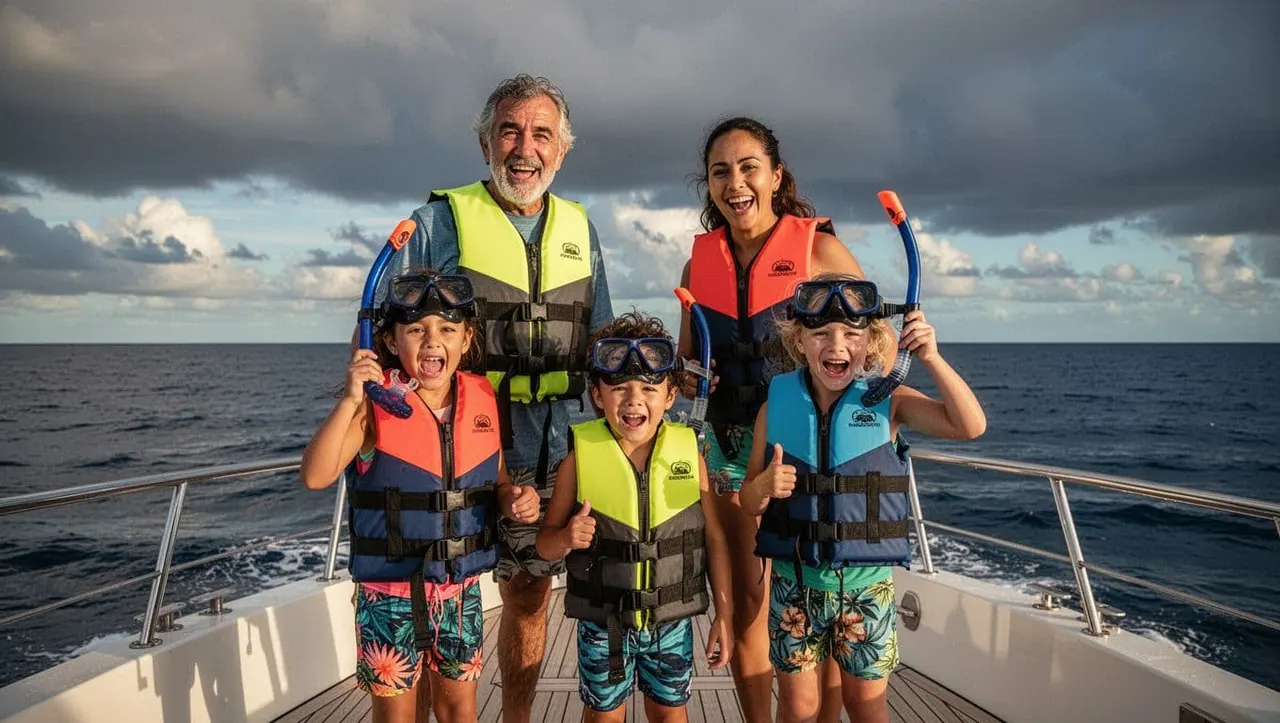
The tour operator you choose affects your child’s experience. Look for a company that provides clear safety instructions, quality gear, flotation support, and close supervision in the water.
Living Ocean Tours departs from Kewalo Basin Boat Harbor, a short drive from Waikiki Beach. The company offers guided ocean experiences for beginners and families, with professional snorkel guides accompanying guests in the water. This added support helps you focus on your child instead of trying to manage every detail alone.
The company’s Coast Guard-inspected vessels include shaded seating, restrooms, dry storage, and sturdy ladders for water entry. The Lokahi also features a SeaKeeper stabilization system, which helps reduce rolling while the boat is underway. A steadier ride can make the day easier for children who are sensitive to motion.
You can compare guided Turtle Canyons snorkeling trips before choosing the experience that fits your family. Ask about age requirements, water conditions, flotation devices, and how guides assist children during entry and exit.
The Turtle Canyon Snorkel Excursion is designed for guests who want to see Hawaiian green sea turtles at a natural underwater cleaning station. Living Ocean Tours reports a 95% turtle-spotting success rate for this excursion, although wildlife sightings can never be guaranteed.
Before booking, consider your child’s swimming ability, comfort with masks, and willingness to follow directions. A child who can swim but panics with a face in the water may need more preparation than a younger child who already enjoys snorkeling.
Help Your Child Enter Deep Water Safely
The first entry often feels harder than the swim itself. Your child may hesitate at the ladder, grip the rail tightly, or ask to return to the boat. Those reactions are normal.
Listen to the crew’s instructions and stay close without crowding your child. Many children feel more comfortable entering after watching an adult or guide go first. Let your child see how the ladder works, where to place their feet, and how to hold the rails.
Once in the water, begin beside the boat. Encourage your child to float vertically while breathing through the snorkel. A properly fitted flotation vest or other approved support can provide reassurance while your child learns how the ocean moves.
Don’t pull your child toward the turtles. Instead, allow the guide to lead the group and point out marine life from a respectful distance. If your child wants to return to the ladder, honor that request promptly. A short, successful swim is better than staying too long and creating fear.
Keep your own movements calm. Avoid grabbing your child suddenly unless safety requires it. Sudden movement can make a nervous swimmer feel less secure. Use the agreed hand signals and speak in short phrases.
If your child swallows water, help them return to the boat or hold the ladder. Give them time to recover. They may want to try again after a rest, or they may decide that watching from the boat is enough for the day.
Teach Kids to Respect Hawaiian Green Sea Turtles
Seeing a honu in the water can be a powerful moment for your family. Your child may want to swim closer, touch the shell, or follow the turtle as it moves. Explain the rules before entering the ocean.
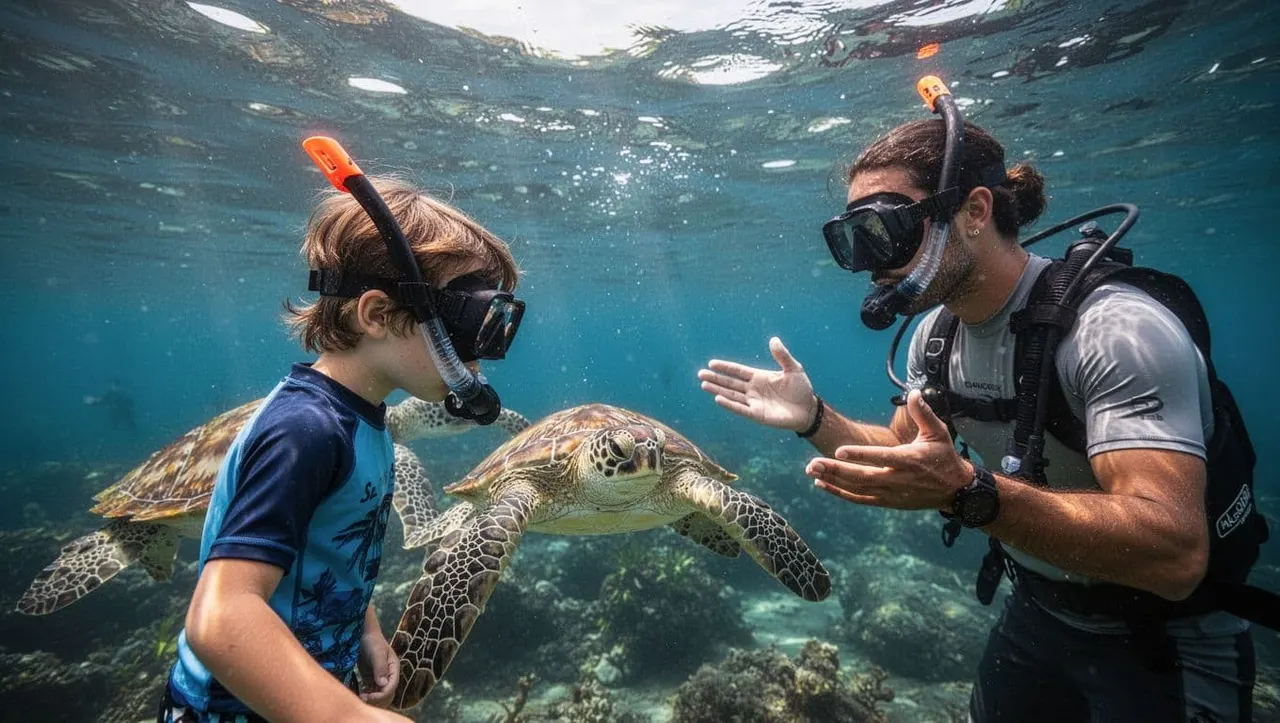
Hawaiian green sea turtles need space to swim, rest, and feed. Teach your child to observe without touching, chasing, blocking, feeding, or riding a turtle. A safe viewing distance protects both the animal and your child.
You can describe the turtle’s behavior in simple terms. If it rises for air, your child should watch without following it to the surface. If it rests on the seafloor, the group should leave room around it. The goal is to see natural behavior, not make the turtle react.
The same rule applies to coral and other reef life. Hands should stay off the seafloor, and fins should move slowly to avoid accidental contact. Sunscreen can also affect the marine environment, so ask your operator about reef-conscious choices and avoid products that irritate your child’s eyes.
Pack for Comfort Before You Leave Waikiki
Small comfort problems can become large distractions on the water. Pack swimwear that fits securely, a towel, reef-conscious sunscreen, drinking water, and a change of dry clothes.
Feed your child a light meal before the trip. Heavy food can make motion sickness worse, while an empty stomach may leave your child tired. Bring a familiar snack for after snorkeling if the operator allows food onboard.
Children often cool down after leaving the water, even on a warm Hawaiian day. A light cover-up or sweatshirt can help during the boat ride back to the harbor. Sunglasses with a strap and a hat also make time on deck more comfortable.
If your child gets seasick, tell the crew before departure. Keep your child looking toward the horizon during the ride, and follow the operator’s guidance about food, seating, and medication. The Lokahi’s stabilization system may help reduce boat movement, but every child responds differently.
Arrive early enough to avoid a rushed check-in. Use that time to show your child the boat, locate the restroom, review the ladder, and meet the guide. Familiar surroundings can reduce anxiety before the group reaches the snorkel site.
What to Do If Your Child Doesn’t Want to Snorkel
Your child may change their mind after seeing the open ocean. Don’t turn the decision into a contest. Ask what feels uncomfortable and separate the problem from the activity.
A child who dislikes the mask may feel better after adjusting the strap. Someone worried about depth may prefer to remain beside the boat ladder. Another child may enjoy sitting on the deck and watching relatives snorkel.
Give your child choices that preserve safety. They can observe from the boat, sit with a parent, try the mask without putting their face underwater, or enter for a short time with a guide. The crew can explain available flotation support and water-entry procedures.
The Deluxe Waikiki Snorkeling and Wildlife Cruise can be a good option for families who want more than an in-water activity. It includes access to a less-crowded reef, plus family-friendly features such as a waterslide, water trampoline, and floating lily pad. Your child can enjoy the boat even if snorkeling takes time.
Keep the Experience Calm, Safe, and Memorable
The best turtle snorkeling Oahu experience for your family is one that matches your child’s readiness. Prepare with short practice sessions, select a guided tour, and explain what your child can expect before reaching the water.
During the trip, stay close, follow the professional snorkel guide, and respect every request for a break. Your child may remember the turtle, but they will also remember whether they felt safe while seeing it.
Conclusion
Deep water doesn’t have to prevent your child from enjoying a Hawaiian snorkeling adventure. With the right equipment, patient preparation, and professional guidance, you can help your child enter the ocean with confidence.
Choose observation over pressure, and let your child’s comfort set the pace. A calm first experience can turn one turtle sighting into a lasting love of the ocean.


