
Turtle Snorkeling Oahu: Your 2026 Guide to Seeing Honu
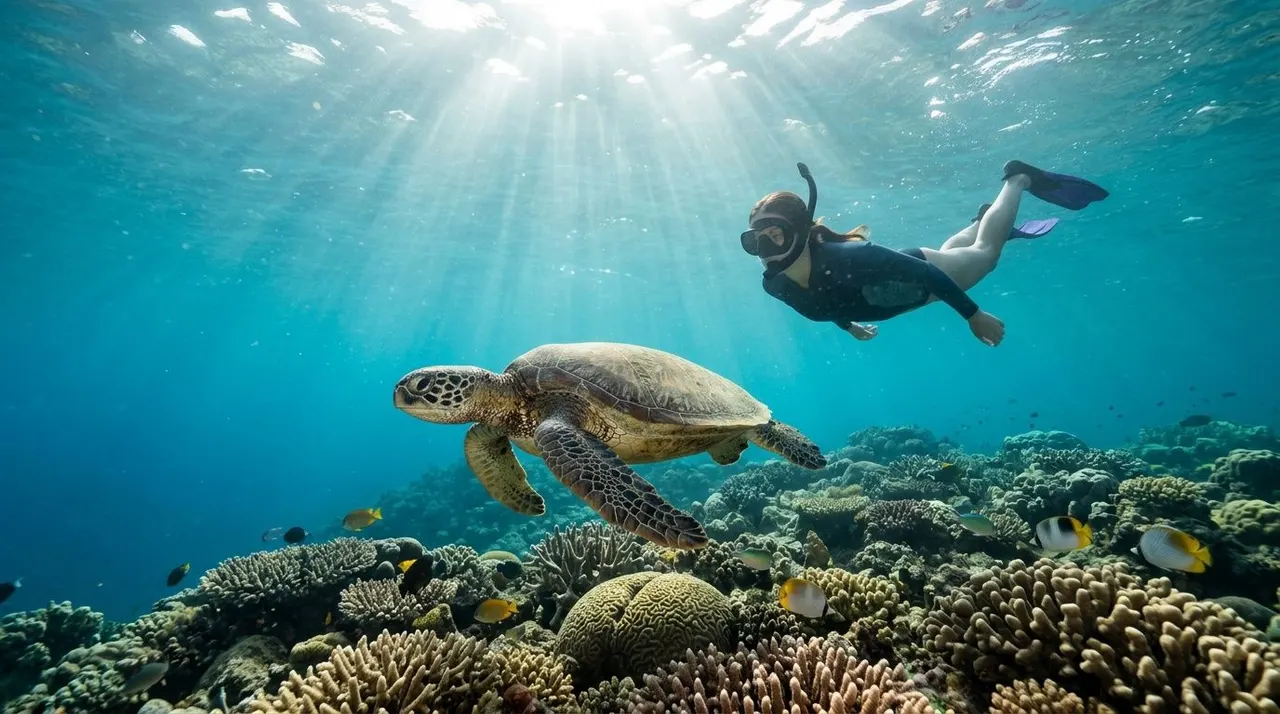
You're likely in the same position as many Oahu visitors. You've seen the photos, your family has insisted on swimming with turtles, and now you're trying to determine what is worth your time. That matters, because turtle snorkeling on Oahu can be magical when you choose the right setup, and frustrating or unsafe when you don't.
The good news is that you don't need to guess. The smartest approach is to focus on a location that gives you calm conditions, reliable turtle activity, and clear rules for respectful wildlife viewing. That's what separates a memorable honu encounter from a rushed beach stop where you spend more time scanning the water than enjoying it.
Dreaming of Swimming with Sea Turtles in Oahu
There's a reason so many visitors search for turtle snorkeling Oahu before anything else. Floating in warm blue water while a Hawaiian green sea turtle glides below you is the kind of moment people talk about for years. It feels calm, slow, and surprisingly intimate, even when you're only watching from a respectful distance.
In Hawaii, these turtles are known as honu, and for many visitors the experience becomes more meaningful once they realize they aren't just checking off a wildlife sighting. They're entering an animal's home. That shift in mindset changes how you choose a snorkel trip, how you behave in the water, and how much you end up enjoying the day.
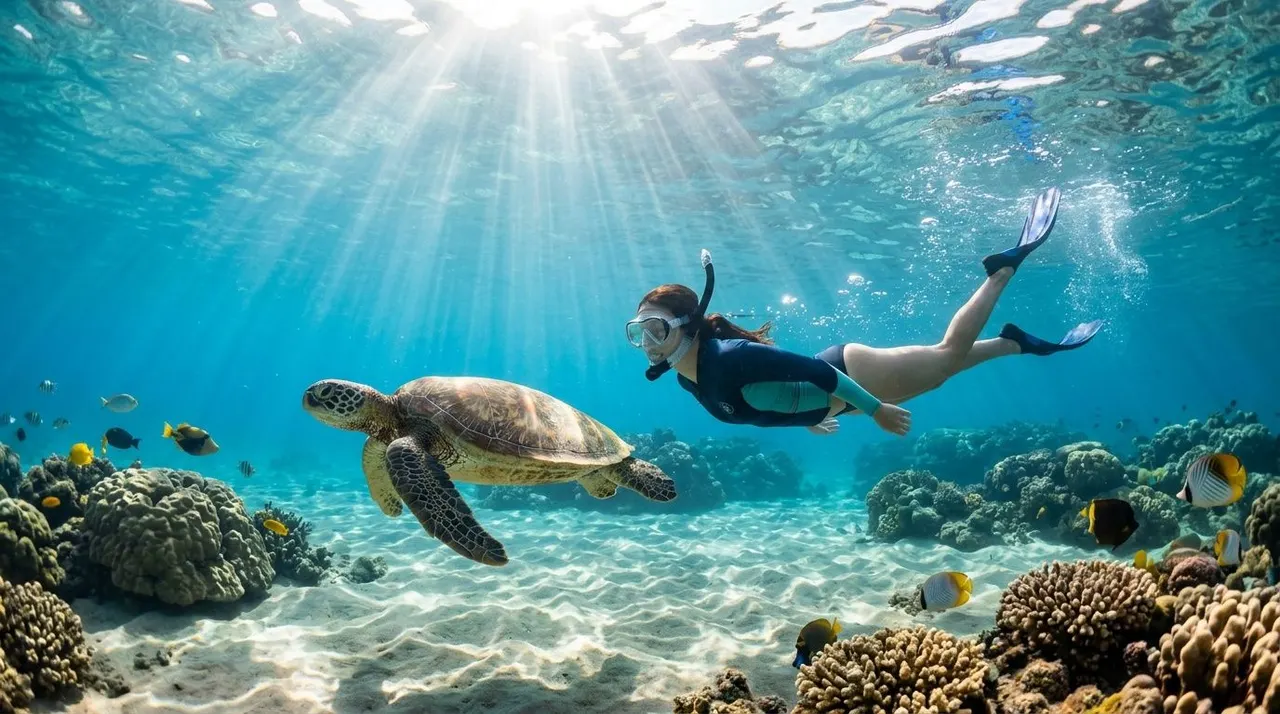
Some people arrive thinking they can just walk to any beach, jump in, and have the same experience they saw online. Sometimes that works. Often it doesn't. Conditions change fast, turtle activity shifts, and the most photogenic spot isn't always the place I'd send a beginner, a nervous swimmer, or a family with young kids.
Practical rule: If your goal is a safe and respectful turtle encounter, choose reliability over hype every time.
That's especially true on Oahu, where the difference between a strong plan and a weak one is huge. A good turtle snorkel day usually comes down to a few simple things: easy water access, stable conditions, knowledgeable guidance, and a site where turtles reliably show up for natural reasons.
What most visitors actually want
Most guests aren't looking for a hardcore swim. They want a trip that feels manageable and exciting. Usually that means:
- Clear direction: You want to know where to go, where to park or check in, and what the morning will look like.
- Good odds: Nobody wants to spend vacation time gambling on a random beach entry.
- Comfort in the water: First-timers want help with gear, breathing, and confidence.
- A clean conscience: People want amazing photos and memories without bothering the animals.
That's the standard this guide is built around. Not just where turtles can appear, but where turtle snorkeling on Oahu works best for real visitors who want the experience to be smooth, safe, and worth booking.
The Best Place for Guaranteed Turtle Sightings
A lot of visitors ask me the same question after one frustrating shore attempt. If they only have one morning to get in the water with turtles, where should they go to give themselves the best chance without turning the day into a hassle?
The most reliable answer is Turtle Canyon off Waikiki.
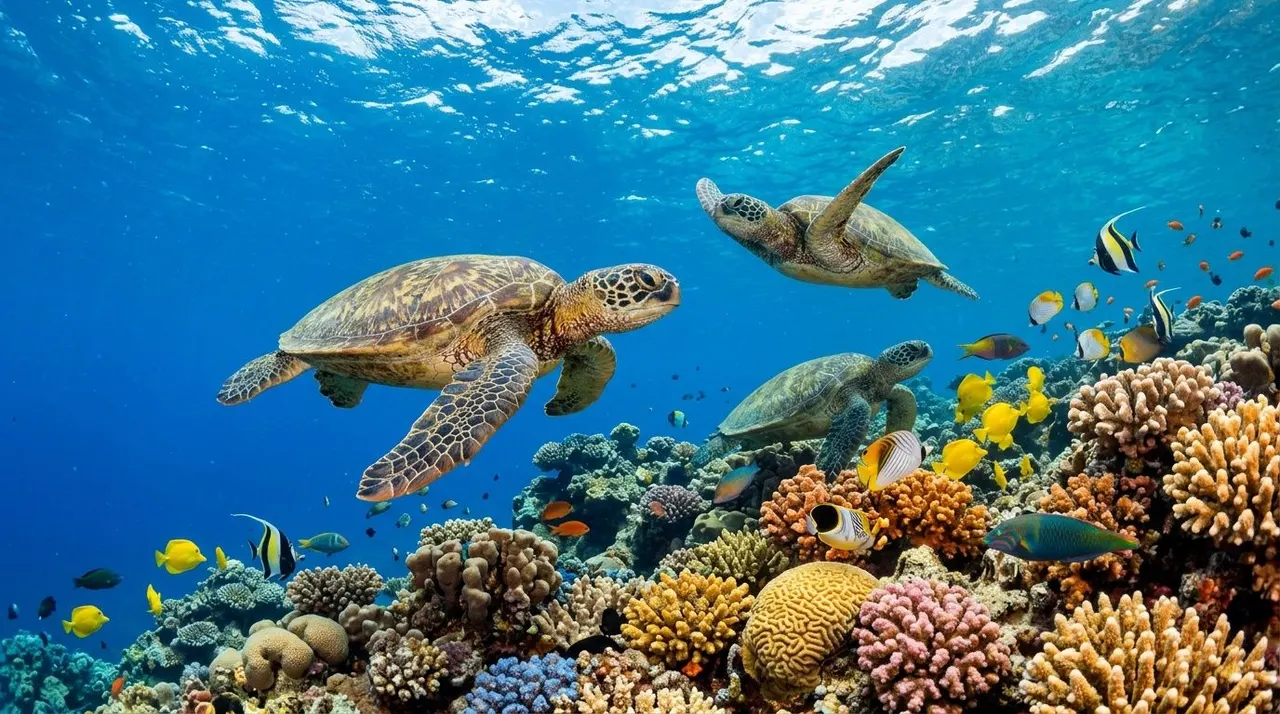
Turtle Canyon works because turtles use it for a repeatable natural behavior, not because operators are chasing random sightings. Hawaiian green sea turtles visit this reef as a cleaning station, where reef fish pick away algae and parasites. That pattern is why tours consistently choose it for guests who want a strong chance of seeing honu in clear water close to town. This Turtle Canyon snorkeling overview explains the site's typical conditions, including its short boat access from Waikiki, common visibility ranges, and the regular turtle activity that made the area well known.
Why Turtle Canyon works so well
The biggest advantage is consistency.
From a guide's perspective, that matters more than a beach's reputation. A site that reliably holds turtles, has straightforward boat access, and usually offers comfortable snorkeling conditions gives first-timers a much better experience than a famous shoreline spot that looks easy in photos but changes by the hour.
Turtle Canyon also solves a practical problem for Waikiki visitors. You can stay near your hotel, check in, take a short boat ride, and be snorkeling over active reef habitat without spending half the day driving around Oahu. For families, couples, and mixed-skill groups, that usually leads to a calmer start and a better day on the water.
A few things make it especially well suited to guided trips:
- Reliable turtle habitat: Turtles use the area naturally, so the trip is built around known animal behavior.
- Short transit time: Less time on the boat, more time in the water.
- Clearer experience for beginners: It is easier to relax when the site, gear setup, and entry are organized for you.
- Strong reef life beyond the turtles: Even on a day when guests arrive focused on honu, the fish life and reef structure keep the snorkel interesting from start to finish.
If you want a closer look at the site itself, this Turtle Canyon snorkeling Oahu guide gives a useful overview of how these trips are typically run.
Why shore spots are not always the better choice
Shore snorkeling has its place. I recommend it to confident swimmers who can read conditions, handle rocky or sandy entries, and stay flexible if a location is too rough, too murky, or too crowded.
That is not the same as saying it is the best option for a visitor who wants dependable turtle sightings.
Popular shore areas can be excellent for viewing turtles from land or for snorkeling on a very good day, but they come with more variables. Surf, current, entry conditions, parking, and crowd pressure all affect the experience. On the North Shore especially, winter conditions can turn a casual plan into a poor one fast. That trade-off matters. A guided boat trip to Turtle Canyon removes much of that uncertainty and puts you at a site chosen specifically because turtles are there for a reason.
A famous beach and a good turtle snorkel plan are not always the same thing.
If the goal is a safe, respectful, high-odds turtle encounter, Turtle Canyon is usually the smarter call. A direct option is the Turtle Canyons Snorkel Excursion.
Guided Tour vs DIY Snorkeling Which is Right for You
DIY snorkeling appeals to a lot of travelers because it feels flexible. Rent gear, pick a beach, and go when you want. That can work if you already know Oahu's shoreline, understand conditions, and don't mind the uncertainty that comes with self-planning.
Most visitors don't fit that profile. They want a cleaner decision: less guesswork, more support, and a better chance of getting the experience they came for.
Guided Tour vs. DIY Snorkeling at a Glance
| Feature | Guided Tour (e.g., Living Ocean Tours) | DIY (Do-It-Yourself) |
|---|---|---|
| Access | Reaches offshore turtle habitat that's hard to access from shore | Limited to beach-entry locations |
| Safety support | Crew provides briefing, oversight, and in-water help | You manage conditions and comfort on your own |
| Ease for beginners | Better for first-timers, kids, and mixed-skill groups | Can be stressful if anyone is nervous |
| Wildlife etiquette | Rules are reinforced clearly | Depends on your own awareness |
| Gear logistics | Simple, organized, and ready to use | Requires rental, transport, and fit checks |
| Trip quality | More structured and focused | More variable from day to day |
| Best for | Visitors who want confidence and convenience | Confident snorkelers who know what they're doing |
One local option people compare when researching turtle snorkeling is Living Ocean Tours' turtle snorkeling page. The company is often described as the top rated and most reviewed snorkel company on Oahu, and the practical value of a guided trip is straightforward: boat access, gear support, and crew oversight remove a lot of the friction that ruins DIY days.
Who should choose which option
If you're traveling with children, older family members, or someone who's unsure in the water, guided is usually the better call. It's not only about finding turtles. It's about reducing bad surprises.
DIY makes more sense when all of these are true:
- You're comfortable reading ocean conditions
- You don't mind changing plans if the spot looks wrong
- Your group already knows how to snorkel
- You're okay with the chance of seeing less
The right trip is the one that matches your group's confidence level, not the one that looks cheapest at first glance.
That's why I usually steer first-time visitors toward a guided turtle trip. They spend less time solving problems and more time enjoying the reef.
What to Expect on Your Turtle Snorkel Adventure
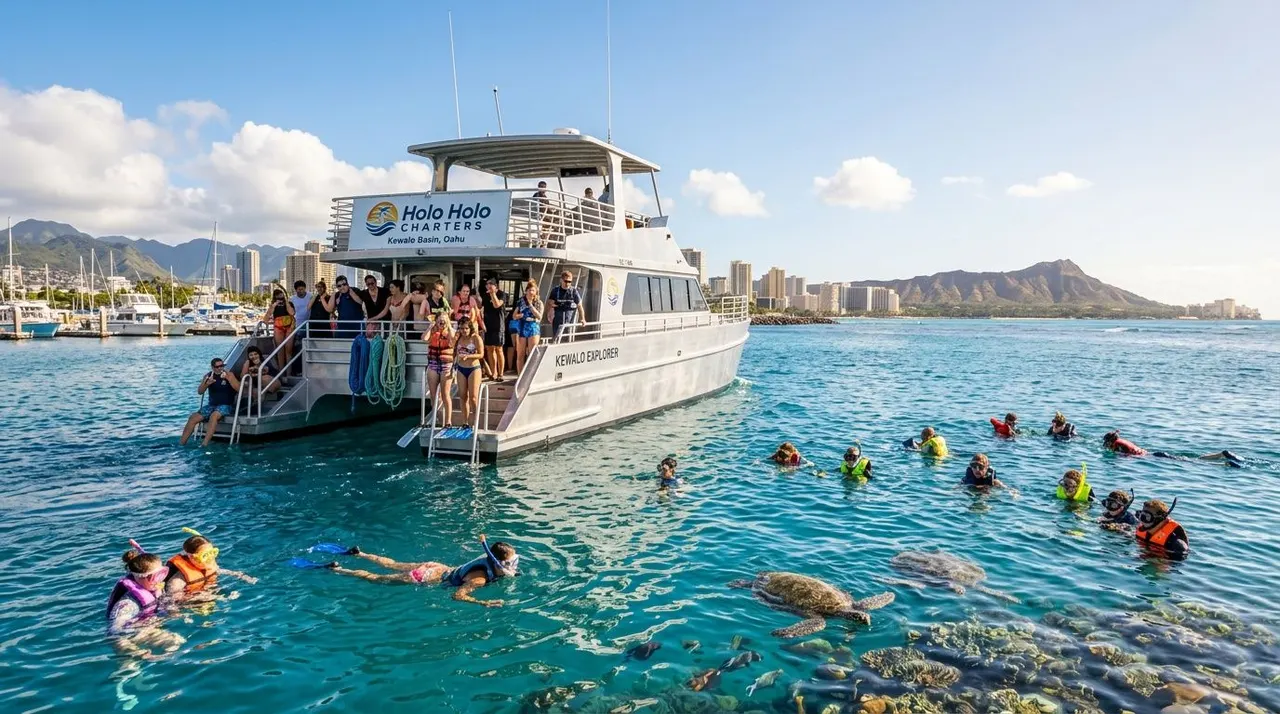
A good turtle snorkel trip feels easy from the start. You check in, meet the crew, get fitted with what you need, and head out without the scramble that often comes with beach rentals and uncertain launch points.
For Waikiki visitors, departures from Kewalo Basin are especially convenient because you're close to the harbor and on the water quickly. That short run offshore changes the energy of the day. Instead of fighting for a patch of sand, you're looking back at the skyline while the reef comes into view.
From check in to the boat ride
Before you board, it helps to know where you're headed and how timing works. This Turtle Canyon snorkeling check in guide is useful for smoothing out arrival logistics.
Once aboard, the crew usually covers the essentials in plain language. How to use the mask and snorkel. Where to enter the water. What to do if you need help. Good crews keep that briefing calm and short, because nervous guests don't need a lecture. They need clarity.
The ride itself is part of the fun. Waikiki behind you, open water ahead, and enough time to settle in without turning the trip into a long transit.
What the in water experience feels like
First-timers are often surprised by how manageable it is once they're floating. With a mask on and your face in the water, the noise drops away. You start noticing the fish first, then the shape of the reef, and then a turtle passes through and the whole group goes quiet for a second.
That's where guides matter. The best ones don't crowd the turtles or rush guests. They help people spread out, stay relaxed, and watch without turning the sighting into chaos.
If your group wants more of a family-style ocean outing, the Deluxe Waikiki Snorkel & Wildlife Cruise is another option with extra onboard fun.
Stay calm, float first, and let the reef come to you. New snorkelers usually enjoy the experience more when they stop kicking so hard.
Honu Etiquette How to View Turtles Respectfully
A turtle encounter can go from magical to stressful fast if a group closes in, kicks hard, or cuts off the animal's path to the surface. I've seen the difference many times at Turtle Canyons. Calm groups get longer, cleaner sightings. Crowded groups usually watch the turtle leave.
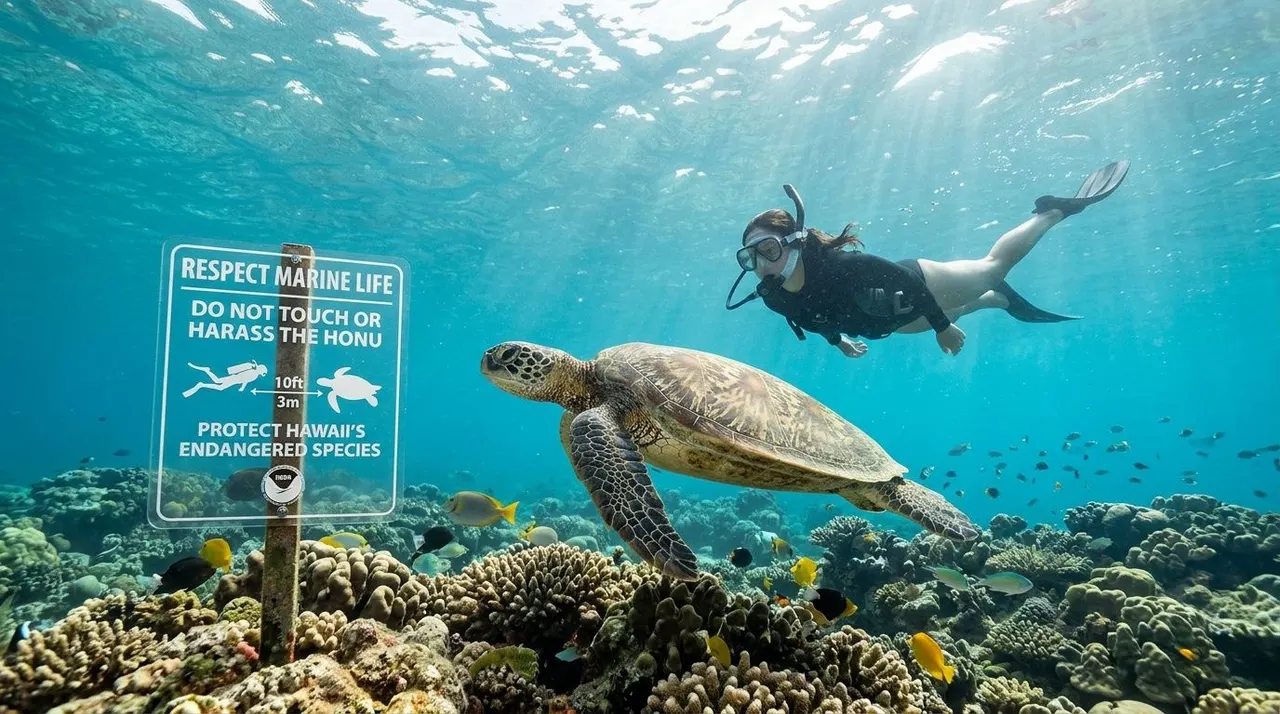
Seeing a honu up close is a privilege, and Hawaii treats it that way. These are protected wild animals, not photo props. The goal is simple. Watch without changing the turtle's behavior.
The rules that matter most
The basics are easy to remember, but they matter most when excitement kicks in. A turtle may look relaxed resting near the reef or heading up for air, but that does not mean it wants company.
Use these habits every time you snorkel with honu:
- Give the turtle space: Stay at least 10 feet away.
- Never touch or chase: If the turtle changes course because of you, back off.
- Keep the surface clear: Turtles need room to breathe without swimming through people.
- Do not feed them: Feeding changes natural behavior and creates problems for future visitors and the animals themselves.
If you want a clear trip-specific rundown before you go, review these Turtle Canyon snorkeling rules for respectful wildlife viewing.
Why guided groups usually do this better
This is one reason I steer first-timers toward a guided tour at a reliable site like Turtle Canyons instead of sending them out on their own. The reef is active, the water is shared, and excitement can override common sense. A good guide keeps guests spread out, points out turtles without surrounding them, and steps in early if someone starts drifting too close.
That protects the turtles, and it usually improves the sighting for the group. You spend less time guessing what is allowed and more time floating, watching, and letting the encounter unfold naturally.
The best turtle moments happen when you hold your position, breathe slowly, and let the honu decide where to go.
Respectful snorkeling helps the whole reef. Fewer frantic kicks mean less chance of bumping coral, stirring up sand, or turning one turtle sighting into a messy crowd scene. For visitors, the trade-off is easy. Give the animal room, and the experience feels calmer, safer, and far more memorable.
Your Checklist for a Perfect Day of Snorkeling
Preparation doesn't need to be complicated. The goal is to show up comfortable, avoid small mistakes, and keep your attention on the water instead of on what you forgot back at the hotel.
What to bring
A short packing list beats overthinking it. For most turtle snorkeling Oahu outings, bring:
- Reef-safe sunscreen: Apply it before boarding so you're not rushing at the harbor.
- Towel and dry clothes: The boat ride back feels better when you've got something dry waiting.
- Waterproof phone pouch or underwater camera: Only if you can use it without turning the trip into a photo chase.
- Hair tie, hat, and sunglasses: The boat portion is brighter than many people expect.
If you want a sense of what gear is typically handled for you on organized outings, this Turtle Canyon snorkel gear guide is a helpful reference.
First timer and family tips
New snorkelers do best when they keep the first few minutes simple. Put your face in the water, breathe slowly through the snorkel, and float before trying to swim hard. Once you trust the gear, everything settles down fast.
For families, the best move is to keep expectations light. Don't frame the trip like a test. Kids do better when they think of it as a boat adventure with a chance to see turtles, not a performance they have to nail.
A few habits make a big difference:
- Eat lightly beforehand so nobody feels queasy once the boat starts moving.
- Tell the crew who's new right away. They can usually help faster when they know who needs extra attention.
- Use flotation confidently if it's offered. Plenty of good snorkelers prefer to conserve energy and just enjoy the view.
If someone in your group gets nervous, keep them floating at the surface and looking down. Comfort returns faster when they stop trying to “snorkel correctly.”
Photography is where people often get sloppy. The best shots usually come when you pause, keep your distance, and let the turtle pass through the frame. Chasing a turtle for a closer photo almost always gives you a worse image and a worse encounter.
Book Your Unforgettable Oahu Turtle Tour Today
If your goal is simple, safe, memorable turtle snorkeling on Oahu, don't overcomplicate it. Choose a trip that gives you reliable access to a proven turtle site, clear safety guidance, and a respectful approach to wildlife from the start.
That's the difference between spending your vacation hoping for a sighting and stepping onto a boat with a plan that fits first-timers, families, and visitors who just want the day to run smoothly. A guided Turtle Canyon outing keeps the logistics tight and the experience focused where it should be, in the water with honu and reef life, not on the sidelines wondering if you picked the wrong spot.
If you're ready to lock it in, book early and pick the day that fits your schedule best.
If you want an easy way to turn your turtle snorkeling Oahu plans into a real booking, explore current tour options with Living Ocean Tours.


