
Turtle Canyon Snorkeling: Why Night Snorkels Are Rare
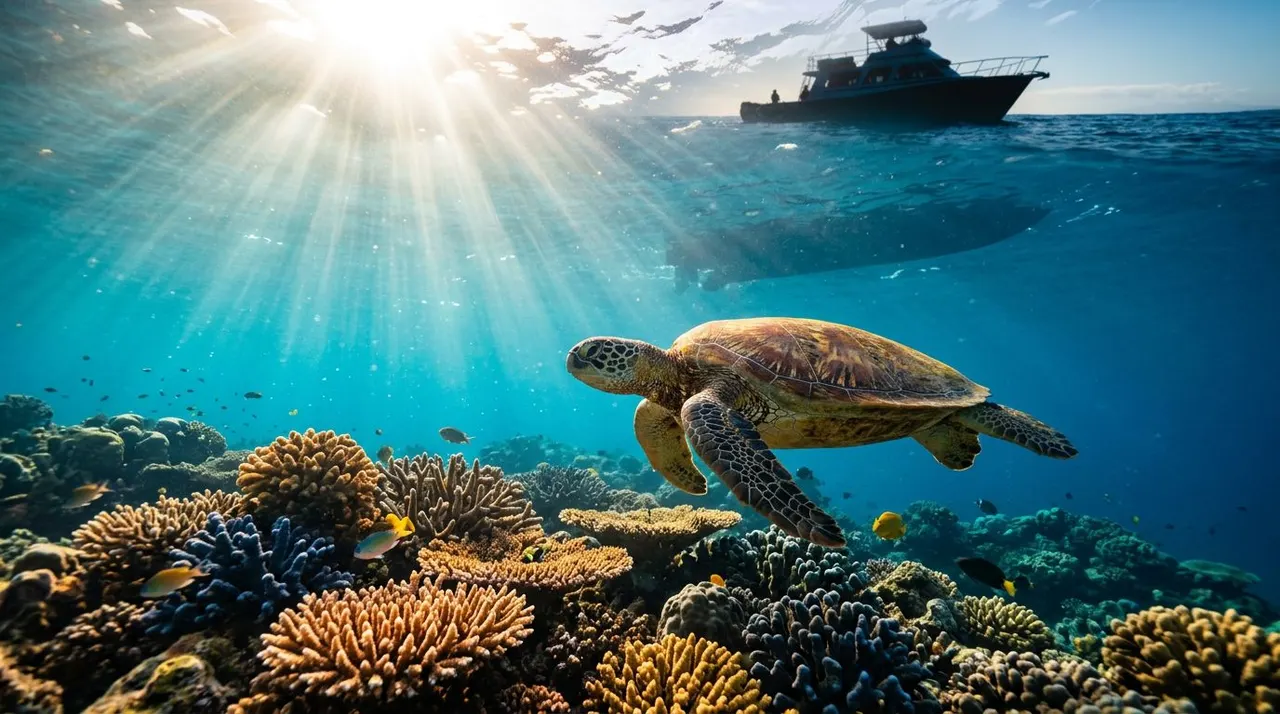
Turtle Canyon snorkeling is usually a daytime experience, and that schedule is intentional. Sunlight gives you clearer water, safer navigation, and a better chance to watch Hawaiian green sea turtles without disturbing them.
Living Ocean Tours departs from Kewalo Basin Boat Harbor, minutes from Waikiki Beach, with professional snorkel guides leading guests through the experience. If you’re wondering why commercial night snorkels at Turtle Canyon are uncommon, the answer involves visibility, wildlife protection, boat safety, and the changing conditions of the Pacific after sunset.
Why Turtle Canyon snorkeling is mainly a daylight experience
Turtle Canyon is a reef area off Waikiki known for encounters with Hawaiian green sea turtles, or honu. During daylight, you can see the reef structure, identify your guide, monitor nearby swimmers, and judge the distance to the boat. Those details matter when you’re floating in open ocean.
Sunlight also helps you appreciate the underwater habitat. Coral, reef fish, sand channels, and turtle-cleaning areas are easier to recognize in natural light. You can watch a turtle glide past without relying on a powerful beam that might startle it.
Living Ocean Tours reports a 95% success rate for spotting Hawaiian green sea turtles at its Turtle Canyons Snorkel Excursion. Wildlife encounters are never guaranteed, but daytime conditions give your crew the clearest setting for locating turtles and guiding guests respectfully.
Turtles don’t follow a tour schedule, either. Their movements can change with water conditions, food availability, boat traffic, and rest patterns. A professional guide reads the conditions and helps you observe from a respectful distance rather than chasing an animal for a closer view.
Daylight also supports safer boat operations. The captain can see surface traffic, floating objects, changing waves, and swimmers in the water. Your guide can keep track of the group more easily, which is especially helpful when you’re snorkeling for the first time or traveling with children.
Night snorkeling is possible in some controlled locations, but Turtle Canyon sits in an active coastal environment. The combination of open water, limited visibility, and marine wildlife makes daytime the practical choice.
What makes a night snorkel harder
After sunset, the ocean changes faster than the shoreline suggests. Even on a calm evening, darkness limits your ability to see the reef below, other swimmers nearby, and the boat’s position relative to the group.
A waterproof flashlight can illuminate a small area, but it can’t replace daylight. Your view becomes a narrow circle surrounded by darkness. If the water turns cloudy or a wave moves you away from the group, your guide has fewer visual cues to work with.
Surface conditions also become harder to judge. Wind can create chop, and currents may feel different as you move around the reef. A swimmer who feels confident in bright conditions may become disoriented after dark, especially when looking down for long periods.
Wildlife protection is another concern. Artificial lights can change how animals respond to people. A turtle may turn away, dive suddenly, or become stressed when several beams follow it. Night snorkeling also brings the possibility of disturbing animals that use the reef after dark.
That doesn’t mean every creature disappears at night. Many reef animals become active after sunset. However, seeing more marine life isn’t enough to make a night tour responsible or suitable. The operator must control the route, group size, lighting, entry point, weather window, and emergency response.
A rare night snorkel is usually limited by safety and conservation, not by a lack of interest in the ocean after dark.
Commercial operators also need to protect the experience for everyone aboard. A nighttime water entry requires extra supervision, careful swimmer counts, strong communication, and a clear recovery plan. Those demands can outweigh the benefit of entering a familiar reef after sunset.
How daytime tours protect turtles and help beginners
A good Turtle Canyon snorkeling experience depends on more than finding turtles. You also need guidance that protects the animals and helps you feel comfortable in the water.
Living Ocean Tours is the only tour company with professional snorkel guides. The crew provides instruction, helps you use your equipment, and stays focused on group safety while you explore. That support is valuable if you’ve never snorkeled from a boat or feel unsure about breathing through a mask.
The boats are Coast Guard-inspected, custom-built double-decker vessels named the Coral Kai and Lokahi. Both include shaded seating, restrooms, dry storage, and sturdy ladders for water entry. The Lokahi also has a SeaKeeper stabilization system designed to reduce rolling, which can make the ride more comfortable for guests who are concerned about seasickness.
You don’t need to be an advanced swimmer to enjoy a guided trip. Listen to the crew, stay with your group, and use the ladder when entering or leaving the water. If you need help adjusting your mask or fins, ask before swimming away from the boat.
Marine etiquette matters just as much as personal comfort. Keep your hands off turtles and coral. Don’t feed wildlife, block a turtle’s path, or swim directly above an animal that is resting. Your best encounter often happens when you remain calm and let the turtle choose the distance.
You can review the Turtle Canyons Snorkel Excursion before choosing a departure time. The tour gives you a structured daytime setting, professional guidance, and the chance to see honu without turning the encounter into a chase.
Choose a sunset cruise when you want the ocean after dark
If your goal is an evening on the water, a sunset cruise offers a safer way to enjoy the Pacific without attempting a nighttime reef entry.
Living Ocean Tours offers a Waikiki sunset cruise with views of the coastline as the sky changes color. Depending on the selected option, you can choose a BYOB experience or a cruise with a cash bar. You stay aboard the vessel, where the crew can monitor conditions while you enjoy the changing view.
That format works well for couples who want a relaxed evening and families who prefer to keep everyone together. You can also combine a daytime Turtle Canyon trip with a sunset cruise on another evening, giving you two different ways to experience Oahu’s coast.
A cruise after sunset also lets you focus on the atmosphere rather than a narrow beam of light underwater. Watch Waikiki’s shoreline, feel the breeze, and leave the reef undisturbed during its nighttime cycle.
Read about the Waikiki Sunset Cruise if you’d rather enjoy an evening boat ride than search for a rare night snorkel.
How to choose a Turtle Canyon snorkeling tour
Start with the schedule. A morning or afternoon departure gives you natural light, better reef visibility, and more time for your guide to assess the conditions. Ask whether the tour supplies masks, fins, flotation equipment, and safety instruction before you book.
Next, check the boat facilities. Easy water entry can make a major difference if you’re traveling with children or feel nervous about jumping into open water. Shaded seating and restrooms also matter when you’re spending several hours on a boat.
Pay attention to the operator’s wildlife practices. A responsible crew should tell you to observe, not touch. Guides should discourage chasing turtles, crowding animals, and standing on coral. Those rules protect the reef while giving you a calmer encounter.
You should also ask what happens if weather or ocean conditions make snorkeling unsafe. A professional operator will put guest safety ahead of keeping the original schedule. Conditions can change quickly around Oahu, so flexibility is part of responsible ocean travel.
Finally, choose guidance over novelty. A nighttime snorkel may sound exciting, but darkness can reduce what you see and increase the work required to keep everyone safe. A well-guided daylight tour gives you a stronger chance to enjoy Turtle Canyon with clear views and steady support.
Conclusion
Night snorkels at Turtle Canyon are rare because darkness reduces visibility, complicates rescue and boat operations, and can disturb marine life. Daylight gives you a clearer view of the reef, better communication with your guide, and a safer way to observe Hawaiian green sea turtles.
Choose daytime Turtle Canyon snorkeling when you want to enter the water. When you want an evening ocean experience, stay aboard for a sunset cruise and let the reef rest under the stars.


