
Turtle Canyon snorkeling: A field guide to reef food chains
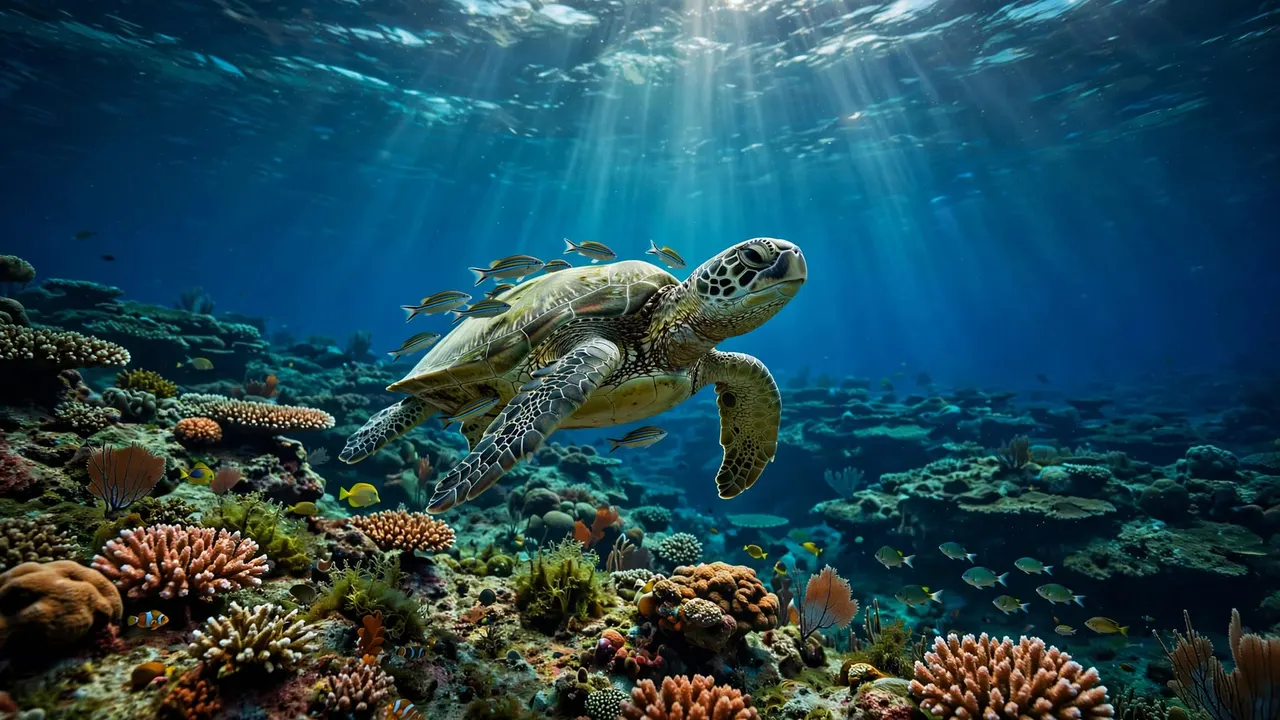
A green sea turtle can hover over a Waikiki reef while small fish work around its shell. The scene looks peaceful, but it gives you a close look at how reef life depends on food, habitat, and other animals. Living Ocean Tours brings snorkelers to this offshore habitat from Kewalo Basin Boat Harbor, near Waikiki.
Turtle Canyon snorkeling becomes more rewarding when you know which animals are feeding and which are doing something else. Start with the sunlight reaching the reef, then follow the connections you can spot from the surface.
Key Takeaways
- Sunlight supports algae and other producers at the base of a reef food web.
- Green sea turtles, called honu in Hawai’i, mainly eat algae and seagrasses. A turtle at a cleaning station may not be feeding.
- Cleaner fish can pick algae and other material from a turtle’s shell and skin.
- You can see more natural behavior when you float calmly, leave turtles room to surface, and keep your fins clear of coral.
What Turtle Canyon snorkeling shows you about food webs
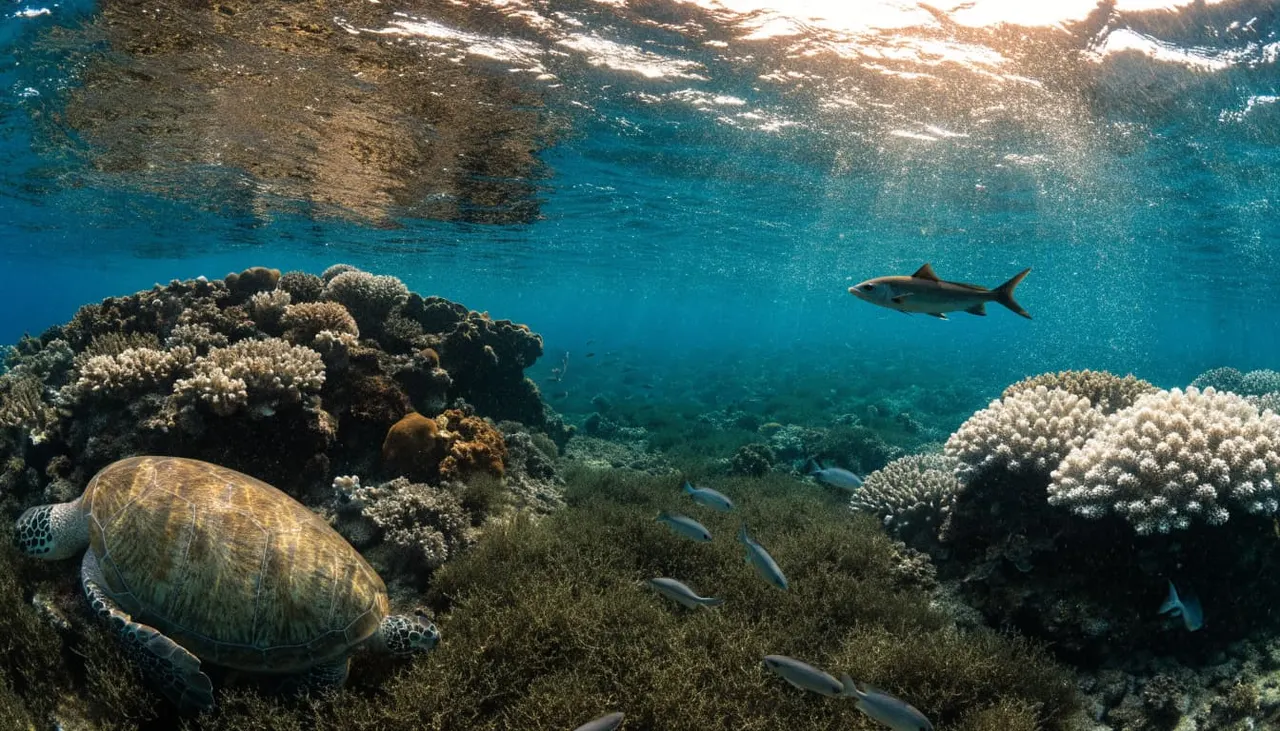
A reef food chain starts with a simple question: where does an animal get its energy? Follow that question through several species, and you get a food web. At Turtle Canyon, the relationships continue below you even when no turtle is in view.
Follow energy from the sun
Algae use sunlight to make food. An animal that eats algae gets some of that stored energy. Another animal may eat that grazer. NOAA’s guide to aquatic food-web roles calls these groups producers, primary consumers, and secondary consumers.
You don’t need to identify every fish to use the idea. Look for algae-covered rock, a fish grazing close to the reef, or small fish moving through the water column. Each observation gives you a place to begin following a possible food connection.
Expect a web, not a single line
Reef animals rarely eat one thing throughout their lives. Food sources also change with habitat and availability. That’s why a neat diagram cannot tell you everything happening at one coral head.
A turtle adds another complication. It may eat algae in one area, then visit a cleaning station elsewhere. The fish picking at its shell gain food, but the turtle isn’t eating them. As you watch, separate feeding from other useful relationships.
Start with algae, plankton, and coral
Sunlight reaches the upper layers of clear coastal water, supporting the producers that feed much of the reef community. Some are easy to overlook because they’re tiny or blend into the rocks.
Find the producers
Attached algae grow on hard surfaces. Microscopic phytoplankton drift in sunlit water, where animals can consume them. Seagrasses are another food source for green turtles in places where those plants grow, although you shouldn’t assume a seagrass bed is present beneath your snorkel route.
At Turtle Canyon, notice where fish spend their time. A fish working close to a reef surface may be grazing. One swimming in open water may be looking for different food. You can’t confirm its meal at a glance, but its position offers a useful clue.
Remember that coral is an animal
Coral can look like colorful stone, yet coral polyps are animals. Many reef-building corals also host microscopic algae within their tissues. According to NOAA’s explanation of coral reef ecosystems, those algae produce food and oxygen that help support the coral.
The partnership makes sunlight important to the reef’s structure as well as its food supply. Still, don’t confuse the algae living inside coral with every patch growing on nearby rock. They occupy different places, even though both rely on light.
Look for grazers and other consumers
Once producers make food, other organisms put that energy to work. A healthy reef holds many feeding relationships at once, though a short snorkel reveals only a few.
Watch the reef surfaces
Grazers eat algae on reef surfaces, helping keep growth in check. Fish such as parrotfish and surgeonfish are familiar examples in Hawaiian reef communities. You might see a fish repeatedly approach rock rather than swim through open water. Watch its behavior before deciding whether it’s feeding.
Grazing matters for coral, too. NOAA explains that when too few herbivores eat algae, algae can crowd recovering reefs. That doesn’t mean every bit of algae is harmful. It means the balance between growth and grazing affects the space available to coral.
Look beyond the grazers
Some fish feed on small animals in the water or among reef crevices. Larger predators can feed on smaller fish. Meanwhile, microbes and other organisms break down dead material, returning nutrients to the system.
You may not witness a hunt on a guided swim, and you don’t need to. A fish darting into shelter or a school shifting direction can prompt you to look more closely. Treat it as an observation, not proof of a particular predator nearby.
Where honu fit into Turtle Canyon snorkeling
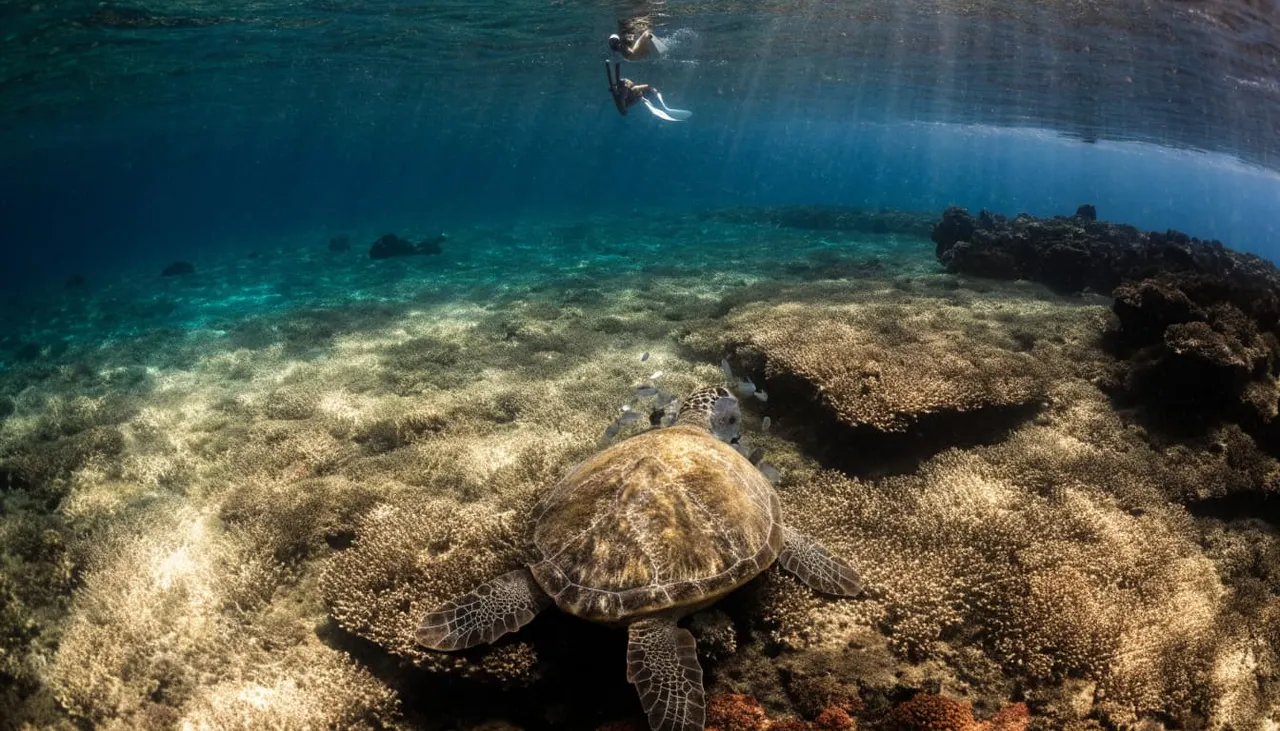
Green turtles connect feeding areas with the reefs where they rest and receive attention from small fish. At Turtle Canyons, a turtle may cross the site, pause near a reef feature, or rise to breathe. You can’t tell which behavior comes next.
A turtle’s meal isn’t always visible
NOAA Fisheries says green turtles mainly eat algae and seagrasses, though they may consume other material when available. If you see a honu moving slowly near rock, it could be looking for food. It could also be traveling or resting.
Watch the animal rather than assigning a purpose to every movement. Feeding involves the turtle taking food into its mouth. Hovering while fish gather around its shell is a different interaction.
Cleaner fish have their own meal
NOAA describes sea turtle cleaning stations where fish remove algae and small parasites from turtles. At Turtle Canyons, you may see fish approach a honu’s shell or skin while it remains near the reef.
At a cleaning station, the small fish may be eating while the turtle holds still. The turtle’s next move is its own choice.
This relationship connects the turtle to the reef community without fitting a simple predator-and-prey chain. If the honu leaves or heads up for air, let the interaction end.
Read the reef from the surface
You don’t have to dive down to notice food-web clues. Floating gives you a broad view of where animals gather and how they use different parts of the habitat.
Scan one patch at a time
Choose a reef feature you can see clearly without swimming over fragile coral. First, notice its surfaces and crevices. Then watch for fish returning to the same spot or passing through. After a minute, shift your attention to the open water beside it.
This slower approach helps you distinguish a fish grazing near rock from one traveling with a school. Visibility and current can change what you see, so keep your observations modest. You may recognize a behavior without knowing the species responsible.
Follow the turtle’s choices
During Turtle Canyon snorkeling, a honu may pause near fish, glide over the reef, or head toward the surface. None of those movements guarantees a longer encounter. Give it an open path instead of swimming ahead to anticipate its route.
If fish gather around a turtle, watch where they work. Activity near its shell suggests cleaning, while a turtle taking bites from a surface suggests feeding. Both are worth seeing, and neither needs help from a snorkeler.
Keep the food web wild
Your best view often comes when you stop trying to get closer. Calm movement gives reef animals space to continue what they were doing before you arrived.
Leave turtles an exit
Don’t touch, feed, chase, or surround a turtle. A honu must surface to breathe, even when it appears settled below you. Stay out of its upward route and move aside if it approaches. Your guide can help you choose a position that doesn’t crowd the animal.
Food offered by visitors also changes the interaction you’re there to observe. Let turtles and fish find their own meals. That way, the behavior you witness belongs to the reef rather than to your presence in it.
Keep fins above the coral
Coral is living habitat, and a misplaced kick can damage it. Stay horizontal while you float, check where your fins are, and avoid standing on the reef. If you need to fix your mask, use flotation support or ask your guide for help.
Secure anything that could fall into the water, too. These small habits protect the surfaces where reef organisms feed and shelter. They also make your snorkel more comfortable when your attention turns to the wildlife.
Plan a guided look at Turtle Canyons
Living Ocean Tours departs from Kewalo Basin Boat Harbor for its guided Turtle Canyon snorkeling tour in Waikiki. The company provides snorkel gear and knowledgeable guides. It also says it is the only tour company with professional snorkel guides in the water with guests, offering beginners direct help as they get comfortable.
The site is a natural cleaning-station reef, not a scheduled turtle encounter. Wildlife sightings depend on the animals and the day’s conditions. If you want to focus on the food web, tell your guide what interests you and ask what they’re seeing beneath the surface.
Choose the support you need
Before entering, listen to the crew’s guidance on flotation, water conditions, and respectful turtle viewing. If you’re new to snorkeling, practice breathing through your snorkel near the boat before turning your attention to the reef. You can take your time; there is plenty to notice without swimming far.
For Living Ocean Tours’ available outings, use the booking button below.
Make room for an unscripted sighting
On a Turtle Canyons Snorkel Excursion, look for grazing, fish movement, and cleaning behavior rather than waiting only for a turtle. That broader view gives you something meaningful to watch throughout your swim. When you arrive at a cleaning area, follow your guide’s direction and let the honu decide how long to stay.
To reserve the turtle-focused trip, CHECK AVAILABILITY.
Frequently asked questions
Will you see turtles eating at Turtle Canyon?
You may, but a turtle near the reef isn’t necessarily feeding. Honu also travel, rest, breathe, and visit cleaning stations. Look for the turtle taking bites before calling it a feeding sighting.
Are cleaner fish part of the turtle’s food chain?
They connect to the turtle through cleaning rather than through the turtle eating them. Fish may pick food from its outer surface while the turtle remains nearby. It’s a useful reminder that a food web includes more than direct predator-and-prey relationships.
Do you need snorkeling experience to notice these relationships?
No. From the surface, you can watch where fish gather, whether a turtle pauses, and how animals move around reef features. If you’re a beginner, use the provided support and stay within the guidance of your in-water crew.
A richer way to see the reef
That hovering turtle in the opening scene is only one part of a busy reef. Sunlight feeds producers, grazers use that growth, and cleaner fish find food during a honu’s pause.
When you give the animals space, Turtle Canyon snorkeling lets you watch those connections unfold on their terms.


