
Turtle Canyon snorkeling: Keep the Water Clear
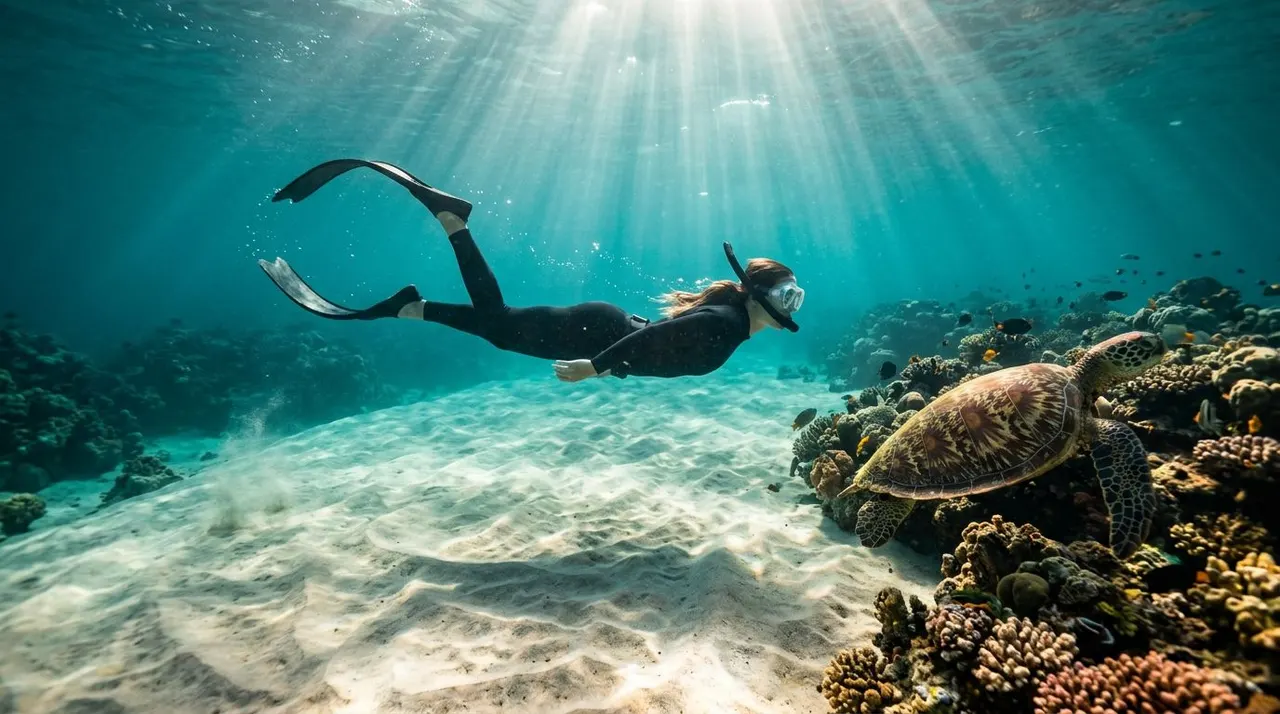
Clear water can vanish in seconds when a fin clips the sandy bottom. Turtle Canyon snorkeling looks effortless from the boat, but one careless kick can send a gray cloud across the reef and hide the turtles you came to see.
You can avoid that problem with a relaxed body position, small kicks, and a guide who knows the site. These habits improve your view, protect coral, and help you stay calm when you’re new to snorkeling. Start with the technique that keeps your fins above the sand.
Why Stirred-Up Sand Matters at Turtle Canyon
Turtle Canyon has sandy areas near reef structure where Hawaiian green sea turtles may visit natural cleaning stations. When your fins push downward, fine particles rise and spread with the current. Visibility drops for everyone nearby, and you may miss a turtle passing through the clear water.
A clouded patch also makes it harder to judge your distance from coral. You might reach toward the bottom, plant a foot, or push off a rock. That contact can damage living reef and disturb small animals sheltering between coral heads.
Sand usually settles after you stop creating turbulence. However, waiting won’t help much if the group continues kicking. Move beside the disturbed area, give the water time to clear, and follow your guide’s route.
A single strong kick can affect more than your own view. In a guided group, every swimmer behind you inherits the sand cloud.
Keep your attention on the water in front of you, not only on finding a turtle. Good Turtle Canyon snorkeling means leaving the site clear for the next swimmer as well.
Turtle Canyon snorkeling starts with fin control
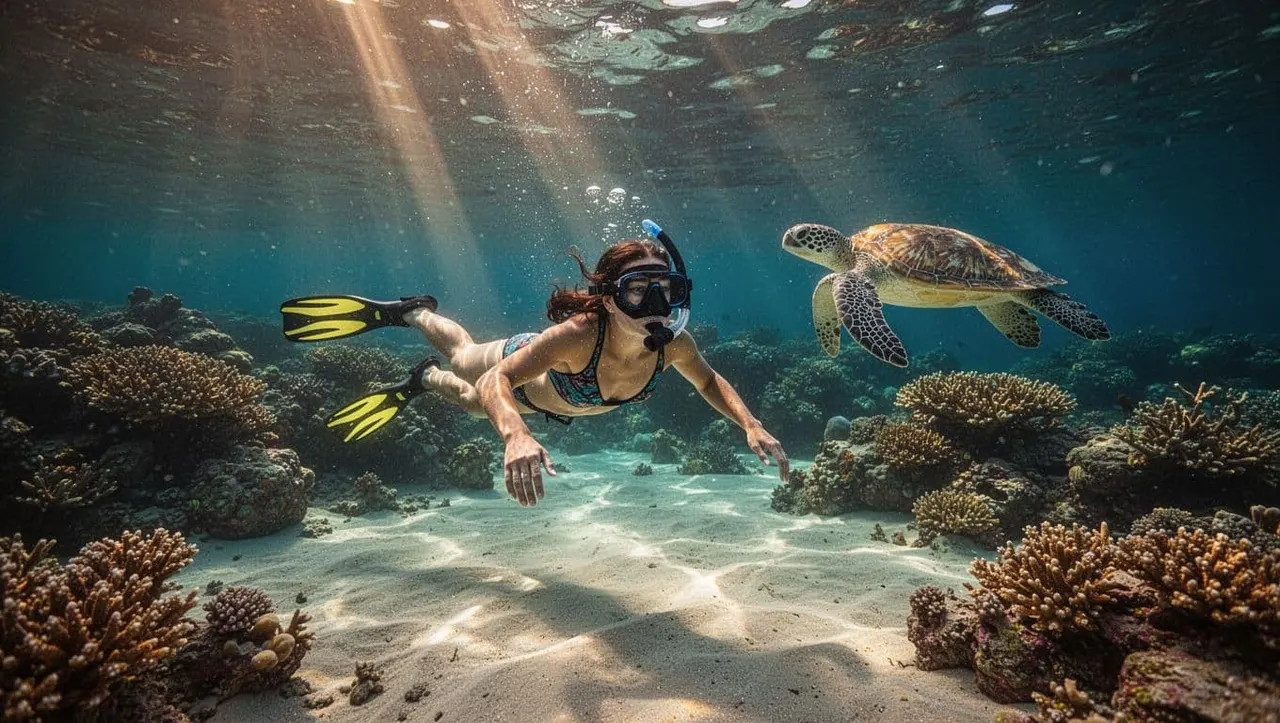
The most useful position is long, level, and relaxed. Keep your head, hips, and ankles near the same plane. Your mask should point slightly forward, not straight down, so you can see the reef and the space beneath your fins.
Bend your knees less than you think. Make short flutter kicks from your hips, and let the fins do the work. Your fin blades should stay well above the sand, with each kick moving water backward instead of downward.
Keep your fins above the bottom
Avoid bicycle kicks, wide frog kicks, and fast downward strokes in shallow water. These movements push water toward the seafloor. If you need to slow down, reduce the size of each kick before stopping completely.
Keep your arms close to your sides. Small hand movements can help with balance, but don’t pull yourself across the bottom or grab coral. A flotation vest or pool noodle can provide rest without forcing you to stand in a shallow patch.
If your mask leaks, stop kicking and signal your guide or buddy. Fix it at the surface, then resume from open water. Standing to adjust equipment often creates the biggest sand cloud.
Turn with your whole body
Turning from your ankles can make your fins sweep in opposite directions. Instead, look toward your new line, rotate your shoulders and hips, then make a few gentle kicks. This keeps your legs aligned with your body.
Current can change your path quickly. Follow the guide’s line and leave room between swimmers. If you drift toward a sandy patch, use controlled kicks to move into open water instead of reaching for the bottom.
Read the water before you swim
Before entering, watch the surface and listen to the crew’s instructions. Wind, boat traffic, surge, and current can change the clearest route. A professional guide can show you where to enter, where to pause, and which areas need extra distance.
When you reach the water, take a moment to settle your breathing. A slow exhale through the snorkel reduces rushed kicks. If you’re nervous, stay near the guide and use flotation support until your mask feels comfortable.
Stay aware of the swimmer ahead. Following too closely makes you more likely to kick their fins or swim into their sand cloud. Leave enough space to see the reef instead of the person directly in front of you.
If visibility drops, stop. Float with your fins level, face the clearer side of the water, and let suspended sand move away. Signal the guide if you lose the group, rather than sprinting through the cloud.
NOAA’s marine wildlife viewing guidelines for Hawaii advise visitors not to touch, chase, or feed sea turtles and other protected wildlife. Staying still helps you follow that guidance because turtles can pass without you cutting across their path.
Choose a guided Turtle Canyon snorkeling experience
Your tour choice affects how easy it is to keep the water clear. A group with limited snorkeling experience needs clear instructions before entering the reef. You also benefit from a crew that can adjust the route when current or visibility changes.
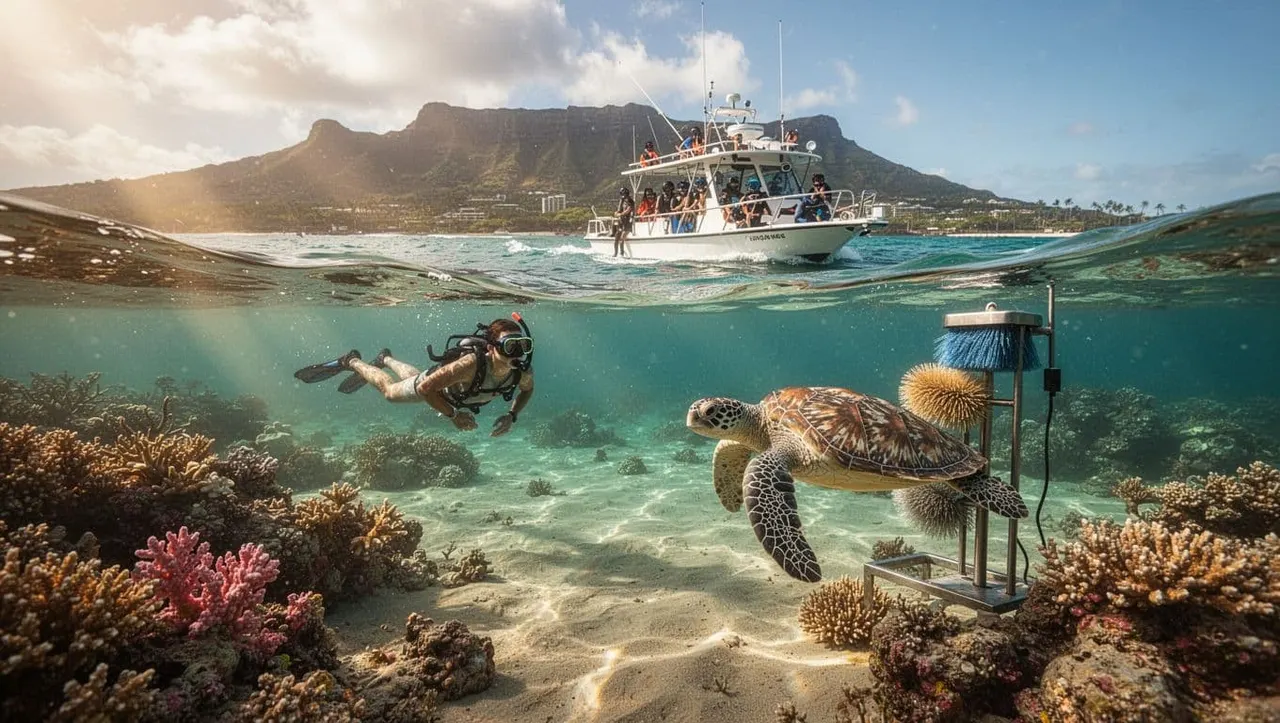
Living Ocean Tours departs from Kewalo Basin Boat Harbor, just minutes from Waikiki Beach in Honolulu. Living Ocean Tours is the only tour company with professional snorkel guides, so you receive hands-on instruction instead of a quick equipment handoff. Guides help beginners with mask fit, water entry, body position, and wildlife etiquette.
The Turtle Canyons Snorkel Excursion lists a 95% success rate for spotting Hawaiian green sea turtles at a natural underwater cleaning station. A sighting is never a reason to chase an animal. You get a better view by staying still, keeping your fins away from the bottom, and allowing the turtle to choose its own path.
Living Ocean Tours operates Coast Guard-inspected, custom-built double-decker vessels, including the Coral Kai and Lokahi. Both boats have shaded seating, restrooms, dry storage, and sturdy ladders for safe water entry. The Lokahi also has a SeaKeeper stabilization system that reduces rolling while guests prepare to enter or return aboard.
You can compare Turtle Canyon snorkeling tours and choose a departure that fits your group. The professional crew can reassure first-time snorkelers and families, including guests age 3 and up, about the basic process.
Before booking, you can review recent guest feedback about the crew and ocean experience.
When Turtle Canyon is your priority, CHECK AVAILABILITY before your preferred time fills.
Practice low-impact habits in every encounter
The best rule for snorkeling around honu is observe, don’t touch. Never hold, feed, chase, surround, or block a sea turtle. Let the animal control the encounter, even when it swims close enough for a memorable photo.
The Hawaii Department of Land and Natural Resources community guide asks visitors to enjoy sea turtles from a respectful distance. That means keeping your hands to yourself and leaving a clear path around the animal.
You should also avoid standing on coral, even when the bottom appears sturdy. Coral can look like rock, but living colonies are fragile and may take years to recover from one misplaced step. Use the boat ladder or flotation support when you need a break.
The state’s marine wildlife guidance warns against encircling or trapping turtles between boats, shorelines, or groups of swimmers. Keep your group spread out, follow the crew’s instructions, and move around wildlife instead of cutting it off.
Before you enter, secure your mask strap, check your fins, and keep loose gear attached. Apply sunscreen before boarding when possible, and choose an ocean-conscious option recommended by your operator. A prepared swimmer makes fewer frantic movements in the water.
The clearest turtle encounter often comes after you stop trying to create one. Give the honu space, and let the reef reveal what is already there.
Make sand control part of your swim plan
If you’re snorkeling with children or first-time swimmers, practice the basics beside the boat before heading toward the reef. Ask the guide to check each mask, then spend a minute floating horizontally and making small hip-driven kicks.
Agree on simple signals for “slow down,” “stop,” “mask problem,” and “I need help.” Families should stay close enough to communicate but far enough apart to avoid tangled fins. A guide can help you choose a position that matches your comfort level.
You don’t need to swim fast to see more marine life. Slow movement gives you better control, reduces sediment, and makes it easier to notice fish, coral textures, and turtles resting near the reef.
If you feel tired, signal early. Return to the boat or use approved flotation rather than standing on the bottom. Resting before you become exhausted keeps your breathing steady and protects the reef from accidental contact.
Clear water begins with calm movement
Turtle Canyon snorkeling becomes easier when you treat fin control as part of the experience, not a technical detail. Stay level, kick from your hips, keep your fins above the sand, and pause when visibility begins to fade.
A professional guide adds confidence, especially when you’re snorkeling with children or visiting a reef for the first time. With the right technique and respectful wildlife habits, you can enjoy a clear view of Turtle Canyon while leaving the sand, coral, and honu undisturbed.


