
Turtle Canyon Snorkeling Hand Signals for Safer Swims
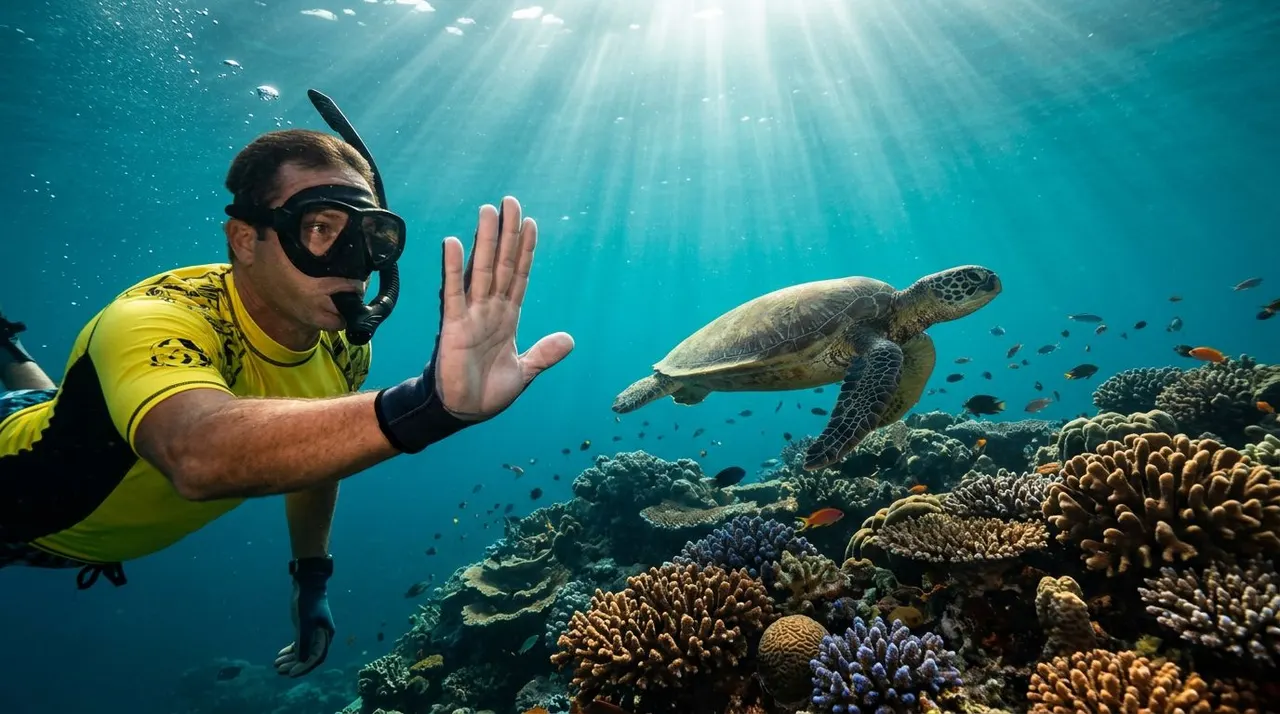
At Turtle Canyon, your guide may point toward a sea turtle, raise an open palm, or signal for the group to regroup. You can’t hear spoken instructions with your face in the water, so understanding turtle canyon snorkeling hand signals helps you respond without panic or confusion.
Good turtle canyon snorkeling depends on more than a clear mask. You need to recognize a few simple signs, answer them clearly, and stay aware of your guide and group. Learn the basics before you enter the water, then follow the signals your crew teaches you.
Why Hand Signals Matter at Turtle Canyon
Water muffles voices, waves create background noise, and snorkel masks make facial expressions difficult to read. Even when your guide is only a few feet away, spoken directions may disappear beneath the surface.
Hand signals solve that problem with quick visual cues. A raised palm can stop you before you drift toward coral. A pointing hand can show you where to look. A circular “OK” signal lets your guide know that your mask fits, your breathing feels comfortable, and you’re ready to continue.
Signals also help your guide manage the group. Turtle Canyon can attract several snorkelers at once, especially when Hawaiian green sea turtles visit their natural underwater cleaning station. A guide may ask you to slow down, stay close, or shift your position so everyone can observe without crowding the animal.
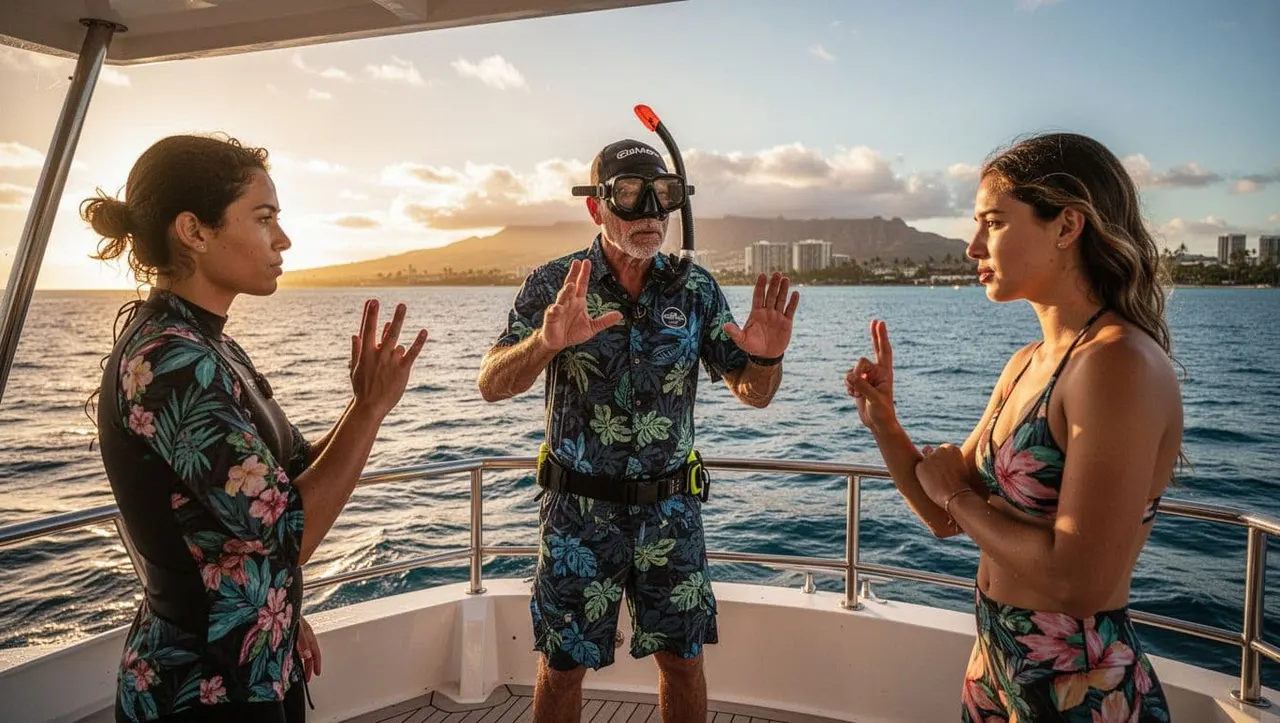
Before entering the water, watch your guide’s briefing closely. Different operators may use slightly different motions, so the crew’s instructions always take priority over any general guide you read online.
Hand Signals Every Turtle Canyon Snorkeling Guest Should Know
You don’t need to memorize a complicated diving vocabulary. A small group of clear signals covers most situations during a guided snorkel.
- The “OK” signal uses your thumb and index finger to form a circle, with the other fingers extended. Your guide may use it to ask if you’re comfortable. Return the same signal when everything feels fine.
- A raised open palm usually means “stop” or “hold your position.” Stop kicking and wait. Your guide may need to check the group’s spacing, point out wildlife, or help another guest.
- A flat hand moving slowly downward often means “slow down.” Reduce your kicking speed and look around before moving ahead. Fast swimming can separate you from the group and disturb nearby wildlife.
- A hand motion toward the guide commonly means “follow me.” Move in the indicated direction while keeping your head up enough to see the guide’s next signal.
- A pointed finger tells you to look at something. The guide may point toward a turtle, fish, reef feature, or another part of the group. Follow the direction of the finger, but don’t rush forward.
- A hand rocking from side to side can communicate a problem. Use it if your mask leaks, your snorkel feels uncomfortable, you swallowed water, or you feel anxious. You don’t need to wait until a small issue becomes serious.
- A clear upward motion can mean “go to the surface” or “return toward the boat.” Confirm the signal by making eye contact and copying it back. Your guide may then point toward the safest route.
For diagrams of widely used underwater signals, you can review this illustrated scuba hand signal guide. Snorkeling is usually shallower and less technical than scuba diving, but the visual communication principles are similar.
The safest response to an unfamiliar signal is to stop, make eye contact, and wait for clarification. Guessing can send you farther from the group.
How to Respond When Your Guide Signals Underwater
The first step is to pause your fins. Continuing to swim while trying to interpret a signal can carry you past the guide or into another swimmer’s path.
Next, make eye contact. If your mask is fogging or the water is choppy, lift your head slightly until you can see the guide’s hand clearly. Then copy the signal back when possible. That simple response confirms that you received the message.
Suppose your guide points toward the reef and then gives the “slow down” signal. Reduce your kicking, stay level with the group, and look in the direction indicated. If the guide raises an open palm, stop completely and wait for the next instruction.
When you need help, use one signal and hold it long enough to be seen. For a leaking mask, point toward your face and give the problem motion. For discomfort, signal the guide rather than swimming back alone. Your professional snorkel guide can help you adjust equipment or escort you toward the boat.
Families should practice signals together before the swim. Children can learn the “OK,” “stop,” “problem,” and “follow me” motions first. Parents should also agree on a simple buddy habit, such as checking in with a thumb signal whenever the guide pauses the group.
Your guide may use additional signs for boat direction, surface breaks, or changing conditions. Follow that briefing rather than assuming every gesture has one universal meaning. A general underwater hand signal reference can help you recognize common motions, but your crew’s system applies to your tour.
Safety Habits That Support Clear Communication
Hand signals work best when you stay in a position where your guide can see you. Keep a comfortable distance from the group, avoid swimming behind the boat, and check your surroundings before changing direction.
Stay close enough to respond, but leave room between your fins and other swimmers. Kicking directly behind someone can strike their legs or push water into their face. If you need to stop, raise your palm and let the guide organize the group.
Your equipment also affects communication. A loose mask, poorly fitted snorkel, or uncomfortable fins can distract you. Tell the crew before entering the water if something doesn’t feel right. Adjustments on the boat are easier than repairs in the middle of the swim.
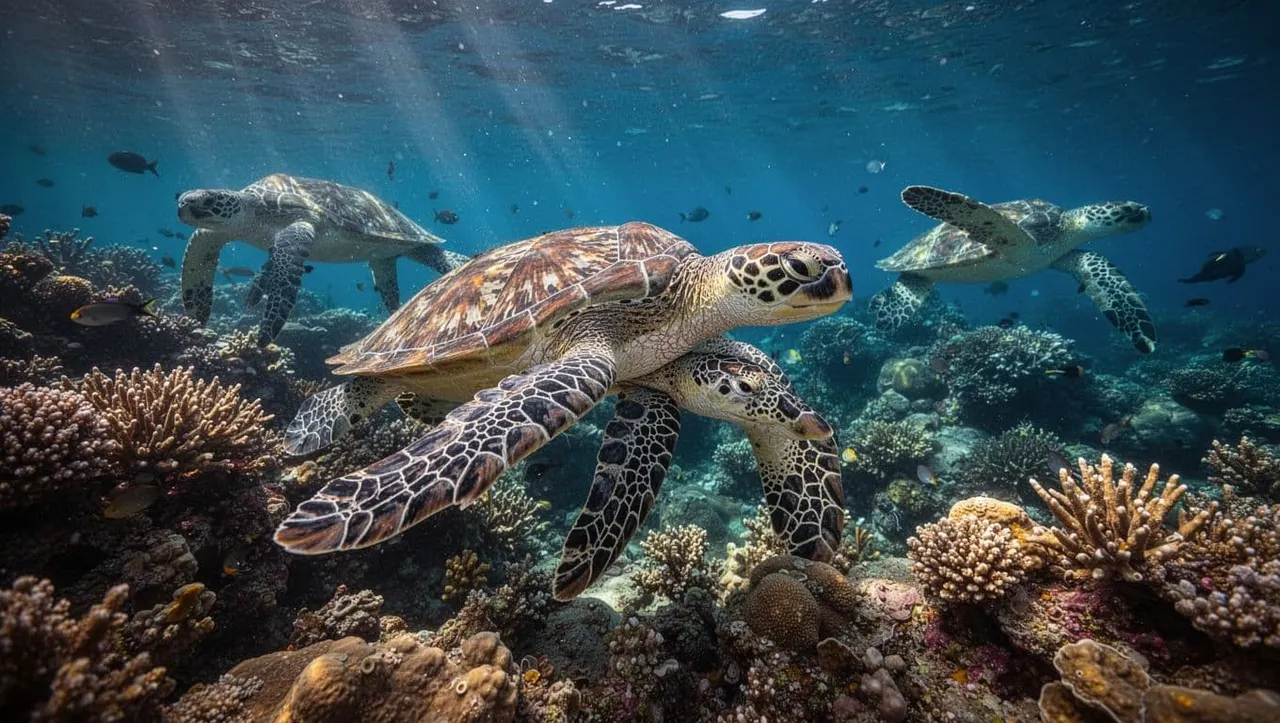
During turtle canyon snorkeling, observe wildlife without touching it. Never chase a turtle, block its path, or reach toward its shell. If a turtle swims near you, stay still and allow the animal to choose its distance. Your guide may use a stop signal when a turtle appears, giving everyone a chance to watch calmly.
Keep these situations in mind:
- Signal a problem as soon as you notice it, even if it seems minor.
- Stop kicking when your guide raises an open palm.
- Surface or return to the boat when your guide gives that direction.
- Keep your hands away from turtles, coral, and other marine life.
- Tell your guide if you feel tired, cold, dizzy, or uncomfortable.
Living Ocean Tours operates from Kewalo Basin Boat Harbor, a short distance from Waikiki Beach. Its Coast Guard-inspected vessels, the Coral Kai and Lokahi, include shaded seating, restrooms, dry storage, and sturdy ladders for water entry. The Lokahi also has a SeaKeeper stabilization system that helps reduce rolling on the water.
Those details support communication before you even reach the reef. A steadier boat gives you a calmer place to fit your mask, listen to the briefing, and practice the signals.
What a Guided Turtle Canyon Swim Is Like
Living Ocean Tours focuses on guided ocean experiences along the Waikiki coastline. The company is the only tour company with professional snorkel guides, giving beginners and experienced swimmers in-water support during the excursion.
The Turtle Canyons Snorkel Excursion visits a natural underwater cleaning station where Hawaiian green sea turtles may gather. Living Ocean Tours reports a 95% success rate for turtle sightings, although wildlife remains free to move through the reef on its own schedule.
Your guide helps you read the water, maintain group spacing, and locate marine life without disturbing it. That support matters if you’re snorkeling for the first time, traveling with children ages 3 and older, or sharing the water with a partner who has limited experience.
The boat also gives you a comfortable base before and after the swim. You can store dry items, use the restroom, sit in the shade, and enter the water using heavy-duty ladders. These practical features make the experience easier for families and guests who want guidance without giving up comfort.
If you’re planning a trip, review the Turtle Canyons Snorkel Excursion and choose a departure that fits your schedule.
Once you’re ready to reserve the Turtle Canyon trip, use the tour-specific booking option below.
Make Your Next Swim Safer
The best time to learn hand signals is before your mask touches the water. Watch the briefing, practice the basic motions, and keep your response visible when your guide checks on you.
During turtle canyon snorkeling, a raised palm may protect your space, a point may lead you to a turtle, and a problem signal may bring help before discomfort grows. Clear communication lets you enjoy the reef while respecting the animals that make Turtle Canyon special.
When you stay close, observe without touching, and trust your professional guide’s directions, safer guided swims become part of the experience rather than something that interrupts it.


