
Turtle Canyon Snorkel Wetsuit Guide for Cooler Water Days
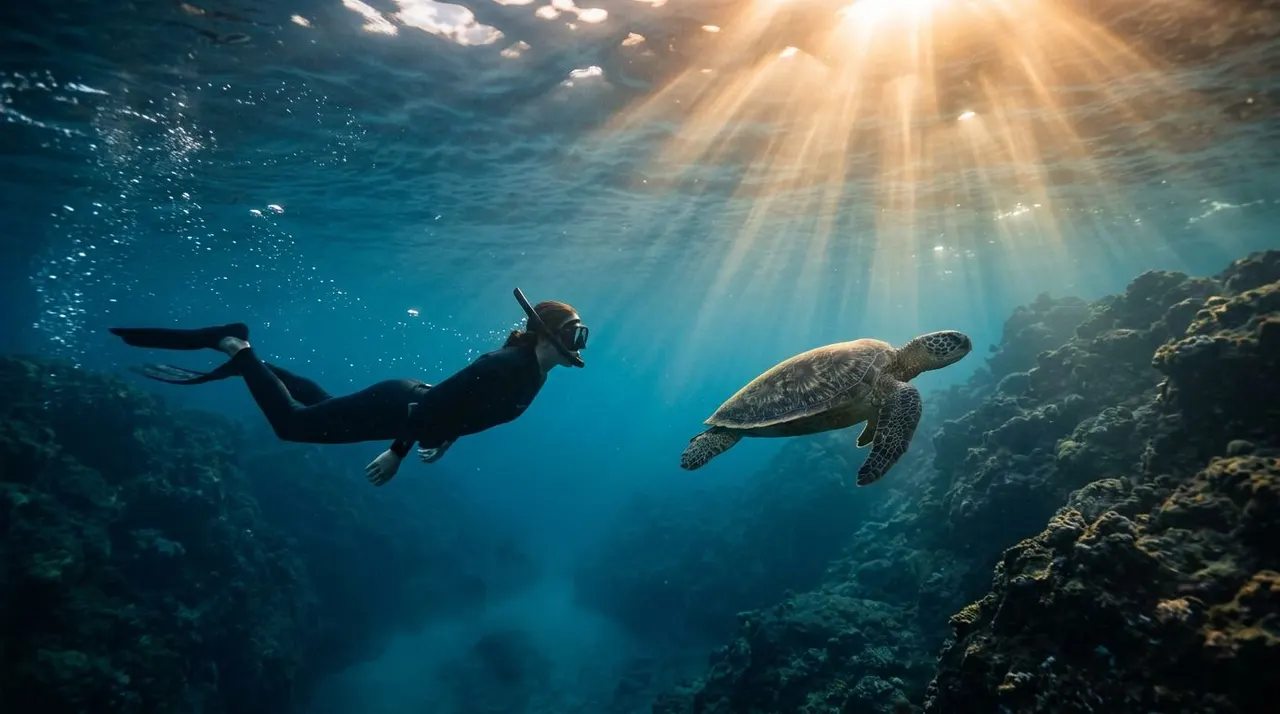
Cooler weather doesn’t have to keep you out of Turtle Canyon. Hawaii’s ocean stays mild year-round, but wind, cloud cover, and extended time in the water can make snorkeling feel colder than expected.
Choosing the right wetsuit helps you stay comfortable without restricting your swimming. With the proper fit, smart layering, and guidance from a professional crew, you can focus on Hawaiian green sea turtles instead of shivering. Start with the conditions that affect your comfort most.
Why Turtle Canyon can feel cold on certain days
Turtle Canyon sits off Waikiki, where snorkelers often spend long periods in open water. Even when the air feels warm on the beach, wind across wet skin can cool you quickly after you climb out of the water.
Cloud cover also affects how warm you feel. Without direct sun, your body loses heat faster between turtle sightings. You may notice the chill most when you float quietly, because relaxed swimming produces less body heat than continuous movement.
Your personal comfort matters, too. You may feel colder if you have a lean build, low body fat, or limited cold-water experience. Children and first-time snorkelers often benefit from extra protection because they may spend more time resting, listening to instructions, or waiting for a safe entry.
A wetsuit reduces heat loss by holding a thin layer of water against your skin. Your body warms that water, while the neoprene slows the transfer of heat into the surrounding ocean. The suit won’t make cold water warm, but it can give you more comfortable time in the water.
Before your tour, check the forecast and ask the operator what suit options are available. Wetsuit policies differ between companies, and many snorkel tours provide masks, snorkels, fins, and flotation equipment without automatically including thermal suits.
Your comfort depends on more than the water temperature. Wind, shade, body type, activity level, and time in the ocean all affect how warm you feel.
Choosing the right wetsuit thickness
For most casual Turtle Canyon snorkeling, a thin wetsuit or shorty is easier to wear than a thick diving suit. You need warmth, but you also need unrestricted shoulder movement and quick access to the ladder.
| Wetsuit option | Best use | What to consider |
|---|---|---|
| 1 to 1.5 mm shorty | Mild days and warm-water swimmers | Covers the torso while keeping arms and legs free |
| 2 to 3 mm shorty | Windy days or people who get cold easily | Adds warmth without feeling overly bulky |
| 2 to 3 mm full suit | Longer sessions or strong cold sensitivity | Provides more coverage but can feel warmer and tighter |
| Neoprene top | Light protection and flexible movement | Works well when your legs stay comfortable in swimwear |
A 1 to 1.5 mm shorty often works well if you usually feel comfortable in Hawaii’s water. It covers your core, where heat loss can become noticeable, while leaving your arms free for swimming and signaling.
Choose a 2 to 3 mm shorty if you tend to get cold, expect strong wind, or plan to spend a long time snorkeling. The extra neoprene can make the difference between enjoying the reef and wanting to return to the boat early.
A full suit offers more warmth, but it isn’t always necessary for a short guided snorkel. It can also make you feel warmer while walking around the deck. If you choose one, look for flexible neoprene and a smooth interior that won’t rub your neck or underarms.
Avoid choosing a suit based only on thickness. A poorly fitted 3 mm suit can feel colder than a well-fitted 1.5 mm suit because water flushes through loose openings. On the other hand, a suit that’s too tight can limit breathing and make climbing a ladder uncomfortable.
How your wetsuit should fit
Your wetsuit should feel snug across your torso, shoulders, and lower back. Neoprene works best when it stays close to your skin, so large gaps around the neck, wrists, or ankles can allow cool water to circulate.
The neck seal should sit flat without pressing hard against your throat. You should be able to turn your head, breathe normally, and look down through your mask without feeling restricted.
Move your arms overhead before entering the water. If the suit pulls sharply across your shoulders, it may be too small or too stiff for snorkeling. You also need enough room to reach forward, adjust your mask, and hold a ladder securely.
Try the suit on with the swimwear you plan to wear underneath. A bulky swimsuit, board shorts, or layered clothing can change the fit. A smooth-fitting swimsuit or rash guard usually works better than cotton, which absorbs water and stays cold.
Put the suit on slowly. Use your fingertips to work the neoprene into place instead of pulling hard at the seams. If you need help, ask the crew before boarding or entering the water. Rushing can damage the material and leave you with uncomfortable folds.
Your wetsuit may also add buoyancy. That can make floating easier, but it can change how your body sits in the water. Practice a few gentle kicks and listen carefully to the crew’s instructions before swimming toward the reef.
What to wear for a comfortable Turtle Canyon snorkel
A wetsuit is only one part of your setup. Start with a swimsuit that stays secure when you climb a boat ladder. Loose straps and sliding waistbands become distracting once you begin swimming.
A long-sleeve rash guard can provide light warmth and sun protection. You can wear it under a thin wetsuit if the fabric is smooth and the suit still fits comfortably. Avoid stacking too many layers, since excessive clothing can restrict your shoulders and trap uncomfortable folds.
Use reef-conscious sun protection according to local rules. A rash guard, hat, and shaded seating can reduce the amount of sunscreen you need. Never apply lotion immediately before entering the water if it could make your mask seal slippery.
Bring a dry change of clothes for the ride back to the harbor. Even if you wear a wetsuit, your swimsuit and towel may stay damp after the snorkel. A light windbreaker can also help during the boat ride, especially when you are wet and sitting in the shade.
Keep valuables secured in the boat’s dry storage rather than carrying them into the water. You won’t need a phone, wallet, or loose jewelry while snorkeling, and removing distractions helps you pay attention to your guide.
Your mask fit matters as much as your thermal layer. A leaking mask forces you to stop and adjust, which can leave you colder. Ask the crew to check the seal before you swim away from the boat.
Snorkeling Turtle Canyon with Living Ocean Tours
Living Ocean Tours departs from Kewalo Basin Boat Harbor, only minutes from Waikiki Beach in Honolulu. The company focuses on guided marine experiences, and it is the only tour company with professional snorkel guides.
That support is valuable when you’re deciding whether to wear a wetsuit. Professional guides can help you adjust your mask, check your equipment, explain entry procedures, and answer questions about staying comfortable in the water. Beginners and families can receive clear instructions before they approach the reef.
The Turtle Canyons Snorkel Excursion has a reported 95% success rate for spotting Hawaiian green sea turtles at a natural underwater cleaning station. Sightings are never guaranteed because turtles are wild animals, but a trained crew can help you observe marine life responsibly without chasing or crowding it.
Living Ocean Tours uses Coast Guard-inspected, custom-built double-decker vessels. The Coral Kai offers open deck space, while the Lokahi includes SeaKeeper stabilization technology, shaded seating, restrooms, dry storage, and heavy-duty ladders. Those features make the transition between the boat and the water easier when you’re wearing neoprene.
Review the Turtle Canyons Snorkel Excursion before you reserve your seats. Check the day’s schedule, tour details, and available options so you can plan your clothing around the experience.
You can also CHECK AVAILABILITY before your preferred date fills.
Stay warm while protecting Turtle Canyon
A wetsuit should improve your comfort, not change how you interact with the reef. Follow your guide’s instructions and keep your hands off turtles, coral, rocks, and other marine life.
Hawaiian green sea turtles need space to rest and feed. Swim beside them without blocking their path. Avoid touching, riding, chasing, or surrounding a turtle, even if it remains near you for several minutes.
Your fins also require attention. Kick gently and keep your feet away from the seafloor. A careless fin stroke can break coral or stir sediment over the reef. If you need to stop, use a calm sculling motion instead of standing on the bottom.
A wetsuit can make floating easier, but it doesn’t replace a flotation device or crew instructions. Tell your guide if you feel cold, tired, anxious, or uncomfortable. Returning to the boat early is safer than pushing through fatigue.
After the tour, rinse your suit with fresh water if the operator permits it. Let it dry away from direct heat and avoid twisting the neoprene. Proper care helps prevent odor, damage, and premature wear.
Most importantly, observe wildlife without touching it. Responsible snorkeling protects the animals and gives you a better chance to enjoy natural behavior at the cleaning station.
Conclusion
The right Turtle Canyon snorkel wetsuit can keep you comfortable when wind, clouds, or long time in the water make the day feel cooler. For many swimmers, a well-fitted 1 to 3 mm shorty offers enough warmth without limiting movement.
Choose a snug suit, wear practical swimwear, bring dry clothing, and listen to your professional guide. With Living Ocean Tours, you can prepare for the water while enjoying a safe, respectful encounter with Hawaiian green sea turtles.


