
Turtle Canyon snorkel: How Green Turtle Flippers Work
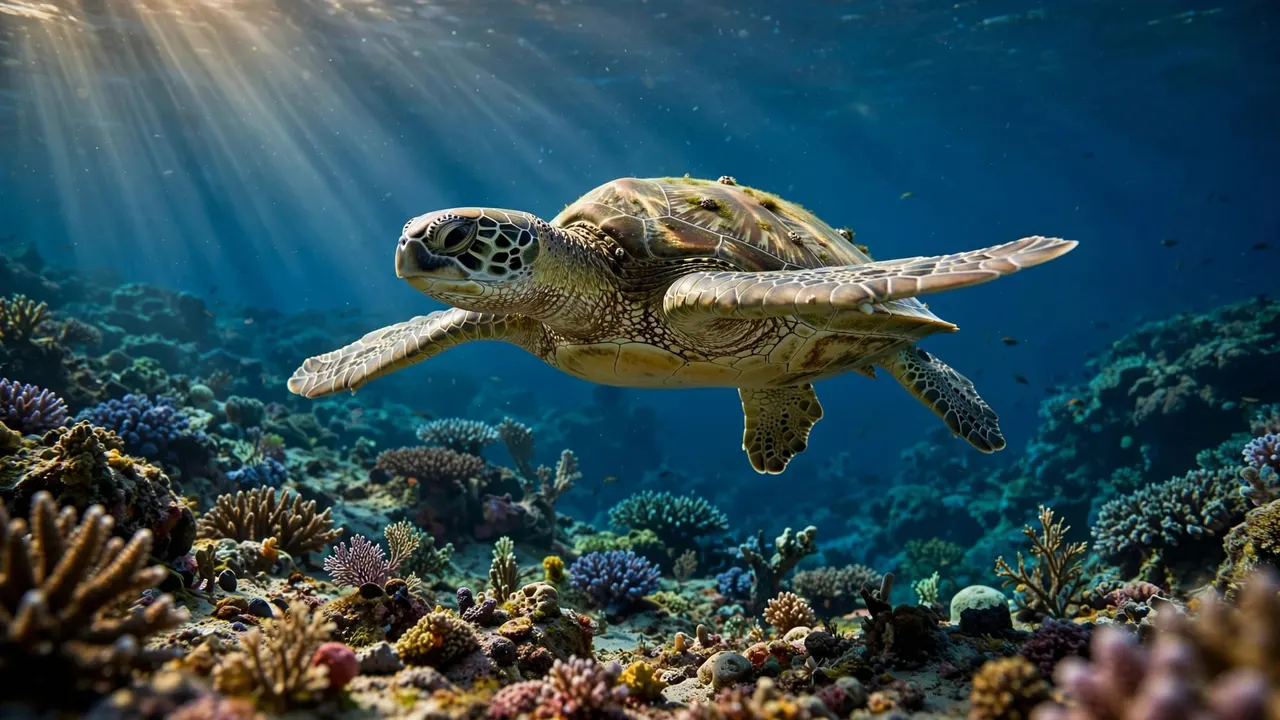
A green sea turtle’s large front flippers provide its swimming power, while its rear flippers are smaller and less conspicuous. On a Turtle Canyon snorkel, that difference helps you understand the graceful movement beneath you.
As you plan your outing with us at Living Ocean Tours, a little anatomy gives you more to notice than a passing shell. The most useful detail is the turtle’s front-flipper stroke, followed by the glide between strokes.
Start with the shape of each pair, then watch how those shapes look when a turtle moves through the reef.
Key Takeaways
- Green sea turtles have two large front flippers and two smaller rear flippers.
- The front pair provides propulsion, so its broad strokes are the clearest movement to watch.
- A turtle can continue moving between strokes, which makes a short glimpse easy to misread.
- Your viewing angle changes how large each flipper appears and whether you can see both sides.
Knowing these differences gives your Turtle Canyon snorkel a useful focus without turning every movement into a complicated anatomy lesson.
Meet the Two Pairs of Green Turtle Flippers
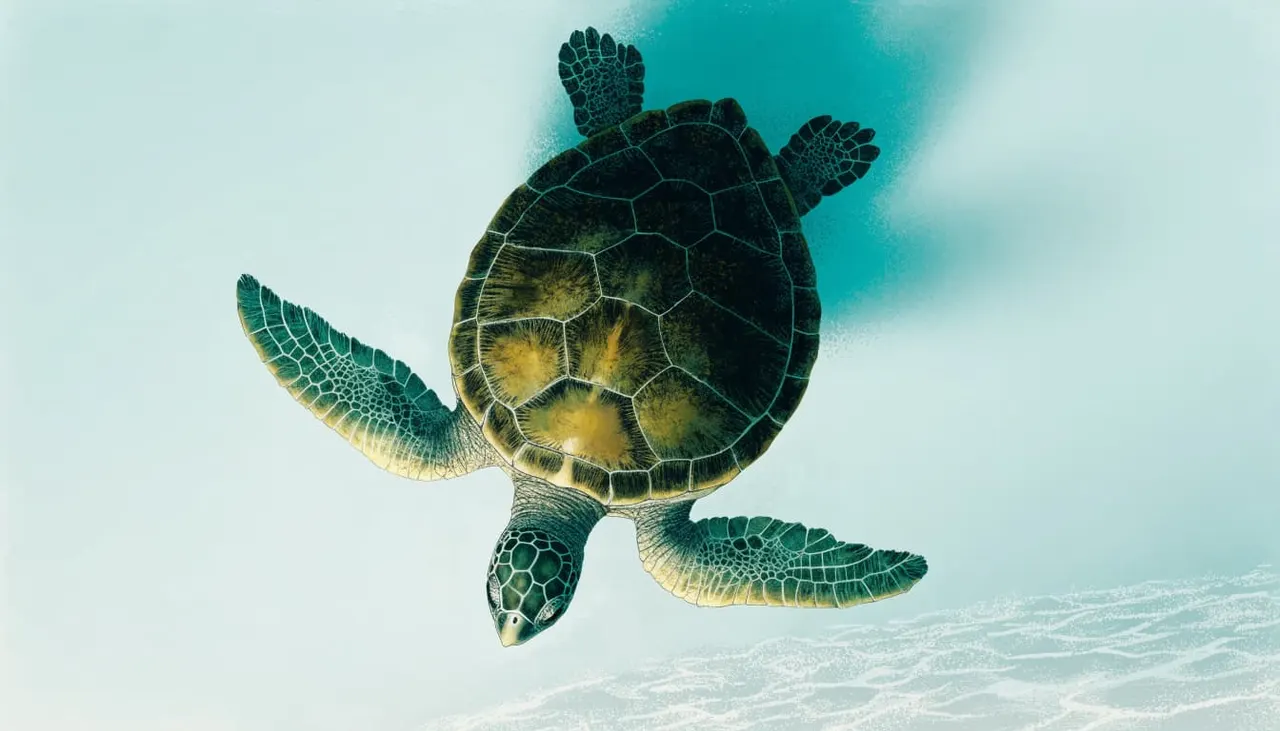
The front pair has a larger swimming surface
Look near the front of the shell, just behind the head. Those long, flattened limbs are the foreflippers, also called front flippers.
Their size makes them easy to follow during a swimming stroke. Rather than looking for rapid paddling, watch the broad sweep of each flipper through the water. You can often recognize that movement before you make out smaller anatomical details.
NOAA’s educational guide, One in a Thousand: Those Amazing Sea Turtles, describes the same basic arrangement: two large front flippers and two smaller rear ones. It also identifies the front pair as the source of propulsion.
The rear pair is smaller, not a miniature duplicate
Now look toward the back edge of the shell. The hind flippers are shorter and less prominent than the front pair.
That size difference matters when you’re identifying what you see. A rear flipper partly hidden behind the shell can be surprisingly easy to overlook, especially when a turtle faces you.
All four are flippers, but they don’t have matching proportions. You shouldn’t expect four equally large paddles making identical movements.
Also, these are limbs rather than fish fins. A sea turtle is a reptile, and its flippers are modified limbs adapted to aquatic life. That distinction helps explain why its swimming looks so different from a fish’s side-to-side motion.
Why the Front Flippers Provide the Swimming Power
Watch the sweep rather than the flipper tip
During your Turtle Canyon snorkel, follow the whole front flipper as it moves. Its broad surface acts against the water to generate the force that moves the turtle forward.
The tip alone can be misleading. Depending on your angle, it may appear to trace a small arc while the rest of the flipper moves through a much larger sweep.
Instead, notice where the flipper starts beside the shell and how its position changes during the stroke. Then follow the turtle’s body relative to a stationary reef feature.
This gives you two useful observations: the motion producing propulsion and the forward movement that follows. You don’t need a close-up view of tiny features to recognize either one.
The glide belongs to the swimming sequence
A turtle doesn’t need to make a visible stroke every instant it moves. Momentum carries it forward between strokes, and water movement also affects its position relative to the reef.
As a result, a short video can show a turtle traveling with its front flippers almost still. That doesn’t mean another body part suddenly took over propulsion.
Watch a longer sequence when the opportunity arises. You may see a stroke, a glide, and another stroke rather than continuous paddling.
A still flipper in one moment doesn’t tell you how the turtle generated its movement a moment earlier.
That distinction is especially helpful when you review underwater photos afterward. A photograph freezes a position, but it can’t show the complete swimming sequence.
What You Can Notice Around the Reef

A pause reveals a different outline
A moving turtle draws your attention toward its large front flippers. During a quieter interval, however, you may find it easier to notice the smaller rear pair and the outline of the shell.
Turtle Canyon is known for its natural cleaning-station activity. Reef fish gather around turtles and remove material such as algae and parasites. That interaction gives you something worth watching beyond forward swimming.
Look at the whole scene rather than concentrating on one limb. Notice the turtle’s position relative to the reef, the fish around it, and whether its body is traveling or remaining in roughly the same place.
A pause isn’t an empty moment. It offers another view of the same animal’s proportions.
A turtle heading upward changes your perspective
Green sea turtles breathe air, so their underwater activity includes trips to the surface. NOAA’s green turtle species profile identifies them as Chelonia mydas, the species known in Hawaii as honu.
When you see a turtle angled upward, its familiar horizontal outline changes. The front flippers may overlap the shell in your view, while the rear pair becomes harder to distinguish.
Keep that change in perspective in mind during a Turtle Canyon snorkel. A different silhouette doesn’t necessarily mean a different kind of movement.
The same turtle can look broad and flat from above, then compact when viewed head-on. Recognizing that shift helps you follow its anatomy without needing every flipper in view.
Avoid Misreading a Single Underwater Glimpse
Your angle can hide half the movement
A turtle passing sideways presents a different picture from one swimming toward you. In a side view, the shell can conceal the far flipper almost completely.
Because of that overlap, you might notice one large stroke and miss the other flipper’s movement. A photograph can make the animal look uneven even when the hidden side simply falls outside your view.
Foreshortening also changes apparent size. A long flipper pointing toward you looks shorter than one extending across your field of vision.
Before drawing conclusions about what a turtle is doing, consider which parts you can see. Visibility is only part of the picture; body orientation matters too.
One unusual position doesn’t explain the turtle’s condition
A flipper held at an unfamiliar angle isn’t enough to establish an injury or explain an animal’s behavior. You may be seeing a moment between strokes, an overlap, or a movement partly obscured by the shell.
Likewise, a slow glide alone doesn’t establish that a turtle is tired, sleeping, or inviting interaction. Its appearance gives you a limited snapshot.
For your Turtle Canyon snorkel, keep your descriptions tied to visible details. “The front flippers swept downward” is an observation. “The turtle was showing off” assigns a motive you can’t establish.
That habit makes your photos and memories more accurate. You can appreciate an interesting movement without needing to explain everything about it.
Give Your Snorkel a Simple Observation Focus
You don’t need to memorize anatomical terms before entering the water. Choose one feature to notice first, such as the front flippers’ size relative to the shell.
Next, connect a visible stroke with the turtle’s movement. Finally, notice what remains visible during the glide. This sequence gives your attention a natural progression rather than a checklist of tiny details.
If you’re sharing the experience with children, use plain descriptions afterward. Ask which flippers looked larger and whether the turtle moved between strokes. Those concrete observations are more useful than guessing its mood.
For couples and experienced snorkelers, the same approach adds interest to underwater photography. A wide image can capture body position and reef context that a tight shell close-up leaves out.
When you’re ready to plan your outing, explore our Turtle Canyons Snorkel Excursion. You can also CHECK AVAILABILITY as you arrange your Waikiki plans.
Frequently Asked Questions About Turtle Flippers
Do green sea turtles have four flippers?
Yes. You can identify two large front flippers and two smaller rear flippers. However, you won’t necessarily see all four at once. The shell, viewing angle, and position of the animal can hide one or more, particularly when you see a turtle from the side.
Which flippers move a green turtle forward?
The front flippers provide propulsion. Their large, flattened surfaces move against the water during the swimming stroke. On a Turtle Canyon snorkel, watching that broad movement gives you the clearest starting point for understanding how a green turtle travels through the water.
Why can a turtle move without visibly paddling?
You may be watching the glide between strokes. The turtle retains momentum after a stroke, while surrounding water movement affects what you see relative to the reef. A brief glimpse therefore doesn’t show the complete sequence that produced its current movement.
Can you identify a flipper’s job from one photo?
You can recognize the front pair’s larger size, but a single image doesn’t reveal an entire movement. A flipper may be partly hidden or pointing toward the camera. Photos are useful for studying proportions; a longer observation gives you more information about swimming.
Notice the Stroke, Then Enjoy the Glide
A green turtle’s front and rear flippers differ visibly in size, and the large front pair provides its swimming power. Recognizing that arrangement gives your Turtle Canyon snorkel a clear point of focus.
Watch the complete swimming sequence, including the moments between strokes. You’ll notice more about the animal’s movement while avoiding conclusions that a single underwater glimpse can’t support.


