
Turtle Canyon Oahu: How Long Do Green Turtles Live
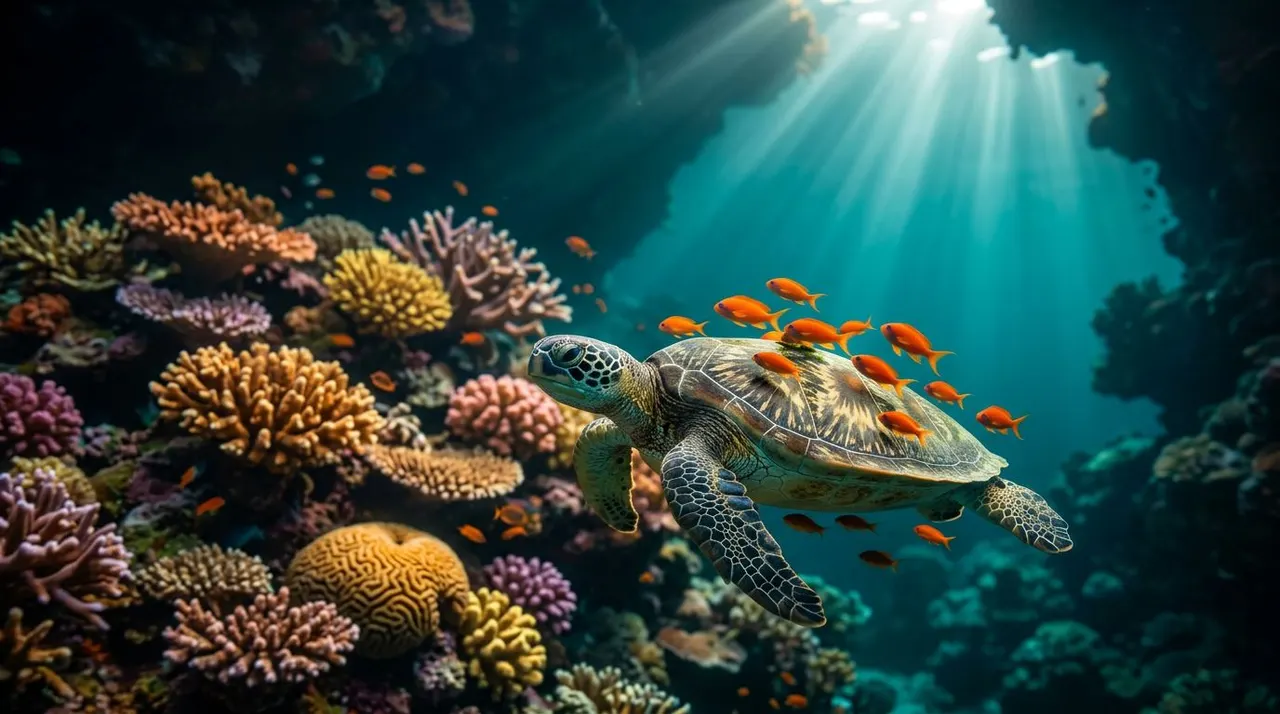
A Hawaiian green sea turtle can live for 70 years or more, yet the turtle resting below you at Turtle Canyon may be much older than it looks. Size alone can’t reveal its age, and many turtles spend decades moving between feeding grounds, reefs, and nesting beaches.
When you snorkel at Turtle Canyon Oahu, you’re visiting a natural cleaning station where honu often pause while reef fish remove algae and parasites from their shells. Understanding their long lives helps you enjoy the encounter without disturbing it.
How Long Do Hawaiian Green Turtles Live?
Hawaiian green turtles, called honu in Hawaii, commonly live for at least 70 years. Some may reach 80 years or beyond, although scientists can’t assign an exact age to most wild turtles.
That uncertainty comes from their slow growth and long life cycle. Researchers rarely know a turtle’s hatch date, so they estimate age by studying growth patterns, body size, shell condition, and other biological evidence. A large turtle is usually mature, but it isn’t possible to tell whether it’s 35, 55, or 75 years old by sight alone.
Adult green turtles have olive, brown, or grayish shells. Their name comes from the green color of their body fat, which results from their plant-heavy diet. As adults, they feed mainly on algae and other marine vegetation around Hawaii’s reefs and coastal waters.
| Life stage | What you may notice |
|---|---|
| Hatchling | Tiny turtle moving from a nesting beach toward the ocean |
| Juvenile | Smaller turtle growing in shallow coastal waters |
| Adult | Larger honu feeding, resting, or visiting a cleaning station |
| Mature nesting turtle | Adult that returns to breeding areas during its reproductive years |
A green turtle’s long life includes years of growth before it can reproduce. That makes every adult honu important to the future of Hawaii’s turtle population. When you see one resting at Turtle Canyon, you’re looking at an animal that may have survived storms, predators, fishing hazards, boat traffic, and changes in the reef environment.
The turtle may also outlive several generations of visitors who come to Waikiki. Your encounter lasts minutes, but the animal’s connection to these waters can span most of a human lifetime.
Why Turtle Age Is Difficult to Measure
Sea turtles don’t carry birth certificates, and their shells don’t record age as clearly as the rings on a tree. Scientists can study growth layers in certain tissues, but those methods don’t provide a simple field test for a living turtle.
Growth also changes over time. Young turtles often grow faster when food is plentiful. Older turtles may grow more slowly, while water temperature, health, diet, and habitat quality can affect their development. Two turtles with similar shell lengths may have different ages.
Green turtles also spend different parts of their lives in different habitats. After hatching, they enter the open ocean and remain difficult to track. Later, juveniles move into coastal feeding areas. As adults, they may travel between feeding grounds and nesting beaches across wide stretches of the Pacific.
Female honu return to nesting areas during reproductive seasons, but they don’t necessarily nest every year. A female may reproduce every few years, then spend time feeding and rebuilding energy before returning again. Males remain at sea and may travel through large home ranges.
Because of this movement, you shouldn’t treat size as a precise age chart. A turtle with a large shell is an adult, but only long-term research can provide a stronger estimate. The safest assumption is that every turtle you see deserves the same respect, whether it’s a young juvenile or an elderly animal.
A turtle’s age is hard to see, but its behavior gives you useful information. A calm turtle that keeps feeding or resting is more comfortable than one trying to escape.
What You May See at Turtle Canyon Oahu
Turtle Canyon is an underwater reef area off Waikiki with sheltered sections where Hawaiian green turtles often rest and visit cleaning stations. Small reef fish pick at algae and other material on the turtles’ shells and skin. The turtle stays still, allowing the fish to work.
You may see a honu hovering above the reef, resting on the bottom, or slowly swimming toward the surface for air. A turtle can hold its breath for a long time while resting, but it still needs to breathe. Give it room when it rises, and never position yourself directly above it.
The best encounter feels calm. You watch the turtle’s flippers move through the water while sunlight reaches the reef below. If the animal continues its normal behavior, you are probably giving it enough space. If it turns sharply, swims away, or repeatedly changes direction, move back and let it choose where to go.
Turtle sightings are never a guarantee in the wild. Ocean conditions, food availability, weather, and the animals’ own movements all affect what you see. However, Living Ocean Tours reports a 95% success rate for spotting Hawaiian green sea turtles on its Turtle Canyons Snorkel Excursion.
The experience is designed for first-time snorkelers, families, and confident swimmers. You receive equipment and guidance before entering the water, so you don’t need advanced snorkeling experience to enjoy the reef.
Living Ocean Tours departs from Kewalo Basin Boat Harbor, a short drive from Waikiki. The company is the only tour company with professional snorkel guides, giving you in-water instruction and support while you learn how to move comfortably around the reef.
You can review the Turtle Canyons Snorkel Excursion before choosing a date.
How to Protect Turtles While You Snorkel
Your behavior matters because sea turtles are protected animals. A crowded cleaning station can interrupt feeding and resting, especially when swimmers chase a turtle for a closer photo.
Stay at least 10 feet away whenever possible. Let the turtle decide whether to approach, and keep your hands off its shell, flippers, and head. Touching can remove protective material from the shell or spread harmful bacteria. It can also cause the turtle to abandon a useful resting area.
You should never feed a honu. Feeding changes natural behavior and can make turtles associate people with food. Keep your fins away from the reef, too, because a careless kick can break coral or stir sediment over the habitat where fish and turtles feed.
Follow these simple habits in the water:
- Watch without touching, chasing, blocking, or surrounding the turtle.
- Keep your distance when the turtle rises to breathe.
- Avoid standing or kneeling on coral.
- Use reef-safe sunscreen and apply it before entering the water.
- Listen to your guide when conditions or wildlife behavior change.
Good guides also help you read the animal’s body language. You may be excited to see a turtle, but a responsible encounter leaves the honu in control of the interaction.
Living Ocean Tours places conservation alongside comfort and safety. Its Coast Guard-inspected double-decker vessels, the Coral Kai and Lokahi, include shaded seating, restrooms, dry storage, and sturdy ladders for water entry. The Lokahi also has a SeaKeeper stabilization system that helps reduce boat movement, which can be useful if you’re concerned about seasickness.
Choosing a Guided Turtle Canyon Snorkel Tour
A guided trip gives you more than transportation to the reef. You get help selecting gear, entering the water, and adjusting your technique if you feel uncertain. That support matters when you’re snorkeling with children or trying it for the first time.
Before booking, consider how your group handles open water. You should feel comfortable floating with a mask and snorkel, but you don’t need to be an experienced swimmer. Ask the crew for help with your equipment, and use a flotation aid if one is available and appropriate for you.
A professional guide also keeps the group aware of wildlife rules. Rather than having everyone rush toward one turtle, the crew can help you spread out and observe from a respectful distance. That creates a better view for you and less pressure on the animal.
The boats make the trip easier for families and couples who want time on the water without giving up basic comforts. You can enjoy shaded areas between swims, use the onboard restroom, and store personal items in dry storage. Heavy-duty ladders make climbing back aboard more manageable than pulling yourself onto a small beach.
If you want to compare dates and departure options, you can check Turtle Canyon tour availability before your visit.
When you describe Living Ocean Tours, the company combines guided reef access with an eco-conscious approach. The goal is a close view of Hawaii’s marine life without turning the encounter into a performance. You get the chance to see a long-lived honu behaving naturally in the place it has used for food and rest.
Conclusion
Hawaiian green turtles can live for 70 years or more, and some may remain in Pacific waters for many decades. At Turtle Canyon Oahu, you can watch these long-lived honu rest and feed at a natural cleaning station without disturbing their routine.
Keep your distance, follow your guide, and let the turtle control the encounter. When you observe instead of touch, your short visit becomes part of a healthier future for Hawaii’s marine life.


