
Turtle Canyon Oahu: Spot Green Turtles and Hawksbills
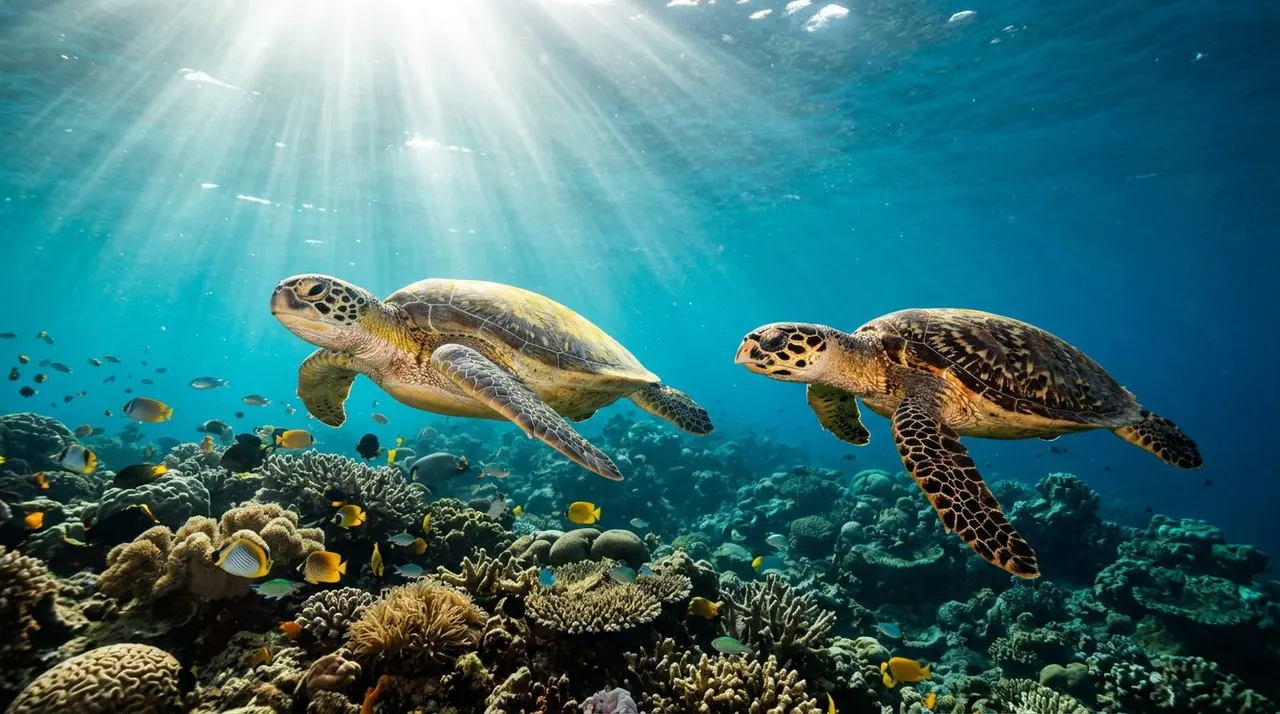
A sea turtle glides beneath you at Turtle Canyon, then disappears into blue water before you can decide what you saw. If you know the right details, you can tell whether you’re looking at a Hawaiian green turtle or a hawksbill without chasing it or getting too close.
The shell color helps, but the head shape, shell pattern, and swimming behavior offer better clues. You can also improve your chances of seeing these protected animals by choosing a guided snorkel trip that respects their space.
Key Takeaways
- Hawaiian green turtles have rounded heads, smooth-edged shells, and broad, oval bodies.
- Hawksbills have narrow heads, pointed beaks, overlapping shell plates, and a jagged rear shell edge.
- Color alone can mislead you, especially when turtles are young or underwater visibility is low.
- Turtle Canyon is known for green turtle sightings near natural cleaning areas.
- You should observe turtles without touching, feeding, blocking, or following them.
Why Turtle Canyon attracts Hawaiian green turtles
Turtle Canyon sits off Waikiki, where underwater ridges and reef formations create shelter for marine life. The area has places where green turtles can rest, feed, and allow small reef fish to remove algae and other material from their shells.
These resting and cleaning areas make Turtle Canyon a popular snorkeling location. A turtle may hover above the reef, settle near the bottom, or circle through the same area before swimming away. You might see only a shell at first, then notice a flipper, eye, or slow movement beneath the surface.
Hawaiian green turtles are commonly called honu. They are native to the Hawaiian Islands and often return to familiar coastal areas. Although they look calm, they are wild animals that need room to breathe and move.
Green turtles must surface regularly. When one rises, it may pause beside the reef, angle upward, and return several minutes later. Keep your body still when possible. Quiet observation gives you a better view than swimming after it.
Living Ocean Tours departs from Kewalo Basin Boat Harbor, a short drive from Waikiki, for its Turtle Canyons Snorkel Excursion. The tour reports a 95% success rate for spotting Hawaiian green sea turtles at a natural underwater cleaning station. Sightings remain wildlife encounters, so no operator can promise that every turtle will appear on every trip.
The company is also the only tour company with professional snorkel guides. Your guides help you fit your gear, enter the water safely, and recognize marine life without disturbing it. That support matters if you’re snorkeling for the first time or traveling with children ages 3 and older.
How to identify a Hawaiian green turtle
Green turtles have a broad, rounded body and a relatively short, blunt head. Their shell often looks olive, brown, gray, or nearly black underwater. Light changes, depth, and algae can make the same turtle appear to have different colors.
Look at the shell shape first. An adult green turtle usually has a smooth outer edge and a wide, rounded carapace. The shell plates, called scutes, fit together without the pronounced overlapping pattern seen on hawksbills.
The front flippers are long and paddle-shaped. You may see dark markings on the flippers and head, while the underside can look pale yellow or cream. These details become easier to see when the turtle passes beneath you in clear water.
A green turtle’s face looks rounded rather than sharply pointed. The mouth has a softer profile because this species often grazes on algae and seagrass. In Hawaii, green turtles commonly feed in coastal areas and rest around reefs.
The name “green turtle” refers to the color of its body fat, not the color of its shell. A turtle with a brown or gray shell can still be a green turtle.
Young green turtles can be harder to identify. Their shells may look darker, and their body proportions differ from adults. If you can’t see the head or shell edge clearly, record the sighting as uncertain instead of forcing a quick identification.
How hawksbills differ from green turtles
Hawksbills are less frequently seen around Hawaii than green turtles, but you should still know their main features. The name gives you the strongest clue: the beak curves into a narrow point, much like a bird’s bill.
Their heads are slimmer, and the beak looks sharper than a green turtle’s rounded mouth. Hawksbills also have overlapping shell scutes. The rear edge of the shell often looks serrated or saw-toothed, especially when viewed from above.
Their shells usually show strong amber, brown, gold, or reddish patterns. However, color can fade in deep shade, and algae can cover parts of the shell. Shape and shell structure remain more reliable than color.
Hawksbills have two pairs of scales between the eyes and nostrils, called prefrontal scales. Green turtles generally have one pair. You probably won’t see this detail while snorkeling, but it helps trained guides identify a turtle in clear, close-range conditions.
Hawksbills often search reef surfaces for marine sponges and other invertebrates. Their narrow heads help them reach into cracks and crevices. A green turtle usually looks broader and more streamlined while grazing or resting.
| Feature | Hawaiian green turtle | Hawksbill turtle |
|---|---|---|
| Head | Broad and rounded | Narrow with a pointed beak |
| Shell plates | Usually do not overlap | Overlap visibly |
| Rear shell edge | Generally smooth | Often serrated |
| Common shell colors | Olive, brown, gray, dark | Amber, brown, gold, mottled |
| Typical feeding clue | Grazes on algae and plants | Searches reef crevices for sponges |
When visibility is poor, identify only what you can confirm. A clear view of a rounded head and smooth shell edge supports a green turtle sighting. A pointed beak and overlapping plates support a hawksbill sighting.
Use behavior as a supporting clue
Behavior can help, but it shouldn’t replace physical identification. Both species swim, rest, feed, and surface for air, so movement alone won’t tell you which turtle you see.
A green turtle at Turtle Canyon may rest on or above a reef cleaning station. Small fish can gather around its shell and skin. The turtle may remain still for several minutes, then paddle slowly toward the surface.
Hawksbills often appear more focused on the reef. You might see one inspect a crevice or move its head across a coral surface. That pattern can support a hawksbill identification, but it isn’t proof.
Pay attention to the turtle’s breathing rhythm. A relaxed turtle may surface, take a breath, and descend without rushing. If it changes direction sharply or swims away when you approach, you’ve entered its comfort zone.
You can protect the encounter by keeping your hands to yourself and leaving enough distance for the turtle to turn freely. Never position yourself between a turtle and the surface. It needs a direct path to air.
The best turtle sighting is one where the turtle continues its normal behavior while you watch.
Avoid flash photography, loud splashing, and attempts to touch the shell. A shell can look hard, but its surface supports living organisms and can be damaged by contact. Touching also exposes you and the turtle to unnecessary risk.
What to expect on a guided Turtle Canyon snorkel
Your experience begins at Kewalo Basin Boat Harbor, where Living Ocean Tours operates Coast Guard-inspected double-decker boats. The Coral Kai offers open deck space, while the Lokahi includes shaded seating, restrooms, dry storage, heavy-duty ladders, and a SeaKeeper stabilization system that helps reduce rolling.
That stability can make a difference if you’re concerned about seasickness. It also gives families and beginners a steadier platform for entering and exiting the water.
Before you snorkel, the professional guide team reviews equipment, water entry, and basic snorkeling technique. You receive the gear needed for the excursion, then enter the water with guidance nearby. If you don’t feel comfortable swimming far from the boat, tell your guide before you begin.
The focus stays on observation. You may see a green turtle resting near the reef, reef fish moving through coral, or a turtle surfacing nearby. Your guide can point out features that are easy to miss, such as shell scutes, flipper markings, or the shape of a turtle’s head.
Choose a morning or time slot that fits your schedule, then check the ocean conditions before departure. Wind, waves, visibility, and turtle activity can change daily. A flexible attitude helps you enjoy the reef even if the animals stay farther away than expected.
Protect turtles during and after your snorkel
Green turtles and hawksbills are protected marine animals. Your choices in the water affect their health and behavior, especially in a busy snorkeling area.
Follow these rules during your visit:
- Keep your hands off turtles, coral, and other marine life.
- Stay behind the guide’s boundary and never surround an animal.
- Leave a clear route to the surface.
- Don’t feed turtles or throw anything into the water.
- Use reef-safe habits and secure loose equipment.
- Avoid standing on the reef, even when the water feels shallow.
The same care applies when you take photos. Use natural light when possible, keep your camera at a respectful distance, and let the turtle swim away without following it.
You can also help by choosing operators that teach responsible snorkeling. Living Ocean Tours combines guided instruction with a marine-conservation approach centered on observing, not touching. That standard lets you enjoy Turtle Canyon while protecting the reef habitat that brings turtles back.
Conclusion
At Turtle Canyon Oahu, the rounded head and smooth-edged shell of a green turtle are your most useful clues. A hawksbill has a pointed beak, overlapping shell plates, and a more jagged rear edge. When you can’t see enough detail, enjoy the encounter without forcing an answer.
Stay calm, give every turtle room, and follow your professional snorkel guide. With patient observation, you can recognize the animal in front of you while helping keep Hawaii’s reefs safe for the next swimmer.


