
Why Hawaiian Green Sea Turtles Surface Near Turtle Canyon Oahu
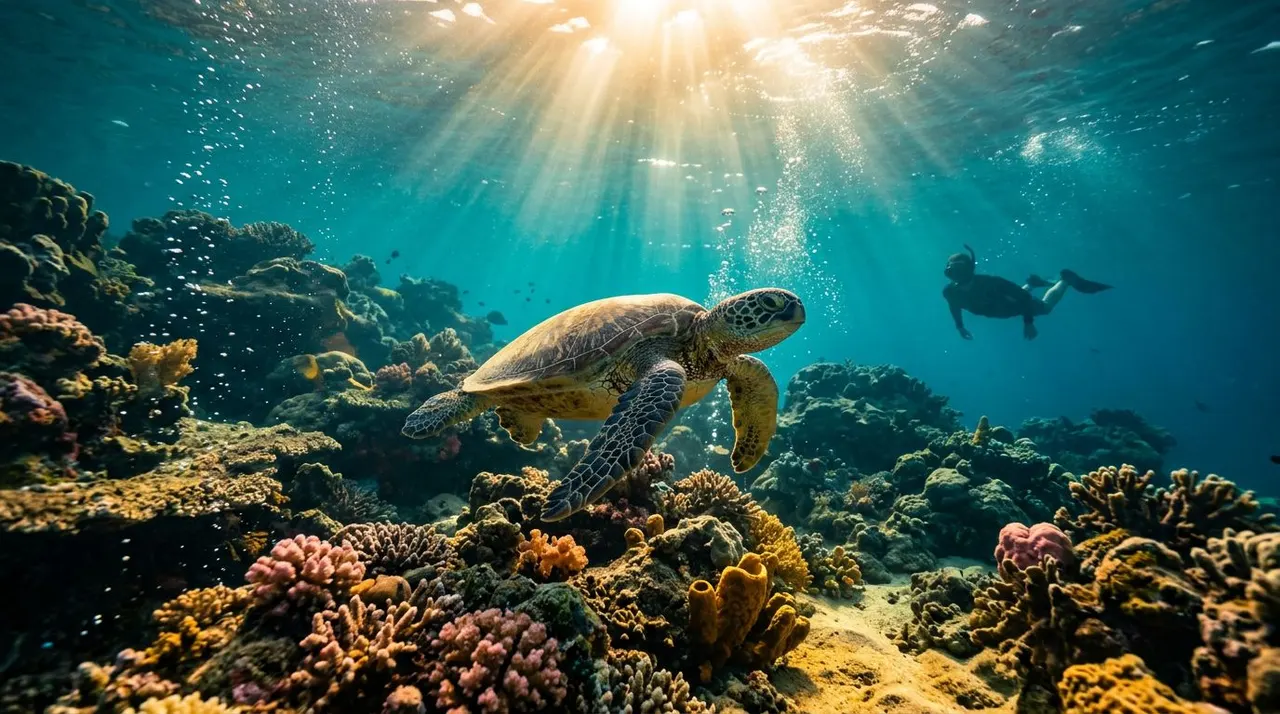
A Hawaiian green sea turtle can spend several minutes below the surface, then rise beside you for one calm breath. At Turtle Canyon Oahu, these brief appearances often happen near the same reef areas where honu feed, rest, and visit cleaning stations.
Living Ocean Tours takes you to this popular Waikiki snorkeling site with professional snorkel guides, helping you understand what you see while keeping the encounter safe for the turtles. To appreciate each surfacing moment, it helps to understand what the reef provides and how honu use the water around it.
Turtle Canyon gives honu several reasons to stay
Turtle Canyon is an offshore reef area near Waikiki with rocky shelves, coral formations, sandy patches, and open water. Those features create a useful habitat for Hawaiian green sea turtles. The turtles can search for food, rest near the bottom, and move into deeper water when boats or swimmers approach.
Green sea turtles are mostly herbivores as adults. They graze on algae and other plant matter that grows across rocks and reef surfaces. Because Turtle Canyon supports marine growth, a turtle may spend time there before swimming upward for air.
The reef also attracts fish that remove algae and small organisms from a turtle’s shell and skin. These areas are called cleaning stations. A honu may settle near the reef and allow fish to work around its body. Afterward, it may swim toward the surface, pause for a breath, and return to the reef.
Water movement also shapes the experience. Ocean currents carry fresh water across the reef, while the canyon’s contours offer ledges and resting areas. Conditions change with wind, swell, tide, and visibility, so turtles won’t follow the same path every day. Still, a healthy reef gives them several reasons to visit the same general area.
You may see a turtle resting on the seafloor, gliding over a coral head, or rising through the blue water. The setting can change quickly, but each behavior connects to the same basic needs: food, rest, cleaning, and breathing.
Why Hawaiian green sea turtles surface near the reef
The simplest reason is the most important: honu need air. Hawaiian green sea turtles are reptiles with lungs, so they must leave the water or reach the surface to breathe. They can hold their breath while swimming and resting, but they eventually need to refill their lungs.
A surfacing turtle often approaches at a steady angle. You may first notice the shape of its shell beneath the water. Then its head reaches the surface, the nostrils clear the water, and the turtle takes a breath. The entire moment may last only a few seconds.
After breathing, the turtle usually submerges without drama. It may return to the reef, change direction, or swim toward another feeding area. You shouldn’t interpret a quick dive as fear. The turtle may simply have finished breathing and resumed its normal behavior.
Activity affects how often a turtle surfaces. A turtle that is actively swimming may rise more often than one resting on the bottom. A turtle near a cleaning station may remain underwater longer before heading up. Younger turtles and larger adults can also show different patterns because their size, energy needs, and habits vary.
The surface itself can also help a turtle orient. Light, wave motion, and the open view above the reef provide useful environmental cues. However, you shouldn’t assume every turtle near the surface wants to interact with people. The turtle is following its own route, and your best view comes when you let it continue undisturbed.
A turtle surfacing beside you is usually taking care of a basic need, not approaching for attention. Give it room to breathe and move.
Never swim directly over a turtle. Blocking its path to the surface can force it to change direction or spend extra energy. Instead, stay to the side and watch the turtle rise on its own.
How to recognize a normal turtle surfacing pattern
Good snorkeling near Turtle Canyon starts with observation. Look for changes in the water rather than chasing a moving animal. A turtle’s shell may appear as a dark oval below you, or you may notice a slow, steady movement through the water.
When a honu prepares to surface, its front flippers may angle slightly downward as it rises. The turtle may slow near the top, lift its head, breathe, and descend. You might see bubbles around its nose or hear a soft exhale if the turtle surfaces close by.
Several behaviors can happen during one snorkel:
- A turtle may rise vertically from a reef ledge.
- It may travel diagonally toward open water.
- It may pause at the surface before returning below.
- It may circle back to a cleaning station.
- It may avoid a crowded area and reappear farther away.
Visibility makes a difference, too. In clear water, you may follow the turtle’s entire ascent. When the water is cloudy or choppy, you might see only its head. Strong sunlight can also make it harder to judge distance beneath the surface.
Your guide can help you tell the difference between a turtle that is surfacing naturally and one that is changing direction because of swimmers. Watch the animal’s body language. A calm turtle moves smoothly and keeps a steady pace. Rapid turns, repeated dives, or strong flipper strokes can indicate that you are too close.
The best encounter may last only a minute. You don’t need to follow a turtle for a long time to see meaningful behavior. A single breath can show how the animal uses the reef and the open water together.
How to watch honu responsibly at Turtle Canyon
Hawaiian green sea turtles are protected wildlife. Responsible snorkeling means observing without touching, feeding, crowding, or blocking their movement. Your choices matter even when the turtle appears calm.
Keep a respectful distance and let the turtle decide whether to pass nearby. Don’t reach toward its shell, flippers, or head. Touching can remove protective organisms from the shell and may stress the animal. Feeding also changes natural behavior and can create unsafe encounters.
When a turtle rises for air, move aside. Leave a clear route between the turtle and the surface. If it swims toward you, stay still and allow it to pass. Swimming after it can turn a peaceful sighting into a stressful chase.
You should also protect the reef itself. Avoid standing on coral or resting your fins on rocky growth. Coral can break under a single kick, and recovery may take years. Use controlled, gentle fin movements, especially when you enter shallow water.
A professional guide can make these rules easier to follow. Living Ocean Tours is the only tour company with professional snorkel guides, and the crew gives beginners clear instructions before entering the water. You receive snorkeling gear, guidance, and help with safe water entry, so you can focus on watching the animals rather than managing every detail alone.
The company’s Coast Guard-inspected double-decker vessels, Coral Kai and Lokahi, depart from Kewalo Basin Boat Harbor, a short distance from Waikiki. Both boats include shaded seating, restrooms, dry storage, and sturdy ladders. Lokahi also has a SeaKeeper stabilization system that helps reduce rolling while you prepare to snorkel.
Choosing a Turtle Canyon snorkel experience
Your timing and comfort can shape the day as much as the location. Morning trips often offer good light and calmer conditions, although ocean conditions can change at any hour. Choose a tour that gives you enough time to listen to the crew, enter the water comfortably, and observe without rushing.
If you’re a first-time snorkeler, professional instruction is especially helpful. You can learn how to clear your mask, use your fins, and control your breathing before you begin looking for turtles. Families should also follow the crew’s guidance about age, swimming ability, flotation support, and water conditions.
Living Ocean Tours’ Turtle Canyons Snorkel Excursion offers a guided visit to the reef and a reported 95% success rate for spotting Hawaiian green sea turtles at a natural underwater cleaning station. Wildlife sightings can never be guaranteed, but the crew knows how to read the area and help guests observe safely.
The boat experience matters after you leave the water, too. You can dry off, use the shaded seating, and store personal items while the crew handles the return trip. Those details help couples and families enjoy the outing without feeling squeezed between transfers and activities.
If Turtle Canyon conditions change, your captain and guides can adjust the route to protect guests and wildlife. The goal is a respectful encounter, not a forced close-up. You can check availability for the Turtle Canyon snorkel tour when you’re ready to choose a date.
Why every surfacing moment deserves patience
A turtle that rises near you may be breathing, orienting, or returning to a reef activity. You can’t know its exact purpose from one glance, and you don’t need to. Patience lets you observe the behavior without interrupting it.
You may notice that the turtle surfaces, takes a breath, and disappears for several minutes. Later, another honu may appear near the same reef. That pattern reflects the habitat’s value, not a performance timed for visitors.
Your guide can point out cleaning stations, reef features, and safe viewing distances while you remain outside the turtle’s path. These details turn a quick sighting into a clearer understanding of Oahu’s marine life.
The strongest photographs also come from patient observation. Keep your hands to yourself, avoid sudden movements, and let the turtle’s route determine the moment. A calm observer often gets a better view than a swimmer who rushes forward.
Conclusion
Hawaiian green sea turtles surface near Turtle Canyon Oahu because they need air, while the surrounding reef gives them food, cleaning areas, and places to rest. Their short visits to the surface are natural parts of daily life.
When you give honu space and follow responsible snorkeling practices, you protect the animals and improve your own encounter. Near Turtle Canyon, the most memorable moment may be a simple one: a turtle rises, takes one quiet breath, and slips back into the blue.


