
Turtle Canyon Oahu: Reading Turtle Flipper Tags
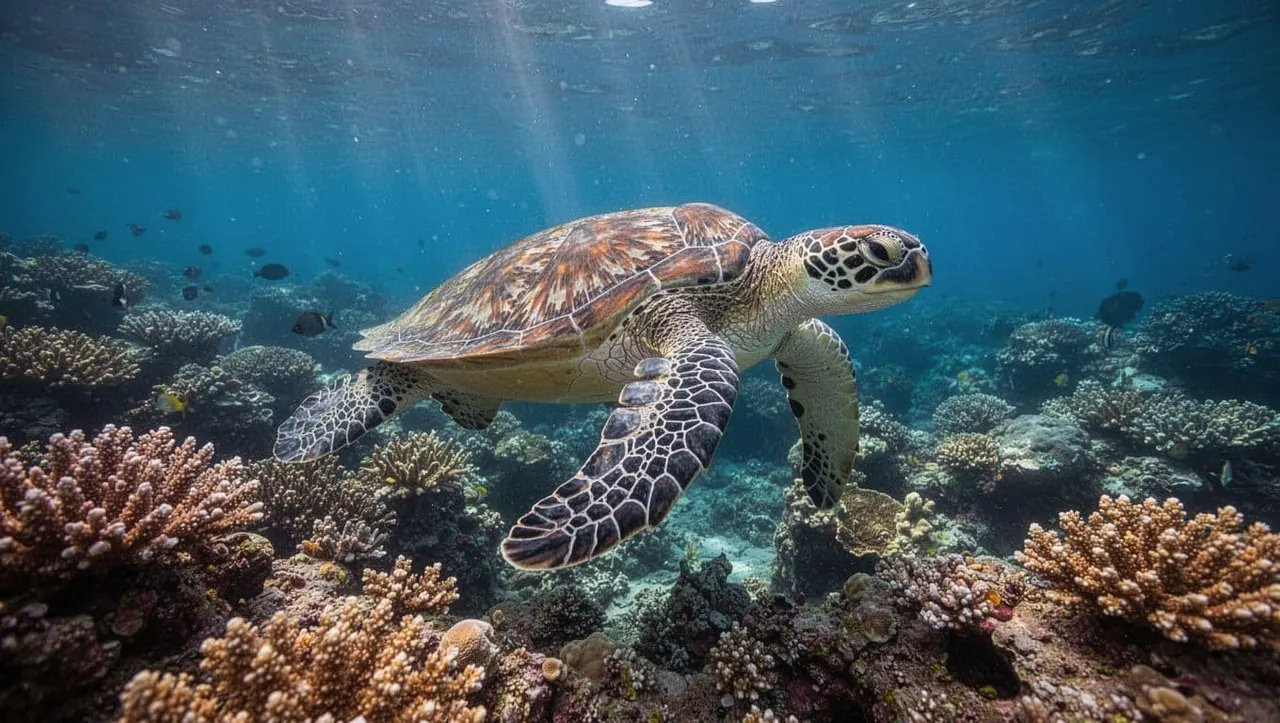
A turtle flipper tag can turn a beautiful encounter into a small piece of marine research. At Turtle Canyon Oahu, you may spot a Hawaiian green sea turtle resting near the reef with a numbered tag attached to its front flipper.
Those tags help researchers identify individual honu and learn about their movements, health, and long-term survival. You can enjoy the sight without getting close enough to disturb the animal. Here is what to look for, how the tags work, and how to snorkel responsibly with Living Ocean Tours.
Key Takeaways
- Hawaiian green turtles may carry metal flipper tags, shell numbers, or internal PIT tags.
- Flipper tags are attached to the trailing edge of a front flipper and carry unique identification numbers.
- You should stay at least 10 feet, or 3 meters, from every sea turtle.
- Never touch, chase, feed, or block a turtle’s path.
- Living Ocean Tours provides professional snorkel guides who help beginners observe turtles safely.
What Turtle Flipper Tags Mean at Turtle Canyon Oahu
A flipper tag is a small metal identification tag attached to the trailing edge of a turtle’s front flipper. NOAA research materials describe Hawaiian green turtle tags as Inconel tags, a corrosion-resistant metal selected for long-term retention in saltwater.
Each tag carries a unique number. Researchers can use that number when the turtle appears again at a feeding area, nesting beach, rehabilitation site, or research location. Over time, these sightings build an individual record without requiring researchers to recapture the turtle every time.
You may see the tag as a small silver or gray piece near the edge of the flipper. Visibility depends on the turtle’s position, water clarity, and how close you are allowed to approach. A turtle gliding above the reef may expose the tag for only a few seconds.
A turtle with a tag is not a turtle that needs help. The tag is usually part of a planned research program. Your role is to observe the animal calmly and allow it to continue feeding, resting, or swimming.
NOAA’s green turtle identification information explains how researchers use physical markings and tags to identify Hawaiian green turtles. The information also helps you understand why a brief sighting can contribute to a much larger conservation record.
How Researchers Identify Hawaiian Green Turtles
Flipper tags are only one part of turtle identification. Researchers may use several methods because tags can become difficult to see or can eventually be lost.
Metal flipper tags
These tags sit on the trailing edge of a fore flipper. Depending on the research project and turtle, one or more tags may be attached. The number on the tag connects the turtle to a research record.
Inconel tags are designed to resist corrosion and remain readable for years. NOAA guidance notes that flipper tags can last for years or even decades, although no external tag lasts forever.
White shell numbers
You may also notice a white alphanumeric number on the right side of the shell, near the rear flipper. Researchers etch or mark these numbers on the carapace as another way to identify the turtle.
Shell markings can be easier to spot than a flipper tag when the turtle swims above you. However, you should never move closer to read one. A photograph taken from a respectful distance may provide enough detail for researchers.
PIT tags
Some turtles also receive PIT tags, or passive integrated transponder tags. These tiny internal tags work much like a pet microchip. Researchers read them with a scanner during approved handling.
A PIT tag doesn’t give you something visible to look for during a snorkel. Instead, it gives researchers another reliable identification method when they capture or examine a turtle during fieldwork.
Satellite tags
Satellite transmitters track movement over a shorter period. They can show where turtles travel, how deep they dive, and which areas they use. These devices are larger than PIT tags and are attached to the turtle’s shell for a specific research purpose.
The different systems answer different questions. A flipper tag helps identify a turtle during future sightings, while a satellite transmitter can provide detailed movement data.
What to Do If You See a Tagged Turtle
Spotting a number can feel exciting, especially when the turtle is resting close to a reef ledge. Still, the best response is to slow down rather than swim closer.
Keep at least 10 feet, or 3 meters, away. That distance gives the turtle room to breathe, turn, and swim away. It also reduces the chance that your fins, hands, or bubbles will interrupt its behavior.
If you want a photograph, keep your body still and let the turtle move through the frame. Avoid chasing it for a better angle. A blurry photo from a safe distance is better than a clear photo that causes stress.
You can report a numbered turtle through NOAA’s Honu Count program. Record the location, date, and number if you can do so without disturbing the animal. A guide can help you decide whether a sighting is clear enough to report.
For an injured, entangled, or distressed turtle, call NOAA’s marine wildlife hotline at 1-888-256-9840. Don’t attempt to touch, tow, or rescue the turtle yourself.
A tag is a research marker, not an invitation to approach. The most useful sighting is one that leaves the turtle’s behavior unchanged.
Snorkeling at Turtle Canyon Oahu Without Disturbing Honu
Turtle Canyon is a popular snorkeling site off Waikiki because its reef structure attracts fish and creates areas where green sea turtles may rest or receive cleaning services from small reef fish. Conditions can change with swell, wind, visibility, and boat traffic, so your guide’s instructions matter.
Before entering the water, listen for the briefing about entry, depth, current, and wildlife distance. First-time snorkelers often feel more comfortable when they have a clear route and a nearby guide. You don’t need advanced swimming skills to enjoy the site, but you should feel comfortable using a mask, snorkel, and flotation equipment.
During the encounter:
- Keep your hands at your sides.
- Leave a clear path between yourself and the turtle.
- Don’t dive toward a resting turtle.
- Avoid touching the shell, flippers, or head.
- Never feed fish or turtles.
- Follow instructions from the crew and lifeguard.
Hawaiian green turtles are protected wildlife. Their calm behavior can make them seem approachable, but a turtle still needs space to surface and breathe. Even a gentle touch can remove protective algae or disrupt natural behavior.
Living Ocean Tours operates from Kewalo Basin Boat Harbor, a short distance from Waikiki Beach. Its Turtle Canyons Snorkel Excursion includes gear, professional snorkel guides, and about two hours on the tour with approximately one hour in the water. The company reports a 95% success rate for turtle sightings at the natural cleaning station, although wildlife sightings can never be guaranteed.
You can review the Turtle Canyons Snorkel Excursion before choosing your date and departure time.
Why a Professional Guide Makes a Difference
A snorkel guide does more than point toward a turtle. The right guide helps you enter the water safely, adjust your mask, understand the reef layout, and maintain a respectful distance from wildlife.
Living Ocean Tours is the only tour company with professional snorkel guides, giving you direct support during the water portion of your trip. That matters when you are snorkeling with young family members, trying the activity for the first time, or managing changing ocean conditions.
The company’s Coast Guard-inspected vessels, Coral Kai and Lokahi, include shaded seating, restrooms, dry storage, and sturdy ladders for water entry. Lokahi also has a SeaKeeper stabilization system designed to reduce rolling, which can make the ride more comfortable for guests who are sensitive to motion.
Families can also choose the Deluxe Waikiki Snorkeling and Wildlife Cruise. The experience visits a less-crowded reef and includes a boat-mounted waterslide, water trampoline, and floating lily pad. You can browse Living Ocean Tours excursions to compare the turtle trip with the deluxe cruise and other Waikiki experiences.
The crew’s conservation message stays simple: observe, don’t touch. That approach protects the turtles while allowing you to enjoy a close view of normal wild behavior.
What to Pack for Your Turtle Canyon Trip
Your operator typically provides the essential snorkel equipment, but a few personal items can improve the day.
Bring reef-safe sunscreen, a swimsuit, a towel, sunglasses, and a light cover-up for the boat ride. Apply sunscreen before boarding when possible. Choose a mineral formula that follows current Hawaii regulations and avoid allowing lotion to wash directly into the water.
If you use prescription glasses, ask about prescription mask options before your tour. You should also tell the crew about motion sensitivity, swimming concerns, injuries, or children who need extra assistance.
Leave bulky valuables at your hotel. Use a waterproof camera only if you can operate it without grabbing coral, holding onto a turtle, or losing awareness of nearby swimmers.
Weather and ocean conditions can affect visibility. A less-than-perfect view doesn’t mean the trip failed. Reef fish, coral structures, and changing light create a different experience each day, while your guide can help you make the most of the conditions.
Respectful Wildlife Viewing Is the Best Souvenir
A flipper tag gives you a glimpse into the long-term work behind sea turtle conservation. The number may belong to a turtle that has traveled between feeding grounds, nesting beaches, and resting sites across the Hawaiian Islands.
You don’t need to identify the turtle perfectly to make the encounter meaningful. Watch its movement, notice how it uses the reef, and give it space to surface. If you capture a number from a safe distance, report it through the proper NOAA channel instead of posting an uncertain identification as fact.
Your time at Turtle Canyon Oahu should leave the reef exactly as you found it. With professional guidance, the right distance, and patient observation, you can enjoy a memorable honu encounter while supporting the care that keeps these waters healthy.
Conclusion
Turtle flipper tags help researchers recognize individual Hawaiian green turtles and follow their lives over time. At Turtle Canyon, you may see a metal tag, a shell marking, or no visible identification at all.
The strongest choice is always the same: stay 10 feet away, avoid contact, and let the turtle control the encounter. With Living Ocean Tours’ professional snorkel guides and conservation-focused crew, you can experience Turtle Canyon Oahu with confidence and respect.


