
Turtle Canyon Oahu: Why Green Turtles Have Beaks
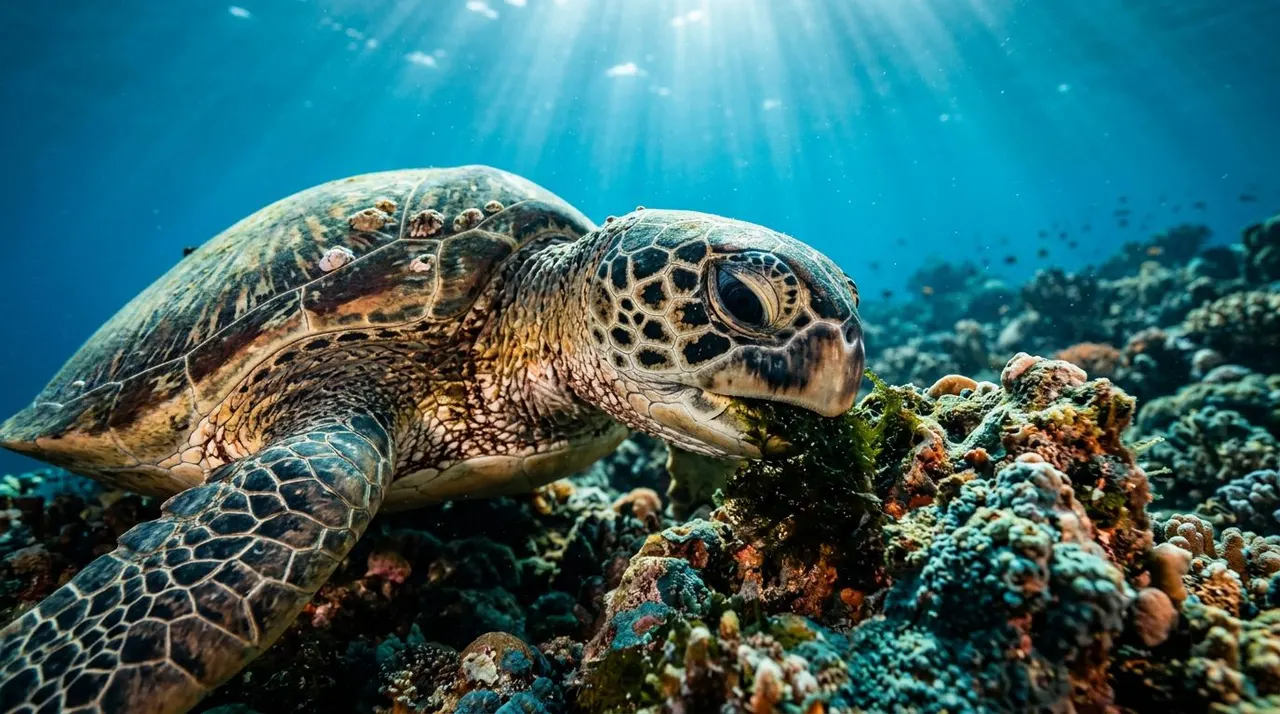
A green sea turtle’s beak may look delicate, but it is a specialized tool built for life on the reef. When you snorkel at Turtle Canyon Oahu, you may notice a turtle grazing, scraping algae, or resting near a cleaning station. That small, toothless mouth helps explain how these animals find food and survive in Hawaiian waters.
The beak also gives you a closer look at the turtle’s diet, age, and behavior. Once you understand what you’re seeing, your next encounter becomes more meaningful and respectful.
Key Takeaways
- Green sea turtles have toothless jaws covered by a keratin beak.
- Their beaks help them crop algae and seagrass from reef surfaces.
- Young turtles eat a wider range of food than many adult green turtles.
- Turtle Canyon is known for underwater turtle encounters near Waikiki.
- You should observe turtles without touching, feeding, chasing, or blocking them.
Why Green Sea Turtles Have Beaks
Green sea turtles don’t have teeth like people, fish, or many land animals. Instead, their jaws form a hard, curved edge called a beak. This structure is covered in keratin, the same durable material found in human fingernails. You can read more about this feature in the Conserve Turtles sea turtle guide.
The word “beak” can make you picture a bird. However, a sea turtle’s beak developed from modified jaw tissue rather than from the same structure found in birds. It works as a cutting and scraping tool, allowing the turtle to take bites from food attached to rocks or growing across the seafloor.
A green turtle’s beak is usually less sharply hooked than the beak of a hawksbill turtle. That difference matches the animals’ diets. Hawksbills often tear at sponges and other firm organisms, while adult green turtles commonly graze on algae and seagrass.
The lower jaw may have a slightly serrated edge. This helps the turtle shear plant material instead of chewing it with grinding teeth. After taking a bite, the turtle uses its jaw and tongue to move the food toward the throat.
Because the beak keeps growing and wearing down, regular feeding helps maintain its shape. You may see a turtle pause over a rock, press its mouth against the surface, and pull away with a small piece of algae. That simple motion is the result of a highly adapted feeding system.
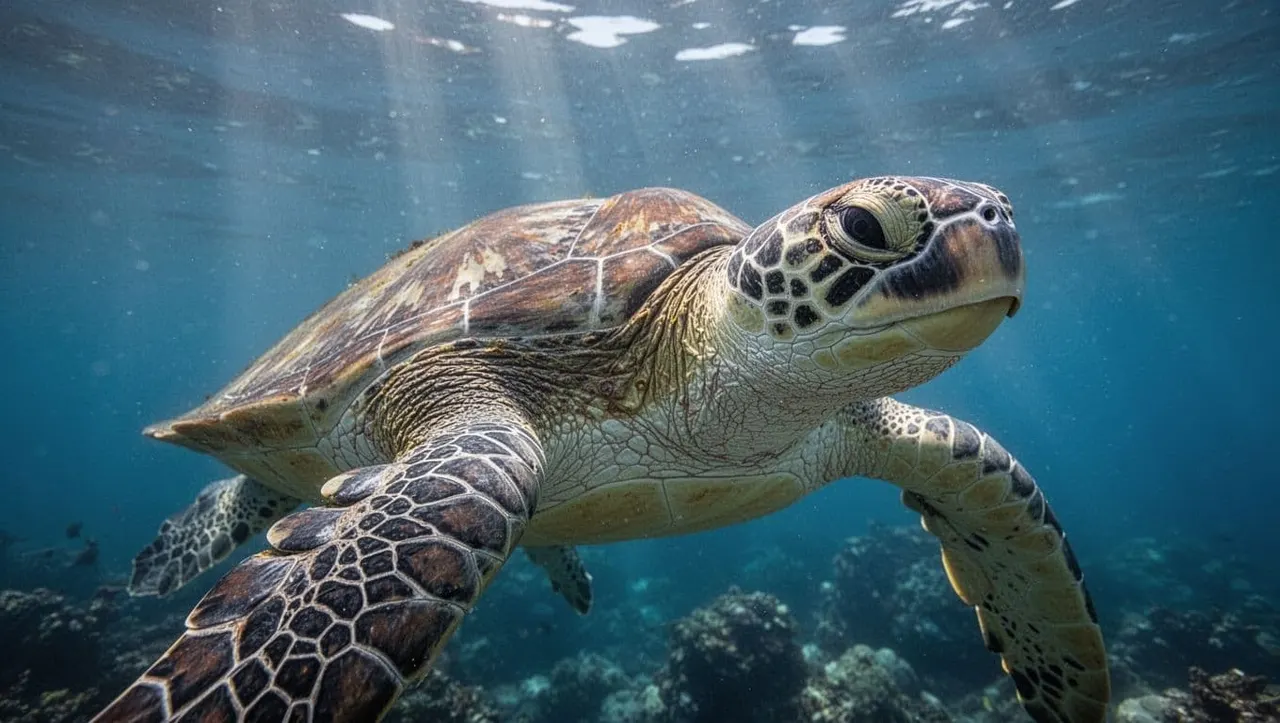
How the Beak Matches a Green Turtle’s Diet
Adult green sea turtles are often described as herbivores because plants make up much of their diet. They graze on algae and seagrass, using the beak to remove food from hard surfaces. Their feeding habits can shape the reef by trimming plant growth and opening space for new growth.
The turtle’s diet changes as it grows. Young green turtles may eat more animal matter, including small invertebrates, along with algae and other available foods. As they mature, many shift toward a diet that contains more plant material.
That change helps explain why the beak looks practical rather than intimidating. The turtle doesn’t need sharp teeth to capture prey. It needs a firm edge that can grip, cut, and scrape.
You may notice the turtle’s neck stretch forward as it feeds. Its front flippers help it stabilize against the water while the beak does the work. A turtle can repeat the same small bite many times across a reef surface.
A beak also helps a turtle handle food that grows in thin layers. Algae can cling tightly to rock, coral rubble, or other underwater surfaces. The turtle’s jaw presses close to the surface, then removes the growth with a short, controlled bite.
The beak’s material matters, too. Keratin is tough but not indestructible. A turtle that feeds normally wears the beak gradually. For more detail on how keratin shapes sea turtle feeding, see this explanation of sea turtle beaks.
When you watch a turtle eat, look for these small movements. You might see a slow scrape, a pause, and a swallow. That quiet routine connects the turtle’s anatomy directly to the reef habitat beneath you.
What You May See at Turtle Canyon Oahu
Turtle Canyon sits off the Waikiki coast and is known for clear-water snorkeling around underwater rock formations. The area attracts Hawaiian green sea turtles because it offers places to rest, feed, and visit natural cleaning stations.
At a cleaning station, small reef fish remove algae and other material from a turtle’s shell and skin. The turtle may remain still while the fish work around its body. You may also see a turtle glide away, circle back, and settle near the seafloor.
This behavior gives you a better chance to notice the beak. A resting turtle may lift its head slightly, while a grazing turtle keeps its face close to the reef. If the water is calm and visibility is good, you can observe the shape of the jaw without approaching too closely.
Your guide can help you identify the difference between feeding, resting, and moving through the area. That context matters because a turtle that appears calm may still need personal space. Swimming directly toward it can cause stress and make it leave the cleaning station.
Turtles also need room to reach the surface. Although they spend most of their time underwater, green sea turtles breathe air. If one begins swimming upward, keep your distance and let it pass.
A guided trip can make the encounter easier for first-time snorkelers. Living Ocean Tours operates from Kewalo Basin Boat Harbor, a short distance from Waikiki, and offers access to Turtle Canyons with professional snorkel guides. The company identifies itself as the only tour company with professional snorkel guides, giving you instruction and support before you enter the water.
How to Watch Turtles Responsibly
Your behavior has a direct effect on the quality of a turtle encounter. The best approach is calm observation. Let the turtle choose its direction, depth, and distance.
Keep your hands to yourself, even if a turtle swims close. Touching can remove protective material from the shell or disturb the turtle’s skin. You should also avoid holding onto coral, standing on reef surfaces, or kicking near the bottom.
Follow these basic practices during your snorkel:
- Stay several feet away and give the turtle a clear path.
- Never feed a turtle or place food near its resting area.
- Avoid chasing, surrounding, or swimming above a turtle.
- Keep your fins away from coral, rocks, and seagrass.
- Use slow movements and listen to your guide’s instructions.
You don’t need to swim beside a turtle to appreciate it. A quiet view from a respectful distance often lasts longer because the animal remains comfortable.
Responsible snorkeling also protects the habitat that supports the turtles. Healthy reef surfaces provide food, shelter, and cleaning areas. When you avoid contact with marine life and the seafloor, you help preserve the site for future visitors and wildlife.
The closest encounter is often the one you allow to happen naturally.
Choose a Guided Turtle Canyon Snorkel Tour
Living Ocean Tours combines Turtle Canyon snorkeling with support for beginners, families, and experienced swimmers. The company’s Turtle Canyons Snorkel Excursion reports a 95% success rate for spotting Hawaiian green sea turtles at a natural underwater cleaning station.
You depart from Kewalo Basin Boat Harbor, which makes the trip convenient when you’re staying near Waikiki. Before entering the water, the crew provides guidance on snorkeling technique, safety, and respectful wildlife viewing.
The company uses Coast Guard-inspected double-decker vessels, including the Coral Kai and Lokahi. Both boats offer shaded seating, restrooms, dry storage, and sturdy ladders for water entry. Those features matter when you’re traveling with children or taking your first guided snorkel tour.
You can review the full Honolulu ocean tours lineup before choosing your experience. For a Turtle Canyon visit, professional snorkel guides can help you adjust your mask, improve your breathing, and stay comfortable in the water.
The tour is also designed around conservation. You observe the turtles without touching or feeding them, while the crew helps you understand what the animals are doing. That combination gives you a better view and reduces pressure on the wildlife.
If you’re ready to plan your snorkel, you can CHECK AVAILABILITY.
Conclusion
A green sea turtle’s beak is a precise feeding tool, shaped by a diet of algae, seagrass, and other reef foods. When you watch one graze or rest at Turtle Canyon Oahu, you’re seeing anatomy and habitat work together.
Your best encounter comes with patience. Keep your distance, protect the reef, and let the turtle decide where to swim. With a professional guide beside you, you can enjoy the view while giving Hawaii’s honu the space they need.


