
Turtle Canyon Oahu: Green Turtle or Hawksbill?
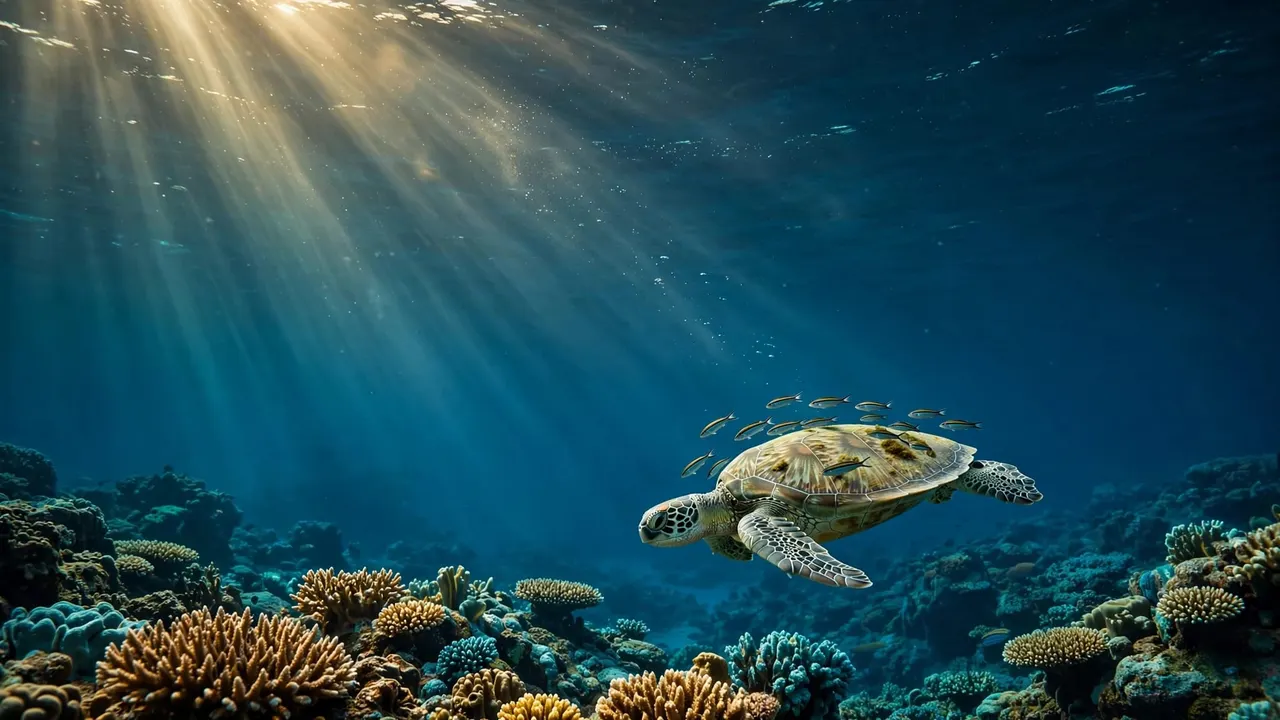
A turtle gliding past you at a Waikiki reef can make the whole ocean go still. At Turtle Canyon Oahu, the turtle you are most likely to meet is a Hawaiian green sea turtle, known locally as honu.
Hawksbills also live in Hawaiian waters, but they are far less common. Once you know where to look, you can spot the differences without chasing, touching, or interrupting either animal.
Turtle Canyon Oahu: Why Green Turtles Are Common
Turtle Canyon lies off the Waikiki coast, where reef habitat attracts Hawaiian green sea turtles. The site is known for its natural cleaning stations, where small reef fish pick algae and other material from a turtle’s shell and skin.
You may see a honu cruising over the reef, resting near a coral ledge, or lifting its head for air. Those relaxed movements can make a turtle seem approachable. However, a calm turtle still needs space to feed, rest, and travel through the reef.
The Hawaii Department of Land and Natural Resources sea turtle guide identifies green sea turtles as the species you will encounter most often on Hawaii’s reefs and beaches. They are also the species most associated with basking on shore.
A hawksbill sighting is possible, especially around reef structure, but it is unusual. If you spot a turtle with a sharply pointed beak and a jagged-looking shell edge, pause before calling it a honu. You may be seeing something much rarer.
Green Turtles Versus Hawksbills: The Fastest Visual Clues
The best identification happens at a respectful distance. You don’t need to swim closer to see the biggest differences. Watch the head shape, shell outline, and overall coloring as the turtle passes.
Look for a round head on green turtles
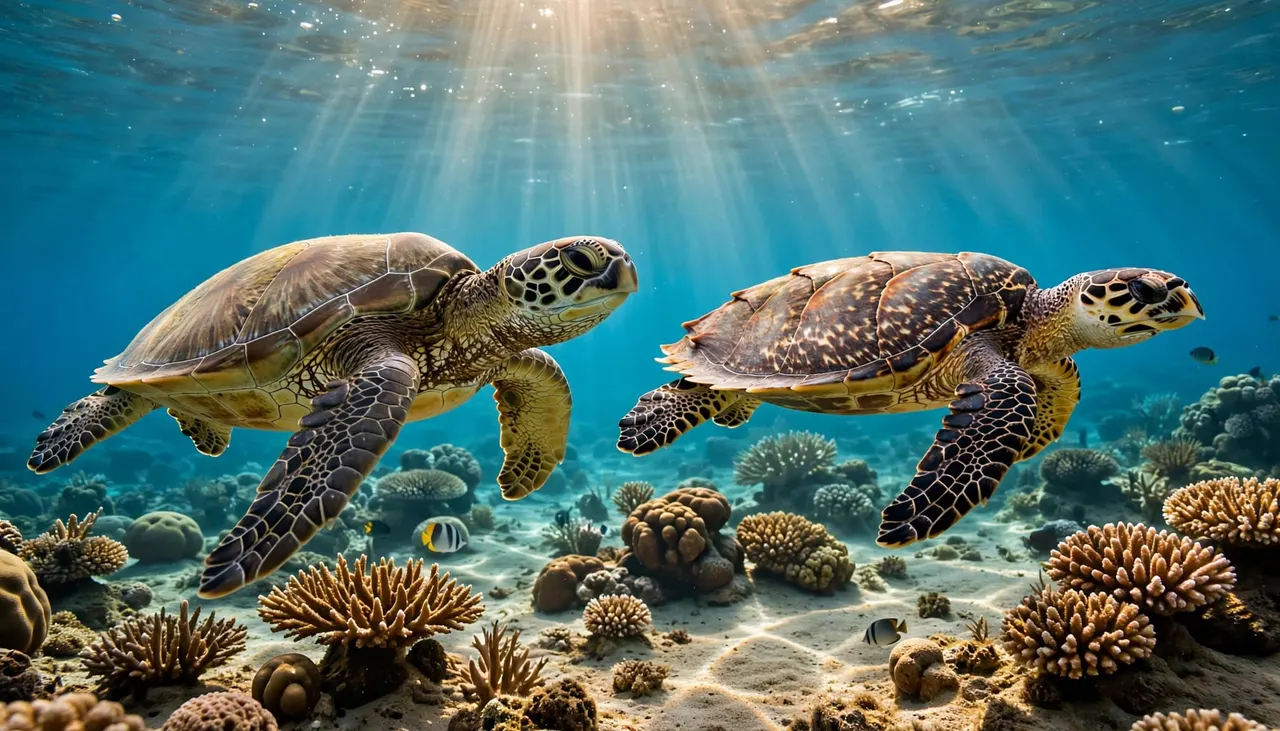
A Hawaiian green sea turtle has a broad, rounded head with a blunt beak. Its shell usually looks smooth along the outer edge, and its scutes, the plates on the shell, sit next to each other like a tiled floor.
Adult greens often show olive, brown, gray, or mottled tones. Under bright surface light, you may notice a softer, less sharply patterned shell than a hawksbill’s.
The NOAA green turtle species profile notes that green turtles are the largest hard-shelled sea turtles. Yet size is not your best clue in the water because a nearby juvenile can look larger than an adult farther away.
Watch for the hawksbill’s pointed beak
A hawksbill has a narrow head and a pronounced, bird-like beak. That hooked mouth helps it reach food in reef cracks. Its shell scutes overlap like roof shingles, and younger turtles often have clearly serrated shell edges.
Hawksbills tend to look more patterned, with amber, brown, black, and gold markings. Their flippers have two visible claws, while green turtles usually have one. Still, claws are hard to count while snorkeling, so use head and shell shape first.
NOAA describes the hawksbill’s distinctive beak and reef feeding habits. In Hawaii, this endangered turtle is rare enough that a clear, respectful photo from a distance may help specialists document a sighting.
| Feature | Hawaiian green sea turtle | Hawksbill turtle |
|---|---|---|
| Head | Rounded and broad | Narrow with a pointed beak |
| Shell edge | Smooth | Serrated, especially on younger turtles |
| Shell plates | Touch edge to edge | Overlap like shingles |
| Typical Waikiki encounter | Common | Uncommon |
The rounded head and smooth shell edge usually identify the turtle you see at Turtle Canyon.
Use Shell Shape, Not Color Alone
Ocean light can fool your eyes. A green turtle may look brown, gray, or nearly black in deep shade. A hawksbill may lose its golden tones when clouds pass overhead. Therefore, shell color alone can lead you in the wrong direction.
Read the shell outline
When a turtle swims away from you, focus on the shell’s perimeter. A green turtle has a clean, rounded outline. In contrast, a hawksbill often has a visibly scalloped or saw-toothed rear edge.
The plates offer another clue if the water is clear. Green turtle scutes touch one another with little overlap. Hawksbill scutes stack over each other, which gives the shell a textured, layered appearance.
Notice the face before the flippers
If you get a side view, the face settles most identification questions. A green turtle’s snout is short and rounded. A hawksbill’s beak tapers forward, much like the bill that inspired its English name.
Avoid trying to angle yourself in front of the turtle for a better look. Let the animal choose its path. A few seconds of natural behavior are more meaningful than a close-up that causes it to change direction.
A turtle that turns away, speeds up, stops feeding, or repeatedly looks toward you needs more room.
Behavior Can Support Your Identification
At Waikiki’s Turtle Canyon, green turtles are the regular visitors at cleaning stations. Reef fish approach their shell, neck, and flippers while the turtle holds still or moves slowly above the reef.
That behavior is not exclusive to greens, but it matches what most snorkelers see here. You may also catch a honu grazing on algae-covered surfaces or coming up for a breath before returning to the reef.
Hawksbills prefer complex reef spaces
Hawksbills often spend time near crevices, ledges, and coral formations where their narrow beaks can reach into tight spaces. They feed on reef animals, including sponges, rather than relying heavily on algae.
Because Hawaiian hawksbills are scarce, don’t assume every patterned turtle is one. The NOAA Pacific Islands sea turtle research program tracks several turtle species and life stages across the region. A sighting matters, but the animal’s welfare comes before identification.
Basking does not mean a turtle needs help
A turtle resting on a beach, lava shelf, or shallow ledge is often taking a normal break. Keep well back, even if it appears asleep. Never try to guide it toward the water.
If you see a turtle that is entangled, hooked, injured, or dead, report it to the NOAA Marine Wildlife Hotline at 1-888-256-9840. Do not attempt a rescue yourself unless trained responders direct you.
Give Every Turtle Room to Be Wild
The most memorable turtle encounters happen when you let the animal control the distance. Stay horizontal in the water, move with slow fin kicks, and keep the reef below you untouched.
Distance protects the turtle and the reef
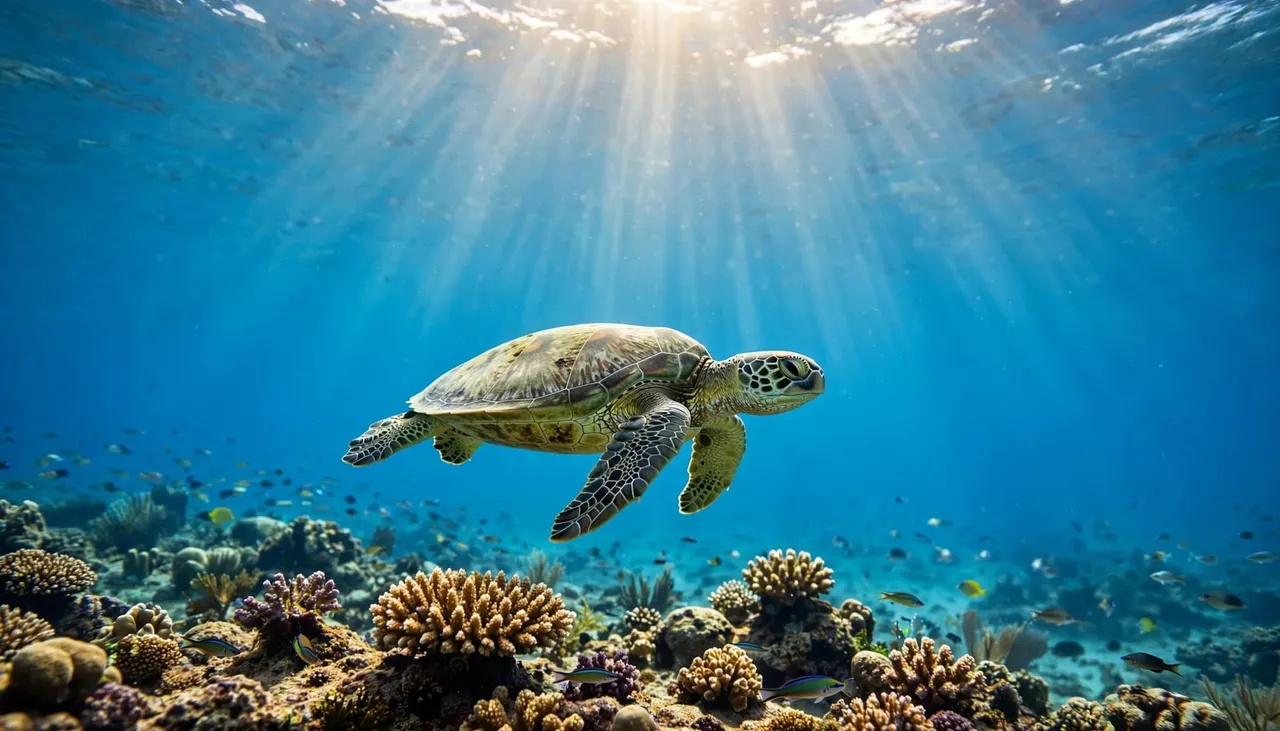
Give turtles at least 10 feet of space on land or in the water. Hawaii guidance also recommends a far wider 50-yard buffer when possible to avoid disturbing marine wildlife. If a turtle swims closer on its own, don’t reach toward it or follow alongside it.
Federal and state protections prohibit handling, feeding, restraining, riding, harassing, or harming sea turtles. A touch can transfer bacteria, disrupt resting behavior, or teach a turtle to associate people with food.
Good buoyancy keeps coral healthy
Coral is living habitat, not an underwater handrail. Keep your fins above the reef, avoid standing on the bottom, and never grab coral to steady yourself.
If you are new to snorkeling, tell your guide before you enter the water. A flotation device, a calm practice session, and simple breathing tips can help you relax without kicking into the reef or drifting toward wildlife.
Snorkel Turtle Canyon With Professional Guidance
Living Ocean Tours operates from Kewalo Basin Boat Harbor, minutes from Waikiki, with Coast Guard-inspected double-decker vessels, shaded seating, restrooms, dry storage, and easy-entry ladders. It is also the only tour company with professional snorkel guides, so you get focused support before you enter the water and while you explore the reef.
The company’s Turtle Canyon snorkeling excursions pair gear and instruction with guide-led wildlife viewing for first-time snorkelers, confident swimmers, couples, and families. Living Ocean Tours reports a 95% success rate for Hawaiian green sea turtle sightings at this natural cleaning station, although wildlife sightings can never be guaranteed.
Your guides help you identify a green turtle without crowding it. They also watch boat traffic, changing swell, guest comfort, and reef conditions that may not be obvious from the water.
For a family-oriented option, the Deluxe Waikiki Snorkeling and Wildlife Cruise visits a less-crowded reef and includes a waterslide, water trampoline, and floating lily pad. No matter which outing you choose, the same rule applies: observe, don’t touch.
You can CHECK AVAILABILITY for a Turtle Canyon snorkel trip before your Waikiki dates fill.
A Better Turtle Sighting Starts With Patience
At Turtle Canyon Oahu, a rounded head and smooth shell usually tell you that you are looking at a Hawaiian green sea turtle. A pointed beak, overlapping shell plates, and serrated edge suggest the rarer hawksbill.
Your best souvenir is a wildlife encounter that leaves the turtle undisturbed. Keep your distance, protect the coral, follow your professional snorkel guide, and let the reef set the pace.


