
Turtle Canyon Oahu and the Turtles’ Slow-Dive Secret
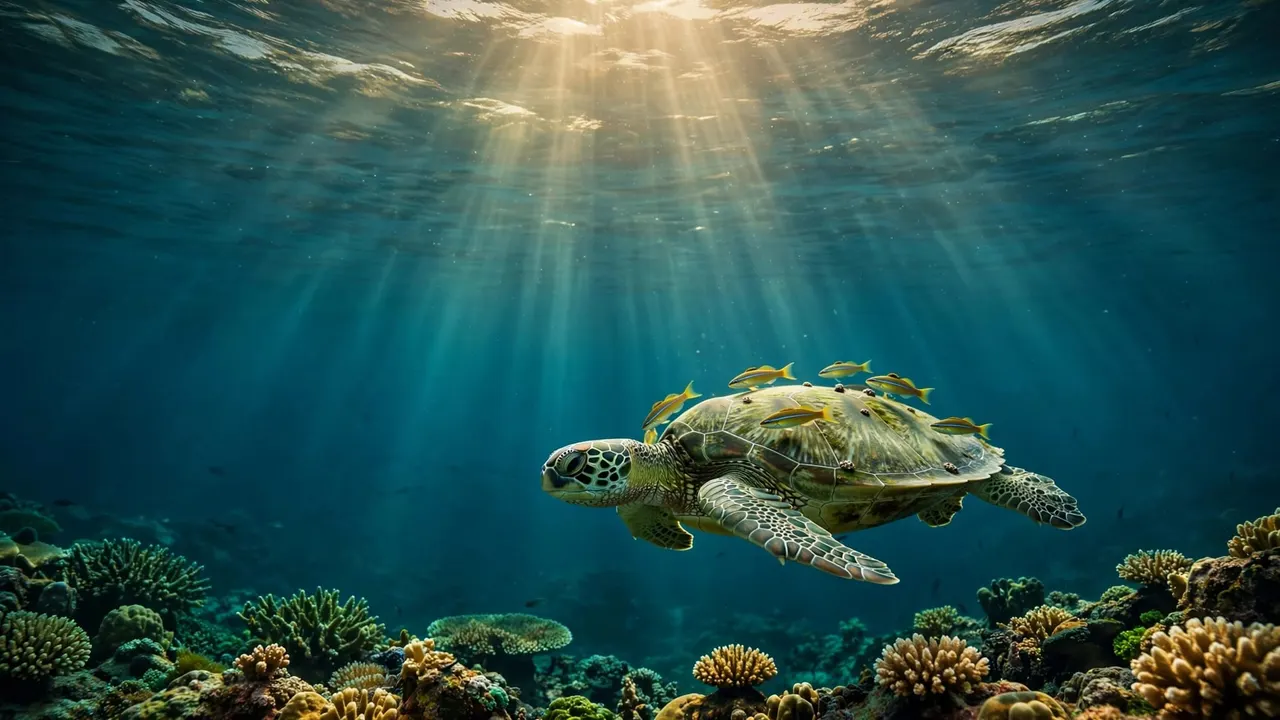
A Hawaiian green sea turtle can drift beneath the surface for long stretches without taking a breath. While you float above the reef, its body is already making careful adjustments that help conserve oxygen.
At Turtle Canyon Oahu, you get a close look at this remarkable animal in its natural offshore habitat near Waikiki. The experience feels peaceful, yet every slow flipper stroke and measured trip to the surface is part of a finely tuned survival system.
Understanding what you see underwater makes a turtle encounter feel even more meaningful.
Why Turtle Canyon Oahu draws Hawaiian green turtles
Turtle Canyon is an offshore reef area along Waikiki’s south shore. You reach it by boat, which gives you a better chance to see the reef without fighting shorebreak, crowded sand, or long swims.
The area is known as a natural cleaning station. Hawaiian green sea turtles, called honu in Hawaii, often visit these reef ledges while small fish pick algae, parasites, and other material from their shells and skin.
A reef that offers rest and cleaning
Turtles don’t need to move all day. They may settle near a reef wall, tuck into a protected spot, or hover with minimal effort while cleaner fish work around them.
At Turtle Canyon Oahu, those quiet moments can be the most memorable. You may see a turtle lift its head, glide toward the surface for air, then return to the reef with unhurried strokes.
Because turtles choose their own movements, every visit looks different. Some spend time near the bottom, while others pass through the blue water beside the boat.
Reef fish play a small but useful role
Goldring surgeonfish and Hawaiian cleaner wrasse are among the reef fish associated with cleaning-station behavior. Their work helps turn a rocky reef into a gathering place for larger animals.
You aren’t watching a staged wildlife encounter. You are watching a living reef community where each animal has its own purpose.
A turtle resting at a cleaning station still needs a clear path to the surface. Give it space to move in any direction.
How green turtles slow their heart rate underwater
Sea turtles are air-breathing reptiles, so they must return to the surface. Still, they can make their stored oxygen last much longer than you can during a snorkel breath hold.
When a green turtle settles into a calm dive, its heart rate can slow. This response is called diving bradycardia. A slower heartbeat reduces the body’s oxygen demand and directs blood toward organs that need it most.
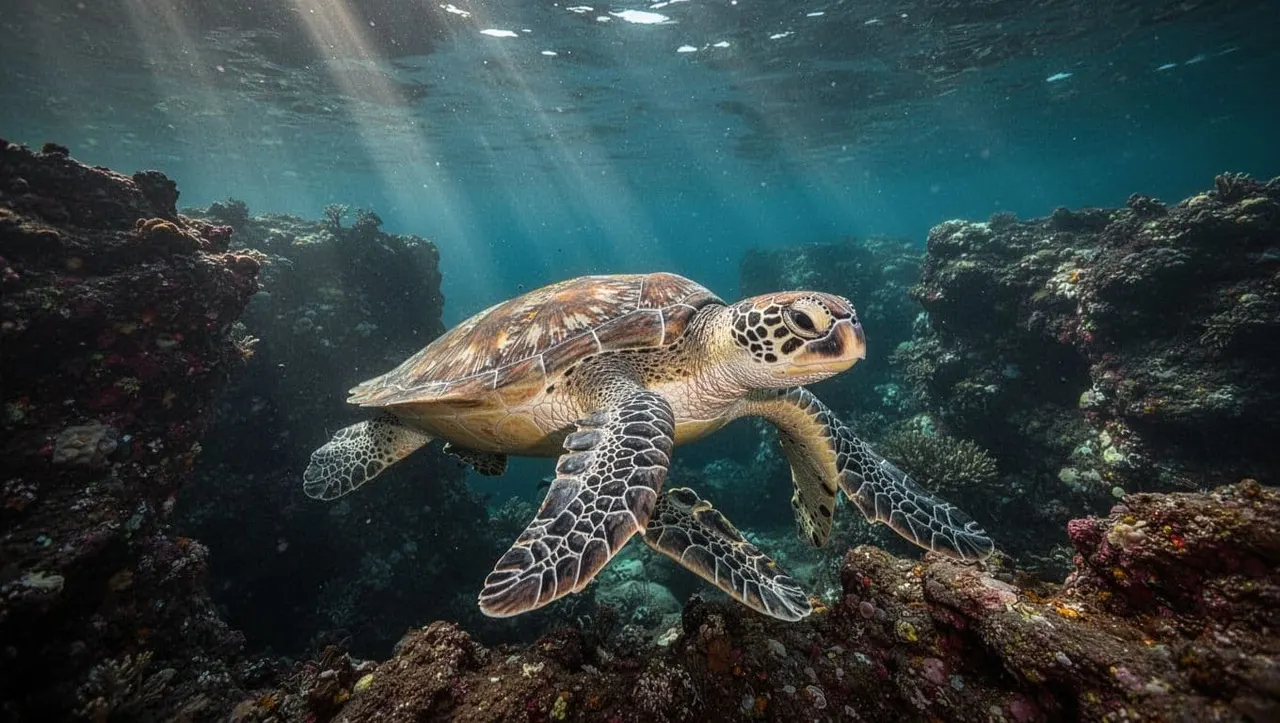
Resting dives use far less energy
A 2020 study of green turtles recorded an average heart rate of 11.1 beats per minute during resting dives. The rate rose when the turtles became active.
That difference matters. A turtle cruising, avoiding a disturbance, or working hard against current needs more oxygen than one resting near a reef. Slowing the heart helps preserve that oxygen for longer underwater time.
You may not see this change from the surface, but you can often recognize the behavior. A relaxed turtle moves with slow, deliberate flipper strokes. It may pause near a ledge rather than race through the water.
Activity changes the turtle’s oxygen budget
A turtle’s dive response isn’t an on-and-off switch. Water temperature, depth, activity, stress, and the length of the dive can all affect its heart rate and oxygen use.
That’s why crowding a turtle causes a real problem. If you make it swim away repeatedly, it must spend energy that could have gone toward resting, feeding, or reaching the surface at its own pace.
The turtle you see at Turtle Canyon Oahu is not holding its breath for your photo. It is managing every dive around its own needs.
Why a turtle may surface sooner than you expect
Seeing a honu rise beside a boat can surprise first-time snorkelers. The turtle may have been resting moments earlier, yet it still needs fresh air.
A turtle’s time underwater changes with what it is doing. Resting animals can stay submerged longer, while active swimmers may surface more often. Young turtles, feeding turtles, and turtles responding to nearby swimmers also have different needs.
The surface is part of the habitat
A turtle needs an open route to breathe. If you spot one ascending, stay level or gently move aside rather than swimming above it.
Don’t chase the turtle toward the surface. Let it decide when to rise, how long to breathe, and where to return.
This patience often gives you a better view anyway. Once a turtle feels unpressured, it may continue its normal pattern near the reef.
Calm observation creates better encounters
Your stillness changes the experience. Slow kicks, a relaxed body position, and steady breathing help you remain a quiet visitor in the turtle’s space.
If the turtle turns away, that is your cue to pause. A respectful encounter is never measured by how close you get.
Give honu room at the reef
Hawaiian green sea turtles are protected wildlife. You should never touch, feed, chase, grab, ride, or corner one, even if it seems calm around people.
The Hawaii Department of Land and Natural Resources lists a 10-foot viewing distance as the federal guideline for public sea turtle viewing. Read its sea turtle viewing guidance before your trip so you know what responsible wildlife watching looks like.
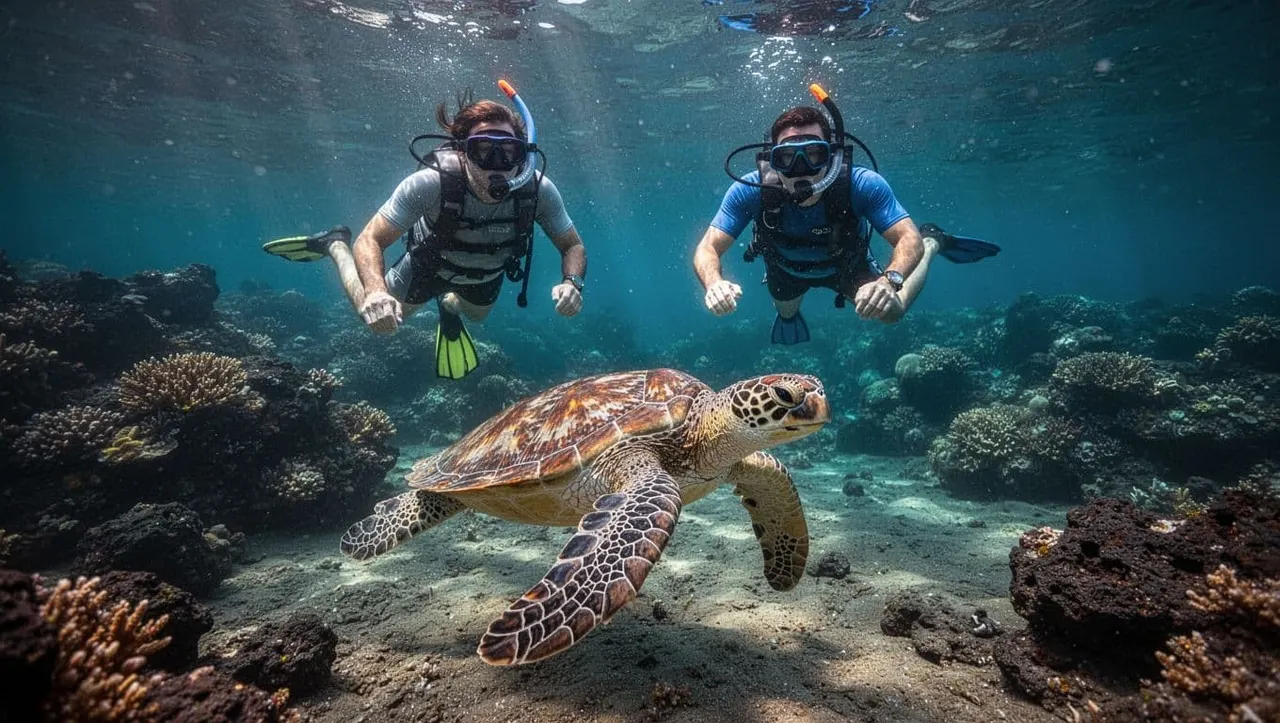
Stay beside the turtle, never above it
Swimming directly over a resting turtle can make it feel blocked. Instead, keep a wide side angle and let the turtle have open water ahead.
You should also avoid dropping down over a turtle for a closer look. Snorkel at the surface, keep your fins controlled, and use your camera’s zoom instead of closing the gap.
NOAA Fisheries also asks visitors to keep at least 10 feet away, including when reporting marked turtles through its Honu Count program.
Leave the reef as you found it
Coral, fish, and turtles share a compact habitat. Keep your fins up over shallow reef, never stand on coral, and secure loose items before entering the water.
Reef-safe sun protection and shade clothing help reduce what washes into the ocean. Small choices from every guest protect the place you came to see.
Snorkeling Turtle Canyon with Living Ocean Tours
Living Ocean Tours departs from Kewalo Basin Boat Harbor, just minutes from Waikiki. Its guided Turtle Canyons snorkel tour in Waikiki gives you gear, instruction, shaded seating, onboard restrooms, and a crew ready to help you feel comfortable in the water.
You don’t need to be an advanced snorkeler to enjoy the reef. The crew gives beginners clear guidance before entry, while confident swimmers can spend more time scanning the reef for turtles and tropical fish.
Living Ocean Tours is the only tour company with professional snorkel guides. That added guidance helps you enter calmly, use your equipment correctly, and keep the right distance when a turtle appears.
Comfort makes ocean time easier
The Coast Guard-inspected Coral Kai and Lokahi are custom-built double-decker vessels with dry storage, shaded seating, heavy-duty ladders, and onboard restrooms.
For families and guests who worry about motion sickness, the Lokahi also has a SeaKeeper stabilization system that reduces rolling. You can spend less time bracing against the boat and more time watching the water.
The Turtle Canyons excursion is built around a focused reef experience, with about an hour in the water during a two-hour trip. That pacing works well when you want a true snorkel outing without giving up your whole Waikiki day.
Make your turtle snorkel more rewarding
A little preparation helps you enjoy the water from your first step off the ladder. Eat a light meal, drink water before departure, and listen closely during the snorkel briefing.
If you wear a prescription mask, ask ahead about available options. Bring a towel, sun-protective clothing, and a waterproof camera if you want photos, but keep your attention on the water first.
Let the turtle set the pace
The best turtle encounters happen when you stop trying to control them. Float, watch, and give the animal room to pass.
When a honu chooses to glide through clear water near you, the moment feels more personal because you did not force it. That respect is part of the privilege of snorkeling in Hawaii.
For a family-focused alternative, Living Ocean Tours also offers a deluxe Waikiki wildlife cruise with reef snorkeling, a waterslide, water trampoline, and floating lily pad. You can choose the experience that fits your group, then CHECK AVAILABILITY before your preferred departure fills.
A closer look at Turtle Canyon Oahu
Turtle Canyon Oahu gives you more than a chance to check sea turtles off a vacation list. You see how a green turtle rests, surfaces, conserves oxygen, and shares its reef with cleaner fish.
When you give honu their space, you protect the behavior that makes the encounter special. Respectful distance lets the turtles keep their natural rhythm, and lets you remember the reef at its best.


