
Turtle Canyon Oahu: A Snorkeler’s Food Web Guide
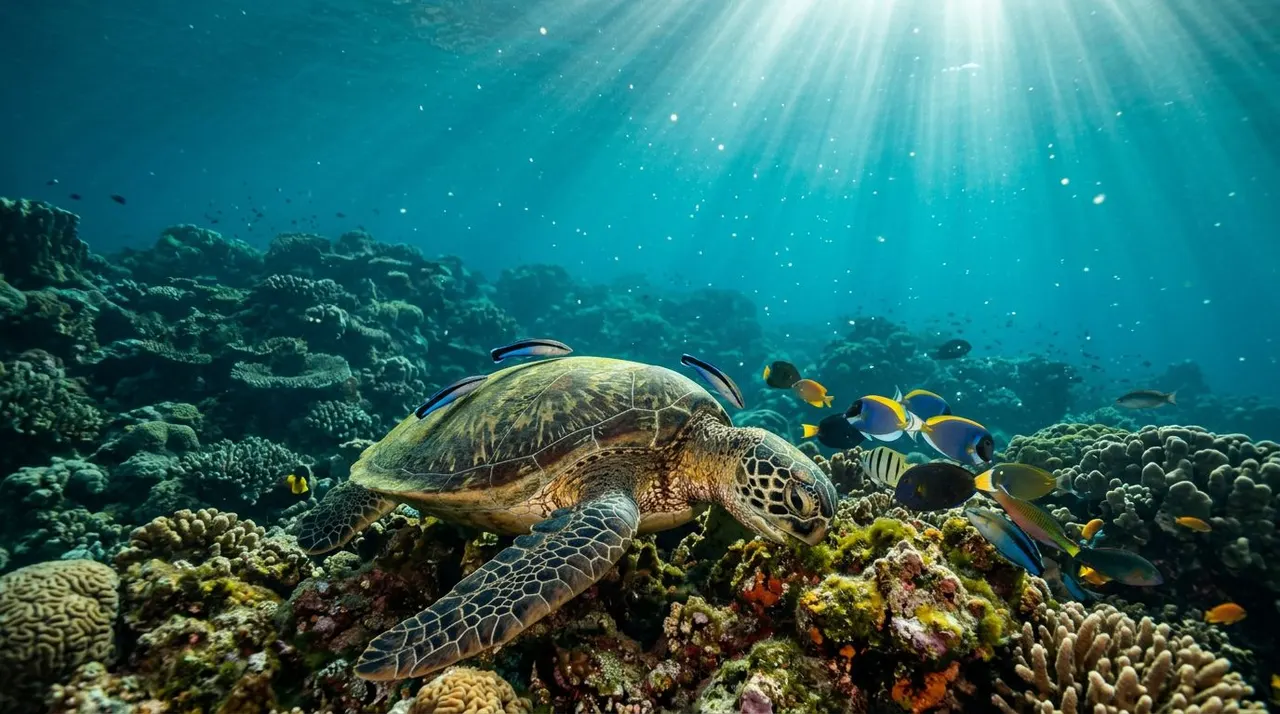
At Turtle Canyon Oahu, a sea turtle is never only a photo opportunity. Each grazing bite, cleaning fish, coral patch, and drifting plankton particle connects to the reef’s food web.
When you snorkel Turtle Canyon Oahu, understanding those connections helps you read the scene instead of swimming past it. Living Ocean Tours makes that easier with professional snorkel guides, supplied gear, beginner-friendly instruction, and a firm commitment to observing, not touching, Hawaii’s marine life.
How the Turtle Canyon Oahu food web works
A food web shows how energy moves through an ecosystem. At Turtle Canyon, sunlight supports algae and coral, herbivores consume plant life, and larger animals depend on the reef’s smaller residents.
Sunlight powers the reef base
Sunlight reaches the shallow water around Oahu and supports microscopic algae, turf algae, and other tiny producers. These organisms grow on rocks and reef surfaces, where small grazers can feed.
Coral animals also live with microscopic algae inside their tissues. The algae use sunlight to create energy, while the coral provides shelter and nutrients. That partnership helps build the reef structure that gives fish and turtles places to rest, feed, and hide.
Plankton adds another energy source. Tiny drifting organisms feed small fish and invertebrates, which then become food for larger reef animals. Even water that looks empty may contain living organisms supporting the reef.
Grazers turn algae into energy
Hawaiian green sea turtles are important herbivores. NOAA Fisheries explains that green turtles mainly eat algae and seagrasses, although they may consume animal matter when it is available.
Parrotfish and surgeonfish also graze across reef surfaces. Their feeding keeps algae from covering every available patch of coral. Sea urchins perform a similar job in small crevices and along rocky areas.
The result is a connected system rather than a straight line. Algae support grazing animals, reef fish move energy across the habitat, and decomposers recycle organic material. When you watch one turtle resting above the reef, you are seeing one visible part of a much larger process.
What you can read underwater at Turtle Canyon
You don’t need a biology degree to notice how the reef works. Slow movements, feeding marks, fish groupings, and turtle behavior all provide useful clues.
Cleaning stations show cooperation
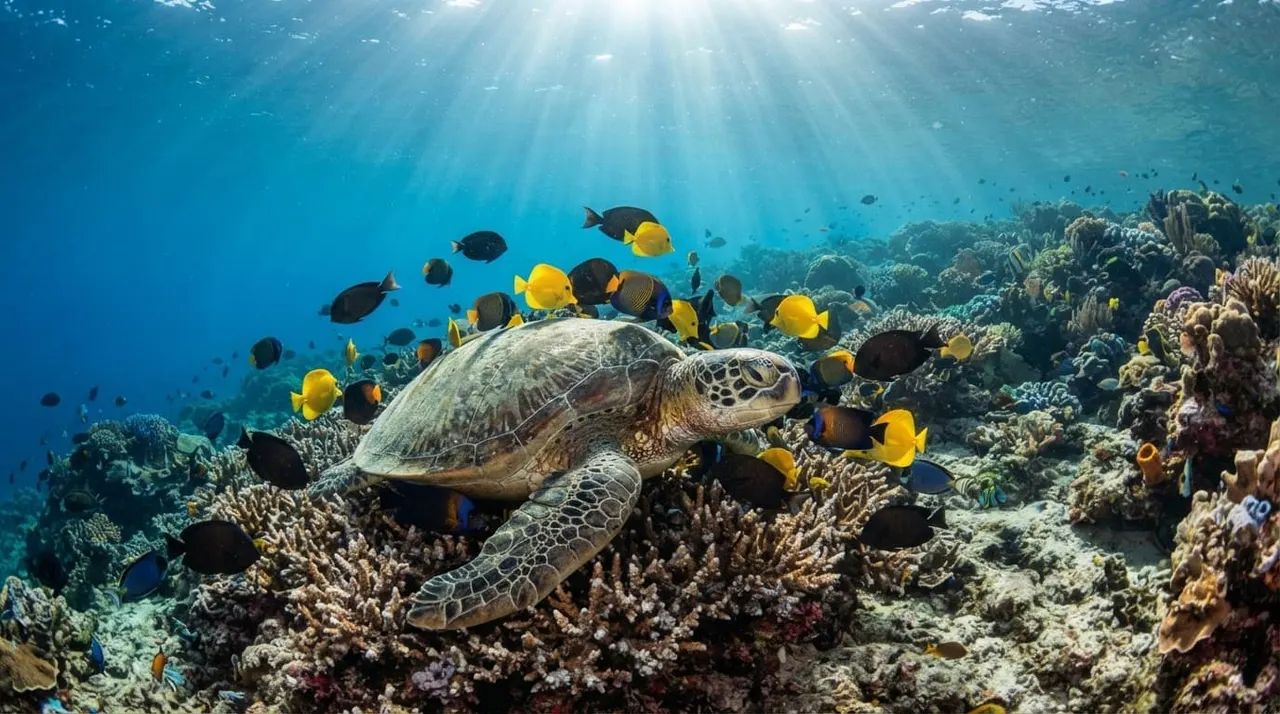
Turtle Canyon is known for areas where Hawaiian green sea turtles pause while cleaner fish remove dead skin and external parasites. A turtle may settle near a reef outcrop while small fish move around its shell, head, and flippers.
Cleaner wrasse depend on these interactions for food. The turtle receives a service that helps keep its skin healthy, while the fish gain access to a meal. This is one of the clearest relationships you can observe while snorkeling.
Keep your body level and your kicking gentle near a cleaning station. A turtle that turns away or swims off needs more space. When you allow the animal to choose its path, you have a better chance of watching natural behavior.
Reef fish reveal the habitat
Fish can tell you what is happening below the surface. Parrotfish may leave pale feeding marks on exposed reef, while surgeonfish move steadily across algae-covered areas. Small damselfish often defend tiny feeding territories near coral heads.
Wrasses may appear around larger fish and turtles because they search for food on their skin. Schools of small fish can indicate shelter, feeding opportunities, or a current carrying plankton through the area.
Hawaii’s Department of Land and Natural Resources sea turtle information explains that green turtles commonly use habitats associated with coral reefs. The reef is both a feeding area and a place where many other species interact.
Snorkel responsibly around every link
Your behavior affects the animals you came to see. A calm approach protects the reef and gives you a more natural experience.
Watch without touching
Hawaiian green sea turtles need room to feed, rest, and move between habitats. Never chase one, block its route, touch its shell, or reach toward its flippers. Even a gentle touch can stress wildlife or remove protective material from the animal’s body.
Keep a respectful distance and let the turtle decide whether to come closer. If you notice a turtle resting on the seafloor, stay above and to the side rather than hovering directly over it.
A turtle moving away is giving you clear information. Increase your distance and let the animal settle somewhere else.
Feeding wildlife also changes natural behavior. Animals that associate people with food may approach swimmers, crowd boats, or ignore normal feeding patterns. Your best contribution is simple: observe, don’t touch, and don’t feed.
Keep the reef healthy after you leave
Your fins should stay away from coral. Kick from the hips with slow, controlled movements, especially in shallow water. If you need to stand, use a sandy area rather than a reef surface.
A rash guard can reduce the amount of sunscreen you need. Keep all equipment secure, take wrappers back to the boat, and avoid leaving anything in the water. Small pieces of plastic can affect animals that mistake floating debris for food.
Pollution also affects the foundation of the food web. The U.S. Fish and Wildlife Service explains how runoff and pollution can reduce algae and seagrass, two important food sources for green turtles. Protecting the reef starts with choices you make before entering the water.
Plan a better Turtle Canyon Oahu snorkel
Good planning helps you spend more time observing and less time managing avoidable problems. Water conditions, comfort, and guidance all affect what you notice underwater.
Pick conditions that support clear viewing
Wind, swell, and recent rain can change visibility around Oahu. Clear water gives you a better view of reef fish and turtle behavior, but no departure can promise perfect conditions or a wildlife sighting.
Living Ocean Tours reports a 95% success rate for spotting Hawaiian green sea turtles at a natural underwater cleaning station. Turtles are wild animals, however, so sightings still depend on their movement and the day’s ocean conditions.
Book early in your vacation when possible. That gives you room to reschedule if weather affects visibility and leaves time for another ocean activity later in your stay.
Bring comfort and use guide support
Living Ocean Tours departs from Kewalo Basin Boat Harbor, just minutes from Waikiki Beach. The company’s Coast Guard-inspected, custom-built double-decker vessels, Coral Kai and Lokahi, include shaded seating, restrooms, dry storage, and heavy-duty ladders for easier water entry.
Lokahi also has a SeaKeeper stabilization system that reduces side-to-side rolling. That added stability can help if you are new to boat travel or concerned about seasickness.
Bring a swimsuit, towel, sun protection, and a change of clothes. The crew provides snorkeling equipment and instruction, so you can focus on your breathing, position, and the reef around you.
Why Living Ocean Tours fits this experience
Turtle Canyon rewards patient observation. A guide who understands reef behavior can help you identify feeding areas, cleaner fish, and the difference between a resting turtle and one preparing to swim.
Living Ocean Tours is the only tour company with professional snorkel guides. Its crew supports first-time snorkelers and families while keeping wildlife protection at the center of the trip.
A professional guide changes what you notice
Beginners often spend their first few minutes adjusting to the mask, snorkel, and saltwater. A professional guide can help you settle your breathing, use your fins safely, and find a comfortable position before you focus on marine life.
The crew also helps you recognize what you are seeing. Instead of calling every small fish a generic reef fish, you can notice feeding behavior, cleaning interactions, and the way animals use coral formations.
Families with children ages 3 and up can also benefit from the boat’s practical design. Shaded deck space, onboard restrooms, stable ladders, and clear instructions make the outing easier for mixed-skill groups.
Book the flagship Turtle Canyon excursion
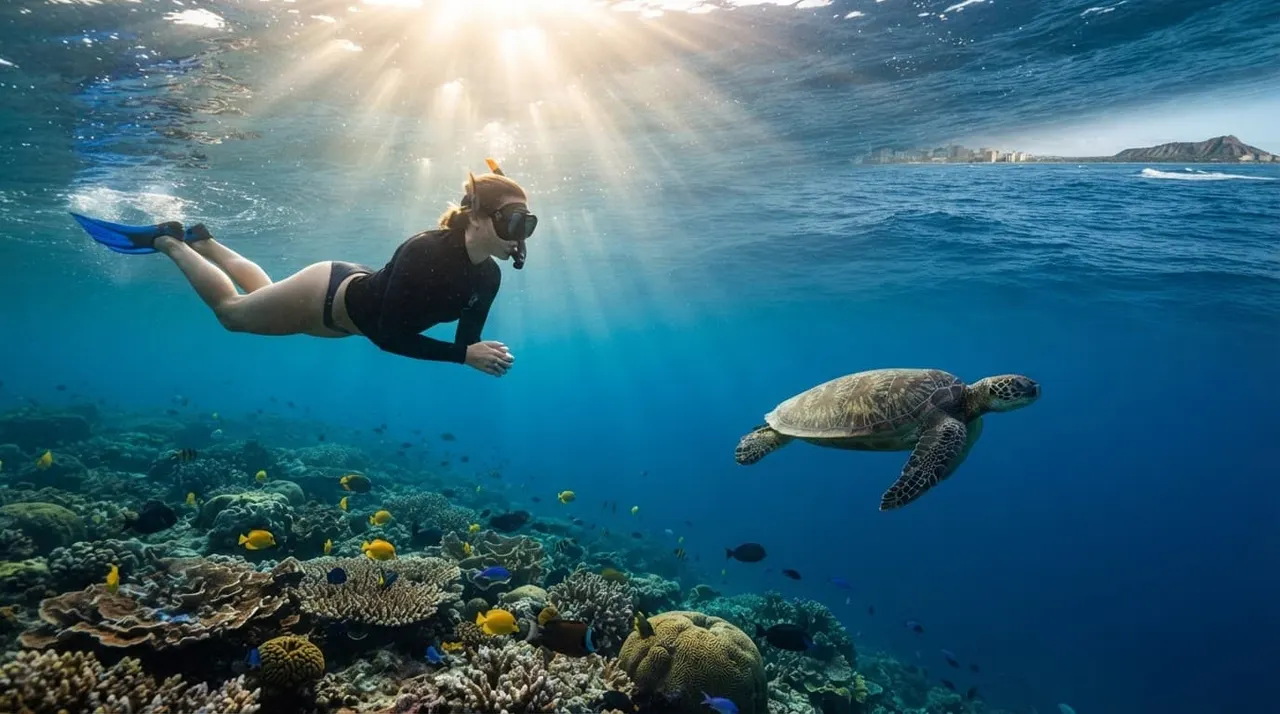
The Turtle Canyon snorkel excursion takes you along the Waikiki coastline to a reef where you can look for green sea turtles, tropical fish, and other marine life. You receive gear, guidance, and time to enjoy the water before returning to the comfortable deck.
If you want to choose a departure date, use CHECK AVAILABILITY.
Conclusion
The Turtle Canyon Oahu food web begins with sunlight, algae, and coral. It continues through grazing fish, cleaner wrasse, invertebrates, and Hawaiian green sea turtles that depend on a healthy reef.
When you snorkel, your best view comes with patience and space. Follow your guide, keep your fins off coral, and let every animal behave naturally. That approach protects the reef while giving you a closer look at the living connections beneath Waikiki’s surface.


