
Turtle Canyon Oahu: Why Green Turtles Rub Their Shells
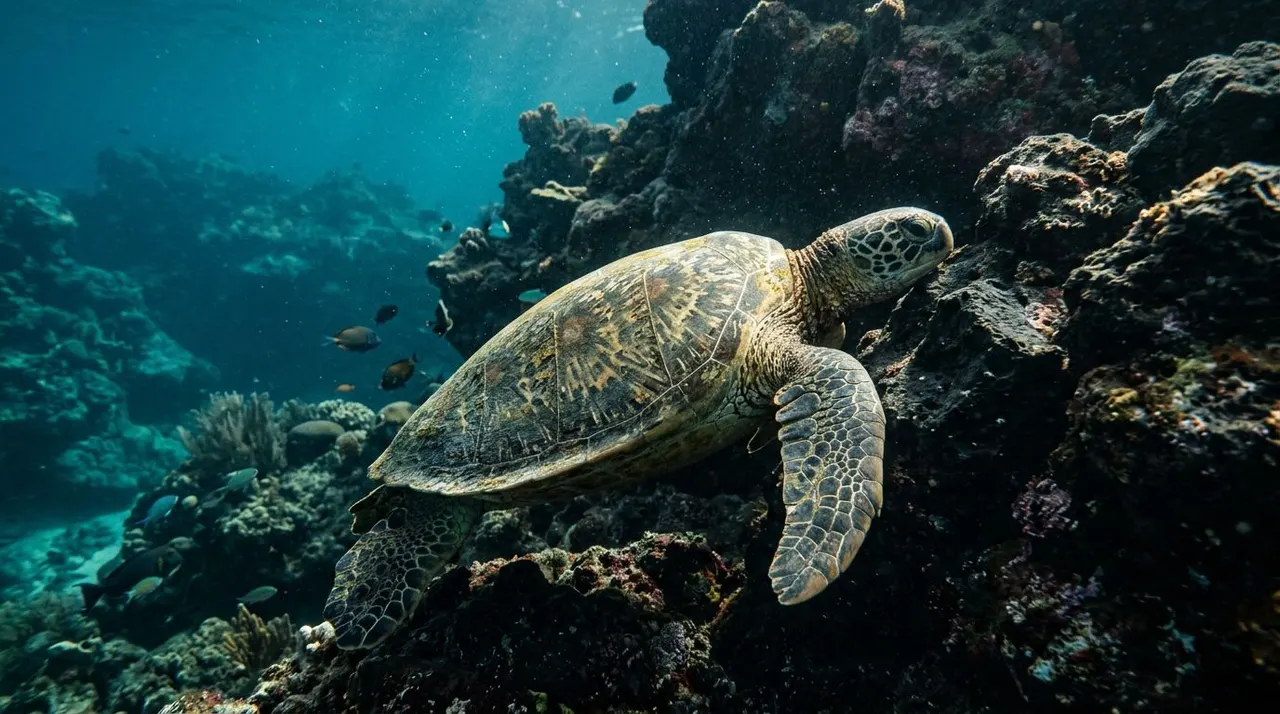
At Turtle Canyon Oahu, a green sea turtle may glide toward a reef ledge, press its shell against volcanic rock, and sweep its body along the surface. The movement looks unusual until you understand that the reef can work as a natural cleaning station.
When you snorkel here, that brief rub offers a close look at normal honu behavior, not a performance for swimmers. You can enjoy it without touching, chasing, or crowding the turtle. First, it helps to know what the turtle is doing and why the rocks matter.
Why Turtle Canyon Oahu attracts shell-rubbing honu
Turtle Canyon sits offshore from Waikiki, where underwater volcanic formations create ledges, channels, and protected spaces. Those features give Hawaiian green sea turtles places to rest, feed, surface, and maintain their shells.
The reef is also accessible to snorkelers, which makes the area popular with visitors who want to see honu in their natural habitat.
A reef ledge can become a cleaning station
A cleaning station is a place where marine animals pause while contact with the reef or cleaner organisms removes unwanted material. At Turtle Canyon, a turtle may hover above a rocky ledge before angling its body toward the surface.
The shell can scrape gently across a smooth section of rock. A turtle may repeat the motion several times, shift its position, then settle nearby. This behavior can happen quickly, so you may miss it if you focus only on finding the largest turtle.
The reef structure also gives honu room to move away when they choose. That space matters because a turtle needs a clear route to the surface for breathing.
Rubbing helps with shell maintenance
A sea turtle’s carapace is hard, but its surface can collect algae, sand, and other marine growth. Rubbing against rock may loosen that material and reduce irritation from organisms attached to the shell.
You can’t identify the exact reason behind every rub from the water. The turtle could be removing algae, responding to an itch, or using the reef as part of a routine that combines rubbing with nearby fish activity. The safest description is natural shell maintenance.
Small cleaner fish may also visit turtles around reef formations. They can pick at algae or other material within reach. NOAA’s green turtle guidance reminds visitors never to touch or feed sea turtles because human contact can change their natural behavior.
What you may see during a Turtle Canyon snorkel
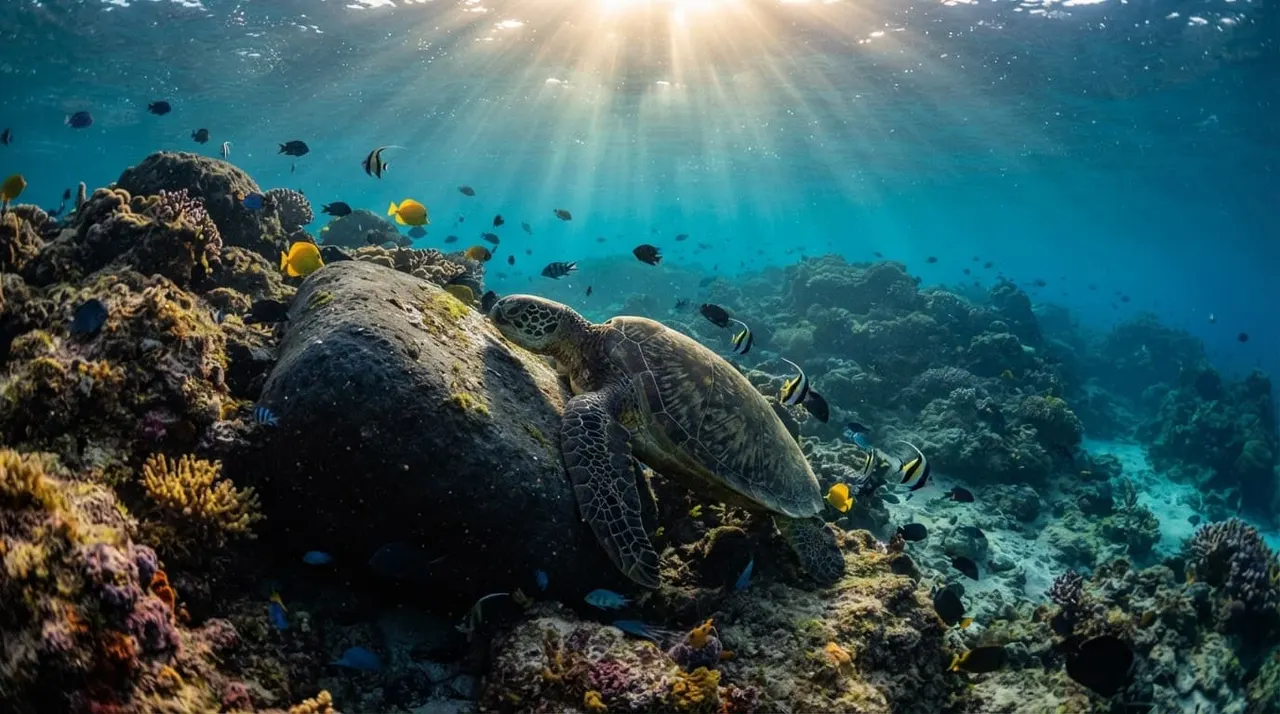
Shell rubbing is only one part of a turtle’s routine. During a Turtle Canyon Oahu snorkeling trip, you may see a honu resting over the reef, swimming through a channel, grazing on algae, or rising slowly for air.
Conditions change each day, so every encounter looks different. That variety is part of what makes responsible wildlife viewing rewarding.
The movement can be slow and deliberate
A turtle may lower its body toward a rock and turn slightly so the edge of its shell touches the reef. Then it may push forward, lift away, and repeat the motion on another surface.
You might see the turtle pause between rubs or swim off without warning. A sudden change in direction usually means the animal wants more space. Give it room rather than following.
Green turtles also need regular access to the surface. Even when a honu appears calm, avoid swimming above it or positioning yourself between the turtle and open water.
The rock is part of a larger reef routine
A turtle can use the same reef area for several reasons during one visit. It may rest in a sheltered pocket, graze along a rocky surface, or move through the area while small fish gather around the structure.
NOAA’s Pacific Islands sea turtle FAQs describe basking as a common green turtle behavior in Hawaii. Seeing a turtle rest near the surface or on a shallow reef is normal, although you should still keep your distance.
Watch the entire scene instead of trying to get one close photograph. You may notice the turtle’s breathing rhythm, the way it uses its flippers, and how it responds to the current.
How to watch turtle cleaning behavior responsibly
Your behavior affects what the turtle does next. A quiet, patient snorkeler can observe a natural routine, while a swimmer who approaches too closely may interrupt it.
The goal is simple: allow the honu to control the encounter.
Give the turtle a clear path
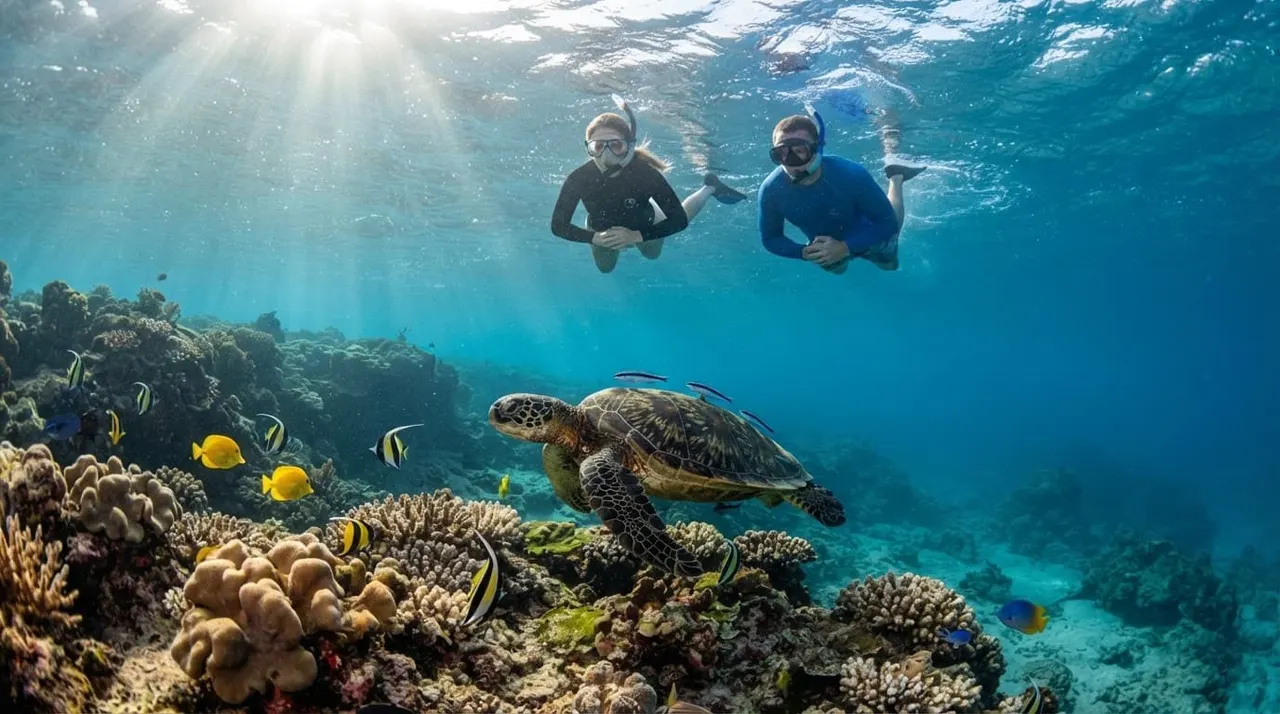
Keep at least 10 feet away whenever possible, and leave extra space if the turtle begins swimming toward the surface. Stay beside the animal rather than directly above or in front of it.
Never touch the shell, fins, head, or tail. Avoid feeding, blocking the turtle’s route, or swimming after it when it moves away. If the honu changes direction because of your position, stop and create more distance.
Your guide can help you judge spacing in cloudy water or around a busy reef. Beginners often feel tempted to get closer because turtles move slowly. Slow movement doesn’t mean the turtle welcomes contact.
If a honu changes direction because of you, you are too close. Move back and let the turtle choose its route.
Treat the reef as part of the habitat
Use controlled kicks and keep your fins away from coral and rock. Don’t stand, kneel, or hold onto the reef, even when waves push you toward a ledge. Those surfaces provide shelter and feeding areas for many small organisms.
Use mineral sunscreen that follows Hawaii’s current regulations, and keep plastic, food, and loose items out of the water. Your guide will explain how to enter, move through, and exit the snorkeling area safely.
Choosing a Turtle Canyon Oahu snorkeling tour
A good tour should make wildlife viewing easier while protecting the place you came to see. Look for clear safety instruction, quality equipment, experienced supervision, and a boat that works well for your group.
Professional guidance changes the experience
Living Ocean Tours departs from Kewalo Basin Boat Harbor, just minutes from Waikiki Beach. The company is the only tour company with professional snorkel guides, giving you hands-on help with gear, water entry, breathing technique, and wildlife etiquette.
The Living Ocean Tours turtle snorkeling options include the Turtle Canyons Snorkel Excursion, which has a reported 95% success rate for spotting Hawaiian green sea turtles at a natural underwater cleaning station. Wildlife sightings can never be guaranteed, but professional guides know how to read conditions and explain what you see.
The crew welcomes first-time snorkelers and families, including guests who need extra reassurance before entering the water. You can ask questions on deck, practice with your mask, and follow the guide’s pace once you reach the reef.
Living Ocean Tours also focuses on observing, not touching. That approach gives you a better chance of seeing natural behavior, including shell rubbing, resting, and surfacing.
Boat comfort matters before you enter the water
Living Ocean Tours uses Coast Guard-inspected, custom-built double-decker vessels called the Coral Kai and the Lokahi. Both boats offer shaded seating, restrooms, dry storage, and sturdy ladders for easier water entry.
The Lokahi includes a SeaKeeper stabilization system designed to reduce side-to-side rolling. That feature can make the ride more comfortable for families, beginners, and anyone who worries about seasickness. Meanwhile, the Coral Kai provides open deck space for relaxing between water activities.
If the Turtle Canyon snorkel excursion fits your plans, review the route and inclusions before reserving. You can also CHECK AVAILABILITY for current departure options.
Planning your Turtle Canyon visit
The best preparation helps you stay relaxed in the water. You won’t need to bring specialized snorkeling equipment when your tour provides masks, snorkels, and fins, but personal comfort items still matter.
Pack for comfort and observation
Bring a swimsuit, towel, reef-conscious sunscreen, sunglasses, and a reusable water bottle. If you use prescription lenses, ask whether prescription masks are available or bring your own.
A waterproof camera can help you remember the encounter, but keep it secondary to your awareness. A perfect photo isn’t worth swimming closer or blocking another person’s view.
Families should consider each swimmer’s comfort with open water. Children may enjoy a flotation aid and extra time practicing on the boat before the group enters the reef.
Expect changing ocean conditions
Wind, swell, current, and visibility can change the appearance of Turtle Canyon from one day to the next. Calm conditions may make it easier for new snorkelers to float comfortably, while stronger movement can require more attention to your body position.
Follow the crew’s instructions if they adjust the route or timing. A change in location can protect the group and the turtles while still giving you a rewarding view of Oahu’s marine life.
If you spot a turtle with a white alphanumeric marking on its shell, you can learn about the Honu Count program, which helps record Hawaiian green turtle sightings.
Why shell rubbing makes Turtle Canyon memorable
When a green sea turtle rubs its shell against a rock, you’re watching an ordinary part of its life in an extraordinary setting. The behavior may help remove algae or other material, and the reef gives the honu a place to rest and maintain its body.
At Turtle Canyon Oahu, the best encounter is calm and hands-off. Keep your distance, protect the reef, and let the turtle decide where it wants to swim.
With professional guidance, comfortable equipment, and a respectful approach, you can leave with more than a photograph. You can understand why these rocky underwater formations matter to Hawaii’s green sea turtles.


