
Turtle Canyon Oahu: How Green Turtles Steer
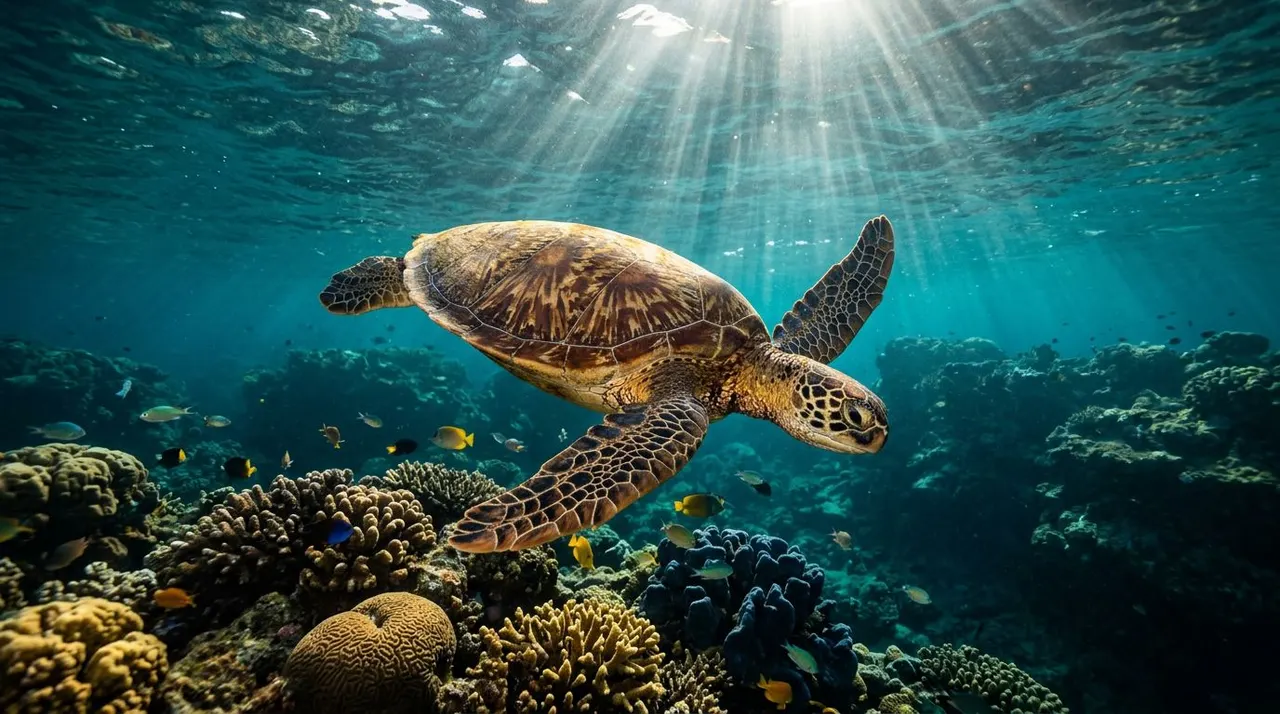
At Turtle Canyon Oahu, a Hawaiian green sea turtle can look almost motionless before it banks across the reef. That smooth turn comes from precise changes in its broad front flippers, not from a rigid fin acting like a boat rudder.
For you, a Turtle Canyon snorkel offers more than a memorable wildlife encounter. It gives you a clear view of how a honu moves, rests, and adjusts its body in the water. Once you know what to watch for, every turn becomes part of the experience.
Turtle Canyon Oahu: The habitat behind the movement
Turtle Canyon is a reef area off Waikiki known for Hawaiian green turtles and clear, relatively shallow water. Its reef ledges provide resting areas, while cleaner fish can remove algae and other material from a turtle’s shell and skin.
The site is popular with snorkelers because turtles often slow down near the reef. That slower pace lets you observe their swimming technique without chasing them.
Where Turtle Canyon sits
Turtle Canyon lies along the Waikiki coastline, a short boat ride from Honolulu’s Kewalo Basin Boat Harbor. The reef’s underwater contours create sheltered areas where turtles can pause between movements.
Water conditions change with wind, swell, visibility, and tide. On a calm day, sunlight reaches the reef and highlights the turtle’s shell, flippers, and changing body position.
Green sea turtles spend much of their lives in coastal waters. NOAA Fisheries explains that adult green turtles primarily eat seagrasses and algae, although young turtles have a more varied diet. You can read the agency’s green turtle species profile for more information about their biology and conservation status.
Why turtles visit the reef
A turtle at Turtle Canyon may rest above the reef, circle slowly, or hover near a cleaning area. During these pauses, it may hold its flippers slightly away from its body while small fish inspect its shell and skin.
The turtle doesn’t need to swim hard during this process. Instead, it makes small corrections that keep its head pointed into the current or prevent its body from drifting into the reef.
Those tiny corrections reveal the same control system that helps the turtle make a larger turn in open water.
How green turtles use their flippers to steer
A green turtle’s front flippers are its main swimming tools. They are long, flexible, and shaped to push against water. The turtle moves them through coordinated strokes that create both forward thrust and lift.
Scientists describe these front limbs as pectoral flippers. Their movement is more complex than a simple up-and-down paddle. The turtle changes the flipper’s angle, speed, and path through the water to control its movement.
Front flippers create thrust and lift
During a swimming stroke, the front flippers push water backward and downward. The reaction moves the turtle forward and can also help it rise or hold its depth.
On the recovery stroke, the turtle brings the flippers forward with less resistance. Its body stays streamlined while the flippers reset for the next powerful movement.
A turtle can also spread or fold parts of its flippers. These adjustments change how water flows around the limb. The result is controlled movement instead of wasted effort.
A 2022 study of wild green turtles examined swimming kinematics and flipper angle. The research, available through the published green turtle swimming study, shows how changes in flipper position affect the forces acting on the animal.
Unequal flipper movement starts the turn
A turtle turns when the left and right sides of its body stop producing identical forces. One front flipper may press harder, change its angle, or move through a different part of the stroke. The other flipper then produces a different amount of lift or drag.
That imbalance rotates the turtle’s body around its vertical axis. In simple terms, the turtle’s head begins pointing left or right while its forward movement continues.
A green turtle can change direction without stopping because it can alter the force on one flipper while the other keeps the body moving.
You may see this clearly when a turtle leaves a reef ledge. It angles one flipper, shifts its body, and glides into a new path with very little splashing or effort.
Each flipper has a different job
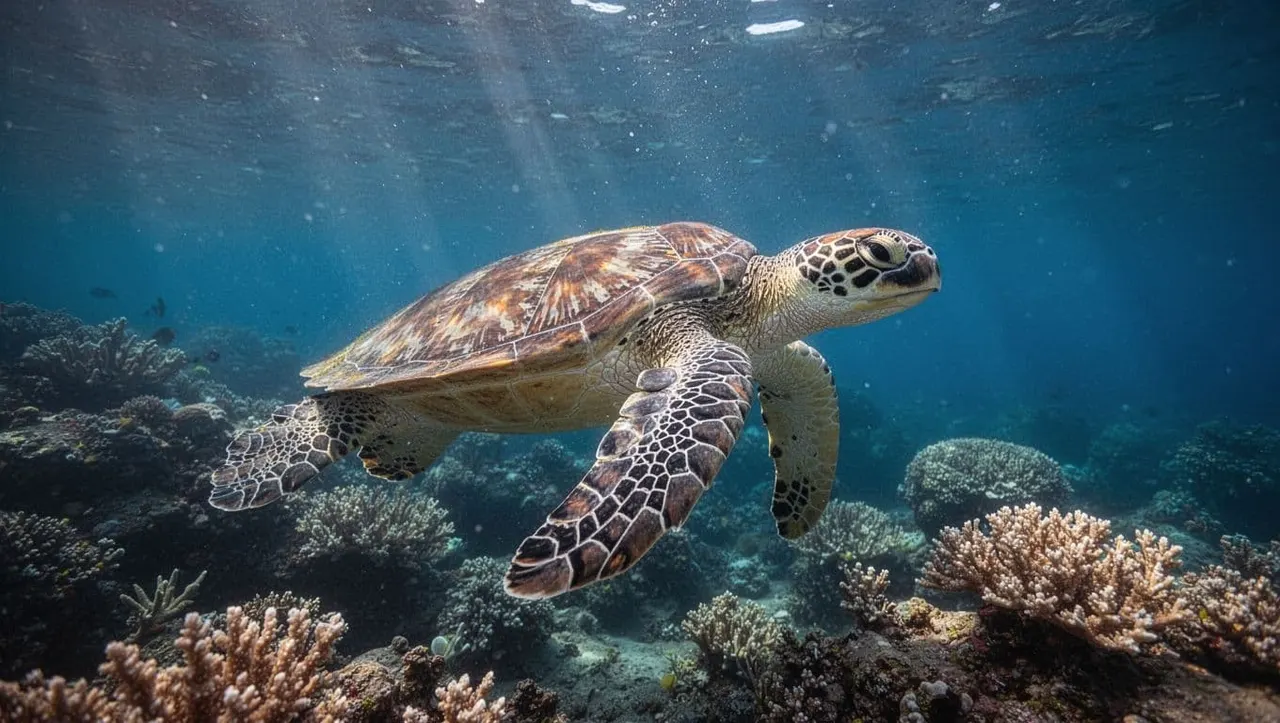
The front flippers provide most of the turtle’s power, but the rear flippers also help manage direction and balance. Together, all four limbs help the turtle control its position in three dimensions.
The turtle must manage more than forward speed. It also controls yaw, which turns the head left or right; pitch, which raises or lowers the head; and roll, which tilts the body from side to side.
Rear flippers help with stability
A green turtle’s rear flippers are shorter and less suited to powerful forward strokes. They help stabilize the rear of the body, especially when the turtle changes direction or adjusts its depth.
When the turtle banks into a turn, the rear flippers can angle outward or inward. That movement helps prevent excessive rolling and keeps the shell aligned with the new path.
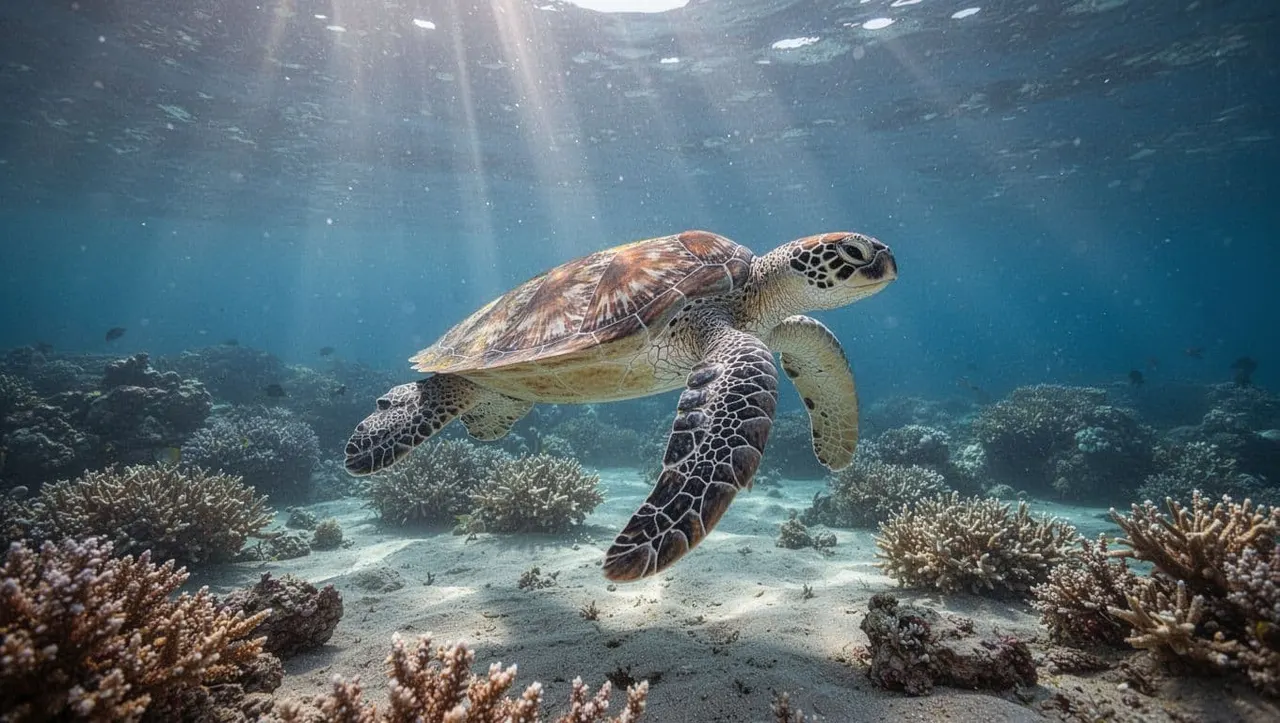
You may notice the rear flippers trailing behind a gliding turtle. Their quiet movements still matter because they help maintain balance while the front flippers handle most of the propulsion.
The shell and body work together
The turtle’s shell affects how water moves around its body. Its rounded shape creates drag, but it also provides stability as the turtle glides.
The head, neck, shell, and flippers form one connected control system. A turtle may extend its neck slightly, shift its body angle, and change one flipper position during a turn.
That combination allows precise movement near coral heads and narrow reef spaces. It also helps the turtle avoid obstacles without sudden, frantic motions.
For snorkelers, these details are easy to miss if you watch only the turtle’s shell. Focus on the flippers and you’ll see the turn begin before the body changes direction.
What you can observe underwater
You don’t need advanced marine biology training to recognize a turtle’s steering movements. Watch the relationship between the flippers, shell, and head as the animal changes course.
Move slowly yourself. A calm position gives you a better view and reduces the chance that your movement will influence the turtle’s path.
Look for these movement cues
A turtle preparing to turn may angle its head first. One front flipper then changes position, while the shell begins to bank behind it.
During a gradual curve, the turtle usually keeps moving forward. Its stroke may become uneven from side to side, creating the force needed to rotate the body.
You may also see a turtle rise toward the surface or descend toward the reef. In that case, both front flippers can change their angle to produce lift or downward force.
When a turtle pauses, its flippers may make small, gentle movements. Those motions help it hold position against current rather than propel it across the reef.
Observe without touching or crowding
Hawaiian green turtles are protected wildlife. NOAA Fisheries also provides updates about conservation work involving Pacific green turtles, including animals found with injuries and researchers tracking their movements.
Give every turtle room to choose its own direction. Never touch the shell, reach for a flipper, block its path, or follow it toward the surface.
Keep your fins away from coral and avoid resting on the reef. Coral grows slowly, and a careless kick can damage the habitat that turtles use for food and shelter.
The best encounter often happens when you remain still. A turtle that doesn’t feel pressured may continue its natural glide, turn near you, and settle back over the reef.
Planning a Turtle Canyon snorkel with Living Ocean Tours
Living Ocean Tours departs from Kewalo Basin Boat Harbor, located minutes from Waikiki Beach. The company focuses on guided ocean experiences along the Waikiki coast, with marine life viewing that combines safety, comfort, and respect for Hawaii’s ecosystem.
Its Turtle Canyons Snorkel Excursion visits the natural underwater cleaning station and has a reported 95% success rate for spotting Hawaiian green sea turtles. You can review the Turtle Canyon snorkeling excursions before choosing a departure.
Why a guided trip helps
Living Ocean Tours is the only tour company with professional snorkel guides. The crew helps first-time snorkelers understand equipment, water entry, breathing, and safe movement around marine life.
That guidance is useful for families, couples, and swimmers who want to focus on the reef instead of managing every detail alone. The company’s experiences are designed for guests ages 3 and up, with crew support for different comfort levels.
The Coast Guard-inspected double-decker vessels, Coral Kai and Lokahi, include shaded seating, restrooms, dry storage, and heavy-duty ladders. Lokahi also has a SeaKeeper stabilization system that helps reduce rolling on the water.
What to expect on the water
Bring reef-safe sunscreen, a swimsuit, a towel, drinking water, and a waterproof phone case if you want photos. Wear fins only when instructed, and keep your body relaxed while you watch the turtles.
The crew supplies snorkel gear and explains how to observe without touching. You can spend less time worrying about technique and more time noticing the turtle’s flippers, breathing rhythm, and controlled turns.
If you want to reserve a Turtle Canyon outing, use the CHECK AVAILABILITY link for current departure options.
Conclusion
A green turtle’s turn at Turtle Canyon Oahu begins with a small change in flipper angle. Its front flippers create power and lift, while the rear flippers help control balance and direction.
When you watch the animal’s entire body, you can see how carefully it moves through the reef. Choose a guided snorkel, keep your distance, and let the honu decide where the encounter goes.


