
Turtle Canyon Oahu: How Green Turtles Choose Resting Spots
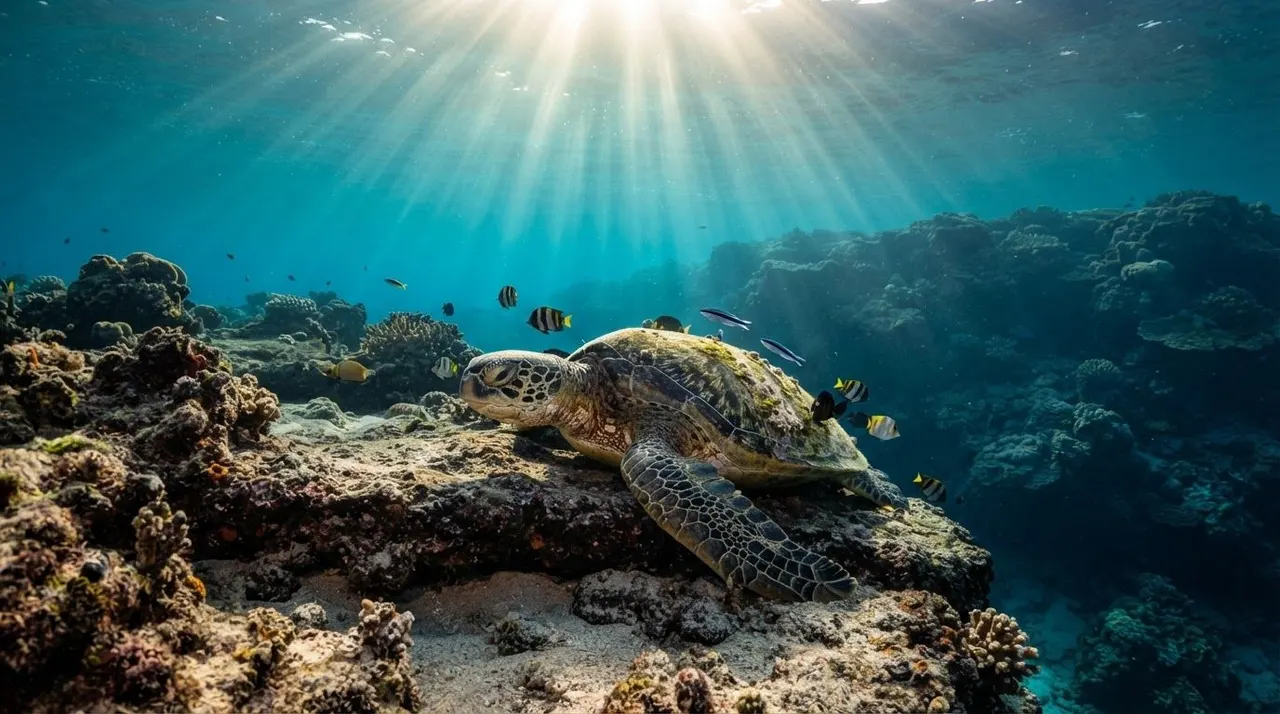
A calm turtle at Turtle Canyon Oahu can look motionless, yet its resting place reflects several careful choices. Reef shape, water movement, shelter, and access to the surface all affect where a Hawaiian green sea turtle settles.
When you snorkel here, understanding that behavior helps you watch without chasing or crowding the animals. It also makes each encounter more meaningful because you can see the reef as a living habitat, not just a scenic backdrop.
Why Turtle Canyon Oahu attracts resting honu
Turtle Canyon is a shallow reef area off Waikiki’s south shore. Its volcanic formations create ledges, channels, and sandy pockets where green turtles can pause between feeding and swimming.
The location also supports a cleaning-station environment. Small reef fish may remove algae and other material from a turtle’s shell or skin while the animal remains still. That relationship gives turtles another reason to return to certain reef areas.
Reef structure gives turtles protection
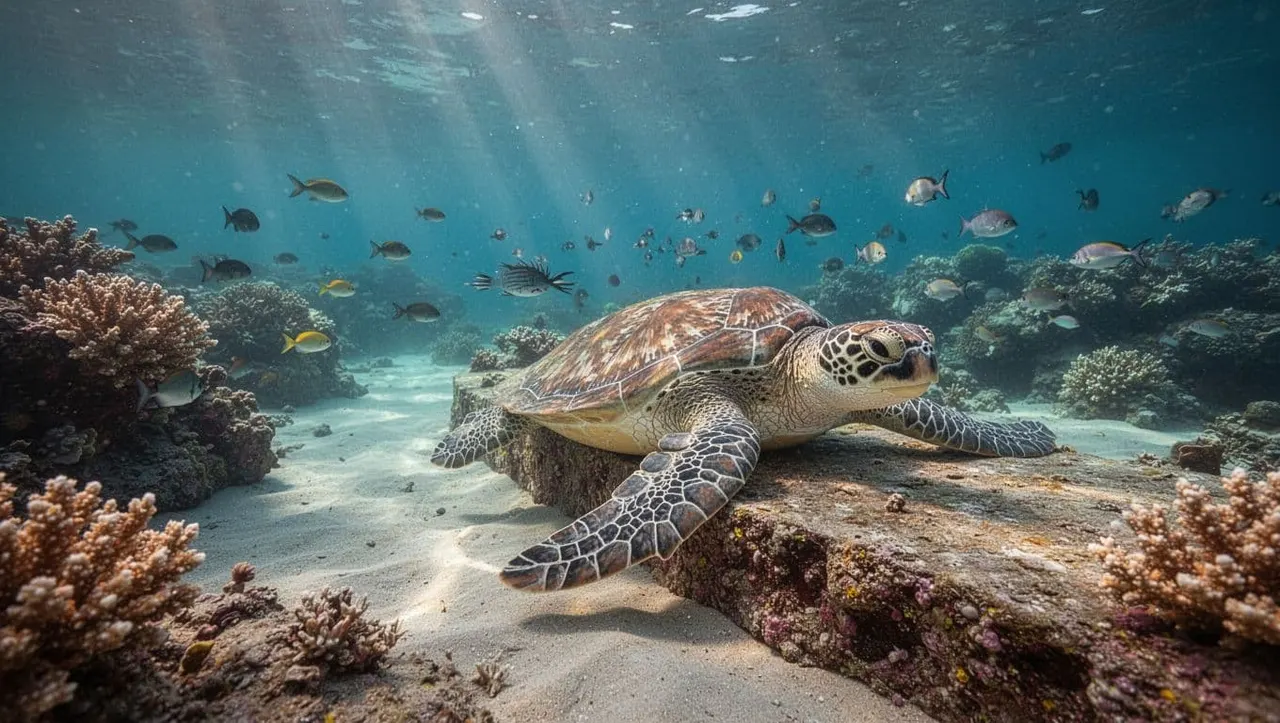
A turtle doesn’t need a cave to feel sheltered. A broad reef shelf can block some wave energy while allowing the animal to lift its head and swim away quickly.
Ledges also give turtles a stable place to rest their bodies. In a shallow area, the turtle can remain close to the seafloor without spending much energy swimming. The reef’s shape matters because open water requires constant movement, especially when currents are strong.
Sandy patches beside coral provide another useful option. A turtle may settle there when it needs more room around its shell or wants a clear path toward deeper water.
Cleaning stations offer a useful pause
Green turtles spend much of their time feeding on marine plants and algae. They also travel between feeding areas, resting sites, and open water. A cleaning station gives them a place to stop while reef fish pick over their shell and skin.
You may notice a turtle hovering above the reef with its flippers relaxed. It might hold its position for several minutes before swimming away. That behavior doesn’t mean the turtle is tame or inviting contact. It means the animal has found conditions that suit its needs.
NOAA Fisheries provides an overview of green turtle biology, behavior, and ecology in its green turtle species profile.
How green turtles select a resting spot
A turtle’s choice can change throughout the day. It may use one part of the reef during calm conditions and move to another when waves, currents, or boat activity increase.
Because of that, there isn’t one guaranteed rock where every turtle rests. The animals choose locations based on comfort, safety, and the ability to leave when necessary.
Water movement affects energy use
Swimming against a current requires effort. A turtle resting behind a reef ledge can reduce that effort while still receiving enough water movement around its body.
Sheltered water also helps a turtle remain in place without repeatedly using its flippers. You may see the animal angle its body toward the current, allowing the water to pass over its shell while it stays near the bottom.
However, complete stillness isn’t always ideal. A little water flow can improve visibility and carry food or scent through the area. The best resting spot often balances protection with access to moving water.
Visibility and escape routes matter
A resting turtle still needs awareness of its surroundings. Clear water helps it spot approaching animals, snorkelers, and boats. A reef shelf with open space in front gives the turtle time to respond if conditions change.
The route to the surface matters as well. Green turtles breathe air, so they must leave the reef periodically. A turtle may choose a spot that lets it rise without squeezing between coral heads or passing through a crowded area.
Researchers also study how green turtles use coastal habitat for feeding, resting, and reproduction. The U.S. Fish and Wildlife Service’s Pacific green turtle habitat information explains why these areas need protection.
Resting underwater is different from basking
Hawaiian green turtles rest in the ocean, but you may also see them resting on beaches. These behaviors look different and happen in different settings.
Learning the difference helps you avoid mistaking a normal pause for distress. It also reminds you that honu need space in every part of their habitat.
Underwater rest keeps the turtle ready to move
At Turtle Canyon, a resting turtle may lie near the reef, hover in place, or settle on a sandy bottom. Its movements can become slow, but the animal remains capable of swimming away.
You might see the turtle raise its head, adjust its flippers, or leave for a breath. Those small movements are normal. Give the animal time and room rather than moving closer for a better view.
A turtle that swims away has made its preference clear. Follow the guide’s direction and let it go. The best encounter ends with the turtle choosing what happens next.
Beach basking follows a different pattern
Hawaiian green turtles are known for basking, which means resting on land to warm themselves. NOAA describes this behavior as unique to Hawaii among green turtle populations.
On a beach, a turtle may appear exposed because it has left the water. That doesn’t make it safe to approach. NOAA’s guidance on keeping Hawaii honu safe explains why people should maintain distance and avoid disturbing basking turtles.
Whether you see a turtle underwater or onshore, the rule stays simple: observe, don’t touch.
What you may observe during a Turtle Canyon snorkel
Your view of Turtle Canyon depends on the turtles’ behavior and the day’s ocean conditions. A responsible tour doesn’t promise that an animal will pose in one exact location.
Instead, you get the chance to see natural behavior in a place where turtles regularly feed, rest, and visit cleaning areas.
A resting turtle may show small clues
A turtle that has settled into a resting spot often moves less than one that is traveling. Its flippers may remain close to the body, and it may hold a steady position above a reef shelf.
You may also see reef fish near the turtle’s shell. The turtle can remain still while the fish inspect its body. Afterward, it may glide away with slow, strong strokes.
Keep your eyes on the whole animal rather than only its face. The direction of its head, flippers, and body can show whether it plans to remain or leave.
A turtle that swims away is communicating clearly. Give it the space to choose another resting spot.
Sightings change with conditions
Wind, swell, rain, water clarity, and current can affect where turtles spend time. Busy periods may also encourage animals to move toward quieter sections of the reef.
Living Ocean Tours reports a 95% success rate for spotting Hawaiian green sea turtles at its natural underwater cleaning station. Even with that strong record, each sighting remains a wildlife encounter, not a staged performance.
That honesty matters when you’re planning a family outing or a special trip with your partner. You can expect professional guidance and a well-chosen snorkeling area, while still respecting the animal’s freedom to move.
How to watch turtles without disturbing them
Your behavior in the water affects the turtle, the reef, and everyone else’s experience. Small choices make a real difference, especially in a shallow snorkeling area.
Give every turtle room to swim
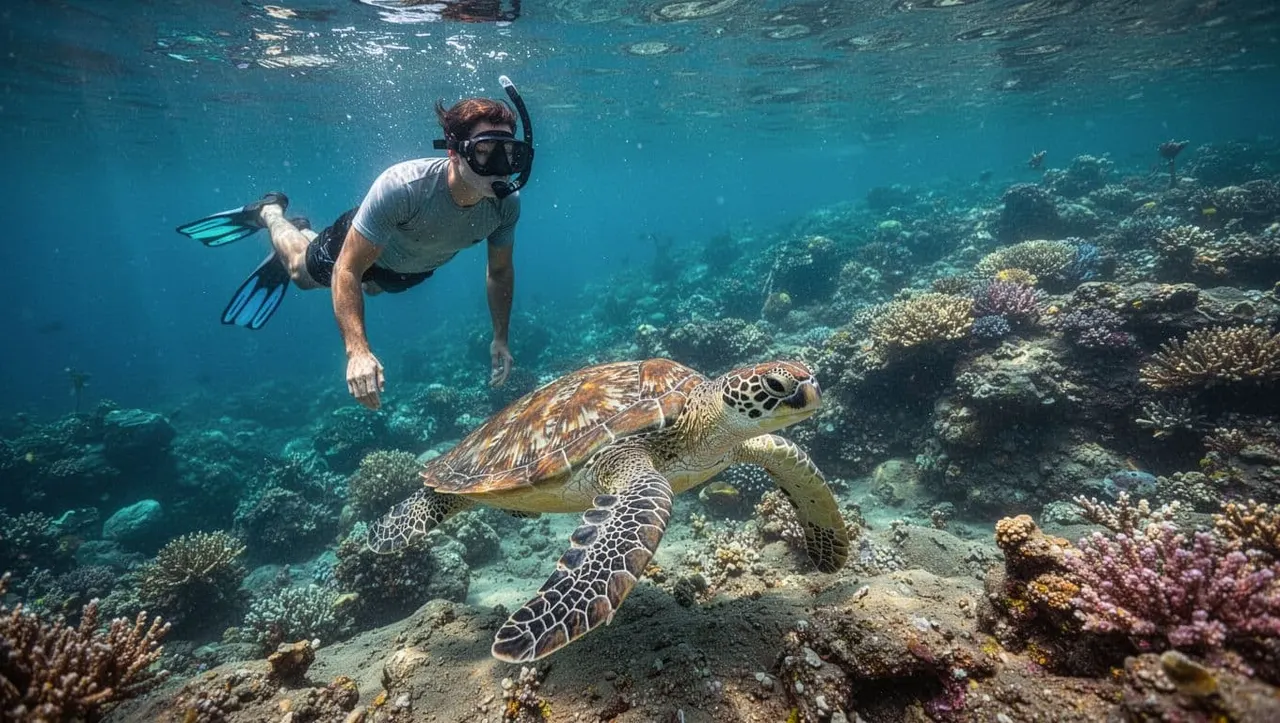
Stay at least 10 feet away whenever practical, and never swim directly over a turtle. Blocking the animal from above can make it feel trapped, particularly when it needs to surface.
Don’t chase, surround, touch, feed, or grab a turtle. Avoid placing your hands near its shell or flippers, even if the animal appears calm. A relaxed turtle still needs personal space.
Keep your body position controlled. Slow kicks reduce splashing and help you avoid striking coral or stirring sand into the water. If a turtle approaches you, remain still and let it set the distance.
Protect the reef beneath you
Coral grows slowly, and even a careless fin kick can break fragile branches. Use a comfortable float position and avoid standing on the reef when you enter shallow water.
Choose reef-safe habits before you leave the boat:
- Use only the sunscreen you need, and apply it well before entering the water.
- Keep loose equipment secured so it doesn’t drag across coral.
- Follow guide instructions about entry points, swimming routes, and wildlife distance.
- Take every item back to the boat, including wrappers, straps, and damaged gear.
- Report unusual turtle behavior or visible markings to your guide instead of approaching the animal.
If you spot a turtle with a white alphanumeric marking on its shell, NOAA’s Honu Count reporting program explains how sightings can support conservation records.
Choose a guided Turtle Canyon Oahu outing
A guided trip gives you more than transportation to the reef. You get help with equipment, water entry, wildlife etiquette, and the changing conditions that affect turtle behavior.
Living Ocean Tours departs from Kewalo Basin Boat Harbor, just minutes from Waikiki Beach. The company is the only tour company with professional snorkel guides, so you have trained support in the water rather than relying on a basic boat briefing.
The Turtle Canyons snorkeling excursion focuses on the natural cleaning station and welcomes first-time snorkelers, families, and experienced swimmers. The crew supplies snorkeling gear and explains how to observe turtles without touching them.
Professional guidance helps beginners relax
You don’t need to be an expert swimmer to enjoy a guided Turtle Canyon trip. Professional snorkel guides can explain how to use your mask, breathe through the snorkel, and enter the water from a heavy-duty ladder.
Living Ocean Tours uses Coast Guard-inspected, custom-built double-decker vessels called the Coral Kai and the Lokahi. Both boats offer shaded seating, restrooms, dry storage, and easy water access.
The Lokahi also has a SeaKeeper stabilization system that reduces rolling. That feature can make the ride more comfortable for families and guests who are concerned about seasickness.
Book with wildlife expectations in mind
The right goal is a respectful encounter, not a guaranteed photograph. Your guide can help you find suitable habitat, but the turtle decides whether it rests, swims, or leaves.
Living Ocean Tours combines local knowledge with conservation-focused viewing. You can CHECK AVAILABILITY for a Turtle Canyon snorkel tour and choose a time that fits your Oahu plans.
Conclusion
Green turtles choose resting spots that conserve energy, offer shelter, provide water movement, and leave a clear route to the surface. At Turtle Canyon Oahu, reef ledges and cleaning-station habitat create conditions that may bring turtles back again.
When you snorkel, keep your distance and let each honu control the encounter. With professional guidance from Living Ocean Tours, you can enjoy the reef safely while protecting the habitat that makes these sightings possible.


