
Turtle Canyon Oahu: How Green Turtles Breathe Underwater
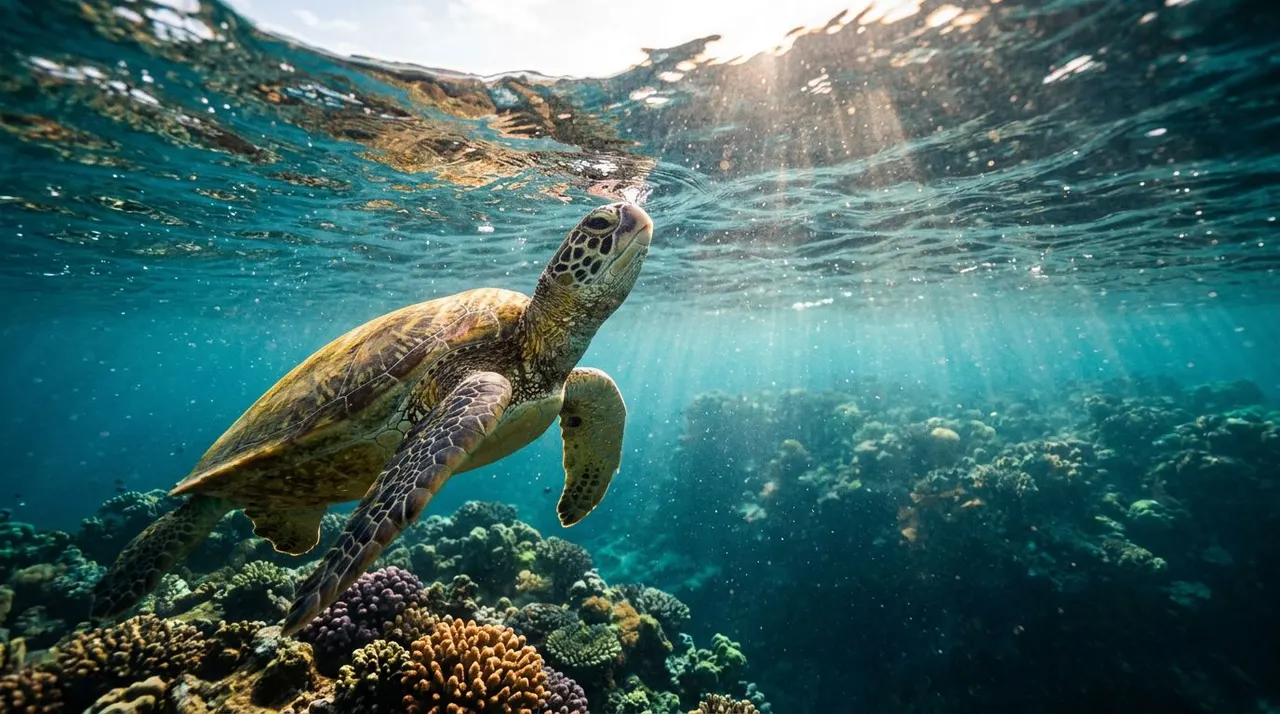
At Turtle Canyon Oahu, a green sea turtle may glide beneath you, pause over the reef, and rise for one quick breath. Its tiny nostrils can look as if they are working underwater, but the turtle is holding its breath until its snout reaches the surface.
That movement reveals a smart set of adaptations. Green turtles close their nostrils underwater, use large lungs to store air, and rely on salt glands near their eyes to remove excess salt. Once you know what to watch for, your Turtle Canyon Oahu snorkel becomes more than a close wildlife encounter. You can read the turtle’s behavior and give it space.
What a Green Turtle’s Nostrils Do at Turtle Canyon Oahu
Sea turtles are reptiles, so they breathe air instead of extracting oxygen from water. NOAA Fisheries’ green turtle profile confirms that green turtles must surface to breathe, even though they spend most of their lives in the ocean.
Their nostrils, also called nares, sit at the front of the snout. The location lets a turtle take a breath while keeping most of its head and body underwater.
The snout is an air inlet
A green turtle doesn’t have gills. When it swims below the surface, it keeps its nostrils closed and relies on stored air in its lungs. The turtle can continue swimming, rest above the reef, or search for food without taking another breath immediately.
When it needs air, the turtle raises its snout until the nostrils clear the water. It exhales and inhales quickly, then descends again. You may see only the front of the nose appear before the animal disappears beneath the surface.
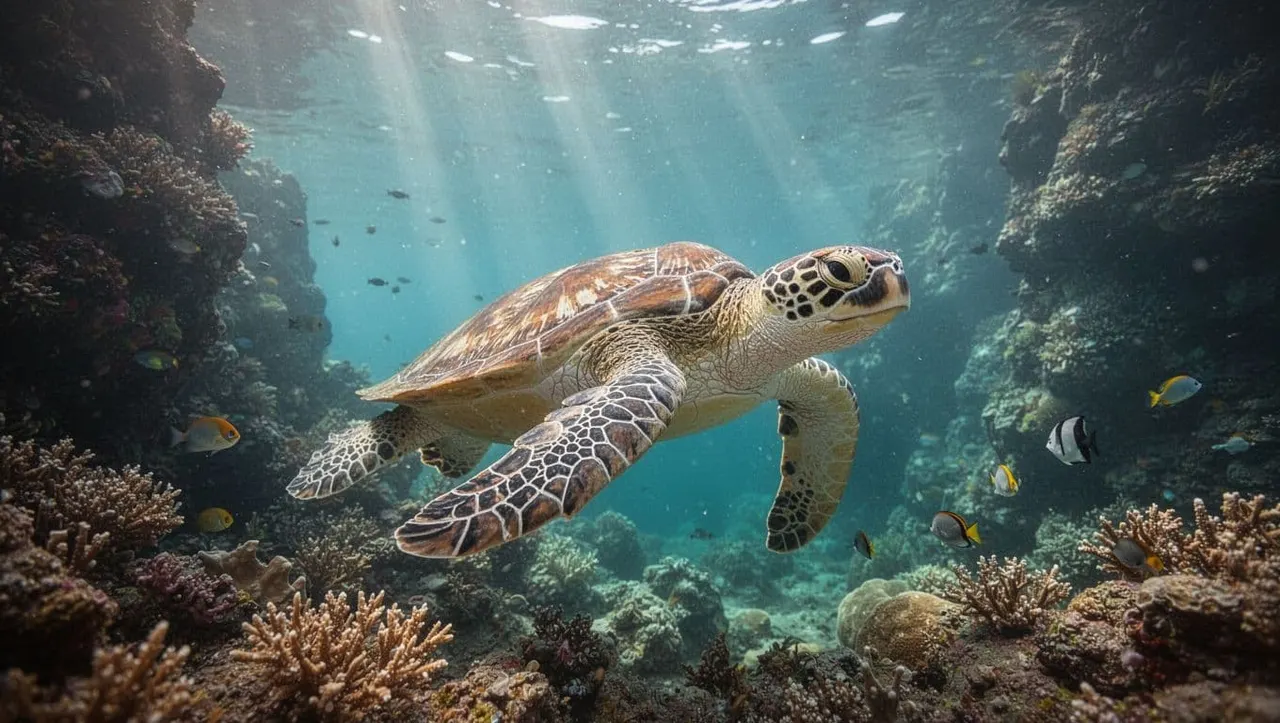
A green sea turtle’s nostrils sit at the end of its snout, allowing it to breathe without lifting its entire head.
Salt glands protect turtles from seawater
Breathing is only one challenge for a reptile living in the Pacific. Saltwater contains more salt than a turtle’s body can safely retain, so green turtles have specialized salt glands near their eyes.
These glands remove excess salt from the bloodstream and release it as a salty fluid. The process can make a turtle appear to cry when it rests on land or surfaces. Those wet trails come from the salt glands, not from underwater breathing through the nostrils.
How Long Can Hawaiian Green Turtles Stay Underwater?
A turtle at Turtle Canyon may remain below you longer than expected. Breath-holding time changes with activity, water conditions, stress, body size, and whether the animal is resting or swimming.
Smithsonian Ocean Portal explains that sea turtles cannot breathe underwater but may hold their breath for four to seven hours while resting. That range describes resting behavior, not every turtle you see during a snorkel.
Resting turtles conserve oxygen
A green turtle resting on the reef uses less oxygen than one swimming steadily or escaping a disturbance. Its heart rate and movement can slow, allowing the stored air to last longer.
You may see a turtle settle near a cleaning station with its flippers almost still. It may remain there for several minutes before making a calm trip to the surface. A resting animal can stay underwater far longer than an active turtle searching for food.
Reported breath-hold limits are upper ranges, not a schedule you can predict. Never follow a turtle because you think it should surface soon.
Active turtles surface sooner
Swimming, feeding, and avoiding obstacles all require energy. As a result, an active turtle usually returns to the surface sooner than one resting on the reef.
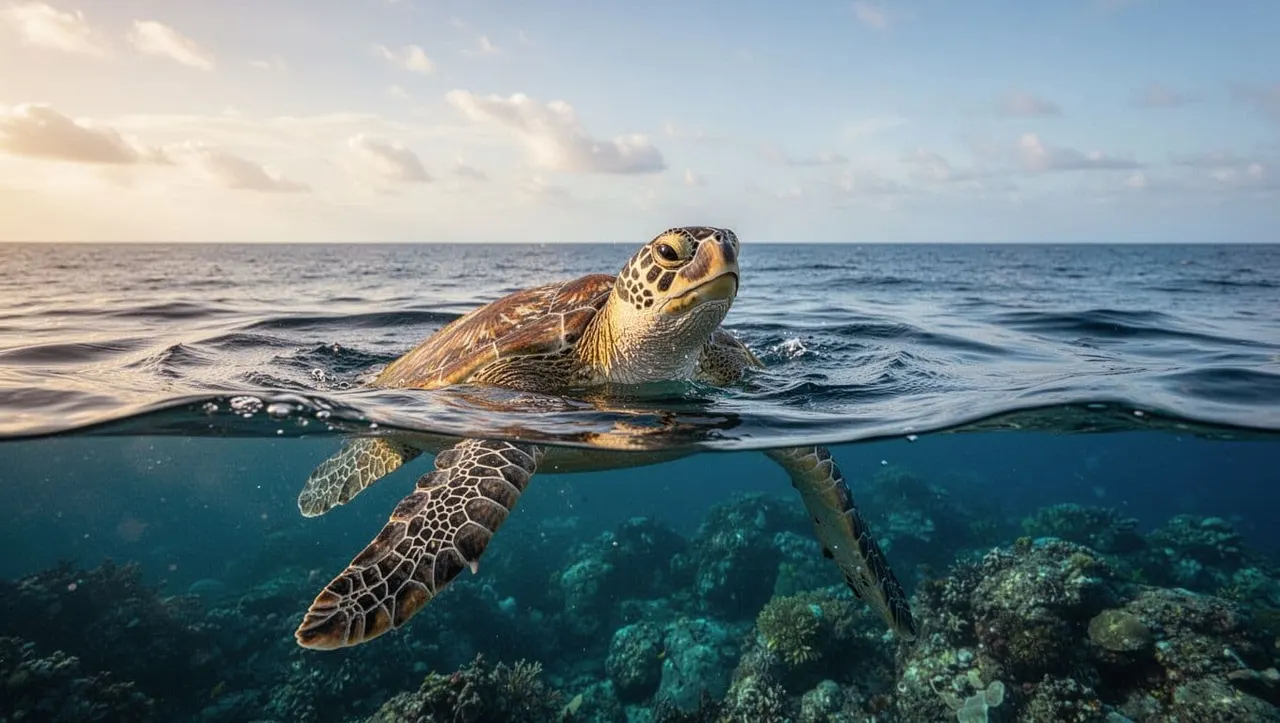
When the turtle reaches the surface, its nostrils clear the water so it can exchange air before returning below.
You might notice a turtle angle upward, take a few stronger strokes, and lift its nose above the waves. It may release a small burst of air before inhaling. After that brief exchange, the animal can return to the reef and continue its normal behavior.
What You May See While Snorkeling at Turtle Canyon
Turtle Canyon is known for reef habitat where Hawaiian green sea turtles often rest and receive cleaning services from small reef fish. A turtle may hover in one area while fish remove algae or other material from its shell and skin.
The best encounter gives you time to observe without changing what the animal intended to do.
Cleaning stations encourage calm behavior
A turtle at a cleaning station may appear unusually still. Its posture can make it easier for you to notice the nostrils, eyes, beak, and patterned shell.
Still, the turtle isn’t performing for snorkelers. It is using a natural reef location for its own needs. If you remain at a respectful distance, you may watch the turtle settle, surface, and return without interrupting the process.
Living Ocean Tours reports a 95% success rate for spotting Hawaiian green sea turtles on its Turtle Canyons Snorkel Excursion. Wildlife sightings can never be guaranteed, but the natural cleaning station gives you a strong place to look.
Watch movement instead of chasing a photo
A relaxed turtle may swim slowly, pause over the reef, or change direction without urgency. Sudden turns, fast strokes, repeated attempts to leave, or a direct path toward the surface mean you should give the animal more room.
Keep your body relaxed and let the turtle choose its route. You don’t need to dive beneath it, swim ahead of it, or surround it with other snorkelers. A clear view often comes when you stop moving and allow the animal to pass naturally.
How to Snorkel Around Green Turtles Responsibly
Your choices in the water affect the turtle’s breathing space. Even a gentle approach can force an animal to change direction, leave a cleaning station, or surface before it is ready.
Hawaii protects green sea turtles under state and federal wildlife rules. NOAA’s marine wildlife viewing guidance for Hawaii tells visitors never to touch, chase, feed, or disturb sea turtles.
Keep at least 10 feet away
Hawaii’s practical viewing rule is a minimum distance of 10 feet, or about 3 meters, from a sea turtle in the water or on land. That space gives the turtle a clear path to feed, rest, and surface.
At Turtle Canyon, give the turtle room to breathe before you try to get a closer look.
Don’t reach toward the shell, hold onto a flipper, block the turtle’s path, or swim directly above it. Never attempt to ride, straddle, or follow a turtle to the surface. These actions create stress and can violate wildlife protection rules.
Let the turtle control the encounter
A turtle may swim near you, but that doesn’t mean you should close the distance. Stay where you are and allow the animal to decide whether it wants to pass nearby.
Your guide can help you maintain spacing while keeping the group together. Follow instructions about entry, current, reef hazards, and boat traffic. Avoid standing on coral or touching reef life while you watch for turtles.
This approach gives you a better view of natural behavior. You may see the turtle use its nostrils, adjust its swimming angle, or return to the reef without any human interference.
Choosing a Guided Turtle Canyon Oahu Snorkel Tour
A guided trip can make the experience easier for first-time snorkelers, families, and confident swimmers who want better local knowledge. Living Ocean Tours operates from Kewalo Basin Boat Harbor, a short drive from Waikiki Beach in Honolulu.
The company is the only tour company with professional snorkel guides. Its crew can explain how turtles breathe, help you use your mask and fins, and show you how to observe wildlife without touching it.
Professional guides improve comfort and safety
You don’t need advanced snorkeling skills to enjoy Turtle Canyon. Professional guidance helps you practice breathing through the mask, enter the water using sturdy ladders, and stay aware of the group.
Living Ocean Tours welcomes guests ages 3 and older, with guidance designed for different comfort levels. The crew also reinforces the most important rule: observe, don’t touch. That reminder matters when a turtle appears close enough to feel within reach.
You can review the Turtle Canyon snorkel excursion details before choosing a departure time.
Comfortable boats make the trip easier
Living Ocean Tours uses Coast Guard-inspected, custom-built double-decker vessels named the Coral Kai and Lokahi. Both offer shaded seating, restrooms, dry storage, and heavy-duty ladders for water access.
The Lokahi includes a SeaKeeper stabilization system that reduces side-to-side rolling. That steady ride can help if you worry about seasickness. The Coral Kai provides open deck space for relaxing between ocean observations.
You can also use the company’s general booking page if you’re comparing available ocean experiences:
If you want a guided look at green turtle behavior near Waikiki, CHECK AVAILABILITY for the Turtle Canyons Snorkel Excursion.
Final Thoughts
Green turtles don’t breathe underwater. They close their nostrils while submerged, hold air in their lungs, and surface when they need oxygen. Salt glands near the eyes handle the extra salt that comes with life in the ocean.
At Turtle Canyon Oahu, your best encounter comes through patience and distance. Watch the turtle’s movements, follow your guide, and let the animal decide how close it wants to swim. That respect gives you a clearer view of a wild Hawaiian green turtle behaving naturally.


