
Turtle Canyon Oahu: Why Feeding Turtles Changes Behavior
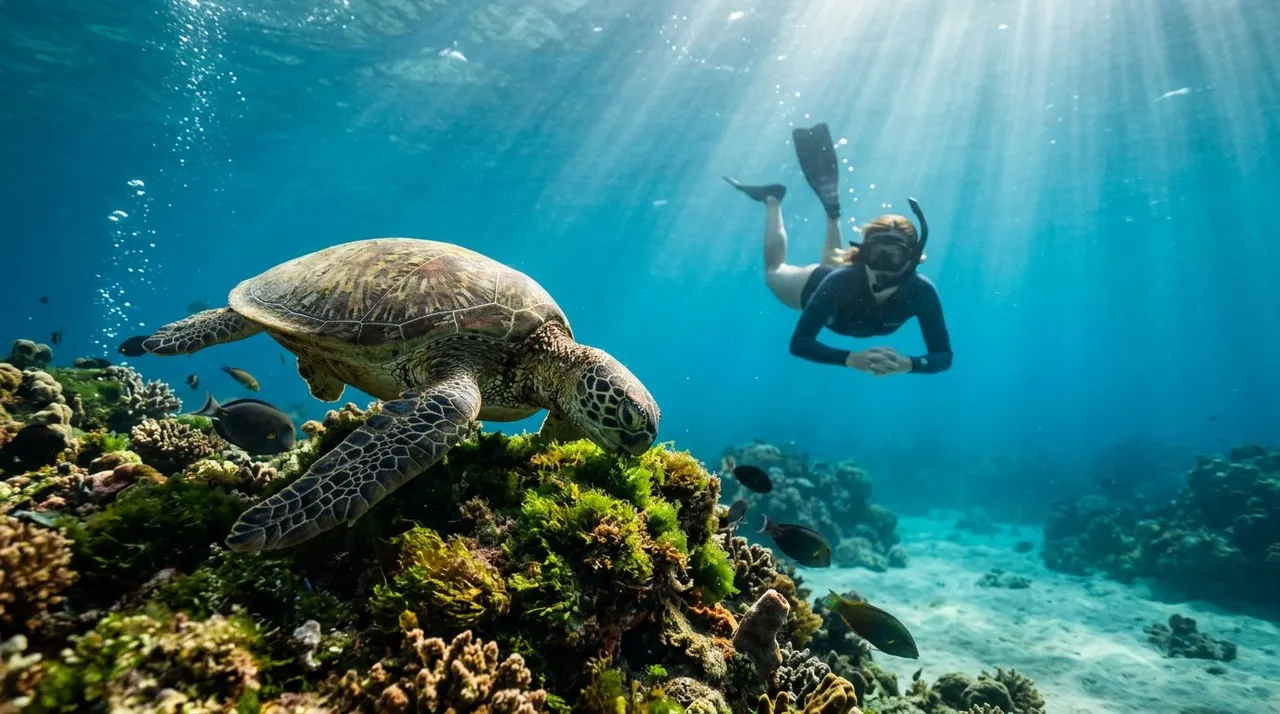
At Turtle Canyon Oahu, a green sea turtle may glide past you, pause above the reef, and continue feeding without showing much interest in people. That calm behavior is exactly what you want to protect.
Feeding a honu, even once, can teach it to associate swimmers and boats with food. The turtle may begin approaching people, leaving natural feeding areas, or taking risks around busy water. A responsible tour keeps the encounter wild, calm, and respectful.
Why feeding at Turtle Canyon Oahu changes turtle behavior
Feeding can look harmless when a turtle approaches. However, that approach may show conditioning rather than curiosity. When people offer food, turtles can change where they go, how they forage, and how closely they approach humans.
Honu already have a natural food source
Hawaiian green sea turtles, known as honu, are primarily herbivores as adults. They graze on macroalgae, seaweed, and limu around shallow reefs, rocky areas, and other coastal habitats. They may occasionally eat small invertebrates, but plant material makes up most of their normal diet.
Turtle Canyon provides a natural reef environment where honu can rest, forage, and visit cleaning stations. The turtles don’t need snacks from snorkelers. They need space to continue the behaviors that help them stay healthy.
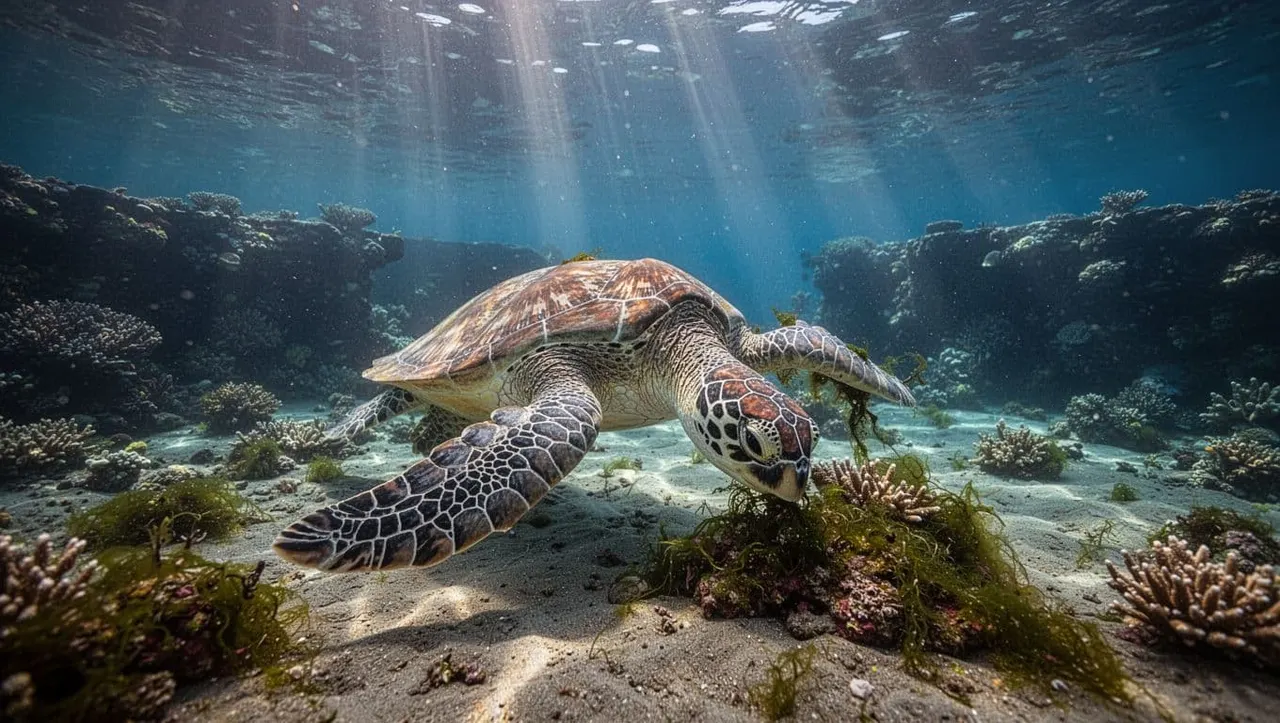
NOAA’s green turtle guidance tells visitors never to feed, touch, or attempt to feed sea turtles because those actions can alter natural behavior and increase the animals’ exposure to harm.
People can become a food signal
A turtle doesn’t understand that one swimmer is offering food while another is only watching. It may begin linking people, boats, or splashing water with a possible meal. Over time, that association can make the turtle approach more often.
This creates problems for everyone in the water. A turtle that moves toward swimmers may get crowded, touched, or chased. It may also swim closer to boats and other hazards instead of staying focused on natural feeding.
Feeding can also make a turtle act aggressively. Hawaii wildlife guidance warns that a honu conditioned to expect food may bite. Even a slow-moving animal has a strong beak and powerful body, so you shouldn’t encourage close approaches.
What changes when a turtle expects food
A fed turtle doesn’t become tame. It becomes less cautious around people. That difference matters because wild animals need their natural judgment to avoid danger.
Natural foraging can take a back seat
When you watch a turtle graze, you see a useful part of its daily routine. The honu searches across the reef, selects algae, and moves between feeding spots. Its behavior follows the habitat rather than the presence of tourists.
Food from people can interrupt that routine. Instead of remaining near algae beds, the turtle may spend more time near boats or groups of swimmers. It can also leave a resting or feeding location when visitors crowd it, then return when people appear with food.
This pattern affects other visitors, too. A turtle that learned to approach one group may repeat the behavior with the next group. Soon, the animal has less room to rest and forage without human attention.
Reduced caution creates real risks
Wild turtles already face hazards in coastal waters. When they lose caution around people, they can enter areas where contact, boat traffic, fishing gear, or other disturbances are more likely.
The risk doesn’t come only from direct feeding. Cleaning fish over the side of a boat or tossing scraps into the water can also provide an unintended food reward. NOAA’s Hawaii honu safety information warns that human activity can affect turtles when it changes their normal behavior.
A turtle swimming toward you isn’t automatically asking for interaction. It may be responding to a learned food association.
The safest response is to stop moving, give the turtle room, and let it choose where to go. You don’t need to follow it for a memorable sighting.
How to snorkel responsibly at Turtle Canyon
You can enjoy a close-looking encounter without touching or feeding a turtle. The best experience comes from staying calm and allowing the animal to control the distance.
Keep at least 10 feet away
NOAA recommends maintaining a distance of at least 10 feet, or 3 meters, from sea turtles in the water and on land. Hawaii guidance also encourages visitors to give basking turtles plenty of room so they can rest undisturbed.
That distance protects the turtle’s path and gives you a better view of its full behavior. When you swim too close, the honu may turn away, dive suddenly, or leave the reef.
Use slow kicks and keep your hands relaxed. Avoid reaching toward the turtle for a photograph. If the turtle comes closer on its own, stay still and let it pass without trying to close the remaining space.
Never block, chase, or touch
A turtle may need to reach the surface to breathe, move between reef areas, or rest. Never position yourself above it, surround it with swimmers, or block its route to open water.
You should also avoid jumping over a turtle, straddling it, riding it, or attempting to guide it toward a camera. Those actions can disturb the animal even when you don’t make physical contact.
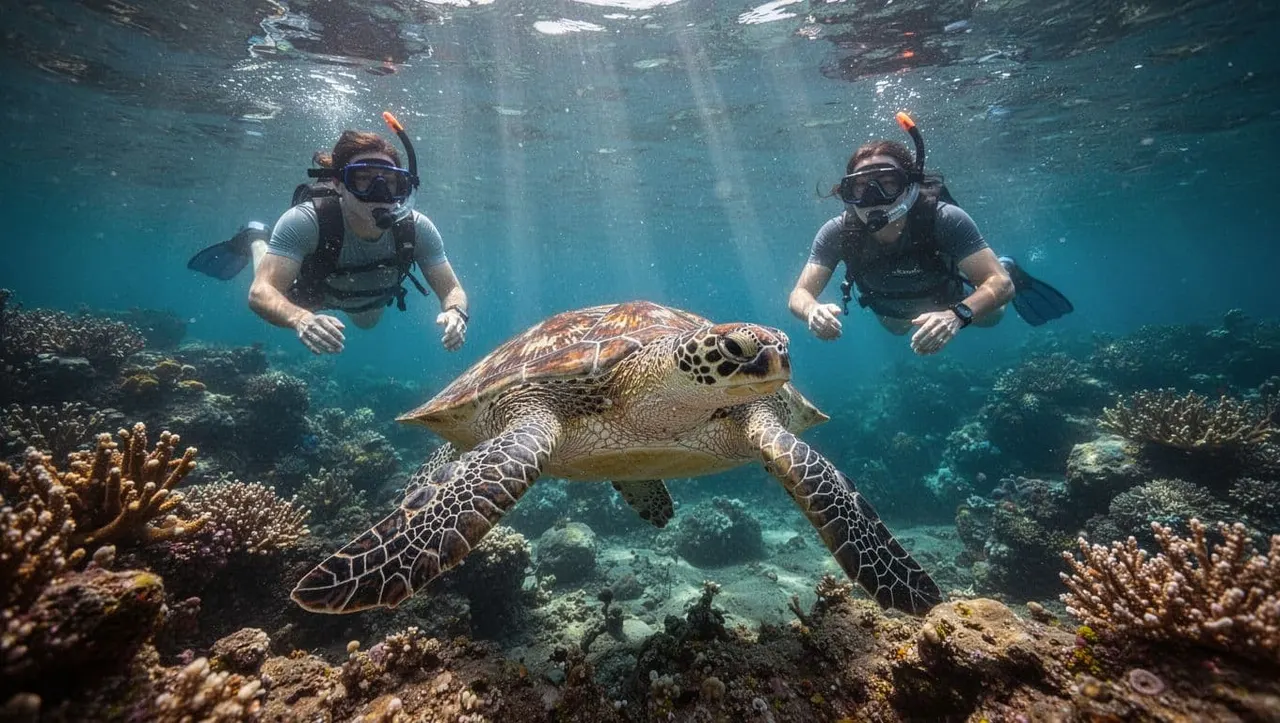
If a turtle changes direction, dives, or swims away, treat that movement as a clear request for space. NOAA’s Hawaii honu safety guidance encourages visitors to watch without interfering.
Choose a tour that puts conservation first
A knowledgeable crew can help you enjoy Turtle Canyon without turning wildlife viewing into an interaction. Your guide should explain distance rules before you enter the water, watch the group, and step in if anyone moves too close.
Professional guides improve the experience
Living Ocean Tours operates from Kewalo Basin Boat Harbor, just minutes from Waikiki Beach. The company is the only tour company with professional snorkel guides, giving you direct instruction before and during your time in the water.
That support helps first-time snorkelers and families feel more comfortable. Guides can explain how to use your mask and fins, help you practice breathing through a snorkel, and point out turtles without encouraging pursuit.
The crew also emphasizes observing, not touching. You get the excitement of seeing a honu in its natural habitat while helping keep the reef peaceful for the next group.
What you can expect with Living Ocean Tours
The Turtle Canyons Snorkel Excursion visits a natural underwater cleaning station near Waikiki. Living Ocean Tours reports a 95% success rate for spotting Hawaiian green sea turtles, although every wildlife encounter remains subject to natural conditions.
You receive snorkel equipment and guidance before entering the water. Floatation support and instruction can help beginners participate more comfortably, while experienced swimmers can focus on reef life and turtle behavior.
The Coast Guard-inspected fleet includes the custom-built double-decker Coral Kai and Lokahi. Both vessels provide shaded seating, restrooms, dry storage, and sturdy ladders for water entry. Lokahi also includes a SeaKeeper stabilization system, which helps reduce boat movement during the ride.
You can review the company’s guided Oahu snorkeling tours before choosing the experience that fits your group.
For a Turtle Canyon outing, check dates through CHECK AVAILABILITY.
What to do during your turtle encounter
Your actions in the water can support healthy turtle behavior. Follow these steps when a honu appears nearby:
- Stop kicking and stay calm so the turtle can move without pressure.
- Keep at least 10 feet of space, even if the turtle swims toward you.
- Keep your hands to yourself and never offer food, fish scraps, or other objects.
- Avoid blocking the turtle’s route to the surface, reef, or open water.
- Follow your guide’s instructions and leave the area if the turtle shows signs of disturbance.
Watch for changes such as a sudden turn, repeated diving, fast swimming, or an attempt to leave the reef. These movements mean you should increase your distance.
You can also help by keeping your equipment secure and avoiding contact with coral. A fin strike can damage the reef where turtles feed, rest, and visit cleaning fish.
Why responsible viewing protects future encounters
Hawaiian green sea turtles have legal protection under state and federal wildlife laws. Feeding or touching a honu can count as disturbance, even if you don’t intend to cause harm. The rules protect the turtle’s natural behavior, not only its physical safety.
Your choices also affect the quality of future trips. When visitors leave turtles alone, the animals are more likely to continue using the reef naturally. When people feed or crowd them, turtles may avoid the area or approach humans in unsafe ways.
A respectful encounter gives you more than a close photograph. You get to see how a wild honu actually moves, feeds, rests, and responds to its surroundings. Those details disappear when the animal is focused on snacks or trying to escape a crowd.
Conclusion
Feeding green turtles at Turtle Canyon Oahu can condition them to associate people and boats with food. That change may disrupt natural foraging, reduce caution, and increase the risk of close contact or injury.
You can protect the experience by staying at least 10 feet away, keeping your hands off the turtle, and allowing it to choose its own route. With professional guidance from Living Ocean Tours, you can enjoy a memorable honu encounter while helping keep Hawaii’s reef wildlife wild.


