
Turtle Canyon Oahu: Why Green Turtles Have Barnacles
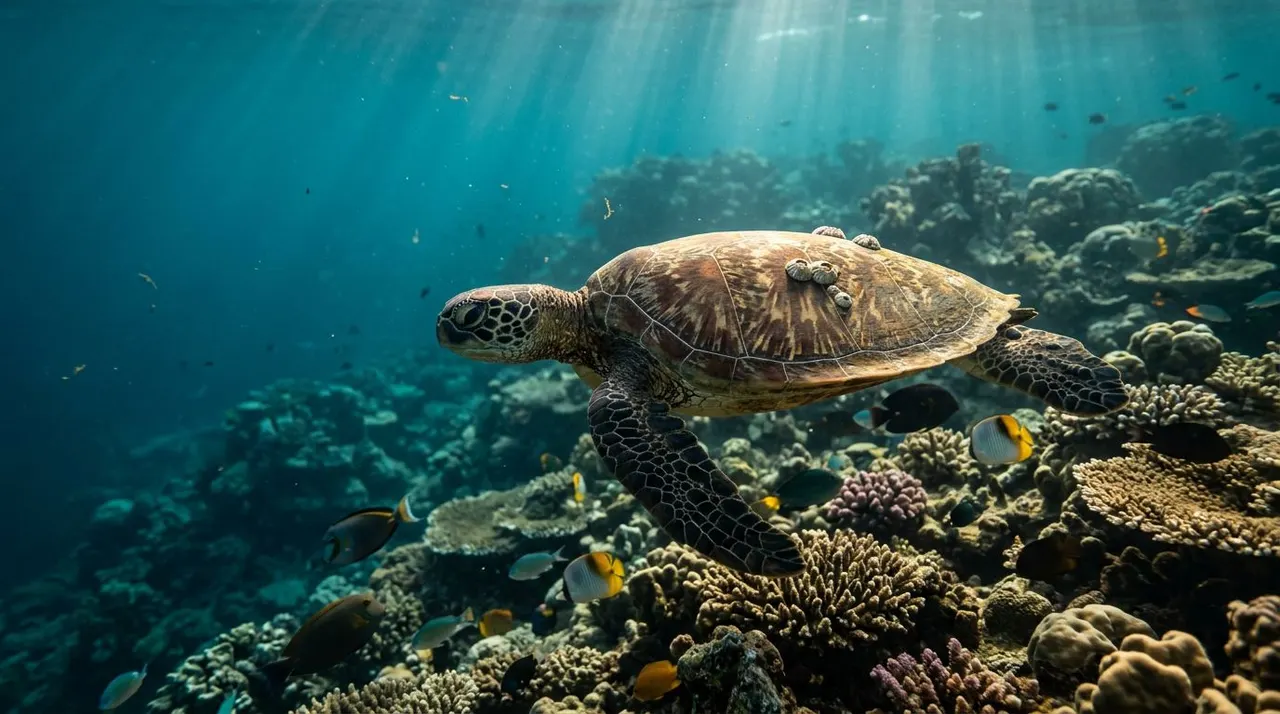
A Hawaiian green sea turtle can look perfectly healthy while carrying small barnacles across its shell. If you visit Turtle Canyon Oahu, you may notice these rough, white growths when a honu glides beneath you or rests near the reef.
Barnacles are usually natural hitchhikers, not proof that a turtle is sick. Their presence tells you more about the turtle’s habitat, movement, and biology than its overall health. Before your next snorkel, learn what you are seeing and how to observe it without causing harm.
What Barnacles on a Turtle Shell Actually Mean
Barnacles are small marine crustaceans. They begin life as free-swimming larvae, then settle on a hard surface when conditions suit them. Once attached, many remain fixed in place and filter tiny food particles from the water.
A sea turtle provides a moving surface with steady access to ocean currents. The barnacle gets transportation and feeding opportunities, while the turtle usually experiences little obvious effect. Biologists call this relationship commensalism, where one species benefits and the other appears mostly unaffected.
Turtle barnacles are specialized hitchhikers
The barnacles found on sea turtles aren’t always the same species you see on a pier or boat hull. Some are highly adapted to live on turtles. Their shells and attachment structures help them hold onto a turtle’s shell, skin, or scales during constant movement.
A 2021 global study of turtle epibionts found that green sea turtles host a wide range of barnacle species. Their larger bodies and long periods in the water give these small organisms more places to attach.
The turtle carries the barnacles through different habitats as it feeds, rests, and travels. In return, the barnacles filter food from the surrounding water. You can think of them as passengers, although the turtle doesn’t choose to carry them.
Some attach to shell, while others use skin
When barnacles appear on a shell, they often attach to the hard outer scutes. These are the plates that protect the turtle’s carapace. A few small barnacles on the rear shell or around the edges can be a normal part of life in the ocean.
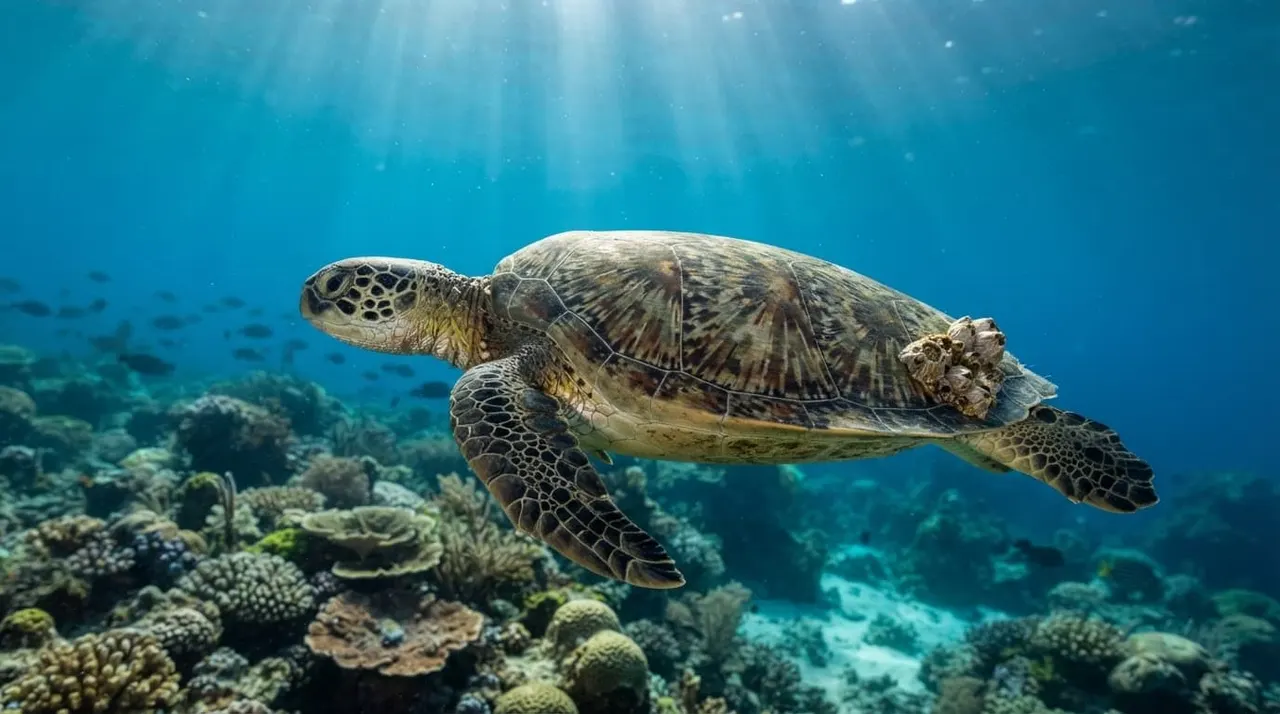
Other species attach to softer areas, including the neck, flippers, and tail. Research on Hawaiian green turtles identified turtle barnacles that can attach firmly to the skin or become embedded in tissue. The Hawaiian barnacle study describes species associated with green turtles in the islands.
How Turtle Canyon Oahu Shapes the Encounter
Turtle Canyon sits off the Waikiki coast and is known for reef structure, tropical fish, and Hawaiian green turtles. The area is also described as a turtle cleaning station, where fish may pick algae and other material from a turtle’s body.
That cleaning activity doesn’t mean cleaner fish remove every barnacle. Barnacles can remain firmly attached, especially when they occupy areas that fish cannot reach. A turtle may visit a cleaning station and still have visible growth on its shell.
A cleaning station isn’t a barnacle remover
Cleaning stations help explain why turtles may gather in one area. A honu can hover above the reef or rest near a ledge while small reef fish inspect its shell and skin. The turtle benefits when fish remove irritating material, while the fish gain food.
Barnacles are different. Their attachment can be strong, and some species live in places that cleaner fish cannot easily reach. You shouldn’t expect a turtle to leave Turtle Canyon with a spotless shell.
The reef also gives turtles a place to pause between feeding and traveling. Since barnacle larvae need time to settle and grow, turtles that spend long periods in coastal areas may collect more visible hitchhikers.
A few barnacles don’t mean the turtle is unhealthy
You may see one turtle with a nearly smooth shell and another with several barnacles. That difference doesn’t automatically indicate illness. Age, location, shell texture, time spent in the water, and the turtle’s individual history can all affect what you see.
Researchers do study barnacle type, number, and location as clues about turtle movement and condition. However, a snorkeler can’t diagnose a turtle by looking at its shell for a few seconds.
Heavy growth across the shell and body can deserve attention, especially if the turtle also appears weak, unusually inactive, entangled, or unable to swim normally. In that situation, keep your distance and report the sighting to a guide or the appropriate wildlife authority.
Are Barnacles Harmful to Hawaiian Green Turtles?
The safest answer is that barnacles can be harmless passengers, but their effect depends on the species, attachment site, and amount of growth. A few barnacles on the shell are common enough to be treated as part of natural marine life.
Problems become more possible when growth is extensive or when barnacles attach to sensitive tissue. They may create friction, add drag, or irritate the skin. Yet you shouldn’t assume every barnacle-covered turtle is suffering.
Look at the whole turtle, not one detail
When you see a honu at Turtle Canyon Oahu, watch its behavior instead of focusing only on the shell. A turtle that swims smoothly, responds normally, and moves through the water with control may simply have natural epibionts.
You should also notice whether the turtle can surface easily and turn without difficulty. A healthy encounter looks calm. The turtle may pause, glide over the reef, or rise for air before continuing along the coast.
Avoid comparing a wild turtle with photos of spotless animals. Turtles shed scutes, encounter different habitats, and carry different organisms. Natural variation is part of what makes each sighting unique.
Never remove a barnacle yourself
Touching a barnacle-covered turtle can injure the animal, damage its protective scutes, or cause stress. Scraping, pulling, or rubbing the shell is even more dangerous. Barnacles attached to skin may cause bleeding if someone tries to remove them.
Hawaiian green turtles are protected wildlife. You should never feed, chase, block, ride, restrain, or touch them. If you see a turtle that appears injured or entangled, tell your guide rather than approaching it.
A barnacle is not a souvenir, and a close-up photo isn’t worth disturbing a wild animal.
How to Observe Turtles Responsibly at Turtle Canyon Oahu
Responsible snorkeling gives you a better encounter because calm turtles are more likely to behave naturally. You can watch, photograph, and enjoy the reef without changing what the turtle intended to do.
Use a relaxed kick, keep your hands to yourself, and let the turtle choose its direction. If it swims toward you, move aside and leave a clear path to the surface.
Keep a respectful distance
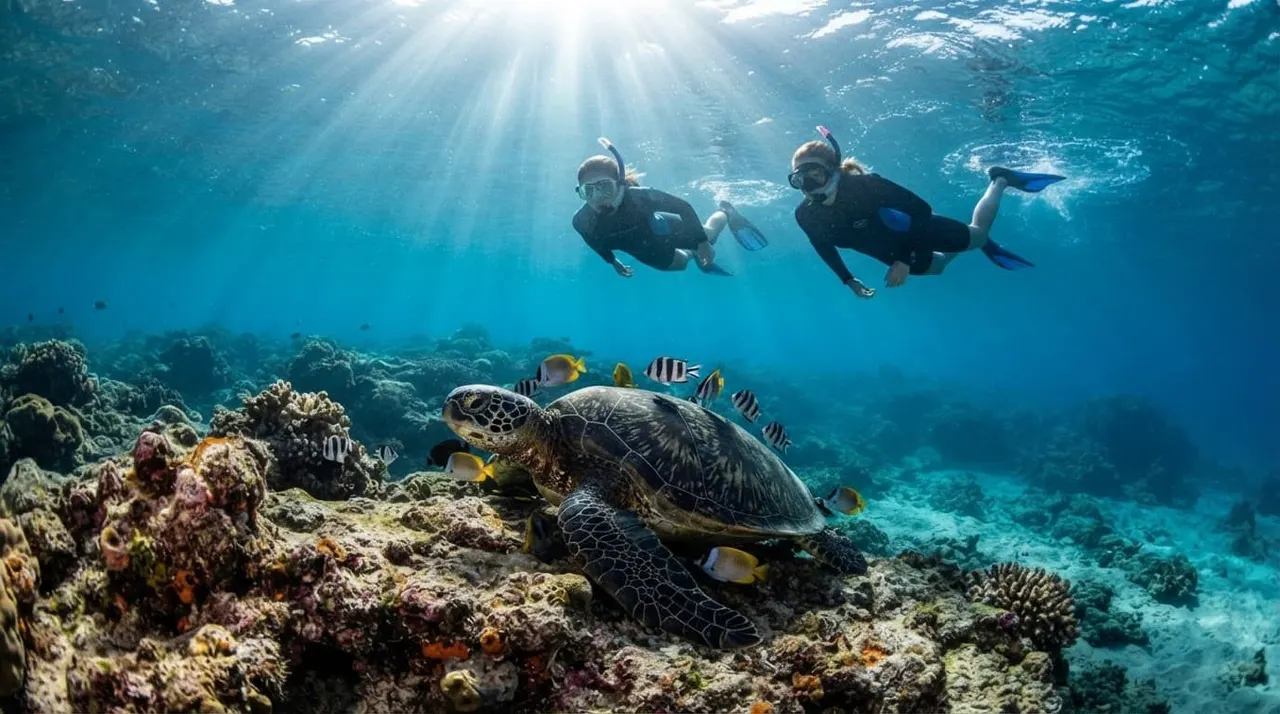
Hawaii guidance recommends a 6- to 10-foot buffer when viewing sea turtles. In the water, visibility and current can make exact distances difficult, so stay farther away whenever conditions require it.
NOAA’s marine wildlife viewing guidance for Hawaii also tells visitors not to touch, chase, or feed sea turtles. You shouldn’t swim directly above a turtle, surround it with other swimmers, or block its route to shore or open water.
If the turtle changes direction because of you, you’re too close. Back away slowly and give it room to pass.
Let a professional guide manage the encounter
A guided trip helps you understand what you’re seeing without crowding the animals. Living Ocean Tours departs from Kewalo Basin Boat Harbor, a short drive from Waikiki, and takes guests along the coast to Turtle Canyons.
The company’s Turtle Canyons Snorkel Excursion typically lasts about two hours and includes snorkeling equipment, safety guidance, and time in the water. Living Ocean Tours is the only tour company with professional snorkel guides, so you have experienced support whether you’re a first-time snorkeler or a confident swimmer.
You can review the Turtle Canyons snorkel excursion before choosing a departure. The company advertises a 95% turtle-spotting success rate, but wildlife sightings can never be guaranteed. The responsible goal is a safe, respectful observation if turtles are present.
What you can expect on a Turtle Canyon snorkel tour
Turtle Canyon works well for couples, families, and ocean-lovers who want to see marine life without planning a complicated day on the water. You cruise along the Waikiki coastline, receive equipment and instructions, then enter the water with guidance nearby.
Living Ocean Tours uses Coast Guard-inspected double-decker vessels with shaded seating, restrooms, dry storage, and sturdy ladders. The Coral Kai offers open deck space, while the Lokahi includes a SeaKeeper stabilization system designed to reduce rolling and make the ride more comfortable.
First-time snorkelers receive clear support
You don’t need advanced snorkeling skills to enjoy Turtle Canyon. Your guide can explain mask fit, breathing, fin technique, and safe water entry before you explore the reef.
Families should still consider each child’s swimming ability, comfort in open water, and the day’s conditions. Children ages three and older can join the excursion according to company information, but every child needs close supervision from a responsible adult.
Stay near your guide, listen to the safety briefing, and tell the crew if you feel tired or uncomfortable. You can enjoy the experience at your own pace.
Bring the right expectations
Turtle Canyon Oahu is a wild marine habitat, not an aquarium. You may see green turtles, reef fish, coral, and other ocean life, but each trip changes with weather, water clarity, and animal behavior.
Bring reef-safe sunscreen, a swimsuit, a towel, and a waterproof camera if you have one. Apply sunscreen before boarding so you don’t need to handle products near the water.
Most importantly, leave the reef and turtles exactly as you found them. Your best photograph may show a turtle gliding naturally, with a few barnacles on its shell and plenty of space around it.
Conclusion
Barnacles on a green sea turtle’s shell are usually specialized marine hitchhikers. A few attached growths don’t prove that a honu is sick, although heavy growth or unusual behavior deserves a report to a guide or wildlife authority.
When you visit Turtle Canyon Oahu, watch the entire animal, keep at least 6 to 10 feet away, and never touch or feed it. With professional guidance and patient observation, you can appreciate the turtle’s natural life without becoming part of the disturbance.


