
Turtle Canyon Oahu: How Boat Noise Affects Turtles
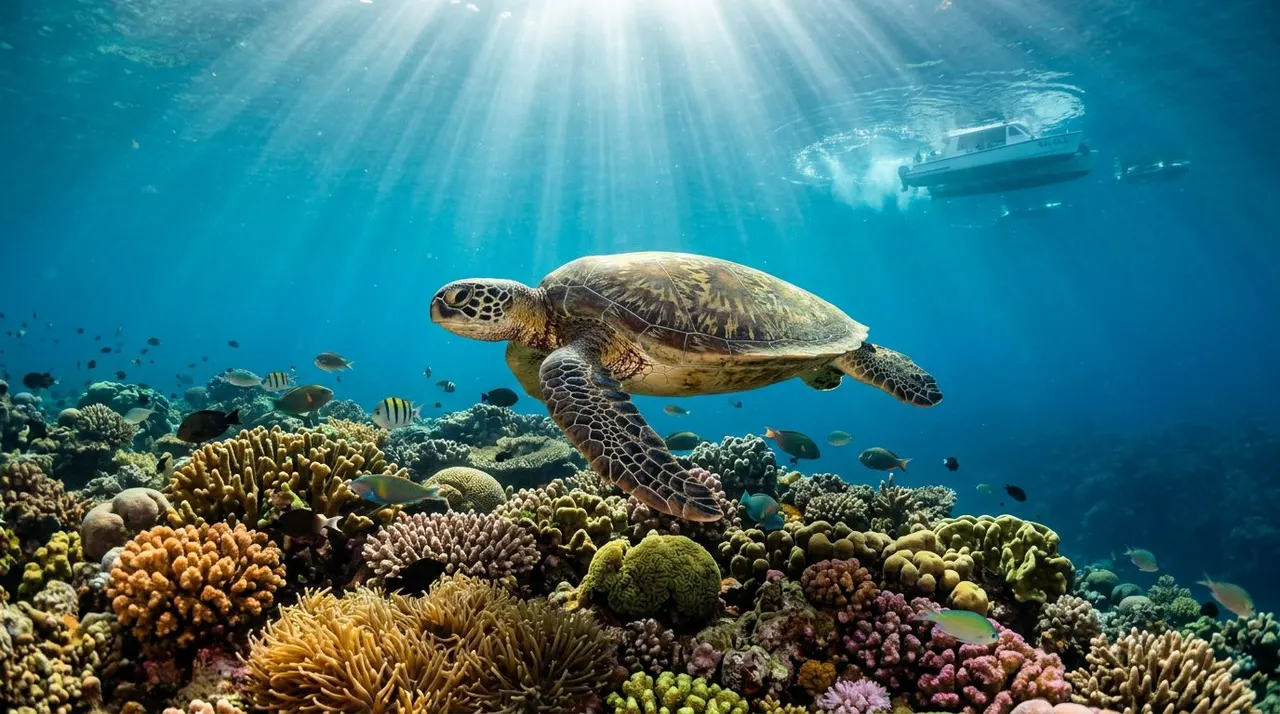
A visit to Turtle Canyon Oahu can feel peaceful, but the reef is rarely silent. Boat engines, propellers, wakes, and nearby swimmers create sound and movement that may affect how Hawaiian green sea turtles rest, surface, and move through the water.
That doesn’t mean every passing boat causes harm, or that boat noise has been proven to change turtle behavior at this exact reef. However, sea turtles can hear low-frequency underwater sounds, and Hawaii’s wildlife guidance treats vessel disturbance and collisions as serious concerns. Your choices on the water can help keep turtle encounters calm and respectful.
Why Turtle Canyon Oahu Is Sensitive Habitat
Turtle Canyon is a reef area off Waikiki where Hawaiian green sea turtles, tropical fish, and other marine life gather. Many visitors know it as a popular turtle snorkeling location, but it is also a living habitat where animals need space to feed, rest, breathe, and avoid danger.
Because the reef sits near Honolulu’s busy coastline, boats and people share the same small area. That makes responsible operation and careful guest behavior especially important.
A cleaning station needs calm water
Green sea turtles often visit reef-cleaning areas, where small fish remove algae and other material from their shells and skin. The turtle may remain nearly still while the fish work. A quiet, predictable environment makes that natural behavior easier to maintain.
Boat activity can change the conditions around the reef. Engines produce underwater vibration, while acceleration creates stronger sound and propeller turbulence. Wakes can also disturb the surface where turtles come up to breathe.
NOAA’s green turtle guidance identifies high-traffic areas, including marinas, boat ramps, and inlets, as places where green turtles face greater risks. Turtle Canyon isn’t a marina, but the same principle applies: more vessel activity means more chances for disturbance or collision.
Turtles can detect low-frequency sound
Sea turtles hear underwater, with their strongest sensitivity in lower sound frequencies. A 2026 study on Kemp’s ridley sea turtles found peak hearing sensitivity around 300 hertz, a range that overlaps with some human-made ocean noise. You can read the published 2026 hearing study for the technical findings.
The research involved Kemp’s ridley turtles, not Hawaiian green turtles. It doesn’t prove that a boat passing Turtle Canyon will make every honu flee. It does show why repeated or prolonged engine noise deserves caution, especially in a shallow reef area where turtles spend time.
The underwater noise overview for marine turtles also explains that turtles are most sensitive to lower-frequency sounds. That makes quieter approaches and slower boat handling sensible parts of wildlife protection.
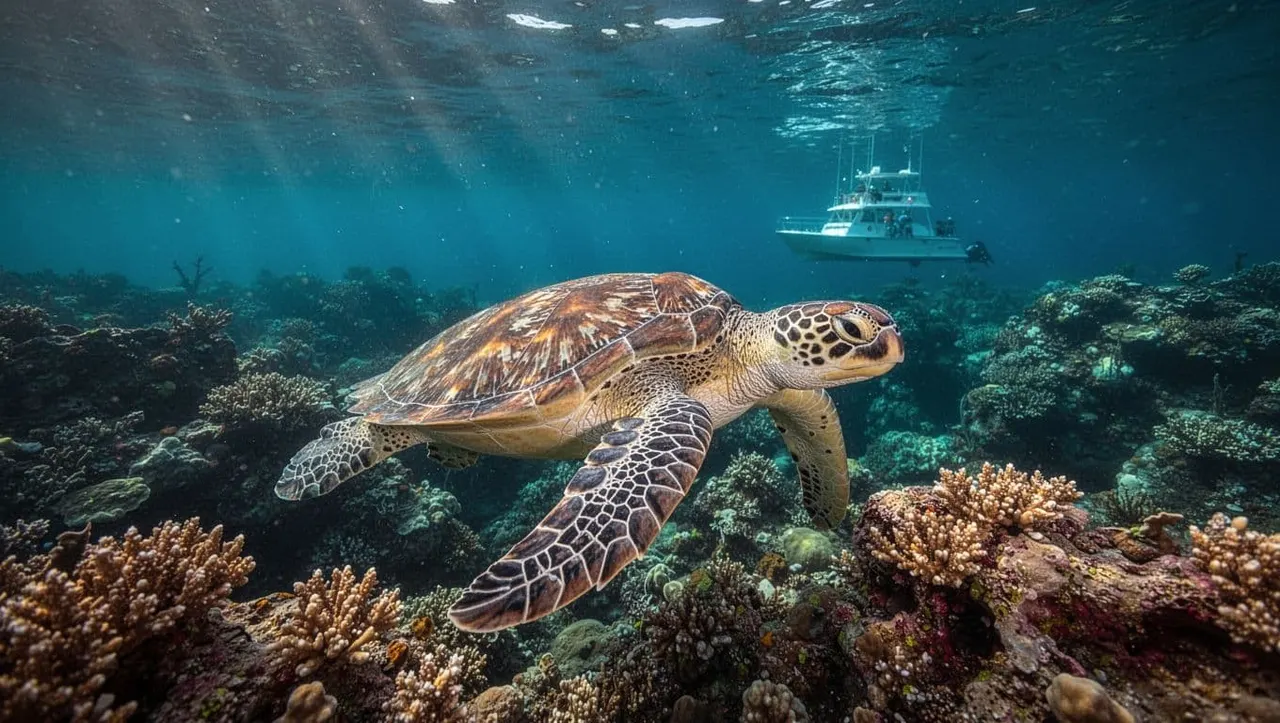
How Boat Noise May Change Green Turtle Behavior
The strongest evidence supports caution, not alarm. Scientists still need more research connecting specific boat sounds with long-term behavior changes in Hawaiian green turtles at Turtle Canyon.
Even so, you can recognize when a turtle may be uncomfortable. The goal isn’t to diagnose every movement. Instead, you should look at the full situation and give the animal more room when its behavior changes around your group or boat.
Watch for changes in movement
A turtle that suddenly changes direction, swims away from a resting area, or surfaces sooner than expected may be responding to nearby activity. The movement could also result from feeding, breathing, a natural change in route, or another animal. Context matters.
Repeated interruptions are more concerning than one brief movement. If a turtle leaves the reef each time a boat approaches, or if several boats pass while it struggles to settle, the area may be receiving too much pressure.
Keep your eyes on the turtle’s direction rather than trying to stay beside it. If you need to follow its path to maintain a view, you’re already too close.
If a turtle changes direction to avoid your group, treat that movement as a request for more space, not an invitation to follow.
Noise can also make it harder for a turtle to detect other sounds in its surroundings. Researchers continue to study how marine animals respond when natural sound is mixed with boat traffic, but reducing unnecessary noise is a practical precaution.
Noise and collision risk are connected
Boat noise is only one part of the problem. A fast-moving vessel can injure or kill a turtle, even when the operator never sees the animal in time. Turtles often surface to breathe, and a calm turtle near the surface can be difficult to spot from a moving boat.
Hawaii’s wildlife protocols advise keeping at least 10 feet from sea turtles. They also recommend putting a vessel in neutral if a turtle approaches, reducing speed to 5 to 10 knots over shallow reefs, and using no-wake speeds within 200 feet of shore where state rules apply.
These steps protect turtles and passengers. Slowing down gives the operator more time to react, while neutral power removes propeller movement when a turtle is nearby.
How to Snorkel With Less Disturbance
You don’t need to sacrifice an exciting encounter to protect the reef. In fact, the best turtle sightings often happen when you stop trying to control the moment.
Quiet swimmers can watch a turtle settle, surface, or glide past without pushing the animal to change course. That creates a better experience for you and reduces pressure on the wildlife.
Give each turtle room
Stay at least 10 feet away, both horizontally and vertically. Never touch, chase, block, feed, or ride a sea turtle. Even a gentle touch can disturb its natural behavior and damage the protective coating on its shell.
Keep your hands close to your body and use slow, controlled kicks. Floating more than kicking helps you avoid stirring up sand and keeps your fins away from the reef. If you need to adjust your mask, do it away from the turtle rather than reaching toward the animal.
Let the turtle choose the distance. It may swim closer on its own, but you still shouldn’t reach out or move toward it. When it surfaces, leave a clear path to the air.
Let the guide set the pace
A professional snorkel guide can position your group where you have a good view without forming a tight circle around the turtle. The guide can also ask swimmers to move back, spread out, or return to the boat when conditions become crowded.
For first-time snorkelers and families, guidance matters even more. You can focus on breathing, floating, and enjoying the reef while the crew handles the group’s movement. A good guide also knows when to stop pursuing a sighting.
Living Ocean Tours is the only tour company with professional snorkel guides. Its crew teaches guests to observe, not touch, and to let turtles decide how close they want to come.
Choosing a Turtle Canyon Tour That Respects Wildlife
Your choice of operator affects more than transportation. It determines how your group enters the water, how close guests approach turtles, and how the crew responds when boats or wildlife crowd the reef.
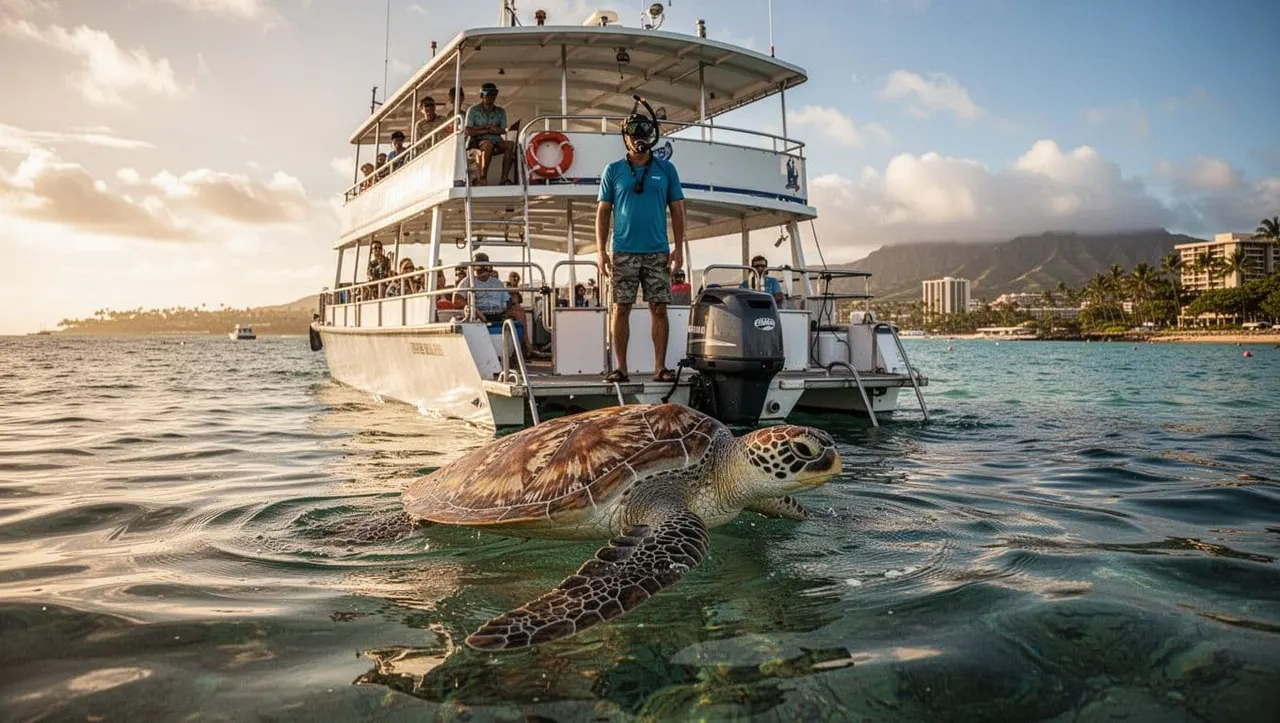
Living Ocean Tours departs from Kewalo Basin Boat Harbor, a short distance from Waikiki Beach. The company’s Honolulu ocean tours include guided Turtle Canyon snorkeling aboard Coast Guard-inspected double-decker vessels.
Look for clear wildlife rules
Before booking, check whether the operator explains distance, no-touch rules, flotation requirements, and guide-led snorkeling procedures. Those details show you what the crew expects before you enter the water.
The Turtle Canyons Snorkel Excursion lasts about two hours, with roughly one hour spent snorkeling at Turtle Canyon. Guests who enter the water must wear a flotation device, and non-swimmers can remain on the boat. The crew also provides a passenger safety briefing, so arriving late can mean missing the departure.
Living Ocean Tours advertises a 95% success rate for spotting Hawaiian green sea turtles. Wildlife sightings can never be guaranteed, but a strong sighting record and professional instruction give you a better chance without requiring anyone to chase animals.
Plan for a calm departure
Arrive about 15 minutes early, complete your waiver before boarding, and allow extra time for limited parking near Kewalo Basin. Rushing onto the boat can make the start stressful, especially when you’re traveling with children or carrying snorkeling gear.
You should also follow the crew’s directions during boarding and water entry. A controlled group enters the reef with less splashing and less crowding. Once you’re in the water, listen for instructions about spacing and movement.
When you’re ready to check dates for the Turtle Canyon Snorkel Excursion, you can CHECK AVAILABILITY.
Read recent guest feedback before your trip so you know what to expect from the crew, boat, and snorkeling experience.
Your Turtle Canyon Wildlife Checklist
A low-disturbance encounter starts before you reach the reef. Keep these points in mind while planning your snorkel:
- Choose a guided tour that teaches wildlife etiquette before you enter the water.
- Stay at least 10 feet from every turtle, even when the animal swims toward you.
- Keep your fins, hands, and flotation gear away from the reef and the turtle.
- Follow the guide’s directions when boats, swimmers, or changing conditions affect visibility.
- Ask the operator to use neutral power when a turtle comes close to the vessel.
- Leave the area if a turtle repeatedly avoids your group or abandons its resting place.
These actions help you enjoy the reef without turning a wildlife encounter into a chase. They also give guides a clear way to protect the animal while keeping your group safe.
Conclusion
Boat noise at Turtle Canyon Oahu deserves attention because sea turtles can detect low-frequency underwater sound, and busy coastal waters increase the risk of disturbance and collision. Current research doesn’t prove a direct behavioral effect at this reef, but the responsible response is clear: slow down, keep your distance, and avoid making a turtle change its natural route.
When you snorkel with a professional guide, you can enjoy a close look without crowding the animal. The best encounter is one where the turtle remains calm, chooses its own distance, and leaves the reef exactly as it found it.


