
Turtle Canyon Oahu: Can Sea Turtles Retract Their Shells?
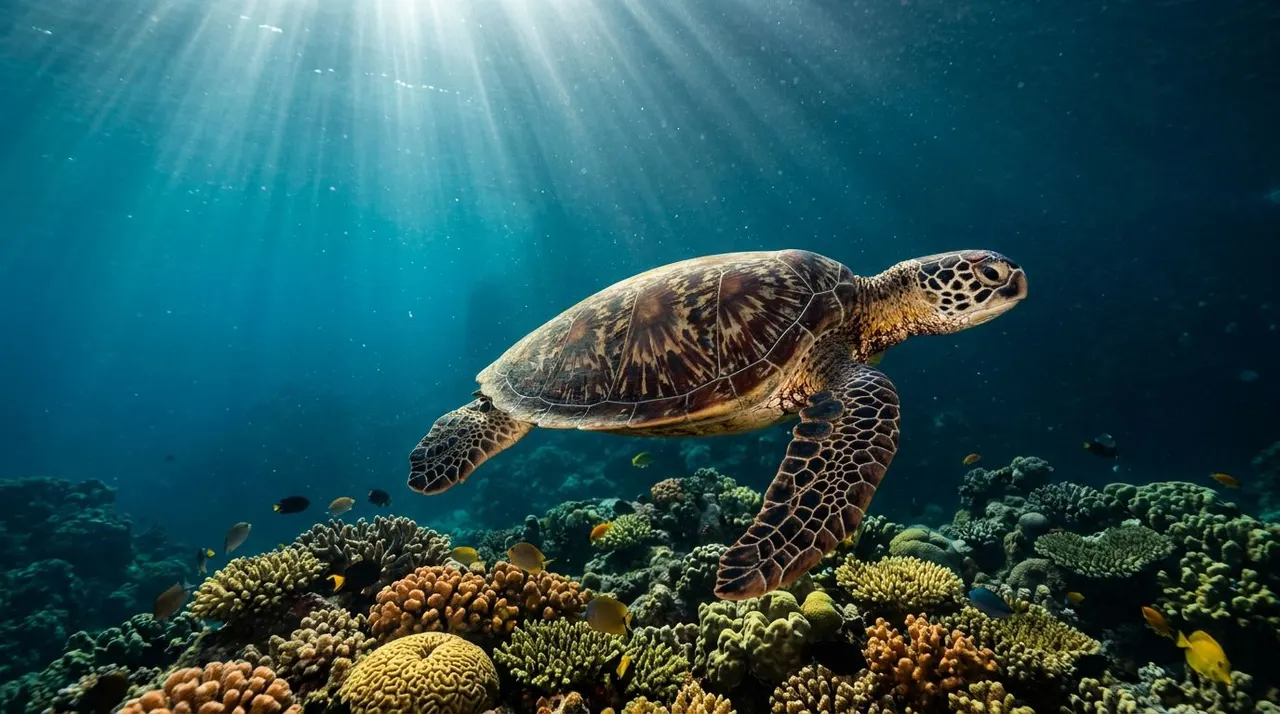
A green sea turtle can look as if it has a built-in hiding place, but Turtle Canyon Oahu visitors often discover a surprising fact: sea turtles can’t pull their heads and flippers fully inside their shells. Their bodies are designed for swimming, not the tucked-in defense used by many land turtles.
That difference makes a Turtle Canyon snorkeling encounter even more fascinating. You can watch a turtle glide over the reef, pause at a cleaning station, and surface for air while your guide explains what you’re seeing. First, it helps to understand how the shell and body work.
Can sea turtles retract into their shells?
No. Hawaiian green sea turtles can’t retract their heads, front flippers, or rear flippers completely into their shells. Unlike many freshwater turtles, sea turtles have fixed limbs and a streamlined body built for long-distance swimming.
A sea turtle can draw its head closer to its body, but it can’t disappear inside the shell. The neck and flippers remain exposed. That design gives the turtle better movement through open water, although it offers less protection when a predator approaches.
The shell still provides important defense. The upper section, called the carapace, covers the turtle’s back. The lower section, called the plastron, protects its underside. Strong ribs and vertebrae connect to the shell, making it part of the turtle’s skeleton rather than a removable covering.
The Smithsonian Ocean Portal’s sea turtle guide explains that sea turtle heads and limbs are fixed outside the shell. The same feature applies to the green turtles you may see near Waikiki.
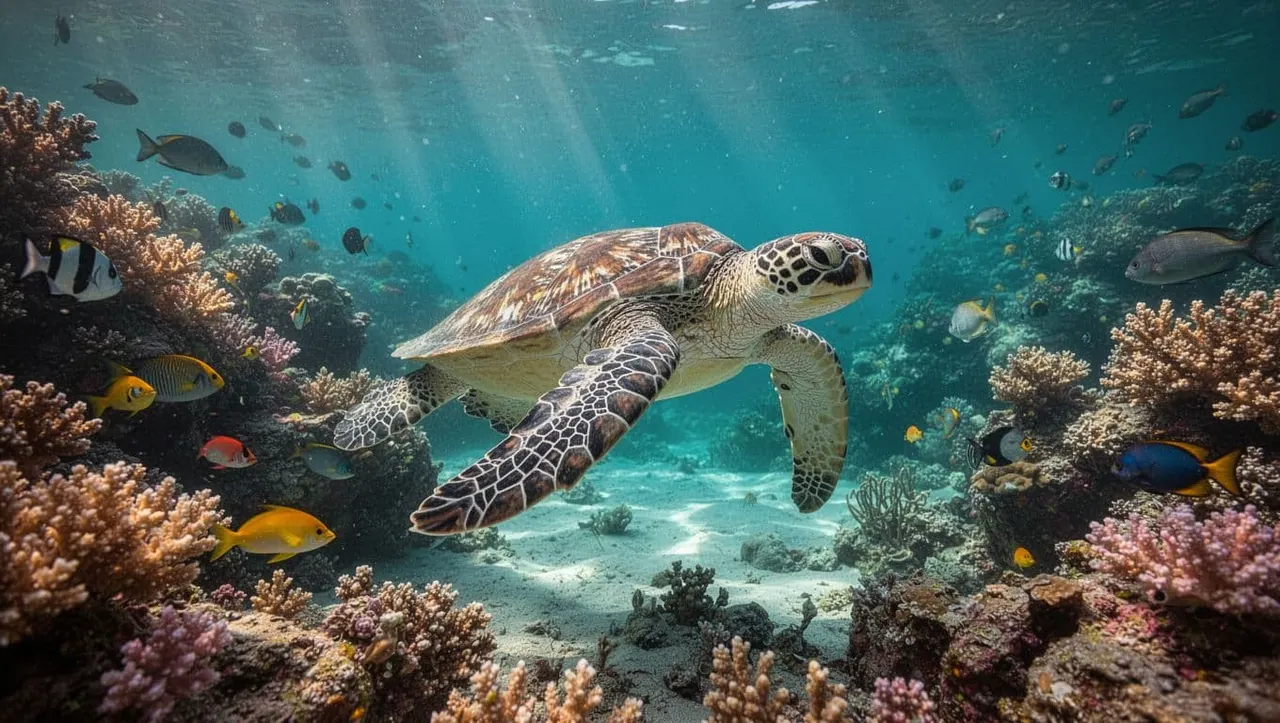
A sea turtle’s shell protects its body, but its best defense in the ocean is often speed, awareness, and the ability to swim away.
Why green turtles have exposed flippers and heads
Land turtles often use a compact body shape to retreat into a shell. Sea turtles need a different structure. Their large front flippers create propulsion, while the rear flippers help with steering and stability.
The front flippers also help green turtles travel between feeding areas, resting places, and nesting beaches. A fully retractable body would make that movement harder. Instead, the turtle’s shell has a lower, smoother profile that reduces drag as it swims.
Green turtles also have a beak-like mouth suited to their diet. Adult Hawaiian green turtles commonly graze on algae and seagrass, although younger turtles may eat a wider range of marine foods. Their name comes from the greenish color of their body fat, not from a green shell.
You may notice that a turtle seems calm when it rests near a reef. That doesn’t mean it wants contact. It still needs room to breathe, move, and react to boats or swimmers. The National Oceanic and Atmospheric Administration’s turtle facts confirms that sea turtles can’t pull their flippers and heads into their shells.
What you may see at Turtle Canyon Oahu
Turtle Canyon is an underwater reef area off Waikiki known for marine life and regular turtle sightings. Its natural contours offer places where fish gather and turtles may stop at a cleaning station.
Small reef fish can pick algae and other material from a turtle’s shell and skin. The turtle benefits from the cleaning, while the fish gain food. When you watch this behavior, you’ll see the turtle hold still for a short time before swimming away.
The experience changes with ocean conditions. On a calm morning, you may see a turtle below you in clear water. On another day, visibility may shift with wind, swell, or current. Wildlife encounters are never guaranteed, but Living Ocean Tours lists a 95% success rate for spotting Hawaiian green sea turtles at its Turtle Canyons excursion.
Your guide can help you identify the turtle’s shell shape, flippers, breathing pattern, and movement. That guidance matters when you spot a turtle at a distance and want to understand its behavior rather than swim directly toward it.
How to watch turtles without disturbing them
Responsible snorkeling protects both the turtle and your experience. Keep your body relaxed, maintain space, and let the animal choose its direction. If a turtle swims toward you, remain still and allow it to pass.
Never touch, feed, chase, ride, or block a turtle. Avoid gathering directly above a resting animal, since turtles need a clear path to reach the surface. You should also keep your fins away from the reef, coral, and sandy resting areas.
Follow your guide’s instructions about distance and positioning. Professional guidance helps your group spread out instead of surrounding one turtle. It also reduces accidental contact when several swimmers react at once.
Living Ocean Tours emphasizes observing, not touching, and its professional snorkel guides help beginners follow safe wildlife practices. The company is the only tour operator with professional snorkel guides, giving you direct support while you learn how to move comfortably in the water.
For a closer look at the trip details, you can view the Turtle Canyon Snorkel Excursion.
What makes a guided Turtle Canyon trip easier?
A guided trip removes much of the guesswork. Living Ocean Tours departs from Kewalo Basin Boat Harbor, a short drive from Waikiki Beach. The crew supplies snorkeling equipment, explains the safety process, and helps you enter and exit the water using sturdy ladders.
The tour is designed for first-time snorkelers, families, and experienced swimmers. You don’t need to identify a turtle’s behavior on your own. Your professional guide can point out reef life, help you adjust your mask, and explain when to stay still.
The snorkeling excursion lasts about two hours, with approximately one hour in the water according to the company’s tour information. That schedule gives you time to get comfortable before watching for turtles near the reef.
Boat comfort also affects your day. Living Ocean Tours operates Coast Guard-inspected, custom-built double-decker vessels called the Coral Kai and Lokahi. Both boats provide shaded seating, restrooms, dry storage, and heavy-duty ladders.
The Lokahi includes a SeaKeeper stabilization system that reduces side-to-side rolling. That feature can help if you feel uneasy on a moving boat. The Coral Kai offers broad open-deck space for enjoying the coastline before or after your swim.
You can also explore Living Ocean Tours’ ocean excursions if you want to compare the Turtle Canyon trip with other Waikiki experiences.
What should you bring for Turtle Canyon snorkeling?
Your tour provides the essential snorkeling equipment, but a few personal items can make the outing more comfortable. Bring reef-safe sunscreen, a swimsuit, a towel, sunglasses, and a reusable water bottle.
Apply sunscreen before boarding when possible. Choose a product that follows Hawaii’s restrictions on sunscreens containing oxybenzone and octinoxate. Those chemicals are restricted under Hawaii law because of concerns about coral reef impacts.
Wear a cover-up between the boat and the water if you burn easily. The sun can feel strong even when the ocean breeze keeps you cool. You should also secure loose belongings in dry storage before entering the water.
If you wear contact lenses, ask your guide about mask fit before the boat departs. First-time snorkelers should practice breathing through the snorkel while standing or sitting in a calm area. A properly fitted mask should seal without excessive strap pressure.
Families should discuss turtle etiquette before the trip. Children can enjoy seeing wildlife while learning that a close encounter doesn’t require touching. A calm child creates a better experience for the entire group and the turtle.
Can you see a turtle’s shell underwater?
Yes, and the shell often gives you useful clues about the turtle’s position and movement. From above, you may see the broad oval carapace, patterned scutes, and powerful front flippers.
A green turtle may rest near the bottom, angle upward toward the surface, or swim steadily across the reef. Watch the entire body instead of focusing only on the shell. The flippers show whether the turtle is turning, accelerating, or maintaining position.
You may also see algae or small organisms on the shell. That doesn’t mean the turtle is dirty or unhealthy. The cleaning station provides a natural place where fish remove material from the turtle’s body.
Avoid diving down toward a resting turtle. Even if you stay several feet away, a direct descent can make the animal change course. Remaining at the surface usually gives you a better view and keeps your breathing calm.
A professional guide can also help you recognize when a turtle is preparing to swim away. When the animal begins moving, give it a clear path. The best encounter often lasts longer when you don’t pursue it.
Living Ocean Tours and respectful wildlife encounters
Living Ocean Tours combines guided snorkeling with practical comfort for guests who want an easy way to reach Turtle Canyon. Its crew supports beginners while helping experienced swimmers follow responsible wildlife practices.
You can expect safety instructions before entering the water, professional snorkel guidance during the excursion, and reminders to leave turtles and reef life undisturbed. That support lets you focus on the experience instead of worrying about where to swim or how to identify marine life.
The goal isn’t to make a turtle perform. It’s to observe a wild animal behaving naturally. You may see it rest, graze, interact with cleaner fish, or rise for a breath. Each moment is more meaningful when you give the turtle control over the encounter.
The boat ride adds another view of Oahu’s coastline. Between snorkeling and wildlife watching, you can relax on deck, use the shade, and enjoy the Pacific without rushing through the day.
Conclusion
Sea turtles at Turtle Canyon Oahu can’t retract their heads or flippers into their shells. Their streamlined bodies help them travel through the ocean, while their shells provide protection without working like a land turtle’s hiding place.
When you snorkel with Living Ocean Tours, you can watch green turtles at a natural cleaning station with professional guidance and comfortable boat access from Honolulu. Keep your distance, let the turtle choose its path, and you’ll experience the encounter as it should be, on the turtle’s terms.


