
Turtle Canyon Oahu: How Green Turtles See Underwater
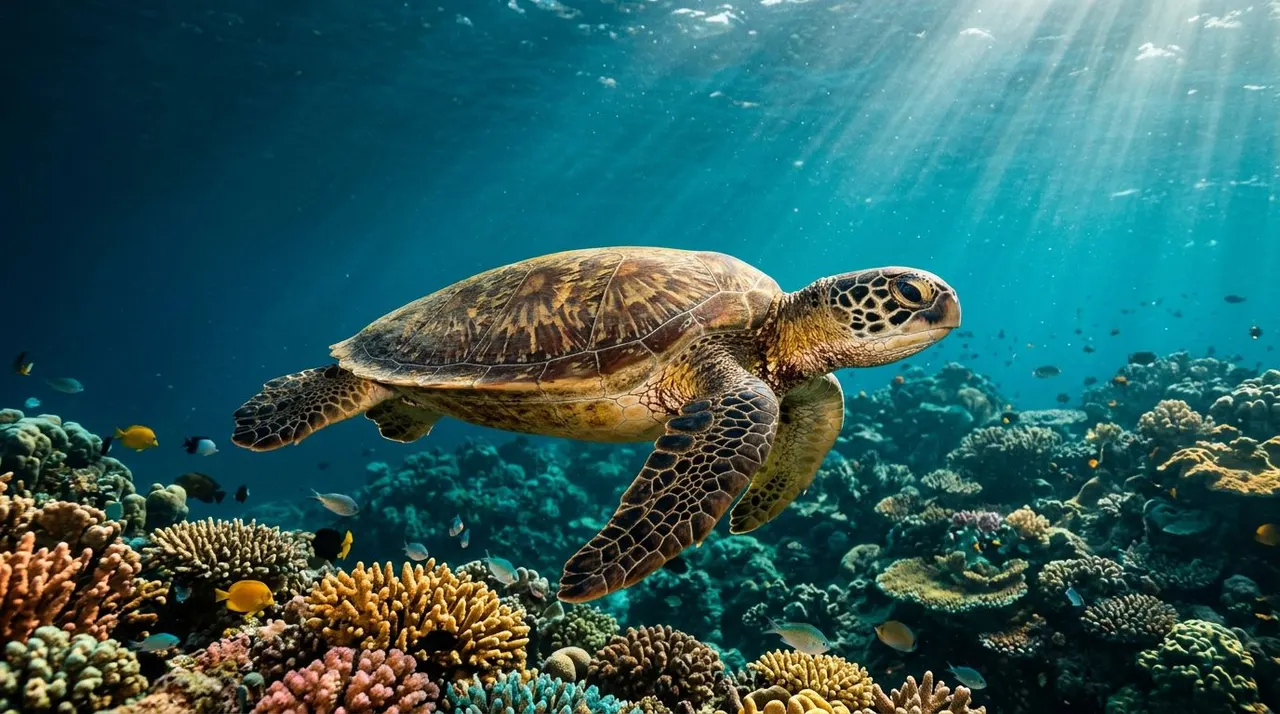
A Hawaiian green sea turtle can look directly at you beneath the surface while your own eyes struggle to focus. At Turtle Canyon Oahu, that difference comes from the way each species handles light underwater.
Your mask restores much of your vision, but a turtle’s eyes are built for life in the sea. Once you understand what the turtle sees, every slow turn of its head and every glide over the reef becomes easier to appreciate. Start with the remarkable design of its eyes.
Key Takeaways
- Green sea turtles have eyes adapted for clear underwater vision.
- Their round lenses bend light efficiently beneath the waves.
- Turtles can see color, movement, reef shapes, and nearby animals.
- Your mask, sunlight, and water conditions affect how clearly you see them.
- Responsible snorkeling means watching turtles without touching, chasing, or blocking them.
How green turtle eyes work underwater
Human eyes focus on land because the cornea bends light as it enters the eye. Underwater, water and the cornea have similar optical properties, so your cornea bends light less effectively. That is why everything looks blurry without a mask.
Green sea turtles solve this problem with a different eye shape. Their lenses are more rounded than human lenses, which helps bend incoming light underwater. As a result, a turtle can focus on reef surfaces, food, other turtles, and potential danger while swimming.
The Smithsonian Ocean guide to sea turtles describes sea turtle eyes as adapted for both air and water, with underwater vision being the stronger fit. A turtle can still see above the surface, but its eyes perform best where it spends most of its time.
Color also matters. Green turtles have color vision, so the reef isn’t a flat blue scene to them. They can distinguish changes in light and color as they search for food or move through coral habitat. Their eyes also detect motion, which helps them respond when a swimmer approaches too quickly.
A turtle’s large eyes give it a broad view of its surroundings. That wide awareness helps it monitor the reef while it rests or feeds. However, good vision doesn’t mean the turtle wants close contact. A clear view works both ways. The turtle can see you, and its reaction tells you when you’ve entered its comfort zone.
Turtles also have protective eyelids and membranes that help shield their eyes while they swim. These features matter when sand, particles, or reef debris move through the water. You may see a turtle close its eyes briefly while resting or rubbing against a surface. That behavior doesn’t mean you should move closer. Give the animal room and let it choose its next direction.
What a turtle sees around Turtle Canyon
Turtle Canyon sits off the Waikiki coastline, where underwater volcanic formations create shelter, feeding areas, and resting spaces for marine life. The site is known for encounters with Hawaiian green sea turtles, often near a natural cleaning station.
At a cleaning station, small reef fish can remove algae and other unwanted material from a turtle’s shell and skin. The turtle may hover above the reef or settle into a relaxed position while the fish work. Its strong underwater vision helps it locate the station and recognize the reef structure around it.
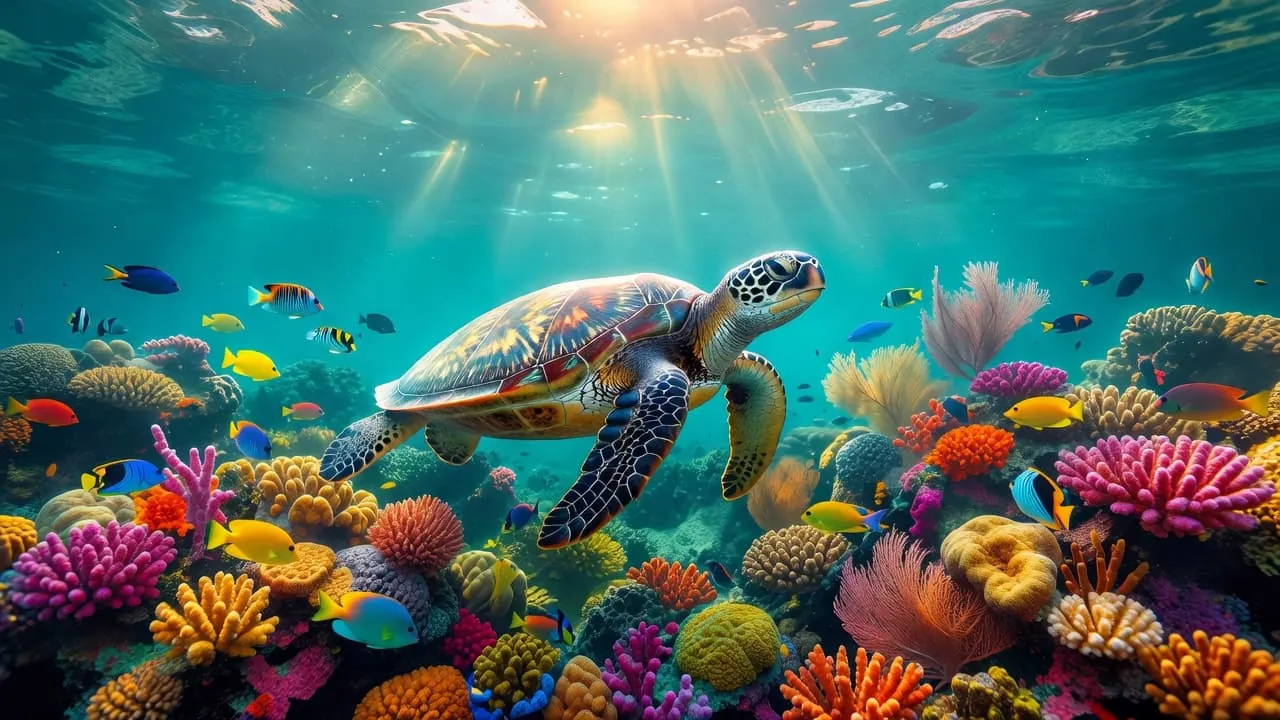
From the turtle’s perspective, a snorkeler is a large moving shape above the reef. Clear masks, bright fins, and sudden arm movements can attract attention. A calm swimmer creates less disturbance and gives the turtle more control over the encounter.
Sunlight changes the scene throughout the day. When light reaches the reef, colors become easier to separate, and the turtle can read the contrast between rock, sand, coral, and open water. Cloud cover or deeper water reduces color intensity. Even then, the turtle’s eyes remain useful for detecting movement and outlines.
Visibility also depends on waves and currents. Water near the surface may appear clear one minute and filled with suspended particles the next. The turtle still has a better optical setup for underwater viewing than you do, but it doesn’t have perfect vision in every condition.
You may notice a turtle turn its head before it swims away. That movement can help it inspect you without changing its position. If it keeps feeding or resting, maintain your distance and watch quietly. If it paddles away, let it go.
The best turtle encounter is one the turtle chooses to continue.
Why your underwater view feels different
Your mask creates an air space in front of your eyes, allowing your corneas to bend light in a way that’s closer to normal vision on land. That correction is why a mask makes the reef appear sharper. Still, your view has limits.
A fogged lens can blur a turtle’s shell into a green-brown shape. Scratches, poor fit, and water inside the mask create the same problem. Before entering the water, adjust the strap and check that the skirt seals comfortably around your face. A professional guide can help you find a better fit if the mask leaks.
Sun angle matters, too. Looking toward bright surface glare can wash out colors and make details difficult to see. Turn slightly so the sun illuminates the turtle from the side or behind you. Avoid shining a light at the animal, especially during low-light conditions.
Your eyes also need time to adjust. At first, the ocean may look like a busy mix of blue, bubbles, and moving shadows. After a few minutes, you start to separate the reef from fish and identify the turtle’s outline. Slow breathing helps because it keeps your body still and reduces bubbles in front of your face.
A turtle may appear closer or larger underwater than you expect. Water changes how objects look through a mask, and a turtle’s broad shell can make distance difficult to judge. Keep several feet of space and allow the guide to manage the group around the animal.
The Apalachicola National Estuarine Research Reserve’s turtle vision images offer a useful visual comparison between turtle and human sight. The difference helps explain why a turtle can find its way through a reef while you may need a moment to locate it.
How to protect the view you came to see
Your behavior affects what the turtle does next. A resting animal may stay in place when the group remains calm. If swimmers crowd it, follow it, or try to touch its shell, the turtle can leave the area.
Keep your hands to yourself, even when the turtle appears relaxed. Hawaiian green sea turtles are protected wildlife, and touching can stress them or damage the protective coating on their shell. Never hold onto a turtle, block its path, or swim directly above it.
You can improve your encounter with a few simple habits:
- Move slowly and keep your fins below the surface.
- Stay behind the guide and leave a clear route for the turtle.
- Avoid standing on coral or stirring the seafloor.
- Use reef-safe sunscreen and apply it before you enter the water.
- Take photos without flash when possible.
- Follow crew instructions about distance, current, and water entry.
The same care protects the reef that supports the turtles. Coral structures provide shelter for fish and create the underwater terrain turtles use for feeding and resting. Kicking coral or dragging equipment across it can cause damage that takes years to repair.
If you aren’t a strong swimmer, you can still enjoy the site with proper support. Professional snorkel guides can explain mask use, breathing, fin technique, and safe water entry before you focus on wildlife. Beginners often see more when they feel comfortable because they stop rushing and start observing.
Living Ocean Tours is the only tour company with professional snorkel guides, according to its company profile. That guidance matters at a site where wildlife behavior and ocean conditions can change during the same outing.
Choose a guided Turtle Canyon snorkel on Oahu
Living Ocean Tours departs from Kewalo Basin Boat Harbor, a short drive from Waikiki Beach. Its Coast Guard-inspected vessels, the Coral Kai and Lokahi, include shaded seating, restrooms, dry storage, and sturdy ladders for easier water entry.
The company’s Turtle Canyons Snorkel Excursion focuses on the natural cleaning station and the reef habitat around it. Living Ocean Tours advertises a 95% success rate for spotting Hawaiian green sea turtles. Wildlife sightings can never be guaranteed, but an experienced crew knows how to read the conditions and guide you toward appropriate viewing areas.
You can explore guided Honolulu snorkel tours when you want to compare the Turtle Canyon experience with other ocean outings. For families and first-time snorkelers, having crew members nearby can make the difference between spending the trip adjusting equipment and enjoying the reef.
The Lokahi adds a SeaKeeper stabilization system that reduces rolling while the boat is underway. That feature can help guests who worry about seasickness. The vessel also includes a water slide, trampoline, and floating lily pad on its deluxe wildlife cruise, while the Coral Kai offers generous open-deck space.
For a Turtle Canyon outing, bring a swimsuit, towel, sunglasses, and a reusable water bottle. Arrive ready to listen to the safety briefing, and tell the crew if you need help with your mask or flotation equipment. You don’t need advanced snorkeling skills to take part.
Living Ocean Tours pairs close wildlife viewing with a clear conservation rule: observe, don’t touch. That approach gives you a better chance to watch natural behavior, including resting, feeding, and visiting the cleaning station.
Conclusion
At Turtle Canyon, you see a green turtle through a mask, but the turtle sees its reef home with eyes designed for the sea. Its rounded lenses, color vision, and broad awareness help it find food, navigate volcanic terrain, and respond to nearby swimmers.
Your best view comes from calm movement, clear equipment, and respectful distance. When you let the turtle set the pace, you get to witness natural behavior without interrupting it.


