
Turtle Canyon Oahu: A 2026 Guide to Snorkeling with Turtles
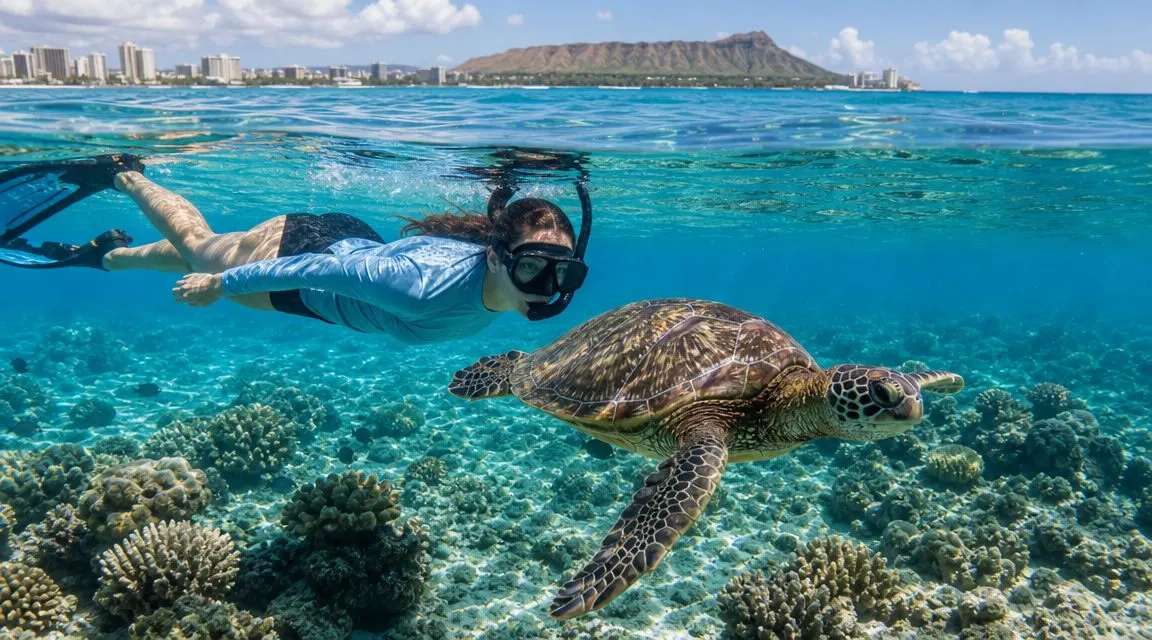
You're probably in one of two places right now. You're staying in Waikiki and want the sea turtle experience everyone talks about, or you've already heard the name Turtle Canyon and want to know if it's worth your vacation time.
It is, if you do it the right way.
Turtle Canyon Oahu isn't a beach you wander onto with a mask and hope for the best. It's an offshore reef with a very specific kind of wildlife encounter. That's what makes it memorable, and that's also why a little practical knowledge matters. Families, first-time snorkelers, cautious swimmers, and anyone traveling with kids or grandparents usually do better when they know what the trip really feels like before they book it.
Your Guide to Snorkeling at Turtle Canyon Oahu
Most visitors don't want a long lecture. They want to know one thing. Where can I safely snorkel near Waikiki and have a real chance of seeing Hawaiian green sea turtles in the wild?
For a lot of people, Turtle Canyon Oahu is the answer. It's widely described as a protected marine life conservation area and a natural cleaning station for honu, with cultural importance in Hawaiian and Polynesian tradition as well. One operator summary says the site sees about 20 to 50 resident honu daily and reports a 98% turtle-sighting success rate year-round, while also noting visibility can exceed 100 feet because the reef sits in the lee of Diamond Head crater, according to Living Ocean Tours' Turtle Canyon overview.
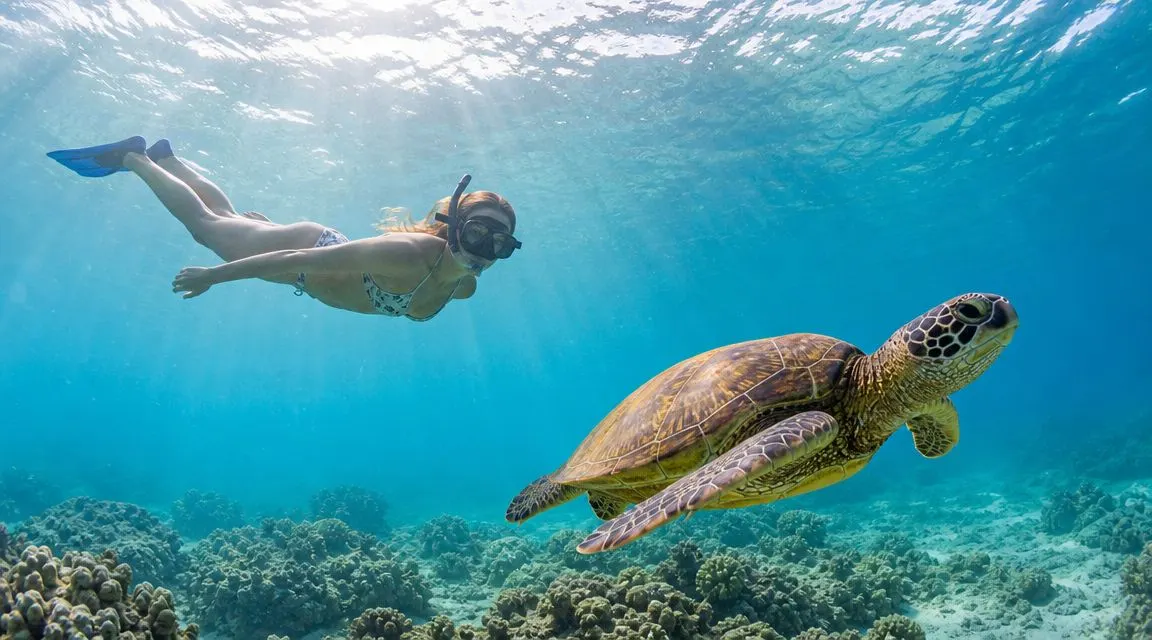
That sounds simple on paper. In practice, the difference between a great day and a frustrating one usually comes down to expectations. Turtle Canyon is not shore snorkeling. It's not the kind of place where you throw gear in the trunk, park nearby, and swim out. It's a boat-access reef, and that changes how you should plan the day, especially if you're traveling with children, nervous swimmers, or mixed ability levels.
Why this spot works for beginners
The appeal isn't just the turtles. It's the combination of short-commitment boat access, guided support, and a site that tends to work well for casual snorkelers once they're on location.
If you're the person organizing the family outing, focus on these questions first:
- Access: Can everyone in your group board comfortably and handle a short boat ride?
- Confidence: Will first-time snorkelers feel better with crew guidance, flotation, and a defined swim area?
- Wildlife expectations: Are you ready to enjoy the reef respectfully instead of trying to force a close turtle encounter?
Practical rule: The people who enjoy Turtle Canyon most are usually the ones who arrive wanting to observe, not chase.
What visitors often get wrong
A lot of online advice skips the parts that matter once you get in the water. The essential skill is knowing how to visit responsibly, when conditions are likely to feel easier, and how to react when wildlife comes close.
That's where most first-timers need help. Not with excitement. With judgment.
What Makes Turtle Canyon a Turtle Hotspot
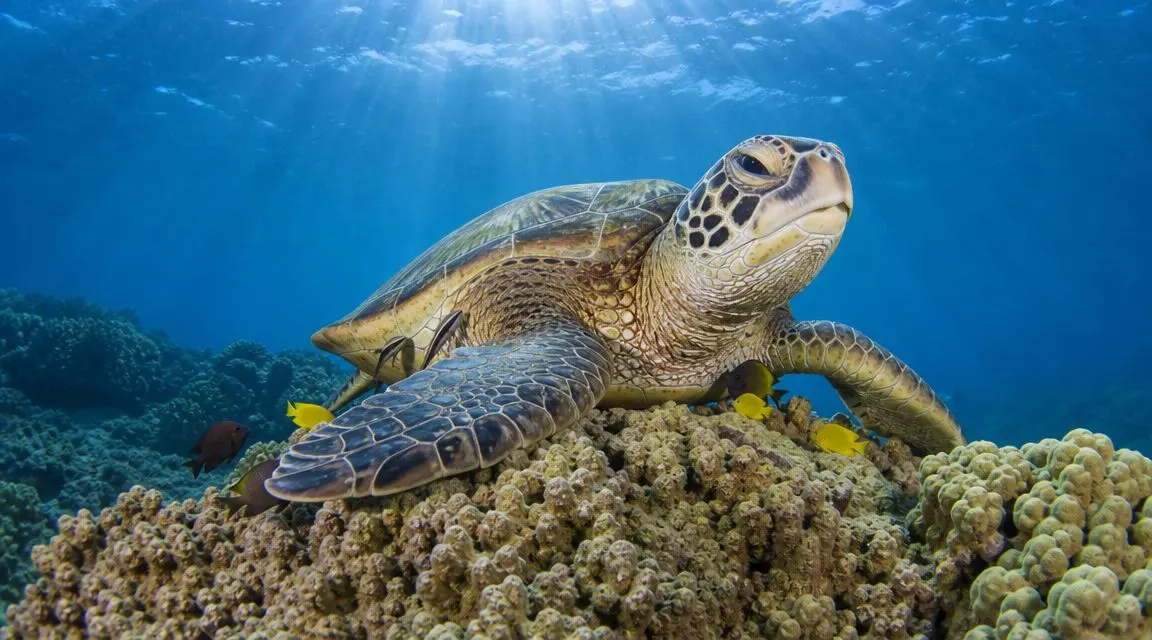
Turtle Canyon is famous for a reason, and it isn't luck. The reef functions as a turtle cleaning station, which is one of the main reasons turtles gather there so consistently.
Why the turtles keep returning
It's a reef-based service stop. Hawaiian green sea turtles, or honu, pause in the area while reef fish remove algae and parasites from their shells. That interaction is the draw. The animals aren't gathering because people show up. People show up because the turtles already use the reef this way.
Multiple tour operators describe Turtle Canyon as a high-probability encounter site, citing sighting success near 98% and a resident turtle population on the order of 20 to 50 individuals, as described in this Turtle Canyon cleaning-station explainer. If you want a second look at the local reef behavior, this Turtle Canyon Oahu guide gives more context on why the area gets so much attention.
Why that matters for snorkelers
This is the part many visitors miss. You're not entering a marine park show. You're entering an active wildlife habitat where the reef structure creates pause points and the turtle behavior creates consistency.
That has two practical effects.
- You're more likely to see natural behavior. Turtles may hover, rest, surface, or move slowly through the area instead of racing past like they might in open water.
- Your behavior matters more. A concentrated habitat is easier to disturb. One swimmer who kicks coral, dives at a turtle, or blocks its path can change the experience for everyone nearby.
Turtle Canyon works because the reef and the animals are doing what they've done for a long time. The job of a good snorkeler is not to interrupt that.
A lot of families find this reassuring. You don't need to be an expert freediver. You need to float calmly, listen to your guide, and let the site do what it naturally does.
When to Visit Turtle Canyon for the Best Experience
You booked a turtle snorkel, the boat leaves on time, and then the water feels choppy enough that one nervous swimmer in the group starts second-guessing the whole plan. That is usually a timing problem, not a Turtle Canyon problem.
Turtle Canyon can produce good trips in any month, but conditions are not equal for every visitor. For beginners, young kids, and anyone prone to seasickness, the better question is not "Can I go year-round?" It is "When is the ocean likely to feel easiest for my group?"
Summer compared with winter
South shore conditions are often calmer in the warmer part of the year. Winter can still bring good turtle trips, but it also brings more days with surge, wind, or boat motion that first-time snorkelers notice right away. Kona Honu Divers summarizes that general seasonal pattern in its Turtle Canyon season guide.
That trade-off matters more than people expect. Calm water usually means easier mask clearing, less fatigue at the surface, and a better first impression for kids or hesitant swimmers. Rougher days can still be worth it for confident guests, but they are less forgiving if someone in your group is already unsure in the ocean.
Here is the practical version:
| Season window | What usually works well | What can be harder |
|---|---|---|
| Calmer months | Easier surface conditions, more confidence for beginners, simpler family outings | Tours and beaches can be busier |
| Rougher months | Good trips still happen, especially with experienced crews and comfortable swimmers | More boat motion, more surface chop, more stress for nervous guests |
Morning or afternoon
Departure time changes the feel of the day, even when turtle activity is steady. Morning trips are usually the safer pick for families, first-timers, and anyone who wants to get in the water before the wind builds and before the group is tired from a full Waikiki day.
Afternoon departures can still be a solid choice. They work well for travelers who hate rushed mornings or need extra time to get kids fed and organized. The trade-off is simple. By midday, some guests are already sun-tired, dehydrated, or less patient in the water.
Before you lock in a date, check a Turtle Canyon tide and conditions guide so you are planning around the ocean, not just your hotel schedule.
How I'd choose for different travelers
For a family with young children, I would pick the calmer season and the earliest departure everyone can handle without stress.
For first-time snorkelers, I would leave room in the itinerary to choose the better weather day instead of forcing the trip into a tight schedule.
For strong swimmers, there is more flexibility, but calm days still make the whole experience better. You spend less energy managing conditions and more time watching turtles behave naturally.
Book for the least confident person in your group. That decision usually leads to the best day for everyone.
How to Snorkel with Turtles Responsibly
A good Turtle Canyon encounter is quiet. You slip in, settle your breathing, and let the reef come to you. The turtles are often relaxed because they use this area as a cleaning station, and your job is to keep it that way.
Legal and ethical guidelines
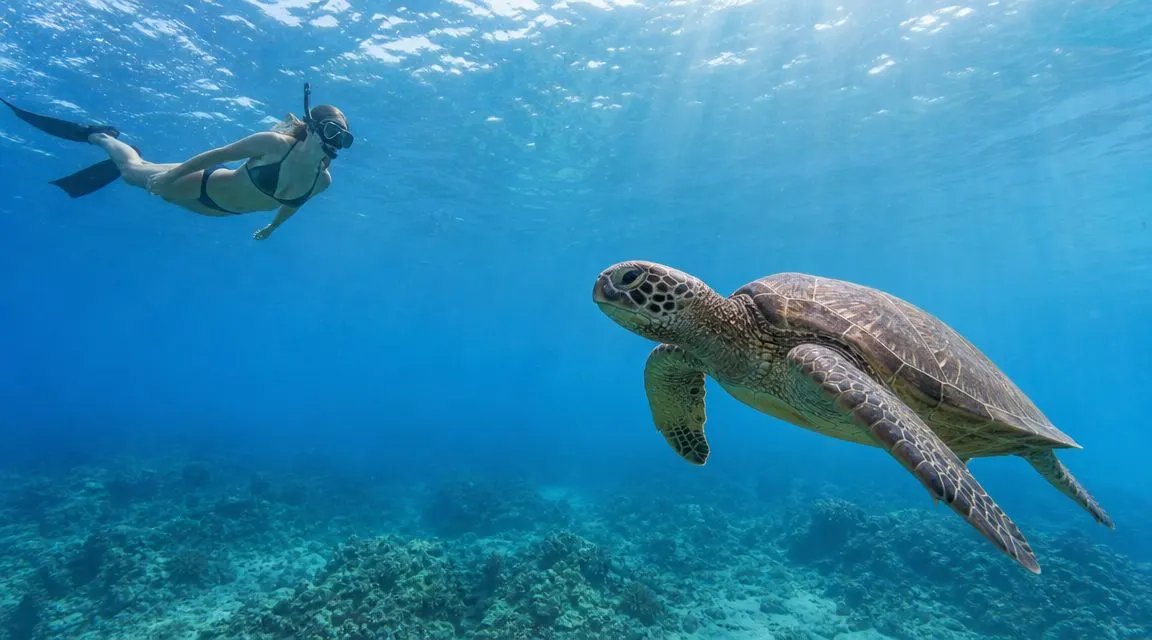
Hawaiian green sea turtles are protected under the Endangered Species Act. State and federal guidelines advise people to stay at least 10 feet away from turtles, and to never touch, chase, or feed them, as summarized in Go Tours Hawaii's Turtle Canyon rules page.
That standard is simple on paper and harder in the water, especially for first-time snorkelers who are focused on their mask, fins, and breathing. The safest approach is to stay calm, stay at the surface, and avoid any move that cuts off a turtle's path.
Use these habits every time:
- Keep your distance: If you need to swim closer for a photo, you are already too close.
- Give turtles the right of way: Never move ahead of one to stage an encounter.
- Kick lightly: Slow finning keeps you from drifting into the animal or the reef.
- Leave the bottom alone: Do not stand on coral, hold rock, or brace yourself on the reef.
For a more detailed Turtle Canyon etiquette guide, review the behavior standards before your tour.
If a turtle comes toward you
This happens often enough that crews should brief it clearly. Turtles surface, change direction, and travel through the same water column snorkelers are using. A turtle approaching does not mean it wants contact.
Do less, not more.
Stop strong kicking. Stay flat at the surface. If you need to create space, back off slowly and give the animal a clear lane to pass. Avoid diving down for a closer look. That is the mistake I see nervous guests and excited photographers make most often.
Small choices that protect the reef and the day
Responsible snorkeling starts before you enter the water. A poor mask fit, loose fins, or last-second sunscreen at the swim step can turn a calm stop into a scramble.
Check your gear before the boat reaches the site. Apply reef-conscious sunscreen early. Stay close enough to the guide that the crew can manage spacing in the water. Families should keep kids within easy speaking distance and use flotation if there is any doubt about stamina.
The trade-off is straightforward. Guests who slow down usually see more natural turtle behavior. Guests who rush, chase, or scatter the group spend more time recovering from effort and less time enjoying the reef.
The goal is not to get the closest look. The goal is to leave the turtles undisturbed and still come away with a memorable experience.
Choosing the Best Turtle Canyon Snorkel Tour
You can feel the difference before the boat even leaves the dock. One crew is fitting masks, checking who is nervous, and explaining how they handle turtles in the water. Another is just loading people fast and hoping everyone figures it out. For Turtle Canyon, that difference matters.
This reef is reached by boat, so the right tour is less about marketing and more about how the operation runs. Families, first-time snorkelers, and weak swimmers usually do better with a crew that keeps the pace calm, gives clear instruction, and treats wildlife rules as part of the experience, not an afterthought.
What matters more than marketing
Start with the basics of how the trip is managed. Good crews make boarding easy, explain entries and exits clearly, and help guests get comfortable with their gear before anyone is in open water.
Then look at how they run the snorkel itself.
- Beginner-friendly boat setup: Stable boarding, clear ladder help, and a crew that notices who may need extra time.
- Straight safety briefing: Guests should know where to enter, where to stay, and what to do if they get tired.
- Real snorkel support: Mask fitting, flotation options, and in-water guidance should be normal parts of the trip.
- Respect for turtles and reef: Guides should enforce spacing and discourage chasing, crowding, or diving down on animals.
- Manageable group flow: A well-organized group is easier to supervise and usually more enjoyable for kids and first-timers.
Smaller or more structured trips often work better for mixed-age groups. The trade-off is simple. A larger boat may offer more schedule options or onboard space, while a tighter operation often gives guests more attention in the water.
A practical way to compare operators
Ask how the crew handles common problems, not just ideal conditions. If a child panics at the ladder, a guest cannot clear a mask, or someone gets tired halfway through the snorkel, the crew should already have a routine for it.
If you want a side-by-side breakdown, this best Turtle Canyon snorkel tour guide covers the points that affect your day on the water.
Living Ocean Tours is one local operator that offers guided Turtle Canyon trips from the Honolulu side. What matters here is not a ranking claim. It is whether the crew explains the site well, supports beginners, and keeps the wildlife interaction respectful.
Choose the crew that explains the reef, the rules, and the water clearly. That usually tells you more than any photo gallery.
Questions worth asking before you book
A quick phone call can tell you a lot. Ask these before you commit:
- How do you help first-time snorkelers or non-swimmers once they are in the water?
- What flotation do you carry, and when do you recommend using it?
- How much of the trip is usually actual snorkel time?
- How do guides manage turtle spacing and guest behavior around wildlife?
- What happens if ocean conditions are rougher than expected?
Those answers usually reveal whether you are booking a boat ride with snorkeling added on, or a well-run turtle tour built around safety, comfort, and good ocean habits.
What to Expect on Your Turtle Snorkel Excursion
The easiest way to calm nerves is to know the flow of the day before you arrive.
From harbor check-in to the reef
Most trips start with check-in, a waiver, a quick gear setup, and a boat briefing. If you're organized, the whole morning feels easy. If you arrive rushed, sunburned, and trying to adjust masks at the last minute, everything feels harder than it needs to.
This Turtle Canyon snorkeling check-in guide helps with the practical side of arrival and boarding.
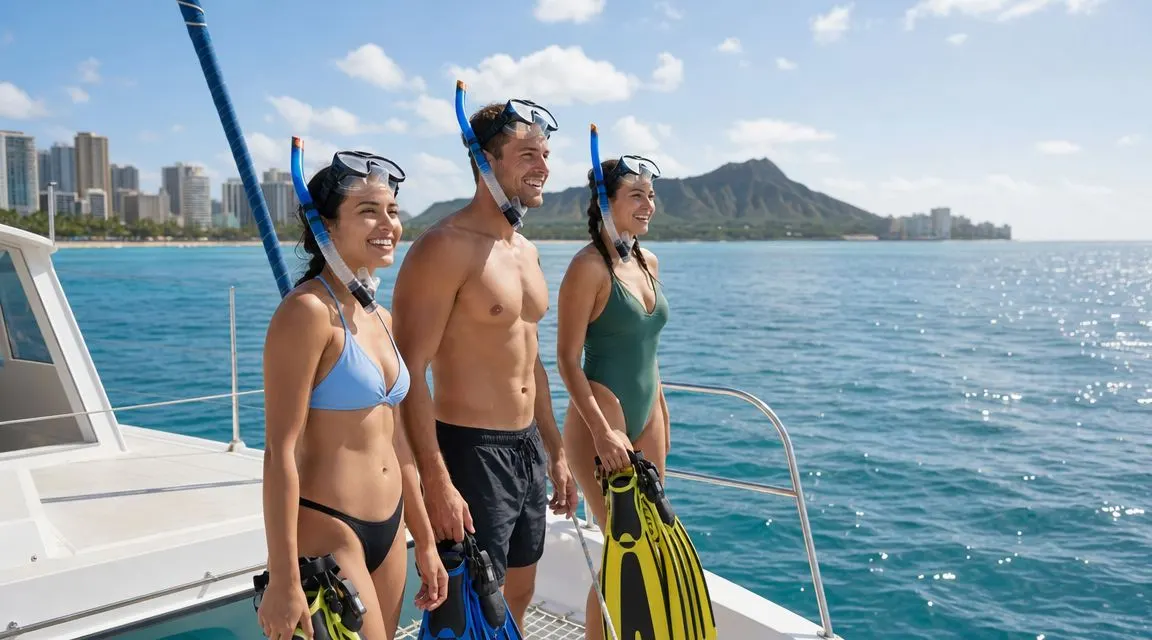
The ride out is part of the fun. You leave the harbor, the Waikiki shoreline opens up behind you, and Diamond Head starts to frame the route. For a lot of visitors, that short run offshore is when the vacation feeling finally clicks.
What the water feels like at the site
Turtle Canyon is a shallow offshore reef sitting about 2.5 miles from Waikiki at reported depths of 15 to 30 feet, according to Hawaii Dolphin's Turtle Canyon location guide. That offshore position is why boat access is the standard way to visit, and it's also why the site can feel more manageable for beginners once they're in the water. The topography helps reduce surface wave action compared with rougher nearshore surf zones.
That matters more than most first-timers realize. You're still in the ocean, but you're not usually dealing with the same kind of shore break, sand churn, and surf entry stress you get at some beach spots.
Here's the basic flow once you arrive:
- Gear check: Mask snug, snorkel set, fins ready, flotation if needed.
- Water entry: Crew explains how to get in and where to stay.
- Surface snorkeling: Most guests spend the session floating, scanning the reef below.
- Wildlife watching: Turtles are the headline, but expect reef fish and an active underwater scene.
A good trip doesn't feel rushed. It feels supervised, calm, and easy to follow.
Frequently Asked Questions About Turtle Canyon
Do I need to be a strong swimmer
No. Plenty of guests who do well here are casual swimmers, first-time snorkelers, or grandparents who want a guided ocean day instead of a hard swim.
The primary question is comfort, not speed. Guests should be able to stay calm in open water, listen to instructions, and use flotation if the crew provides it. If someone in your group gets anxious easily in the ocean, say that before the boat leaves. A good crew can usually suggest the right setup, and sometimes the right call is to stay aboard and enjoy the ride.
Are turtle sightings guaranteed
Wildlife is never guaranteed.
Turtle Canyon is one of the more consistent places near Waikiki for green sea turtle sightings, and tour operators report a very high success rate at this location, as mentioned earlier. Still, conditions change, turtles move, and respectful tours follow the animals rather than crowding them.
What should I bring
Bring less than you think.
- Swimwear: Wear it under your clothes to make boarding easier.
- Sun protection: Hat, towel, and reef-safe sun protection.
- After-snorkel clothes: A dry shirt or cover-up makes the ride back more comfortable.
- Personal items: Any medication you may need, especially motion sickness medication if you are sensitive on boats.
- Water: Bring it if the operator allows outside drinks.
Leave valuables behind if possible. Phones, jewelry, and bulky bags usually add hassle, not value.
Is it a good fit for kids and older family members
Often, yes, if the day's conditions are calm and the tour matches your group.
Boat access helps because it removes the beach entry, which is where many Hawaii snorkel trips get hard for kids and older adults. Even so, I always tell families to judge the trip by the least confident person in the group. If one person is uncomfortable on boats, uneasy in open water, or not able to follow basic snorkel instructions, that changes the experience for everyone.
For visitors who want a structured turtle snorkel from Honolulu, Living Ocean Tours offers Waikiki-side excursions with guided support. If your goal is a respectful, well-organized outing with sea turtles, their Turtle Canyons Snorkel Excursion is the direct option to ask about.


