
Turtle Canyon Oahu: How Green Turtles Control Buoyancy
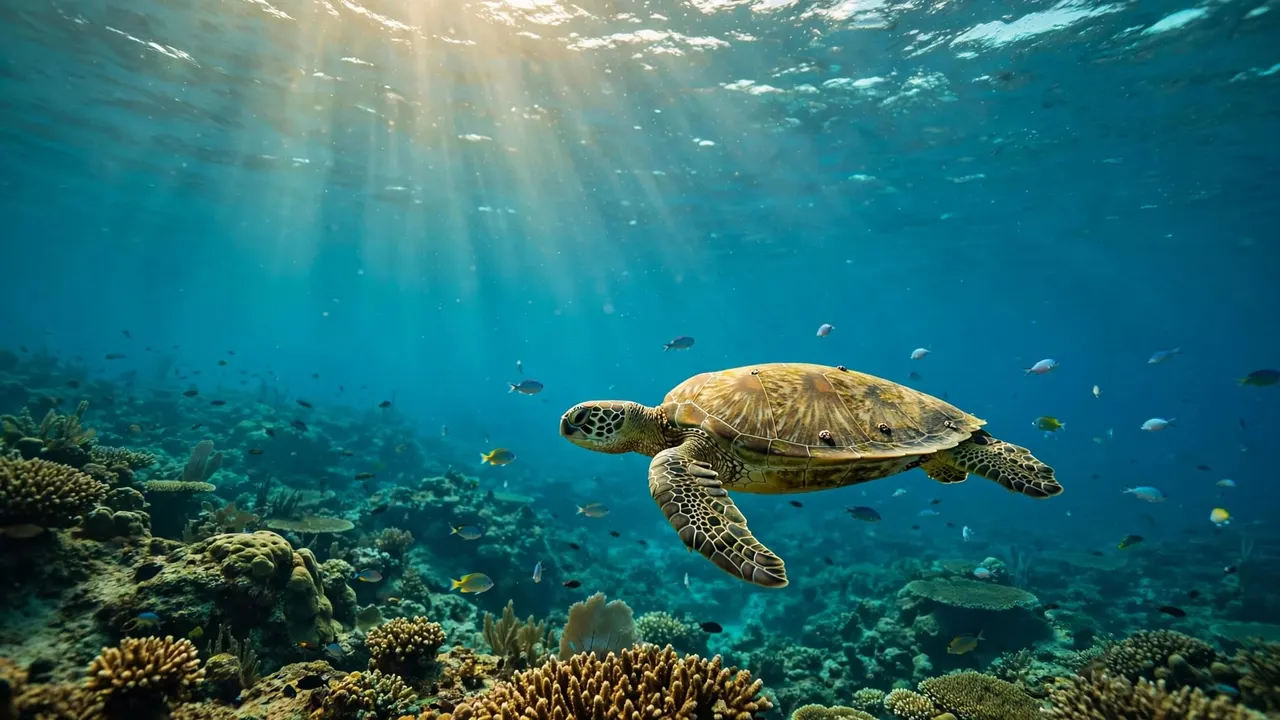
Green sea turtles control their buoyancy partly by adjusting the air in their lungs before a dive. At Turtle Canyon Oahu, you may see that ability in action as a honu glides over the reef or pauses below the surface.
On a Living Ocean Tours snorkel trip, you can watch these animals in their natural habitat with guidance from our professional snorkel guides. Understanding how turtles float, dive, and breathe makes those moments even more fascinating.
Why Turtle Canyon Oahu Attracts Green Turtles
Turtle Canyon is an offshore reef near Waikiki where Hawaiian green sea turtles, known as honu, visit a natural cleaning station. Small reef fish remove algae and other material from their shells and skin, while the turtles spend time near the reef.
You might see a turtle swimming toward the surface, moving over coral, or holding position near the bottom. Each behavior offers a different view of how a sea turtle moves through water.
Green turtles are reptiles that breathe air, so every underwater visit begins and ends at the surface. Their lungs store oxygen, but the air inside them also affects whether they rise or sink.
Our Turtle Canyons Snorkel Excursion takes you to this offshore habitat by boat. As you float above the reef, you can look for the subtle movements that help turtles control their position.
How Buoyancy Works Underwater
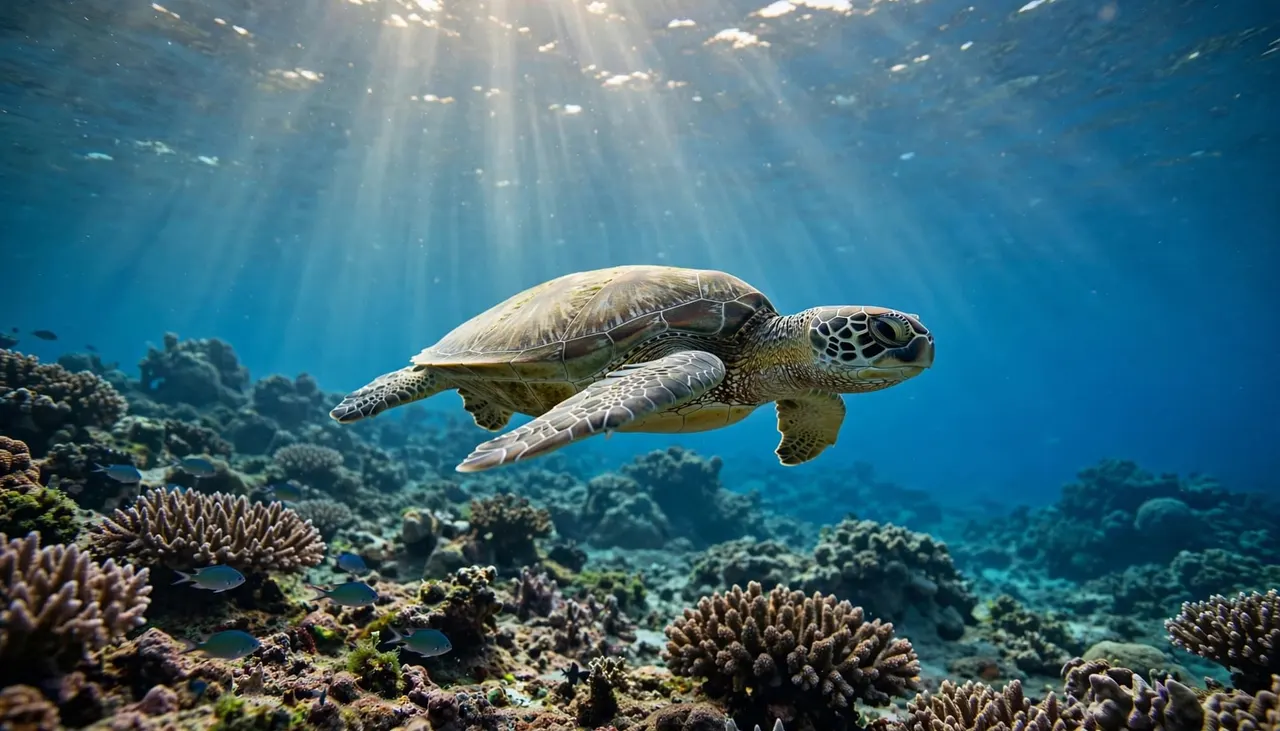
Buoyancy is the upward force that water exerts on an object. Whether a turtle rises, sinks, or stays at roughly the same depth depends on that force, the turtle’s weight, and any movement it makes.
Floating, sinking, and staying level
When upward buoyancy is stronger than weight, a turtle tends to rise. When weight is stronger, it tends to sink. At neutral buoyancy, the two forces balance, so the turtle can remain at a similar depth without continually swimming upward or downward.
That balance doesn’t mean the animal is motionless. Water movement and a stroke of its flippers can still change its position. At Turtle Canyon Oahu, you may notice a turtle making small adjustments while it moves above the reef.
Why air makes a difference
Air is less dense than water, so the air in a turtle’s lungs adds buoyancy. A turtle can influence its starting buoyancy by changing how much air it takes in before diving.
Its body also affects the balance. The shell, muscle, and other tissues all have their own densities. You can’t tell how buoyant a particular turtle is just by looking at its shell.
How a Turtle’s Lungs Affect Its Dive
A green turtle’s lungs have two jobs during a dive: they hold oxygen and influence buoyancy. That means the breath a turtle takes before going underwater affects both its air supply and its movement through the water.
More air helps near the surface
A larger volume of air generally makes a turtle more buoyant near the surface. That can help it float while breathing, but it can also make the beginning of a descent require more swimming effort.
Turtles don’t all take the same breath before every dive. Researchers studying sea turtle dives have examined how lung air relates to the depth and duration of a dive. The needs of a resting animal can differ from those of one swimming or foraging.
Pressure changes the balance
As a turtle descends, water pressure increases and compresses the gas in its lungs. The smaller volume of gas provides less buoyant lift, so the turtle’s balance changes with depth.
On the way up, decreasing pressure allows lung gas to expand. This can increase buoyancy as the turtle approaches the surface. Research on buoyancy regulation in diving sea turtles examines how animals adjust their dives around these changing forces.
What Flippers Add to Buoyancy Control
A turtle’s lungs affect its tendency to float or sink, while its flippers help it travel and adjust position. When you watch closely, you can see how swimming and buoyancy work together.
Swimming down and gliding up
Near the surface, a buoyant turtle may stroke its front flippers to move downward. Once it reaches a different depth, it may glide for a period rather than stroke continuously.
During an ascent, flipper strokes can help direct the turtle toward the surface. If the animal becomes more buoyant as it rises, that upward force can also affect its movement. The speed and path you see depend on the individual turtle and the conditions around it.
Holding position near the reef
A turtle near the bottom may swim gently, rest, or use the surrounding reef for support. You might also see an animal hover above coral while small fish move around it.
Avoid assuming that every pause has the same purpose. A turtle at the reef could be resting or visiting a cleaning station. From the surface, you can enjoy the behavior without needing to assign a reason to every movement.
What Turtle Dive Studies Tell You
Scientists have studied green turtle dives in places beyond Hawaii, giving you useful context for what you see offshore. Those results describe the animals and conditions in each study, rather than setting a rule for every turtle.
In one study near Ascension Island, researchers tracked six green turtles during an interval between nesting events. Their routine resting dives reached maximum depths of roughly 18 to 20 meters, or about 59 to 66 feet. The findings describe turtles at Ascension Island, not measurements from Turtle Canyon Oahu.
A separate 2014 study followed 11 free-ranging green turtles. On resting dives, the turtles maximized their time underwater and then took several breaths at the surface. Their breathing after other types of dives differed.
These observations show why a single dive doesn’t tell you everything about an animal’s habits. A turtle’s activity and the amount of air in its lungs can both affect what happens underwater.
Why Turtles Visit a Cleaning Station
At Turtle Canyon Oahu, the reef gives you a chance to observe a relationship between green turtles and smaller fish. At a cleaning station, fish pick material such as algae and small organisms from a turtle’s shell and skin.
The fish gain a source of food. Meanwhile, the turtle may stay near the reef while the fish move around it. You might notice a turtle hovering, resting, or making gentle flipper movements during a visit.
Cleaning stations are part of a larger reef habitat. As you watch for turtles, take time to notice the fish moving among coral and rock. Their activity adds another layer to the scene below you.
A turtle may pass through without stopping, and wildlife behavior changes throughout the day. Give each animal room to choose its own path rather than trying to approach for a closer view.
Watch Turtles Without Disturbing Them
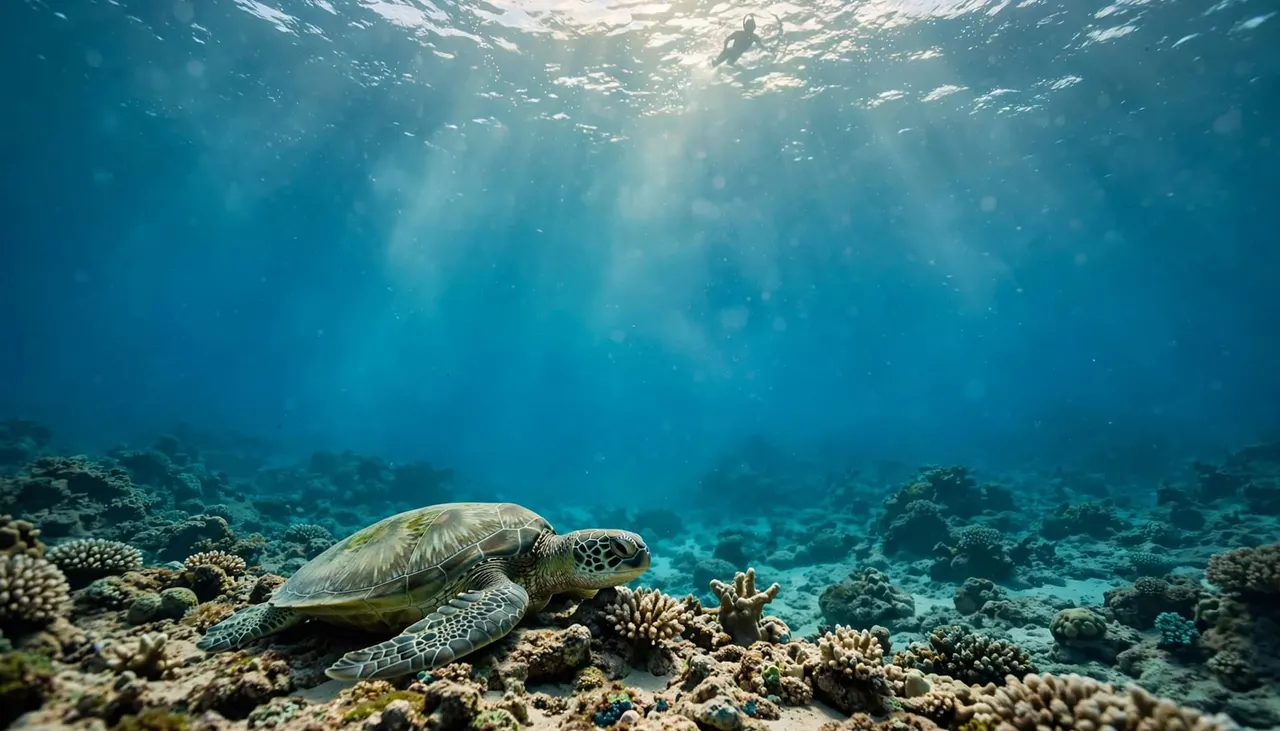
The best view is one that lets a turtle continue its natural behavior. Hawaiian green sea turtles are protected, so observe them without touching, chasing, feeding, or trying to ride them.
Keep at least 10 feet away and give an approaching turtle space to pass. If one begins to rise, move aside so it has a clear route to the surface. Turtles need air, even when they appear comfortable underwater.
You can also protect the reef by floating above it rather than standing on coral. Use flotation support if you need it, and follow your guide’s directions about where to swim.
Conservation continues after your snorkel trip. Turtle Canyon is an offshore reef, not a nesting beach. On nesting beaches, artificial lights can draw hatchlings away from the ocean and discourage nesting adults. Keeping beachfront lighting dark after sunset helps protect turtles at another stage of their lives.
Plan Your Guided Snorkel Trip
Our Turtle Canyon Oahu excursion departs from Kewalo Basin Boat Harbor, near Waikiki. The trip lasts about two hours and includes approximately one hour of snorkeling, along with equipment, flotation support, and professional in-water guidance.
If you’re new to snorkeling, our guides can help you get comfortable with your gear and understand how to observe wildlife respectfully. The excursion welcomes guests ages 3 and older and is designed for a range of experience levels.
We report an approximately 95% success rate for finding Hawaiian green sea turtles. They are wild animals, however, so no sighting is guaranteed.
You can CHECK AVAILABILITY for the Turtle Canyons Snorkel Excursion and choose a departure that fits your plans.
Frequently Asked Questions
How long can a green sea turtle stay underwater?
NOAA Fisheries says Hawaiian green sea turtles typically surface every 15 to 30 minutes to breathe. Adults can remain underwater for up to three hours while resting, but that upper figure doesn’t describe every dive.
Activity matters. A turtle that is resting may use oxygen differently than one that is actively swimming.
Do sea turtles breathe underwater?
No. Sea turtles have lungs and must return to the surface for air. When you see one rise at Turtle Canyon Oahu, give it plenty of space to breathe before it continues its journey.
The Smithsonian’s guide to sea turtles offers more background on how these reptiles live in the ocean.
Do turtles always float?
No. A turtle’s buoyancy changes with factors such as lung air and depth. It also uses its flippers to swim and adjust its position.
If you see a turtle resting below you, watch from a distance and let it surface on its own schedule.
Take a Closer Look at the Reef
A green turtle’s smooth glide is supported by a balance of lung air, water pressure, and movement. Knowing that makes each rise and descent more rewarding to watch.
On your Turtle Canyon Oahu trip, give honu the space they need and enjoy the view from above. Your patience lets you observe their natural behavior while helping protect the reef they visit.


