
Turtle Canyon Oahu: Can You Spot Honu From the Boat?
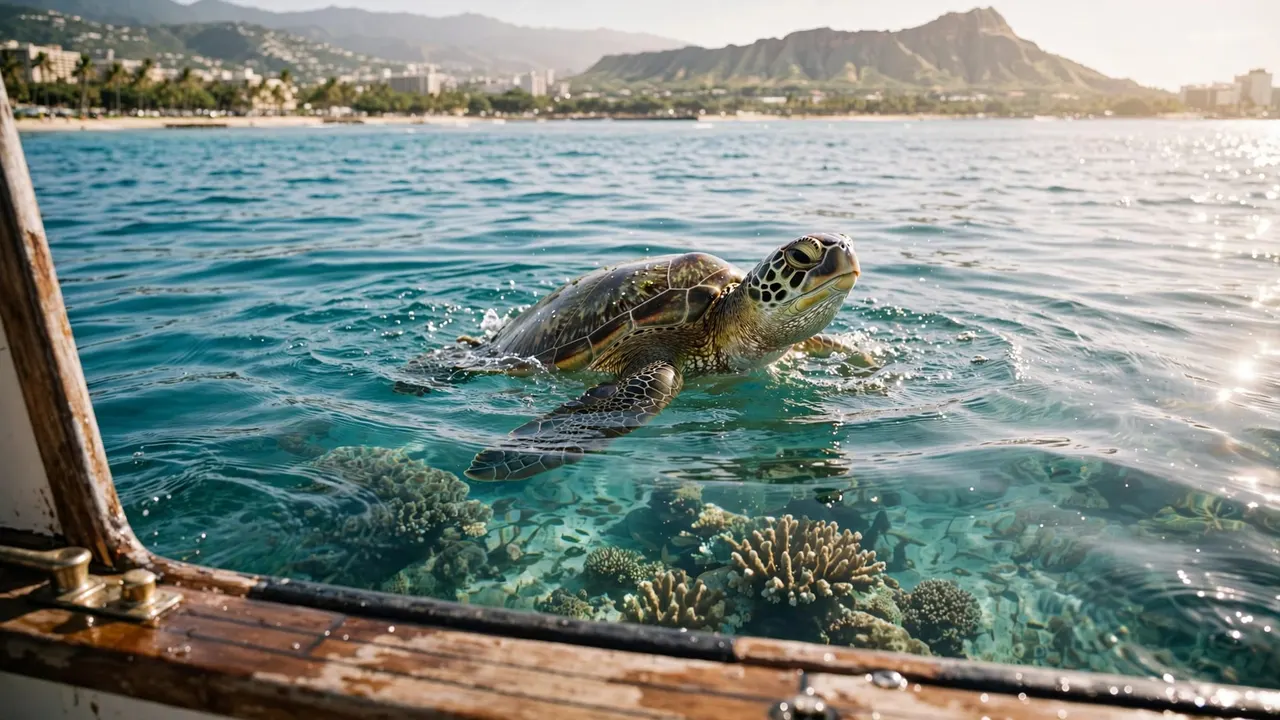
Yes, you may spot a Hawaiian green sea turtle surfacing at Turtle Canyon Oahu before you put on your snorkel mask. With Living Ocean Tours, you can watch the water on the way to the reef and keep looking as the boat settles at the site.
A boat sighting depends on where the turtles are and what you can see through the water. The best approach is to stay curious and enjoy the view above and below the surface.
What Makes Turtle Canyon Oahu a Place to See Honu?
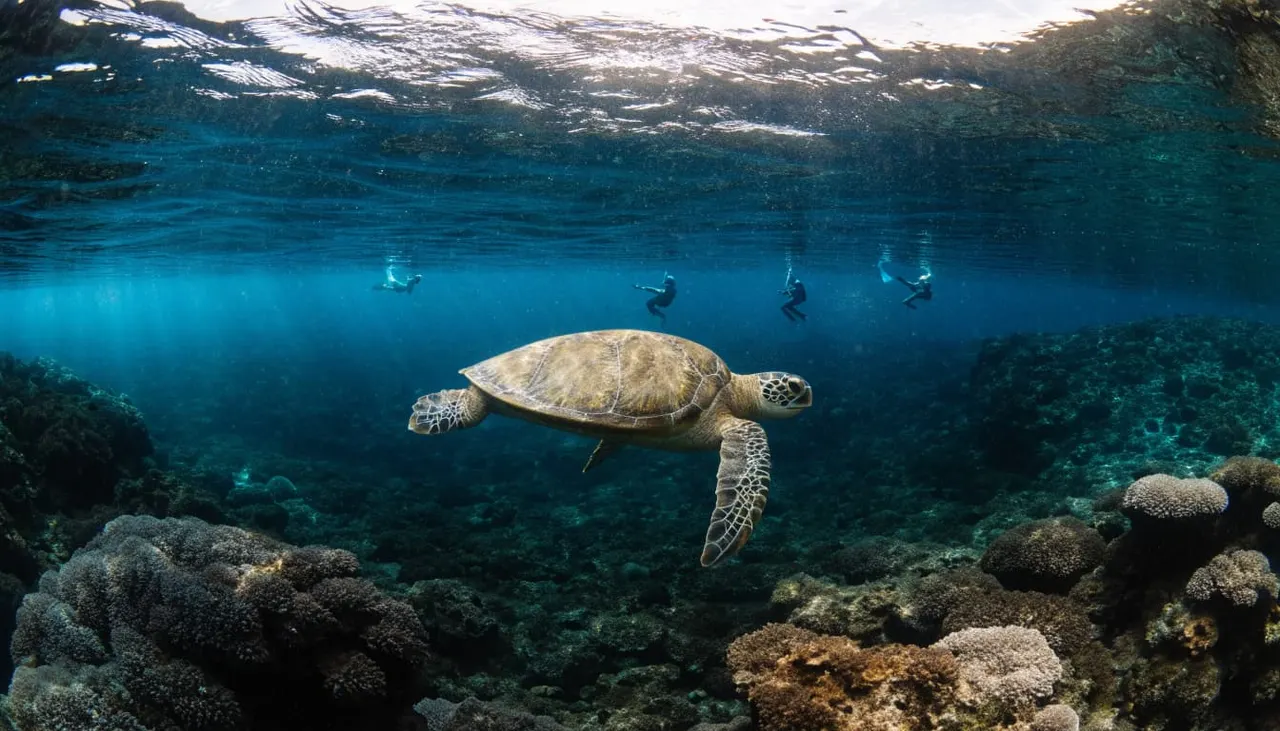
Turtle Canyon, also called Turtle Canyons, is an offshore reef area near Waikiki. Hawaiian green sea turtles, known as honu, visit the reef as part of their natural movements through Oahu’s coastal waters.
You may see a turtle crossing the reef, resting near a ledge, or rising to breathe. Small fish live around the reef, too, so there’s plenty to observe while you wait for a honu to appear.
The Reef’s Cleaning Stations
Turtle Canyon Oahu is known for natural cleaning stations. At these spots, smaller reef fish may pick algae and other material from a turtle’s shell and skin.
If you see a turtle hovering while fish move around it, give the animals room and watch for a while. The turtle may stay near the reef or swim away whenever it chooses.
Why Turtles Come Up for Air
Green sea turtles are reptiles that breathe air. After spending time underwater, a honu eventually needs to reach the surface, which gives you a chance to spot one without entering the ocean.
You might see only its head or part of its shell during that brief visit. The rest of the turtle can remain underwater, so a sighting from the boat can look different from the view through a snorkel mask.
What to Look for From the Boat
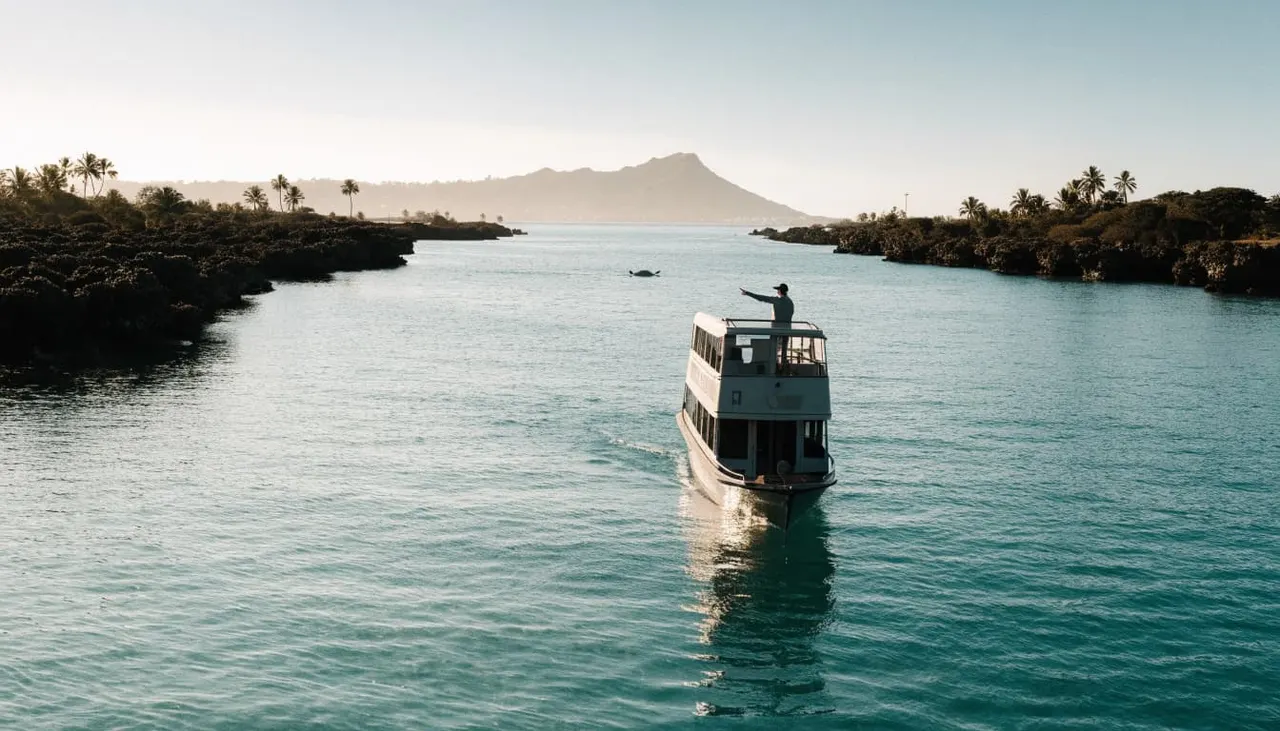
Illustration of a boat-based search for a turtle.
Start looking before you reach the snorkel site, then keep an eye on the water once you’re there. You don’t need special equipment to spot a turtle at the surface, although patience helps.
Watch for a Head or Shell
A surfacing honu may appear as a small, dark shape against the water. Look for a rounded head breaking the surface or a section of shell just beneath it.
Turtles can be easy to miss among reflections and moving water. Instead of scanning the entire ocean at once, pick a comfortable area to watch, then move your gaze across the water. If someone spots a turtle, use a fixed reference, such as a point on the shoreline, to help find it.
Look for Movement, Not Just Color
A patch of dark water isn’t always a turtle. Waves, shadows, and reef features can create shapes that look promising.
Watch a shape for a moment before deciding what you’ve found. A turtle may move in a consistent direction or briefly surface for air. If it disappears, keep watching nearby, but don’t assume it will come up in the same place again.
For a better view, stay seated or use a stable position on deck. Keep clear of the rail’s edge and follow the crew’s directions as the boat moves.
Why a Turtle Can Be Hard to See From Above
A turtle may be nearby even when you can’t pick it out from the deck. Surface conditions affect how much of the underwater reef you can see, and the animal’s own behavior matters just as much.
Sunlight and Surface Glare
Bright reflections can hide shapes beneath the water. Ripples and waves also break up your view, making a moving turtle harder to follow.
If glare is getting in the way, look across a different part of the water while staying in a safe spot. Polarized sunglasses may reduce some reflected light, though they won’t reveal every turtle below the surface.
Clear water can help, but you shouldn’t expect an unobstructed view of the reef throughout your outing. Visibility changes with ocean conditions.
Turtles Choose When to Surface
Honu spend much of their time underwater. A turtle resting near a ledge or moving across the reef may never come into your view from the boat.
That makes the moments before snorkeling part of the search, rather than a preview of every animal at the site. If you don’t see a turtle right away, you can still enjoy watching the coastline and the water around you.
When a honu does surface, resist the urge to keep it in sight at all costs. Watch from where you are and let it continue on its path.
What Changes Once You Put on a Mask?
At Turtle Canyon Oahu, snorkeling gives you a different perspective on the same habitat. Instead of looking through the surface from the deck, you can float and look down toward the reef.
You may notice fish moving around the rocks or see a turtle that was hidden from your view above. A mask also makes it easier to observe how a honu moves through the water, provided the turtle is within view and conditions allow.
Give Yourself Time to Settle In
If you’re new to snorkeling, start by getting comfortable with your mask and breathing through the snorkel. Ask your guide for help with the fit or flotation support if you need it.
Once you feel ready, look down and scan slowly. You don’t need to dive to enjoy the reef. Staying at the surface gives you time to watch and helps you keep track of the boat and other snorkelers.
Enjoy the Reef Between Sightings
A turtle encounter can be the highlight of your trip, but the reef has more to offer while you wait. Watch fish move around the reef and notice how the light changes over the rocks below.
The experience is different each time because you’re visiting wild habitat. A quiet stretch can be a chance to become comfortable in the water and take in what’s around you.
How to Watch Honu Without Disturbing Them
A respectful encounter gives you a better chance to see natural behavior. Hawaiian green sea turtles are protected, and your role is to observe without interfering.
Leave Space at the Surface and Underwater
Hawaii’s Department of Land and Natural Resources describes a recommended public viewing distance of at least 10 feet for sea turtles. You can follow that sea turtle viewing guidance whether you’re snorkeling or watching near the surface.
Don’t touch, chase, feed, or surround a turtle. If one approaches you, stay calm and give it room to pass. Avoid positioning yourself directly above a honu that may need to rise for air.
Let the Crew Handle the Boat
When you’re on deck, the crew is responsible for operating the vessel around wildlife. Stay alert to their instructions and keep your hands and belongings inside the boat.
If you’d like to understand more about the animal you’re hoping to see, NOAA’s green turtle profile covers the species and includes guidance for boaters.
In the water, remember that a cleaning station is the turtles’ habitat. Give fish and turtles space to carry on without being crowded.
Join Our Turtle Canyons Snorkel Excursion
Our Turtle Canyons Snorkel Excursion takes you to the reef with snorkeling equipment, flotation support, and professional guidance. Living Ocean Tours operates out of Kewalo Basin Boat Harbor, near Waikiki.
We’re the only tour company with professional snorkel guides. If you’re new to the water, you can ask our guides for help with your equipment and learn how to observe honu respectfully. Our boats also have shaded seating, restrooms, dry storage, and sturdy water-entry ladders.
You can CHECK AVAILABILITY for your Turtle Canyon snorkel adventure.
You can also browse our available ocean experiences:
See what guests have shared about their time on the water:
Getting Ready for Your Time on the Water
A little preparation helps you spend less time adjusting your gear and more time enjoying Turtle Canyon Oahu. Wear a swimsuit under comfortable clothes, and bring a towel for after your swim.
Plan for Sun and Spray
A hat and sunglasses make the boat ride more comfortable. You may also want a cover-up or sun-protective shirt for time on deck and in the water.
Keep valuables in a waterproof pouch or take advantage of onboard dry storage. Salt spray can reach items left out on deck, even when you’re not swimming.
Tell Your Guide What You Need
Let your guide know if it’s your first time snorkeling or if you’d like help feeling comfortable in the water. A flotation aid can make it easier to relax at the surface while you look down at the reef.
If you’re traveling with children, stay attentive to them on deck and in the water. Ocean conditions can change, so listen to the crew’s instructions throughout the outing.
Frequently Asked Questions
Can You See a Turtle Without Snorkeling?
Yes, a honu may surface where you can see it from the boat. You may also spot a shell beneath the water when conditions allow. Since the turtles move freely, a sighting from the deck is never certain.
Do You Need to Dive to See Honu?
No. You can look for turtles while floating at the surface with a mask and snorkel. Your view depends on where the animals are and how clearly you can see through the water.
Is Turtle Canyon Accessible From Waikiki Beach?
Turtle Canyon is offshore, so a boat trip is the practical way to visit. Our Turtle Canyons snorkeling excursion brings you to the reef from Kewalo Basin Boat Harbor.
Keep Watching Above and Below the Surface
You may see a honu take a breath before snorkeling, or your first glimpse may come through your mask. Either way, the turtle decides when and where to appear.
Give yourself time to enjoy the search and keep a respectful distance when you find one. Watching a wild turtle on its own terms is what makes the encounter special.


