
Turtle Canyon Oahu: Protecting Dark Nesting Beaches
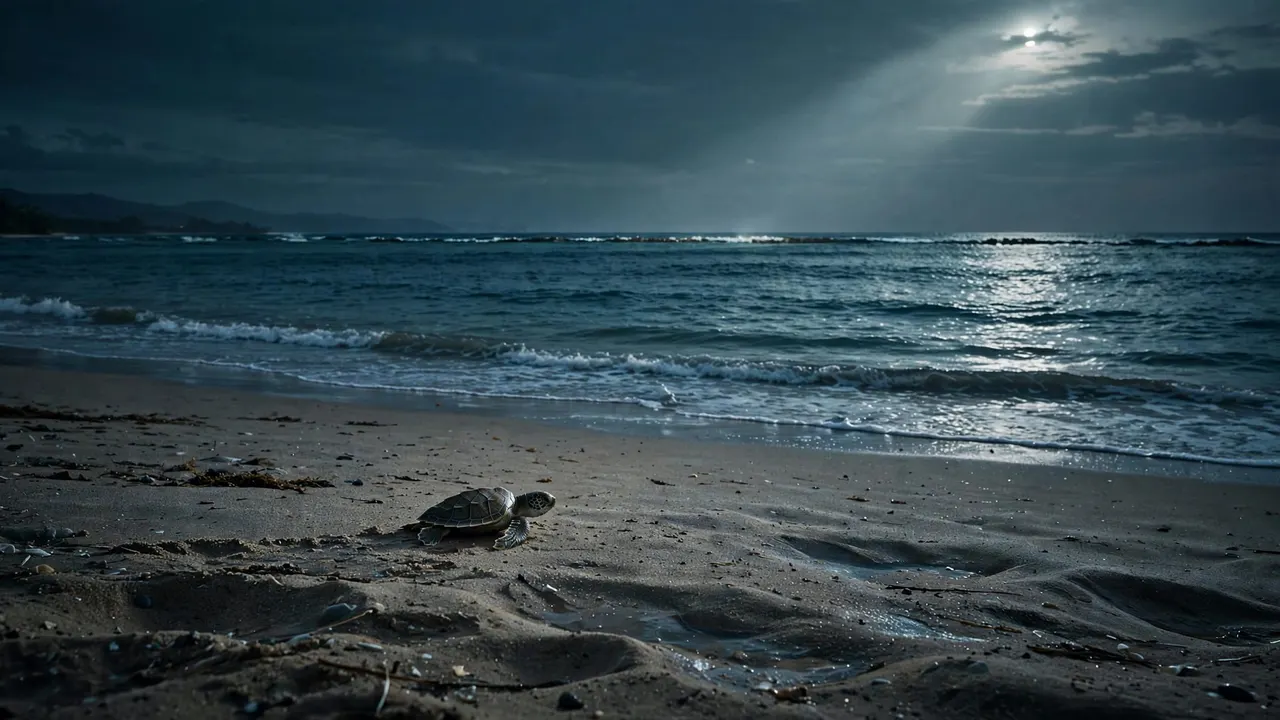
A Turtle Canyon Oahu snorkel trip with Living Ocean Tours gives you a chance to see Hawaiian green sea turtles in their ocean habitat. You can also help protect those turtles by keeping Oahu’s nesting beaches dark after sunset.
Artificial shoreline lights can draw hatchlings away from the water and discourage adult turtles from nesting. Understanding the difference between an offshore reef and a nesting beach is a good place to start.
What Turtle Canyon Oahu Visitors Should Know
Turtle Canyon is an offshore reef near Waikiki, not a nesting beach. Hawaiian green sea turtles, known as honu, visit the area to swim and spend time at a natural cleaning station, where small reef fish remove material from their shells.
On our Turtle Canyons Snorkel Excursion, you can observe this behavior from the water with guidance from our professional snorkel guides. Our snorkeling trips have about a 95% success rate for finding turtles, though wildlife sightings are never guaranteed.
Nesting happens on sand, where a female turtle can come ashore and lay her eggs. A turtle you see underwater may use different habitats throughout its life, so protecting beaches matters even when your own encounter happens offshore.
Our family-owned company departs from Kewalo Basin Boat Harbor in Honolulu. You don’t need previous snorkeling experience to join us. Our crew provides equipment help and instructions before you enter the water.
How Shoreline Lighting Changes a Nesting Beach
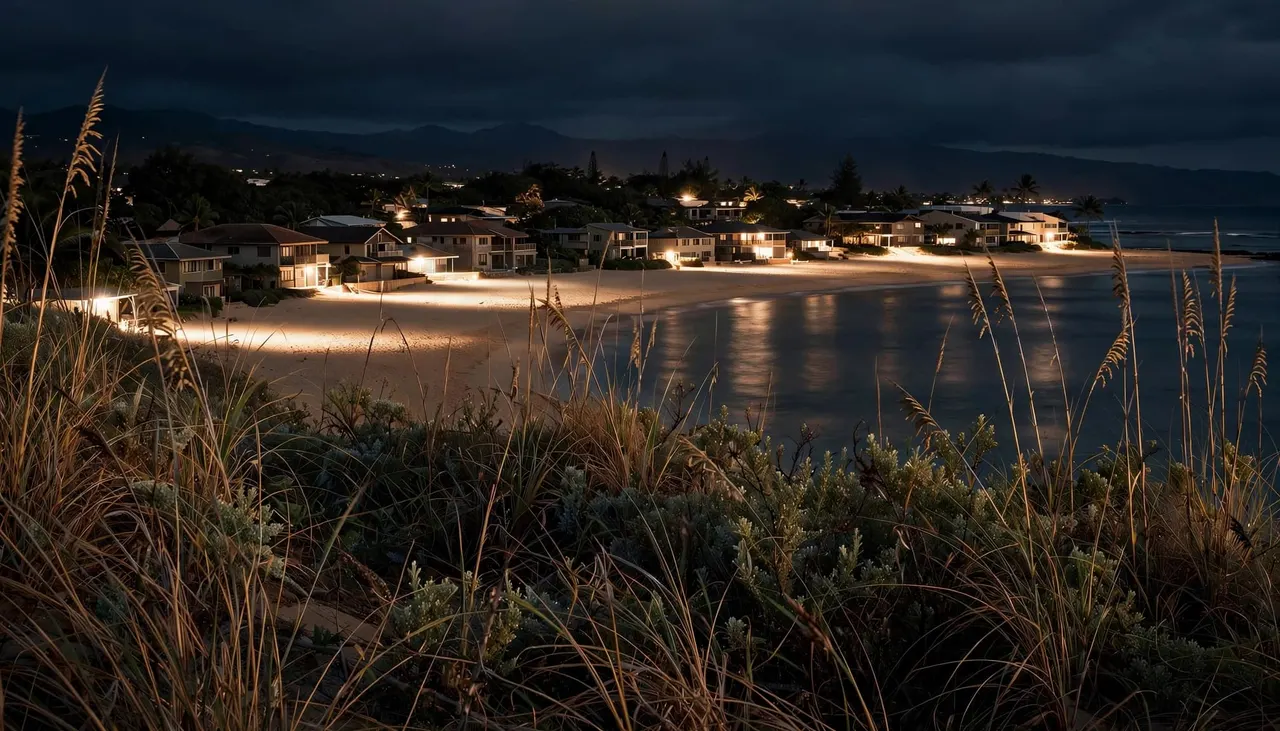
A nesting beach can look peaceful to you while still being too bright for turtles. Lights from buildings, parking areas, walkways, and beach equipment can reach the sand directly or brighten the sky above it.
Hatchlings Can Move Toward Artificial Light
On a naturally dark beach, hatchlings use visual cues, including the brighter open horizon over the ocean, to find their way to the water. An artificial light can compete with those cues and draw them inland or along the shore.
That detour exposes hatchlings to hazards before they reach the sea. They may become exhausted, encounter traffic, or remain on land until daylight. Even a light that seems modest from a hotel balcony can stand out against a dark beach.
Hawaii’s Department of Land and Natural Resources explains that beach-facing lights disorient hatchlings. For a hatchling crossing the sand, the direction of the light matters as much as its brightness.
Adult Turtles Need Dark Beaches, Too
A female turtle may abandon an attempt to come ashore or nest when a beach is disturbed. Artificial lighting is one of the conditions that can interfere with nesting, according to NOAA’s sea turtle lighting guidance.
You may never see that abandoned attempt. That’s one reason a beach can need protection even when it looks empty. Keeping unnecessary light away from the sand gives turtles a better chance to approach and leave without disturbance.
Where Oahu’s Turtles Nest
You don’t need to visit a nesting site to appreciate its importance. Hawaiian green turtles spend much of their lives in the ocean, but they need suitable sandy beaches to reproduce.
Most Hawaiian green turtle nesting takes place in the Northwestern Hawaiian Islands, particularly at French Frigate Shoals, also known as Lalo. Oahu’s beaches are part of that wider picture, though nesting here is less concentrated than at Lalo.
Papailoa Beach on Oahu’s North Shore is an important example. A Hawaii DLNR presentation identified it as the island’s most important nesting beach and reported 35 confirmed nests there in one season. Those nests accounted for 42% of the island’s confirmed nests for that tally.
A beach used for nesting isn’t necessarily a place to look for eggs or hatchlings. Disturbance can put turtles at risk, so give any marked area plenty of room. If you see a turtle resting on another beach, don’t assume it’s nesting. Honu also come ashore to bask.
When to Be Careful With Beach Lighting
The U.S. Fish and Wildlife Service describes Hawaii’s turtle nesting season as running from mid-April through September. Hawaii DLNR’s lighting guidance asks people to minimize coastal lights and beach fires during April through December.
Those windows describe different precautions. A nest laid during the nesting period doesn’t produce hatchlings immediately, so the need for a dark beach can continue after nesting activity begins to slow.
For your Turtle Canyon Oahu vacation, the simplest approach is to make dark-beach habits part of every coastal evening. You don’t have to know whether a particular stretch of sand contains a nest to avoid shining a light across it.
During the day, follow posted wildlife boundaries and keep clear of marked nesting areas. At night, leave those same areas undisturbed and resist the temptation to search for hatchlings with a flashlight.
Lighting Changes That Protect Dark Beaches
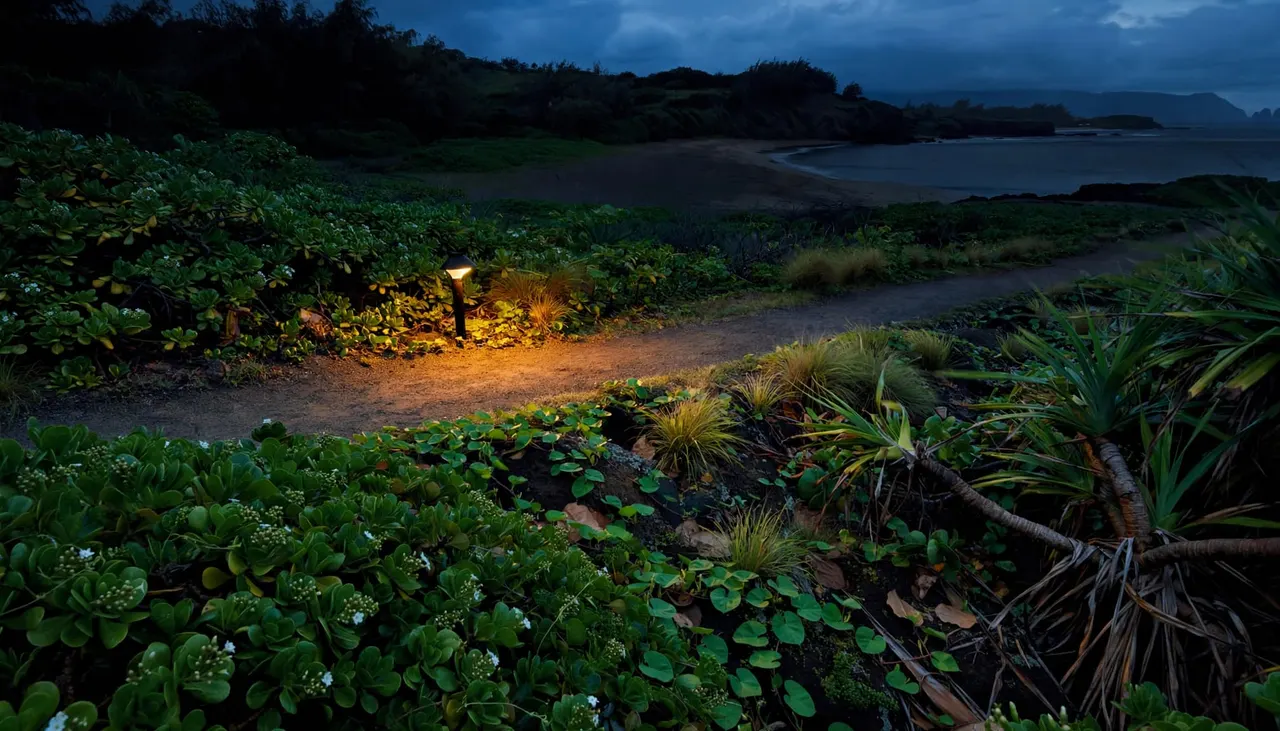
You can reduce light reaching the shore whether you’re staying in a beachfront room or managing a coastal property. The goal is to keep the beach dark while providing necessary light for people away from the sand.
Turn Off and Block Unneeded Light
Start with the lights you control. Switch off an unnecessary lanai light after dark, and close curtains or blinds when an illuminated room faces the beach. Avoid carrying bright lanterns onto the sand.
Camera flashes and phone flashlights can also disturb a dark shoreline. Leave them off around turtles and nesting areas. If you need light to move safely elsewhere, use only what you need and keep it pointed away from the beach.
Before an evening walk, choose an established route so you aren’t searching for a path across dark sand. A quieter walk also gives wildlife more space.
Shield Necessary Outdoor Fixtures
For a property near nesting habitat, fixture placement matters. A shield can direct light downward onto a walkway instead of allowing it to shine toward the beach. Lower-mounted fixtures and less intense lighting can also reduce spill.
Hawaii DLNR recommends minimizing white light near the coast and using shielded yellow or amber wildlife-friendly lighting where light is needed. However, bulb color alone doesn’t solve the problem. Even an amber light can reach the beach if it points in the wrong direction or is too bright.
NOAA’s sea turtle framework describes lighting installed so it isn’t visible from the beach. That principle gives you a practical goal: illuminate the area people need to use, while keeping the nesting sand dark.
What to Do If You See a Turtle at Night
A turtle encounter can feel exciting, but distance gives the animal room to continue its natural behavior. Stay back, keep your voice low, and never touch a turtle or shine a light at it.
If an adult turtle is moving between the ocean and the beach, leave its path open. Don’t gather around it for photographs, and don’t follow it up the sand. A nesting turtle may leave if people or lights disturb it.
For hatchlings, avoid handling them or trying to lead them with a flashlight. Keep people and pets away from their path. If hatchlings appear disoriented, are heading toward a road, or are in immediate danger, call the NOAA Marine Wildlife Hotline at 1-888-256-9840 for guidance.
A nest also needs space, even when no turtle is visible. Stay outside any barrier and follow posted instructions. Don’t move markers, dig in the sand, or place beach gear inside a protected area.
A Respectful Turtle Canyon Oahu Snorkel Trip
Your choices in the water matter as much as your choices on shore. At Turtle Canyon Oahu, watch turtles without touching, chasing, feeding, or blocking them. A turtle needs a clear route to the surface to breathe.
Give honu at least 10 feet of space on land and in the water, and follow any larger posted boundary. If a turtle swims toward you, stay calm and give it room to pass. Our guides can help you position yourself respectfully while you enjoy the encounter.
Our Turtle Canyons Snorkel Excursion starts at $79 and welcomes guests ages 3 and up. With equipment assistance and a crew briefing, families and first-time snorkelers can enjoy the reef while learning how to observe its wildlife.
You can CHECK AVAILABILITY for your Turtle Canyon Oahu snorkel trip.
Turtle Nesting and Lighting FAQs
Are Turtles Nesting at Turtle Canyon?
Turtle Canyon is an underwater reef, so it isn’t a nesting beach. You may see turtles swimming or visiting the cleaning station there, while nesting takes place on suitable sandy shores.
Can You Use a Red Light on the Beach?
Hawaii DLNR recommends a red-filtered flashlight when nighttime beach lighting is necessary. Keep any necessary light low and away from the shore, and turn it off around turtles and nesting areas. A red light isn’t permission to approach wildlife.
Does Every Beach Close During Nesting Season?
No island-wide closure follows automatically from the nesting season. Follow the posted boundaries and instructions at the beach you’re visiting. Those measures give turtles and protected nesting areas room without requiring you to guess where a nest might be.
Keep the Shore Dark for Honu
A Turtle Canyon Oahu encounter can show you a small part of a sea turtle’s life. Dark, undisturbed beaches give the next generation a better chance to reach the ocean.
After your snorkel, carry that respect onto shore. Switch off unnecessary lights, give wildlife room, and let the beach stay dark for turtles.


