
Turtle Canyon Oahu: How Researchers Estimate Turtle Populations
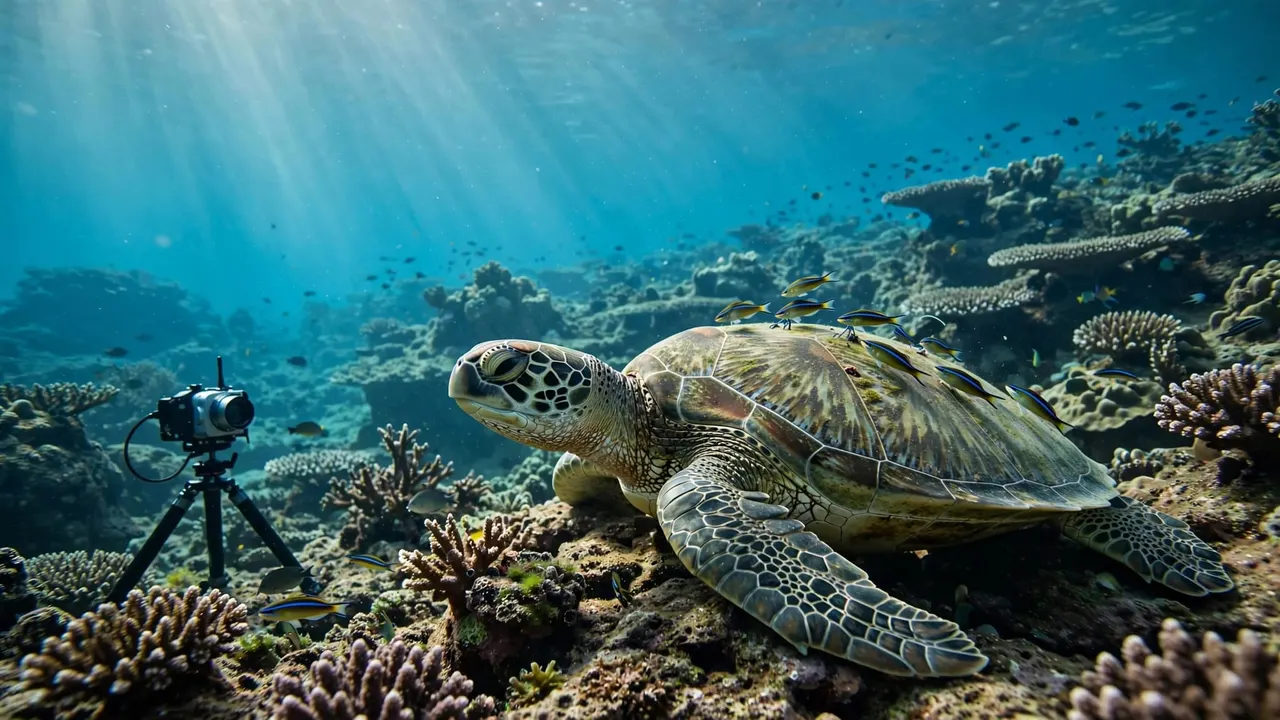
No verified population estimate for Turtle Canyon Oahu was identified in the available NOAA sources. You can see Hawaiian green sea turtles here, but a sighting on one snorkel trip can’t tell you how many use the reef over time.
At Living Ocean Tours, we take you to this offshore habitat with professional in-water snorkel guides. Knowing how researchers study turtles can make your own encounter even more rewarding, starting with the difference between a sighting and a population estimate.
What a Turtle Canyon Sighting Can Tell You
Turtle Canyon is a reef area off Waikiki where green sea turtles, known as honu, may visit natural cleaning stations. Small reef fish remove algae and other material from the turtles’ shells and skin.
Our Turtle Canyons Snorkel Excursion gives you time to watch this behavior from the water. You’ll receive snorkeling gear, flotation support, and guidance before and during your swim.
We report a turtle-sighting success rate of about 95% on our snorkeling trips. That figure describes the share of trips with a sighting, not the number of turtles at the reef. Wildlife encounters are never guaranteed.
You can read guest reviews below and CHECK AVAILABILITY for the turtle snorkel excursion.
Why Sightings at Turtle Canyon Oahu Aren’t a Census
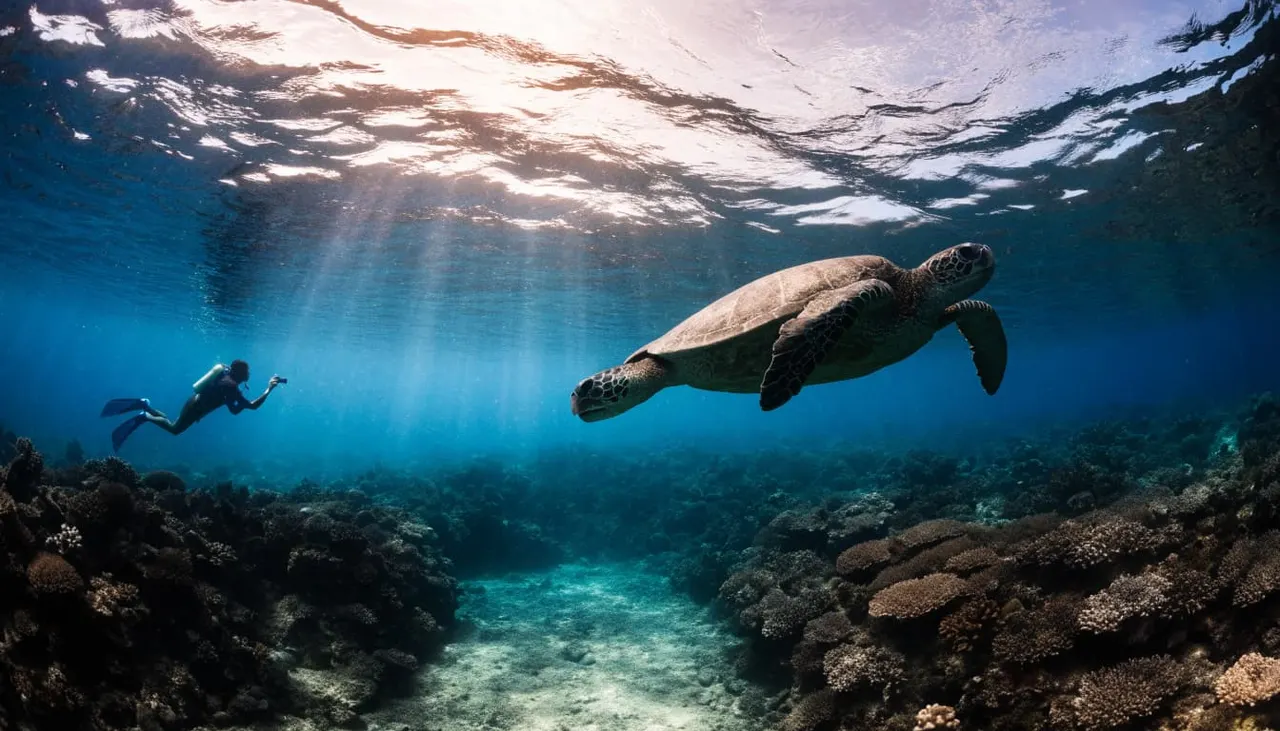
A turtle count starts with a question: How many animals are being counted, over what area, and during what period? The answer determines what a researcher can conclude.
A snapshot shows who’s visible
If you see several turtles during a swim, you’ve learned that those animals were visible at that time. You haven’t counted turtles elsewhere on the reef, below your view, or visiting later.
Even a careful observer can see the same animal more than once. A turtle might swim behind a reef feature, surface for air, and reappear in another part of the viewing area.
Reef use is different from residency
Turtles can move between feeding, resting, and cleaning areas. Repeated visits to Turtle Canyon may show that an animal uses the site, but they don’t establish that it stays there year-round.
A useful local study would define the reef area and survey period before estimating abundance. Without those boundaries, a number can sound more precise than it is.
How Researchers Survey Sea Turtles
Researchers use several approaches to study sea turtles, depending on the habitat and the question. These are general research methods, not claims that a particular study used them at Turtle Canyon Oahu.
Surveys in and above the water
Underwater observers can follow a planned route and record turtles they see along it. Boat and aerial surveys can also cover selected areas, although turtles below the surface may be harder to detect.
Researchers record survey effort, such as the distance covered and time spent looking. That context helps them compare observations collected on different days. A count without effort is difficult to interpret: more turtles may simply mean observers searched for longer.
Tags and tracking devices
Researchers may use flipper tags to recognize turtles encountered again. Satellite tracking can reveal movements between habitats, although the tracked animals are only a sample of a larger population.
NOAA’s marine turtle research plan, published in 1994, describes proposed work on turtle distribution and population characteristics. Studies since then have used different methods to answer different conservation questions.
How Mark-Recapture Estimates Work
Mark-recapture is one way to estimate a population when counting every animal is impractical. It relies on recognizing turtles across repeated encounters rather than adding every sighting together.
Record turtles, then look again
In a basic study, researchers capture and mark a sample of turtles, release them, and later sample the area again. They record how many turtles in the later sample already have marks.
The proportion of marked animals in that second sample helps researchers estimate how many turtles may be present overall. Repeated sampling can provide a stronger basis for an estimate than a single visit.
Test the assumptions behind the estimate
The calculation depends on the study design. For a simple model, researchers consider whether marks remain recognizable and whether marked animals have a similar chance of being encountered again as unmarked animals.
Movement also matters. If turtles enter or leave the study area between surveys, a model that assumes a closed population may produce a misleading result. More advanced models can account for some movement, but they still need enough observations and suitable data.
A tag sighting alone doesn’t produce a population estimate. The estimate comes from the pattern of encounters, the sampling effort, and the assumptions researchers can support.
Why Turtle Estimates Include Uncertainty
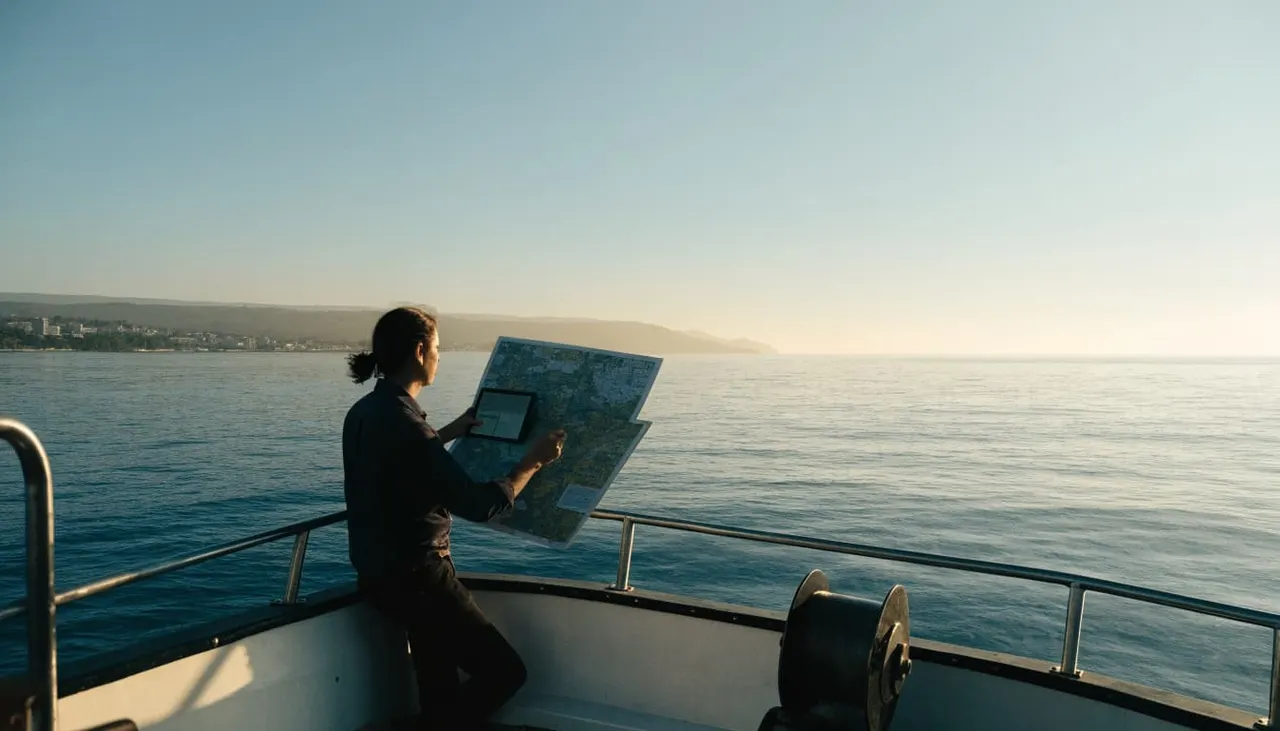
You might expect a population estimate to be one exact number. In practice, researchers often report a range that expresses uncertainty around their estimate.
Some turtles are easier to see
Visibility changes with water clarity, depth, light, and weather. Turtle behavior matters, too. An animal resting in view may be easier to record than one moving below an observer or beyond the survey route.
Researchers call this issue detectability. A low count can mean fewer turtles were present, but it can also mean fewer were seen. Comparing surveys helps when the team accounts for those differences.
Coverage and timing affect the answer
A survey that covers one part of a reef cannot automatically describe the entire area. Likewise, results collected during a short period may miss changes in turtle activity at other times.
When you read an estimate, look for its location and dates alongside the number. An estimate with a clearly defined area and uncertainty range tells you more than an unsupported claim about how many turtles “live” at a site.
What Hawaiian Research Says About Turtle Canyon Oahu
Hawaiian turtle studies offer conservation context, but their results belong to the places and populations researchers studied.
A NOAA-repository study of towed-diver surveys covered 53 Pacific islands, atolls, and reefs over 13 years. Across more than 7,300 linear kilometers, observers recorded more than 3,400 green and hawksbill turtles. Those observations describe a broad regional survey, not a census of Turtle Canyon.
Nesting research answers another question. One NOAA-repository demographic study analyzed records of 3,677 tagged nesting turtles collected between 1973 and 2010. A nesting-female dataset doesn’t include every male or juvenile turtle using Hawaiian waters.
The U.S. Fish and Wildlife Service reported 83 green turtle nests on Oahu in 2024. A nest count is not a count of individual turtles: one female can lay more than one nest in a season.
Hawaiian green turtles are part of the Central North Pacific population segment, which is listed as threatened under the federal green turtle listing rule. That designation covers a much wider population than the animals you might see on one reef.
How Researchers Recognize a Population Trend
A count can describe one survey. A trend requires comparable observations over time.
For example, researchers need to know whether survey routes, observer methods, and time spent searching stayed consistent. If those change, a difference between counts may reflect the survey rather than a change in turtle numbers.
Researchers can also combine data sources. Nesting records, in-water encounters, and tracking information each reveal a different part of a turtle’s life. An in-water survey may include animals that never appear in a nesting-female count, while a nesting beach record can help researchers follow breeding activity over many years.
A sea turtle research review discusses the need for population information that supports conservation decisions. For you as a snorkeler, the takeaway is straightforward: a long-term trend needs a dependable baseline and repeated measurements.
More turtles visible on one outing don’t, by themselves, prove that the population has grown.
Visit Turtle Canyon Oahu With Care
You don’t need to count turtles to enjoy watching them. Give each honu room to swim, rest, and reach the surface for air. Observe without touching, feeding, chasing, or blocking its path.
Stay at the surface and follow your guide’s instructions around the reef. Keeping your fins clear of coral helps protect the habitat that turtles and fish share.
If a turtle approaches you, remain calm and give it space to continue. You may also notice reef fish moving around a turtle at a cleaning station. A patient view lets you watch that behavior without interrupting it.
If an animal appears injured or entangled, tell your guide. Don’t touch it or try to remove fishing line yourself.
Frequently Asked Questions About Turtle Canyon Oahu
Is there an official count of turtles at Turtle Canyon?
No verified, site-specific population estimate was identified in the available NOAA sources. A count from a snorkel trip describes that outing, not every turtle that uses the reef.
Do the same turtles return to the reef?
Turtles can revisit areas they use, but a repeat sighting requires reliable individual identification. Seeing turtles on several trips doesn’t establish how many distinct animals returned or how long they stayed.
Does a high sighting rate mean a large population?
A high sighting rate means guests often encounter at least one turtle. It doesn’t reveal the number of distinct turtles using the area. The same animals could be seen on multiple trips.
Can beginners watch turtles without disturbing them?
Yes. With instruction, flotation support, and in-water guidance, you can focus on breathing comfortably and observing from a respectful distance. Let your guide know if you need help with your equipment or feel uneasy in the water.
A Better Way to Appreciate Each Sighting
At Turtle Canyon Oahu, a turtle encounter is a glimpse of an animal using one part of a much larger ocean habitat. A reliable population estimate takes repeated observations and a defined study area.
As you watch, give the honu space and enjoy what you can see. Patient observation protects the moment for you and leaves the turtle free to continue its day.


