
Turtle Canyon Oahu: How Green Turtles Find Food
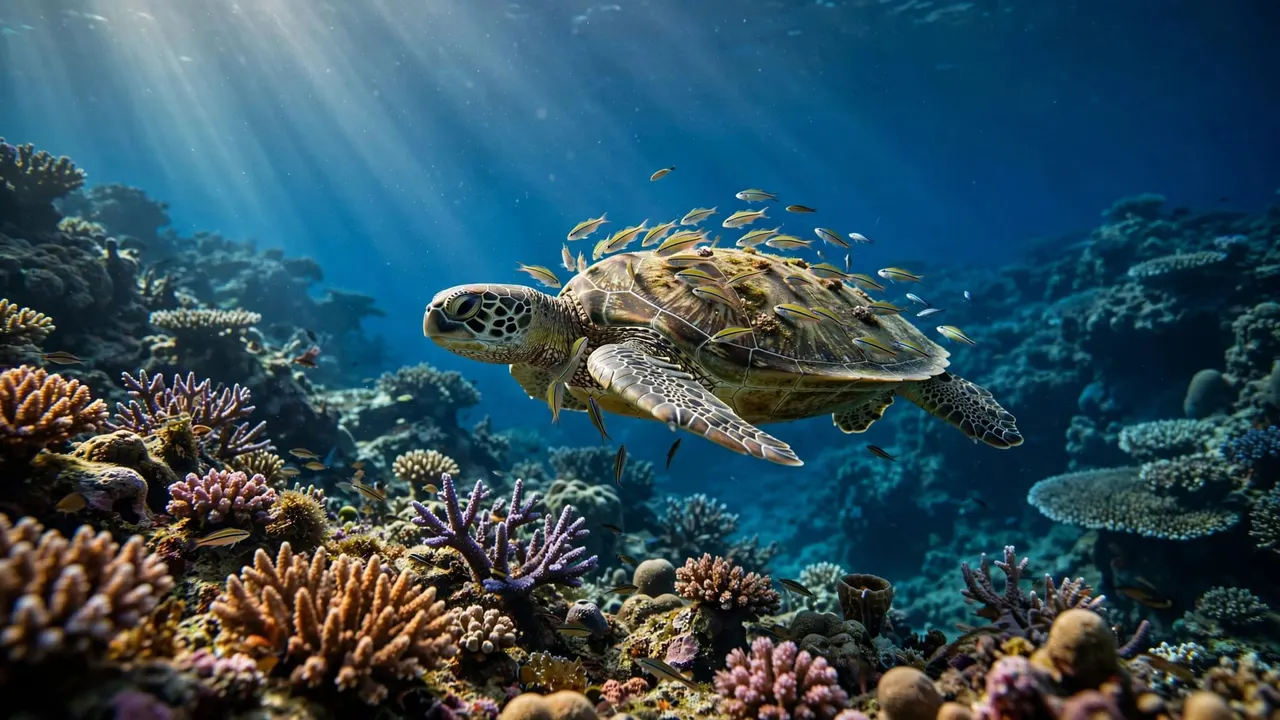
Green turtles choose foraging grounds where they can find food and suitable habitat. On our Turtle Canyon Oahu excursion, you can see another part of their routine: visiting a reef where small fish clean their shells and skin.
Living Ocean Tours brings you to this offshore Waikiki site with professional snorkel guides. As you watch the turtles, understanding the difference between feeding and cleaning makes the encounter more rewarding.
Why turtles visit Turtle Canyon Oahu
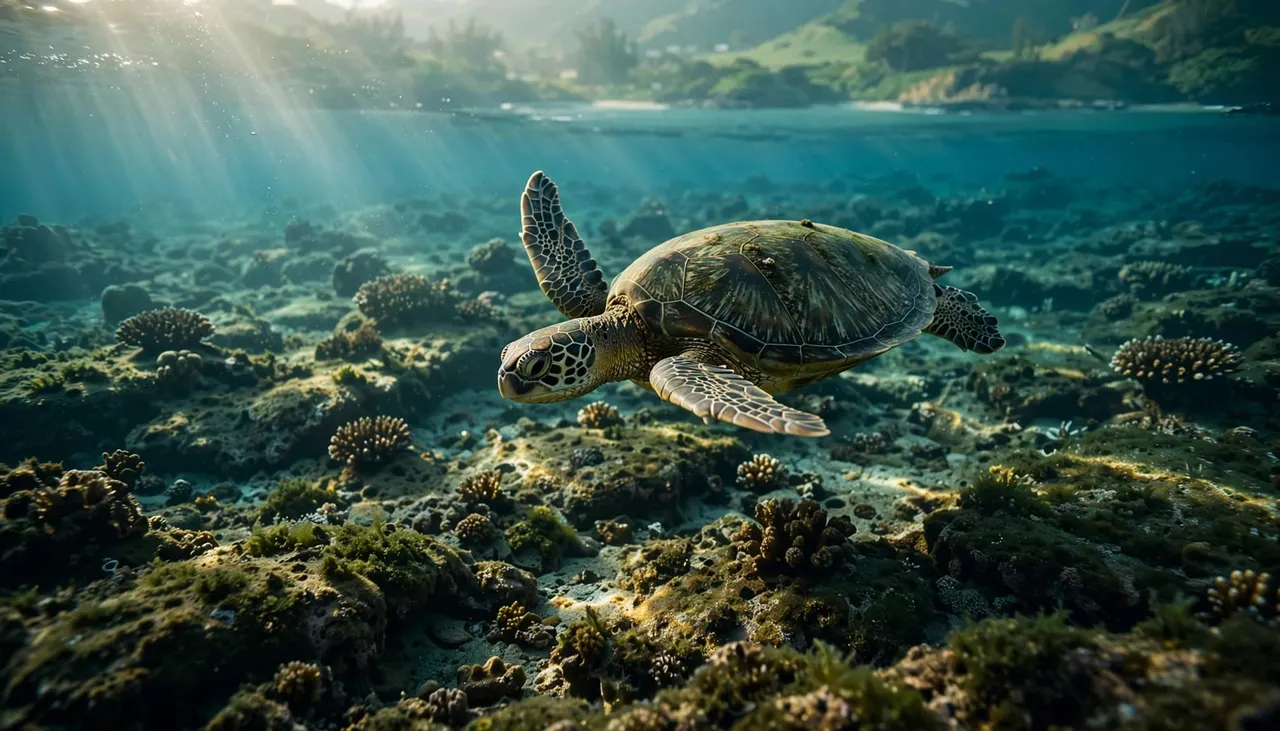
Turtle Canyon is an offshore reef near Waikiki known for its turtle cleaning station. Hawaiian green sea turtles, called honu, visit the area, where small reef fish can pick algae and other material from their shells and skin.
If you see a turtle hovering near fish, you may be watching a cleaning interaction. The fish get food, while the turtle receives help removing material that has collected on its body.
That behavior is different from grazing. A turtle at a cleaning station isn’t necessarily eating there, and a sighting doesn’t tell you where it found its last meal. Green turtles use coastal habitats for different activities, including resting and moving between locations.
Our turtle snorkeling trips give you a chance to observe the cleaning station from the water. Each visit is different, so you might see a turtle pause near the reef, swim through the area, or rise to breathe.
What green turtles eat
A turtle’s diet helps explain what it needs from a foraging area. As green turtles grow, they shift toward a diet made up largely of marine plants and algae.
Algae and seagrass
According to NOAA’s green turtle profile, green turtles primarily eat algae and seagrasses. They can also eat invertebrates, and their diets change as they grow.
Algae includes a wide range of marine organisms, from small growths on hard surfaces to larger seaweeds. Seagrasses are flowering plants that grow underwater. Both can provide food, but their availability differs among coastal habitats.
For a snorkeler, the distinction matters because a turtle’s feeding area won’t necessarily look like the cleaning station you visit. In one region, a turtle may graze where seagrass grows. Elsewhere, algae may provide much of its diet.
Food choices vary by location
A global review of green turtle diets found that algae can supplement or dominate their diet where seagrass is scarce or absent. That finding helps explain why green turtles can use different coastal habitats.
It doesn’t establish which foods a turtle at Turtle Canyon has eaten. To identify its diet, researchers need evidence about that animal and the places where it feeds. Watching the turtle at a cleaning station gives you a view of its behavior, but not its full feeding history.
How turtles find suitable foraging habitat
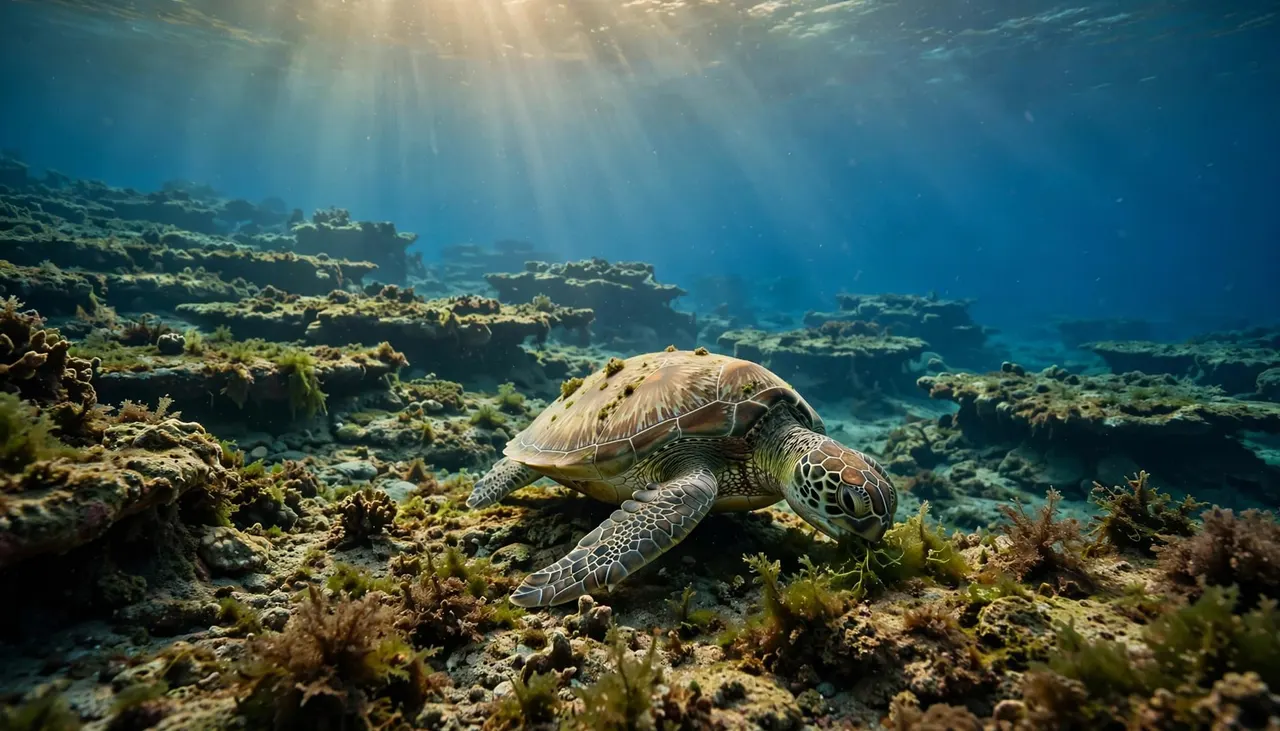
Green turtles need more than a patch of food. A useful feeding area also has to fit the animal’s size, movements, and need to reach the surface for air.
Accessible food matters
A turtle searching for food benefits from an area where it can reach enough suitable vegetation. Different sites contain different species and amounts of algae or seagrass, so the food available to one turtle may differ from what’s available to another.
The Federal Register’s discussion of green turtle foraging describes differences in feeding preferences among sites. Rather than assuming every green turtle eats the same menu, you can picture its diet as connected to the habitat it uses.
A feeding ground also needs to remain usable over time. Changes to water quality or coastal habitat can affect the vegetation turtles depend on. The amount of food in one place isn’t fixed forever.
Turtles must surface to breathe
Even while feeding underwater, a green turtle must return to the surface for air. It also needs room to move between the surface and the habitat below.
As you snorkel, keep that vertical journey in mind. A turtle that appears settled on the reef may soon rise toward you. Staying back gives it an open route and gives you a better chance to watch the full movement without interrupting it.
How turtles use more than one place
A cleaning station is one stop in a turtle’s life, rather than proof that all its needs are met at that exact spot. Green turtles can move among areas used for feeding, resting, and other activities.
Familiar places can matter
Some green turtles return to areas they have used before. A familiar coastal area may offer a combination of resources that makes it useful over time, although individual movements and patterns vary.
That doesn’t mean you can predict where a particular turtle will go after it leaves Turtle Canyon Oahu. From the surface, you see one part of its day. Research tools and observations over longer periods are needed to understand its wider movements.
You also can’t tell whether two turtles traveling through the same area have a lasting relationship. They may simply be using the same part of the reef.
A reef visit doesn’t reveal a turtle’s origin
Green turtles nest on land, while your encounter at Turtle Canyon takes place offshore. Seeing a turtle at a cleaning station doesn’t tell you which beach it came from or where it will nest.
That separation makes the encounter more interesting. The animal below you has a life beyond the few minutes you spend together. Give it room to continue that life on its own terms.
What to watch for during your snorkel
At Turtle Canyon Oahu, a little patience helps you notice behavior that is easy to miss when you’re focused only on counting turtles. Start by floating calmly and looking across the reef rather than swimming straight toward an animal.
A turtle may move slowly above the bottom, pause near fish, or head upward for air. Watch the fish as well as the turtle. If small fish gather around its shell or skin, you may be seeing a cleaning interaction.
If the turtle lowers its head toward a surface elsewhere, that movement alone doesn’t prove what it’s eating. Water, distance, and viewing angle can make details hard to see. Enjoy the observation without needing to identify every action.
Your guide can help you recognize what you’re seeing and point out a good viewing position. For children, choosing one detail to watch, such as the turtle’s flippers or the fish nearby, can make the experience easier to follow.
Give green turtles space to behave naturally
A respectful encounter begins before you enter the water. Listen to the crew’s briefing, get comfortable with your equipment, and tell a guide if you need help. You don’t have to be an experienced snorkeler to enjoy watching the reef.
Observe without touching
Hawaiian green sea turtles are protected wildlife. Keep your distance and don’t touch, chase, feed, or surround them. You should also leave coral and other reef life untouched.
Give a turtle a clear path in every direction, including toward the surface. If one approaches you, stay calm and allow it to pass. Back away when needed rather than trying to hold your position for a photograph.
For a useful reference, NOAA recommends staying at least 10 feet away from sea turtles. More space is appropriate if your presence changes an animal’s behavior.
Float carefully around the reef
Keep your fins away from the bottom and avoid standing on coral. Flotation can help you remain at the surface while you watch, especially if you’re getting used to a mask and snorkel.
If you feel tired or uncomfortable, signal your guide or return to the boat. Taking a break gives you time to adjust your gear and settle your breathing before deciding whether to go back in.
Explore Turtle Canyon Oahu with our guides
Our Turtle Canyons Snorkel Excursion departs from Kewalo Basin Boat Harbor, near Waikiki. The two-hour trip includes approximately one hour of snorkeling, with masks, fins, snorkels, and flotation support provided. The excursion starts at $79 per person.
Our professional snorkel guides join you in the water. They can help you feel comfortable with your gear and show you how to observe turtles without crowding them. That support is helpful for first-time snorkelers and families, as well as swimmers who want to learn more about the reef.
We report a turtle-sighting success rate of about 95% on our snorkeling trips. Turtles are wild animals, though, so their movements and behavior vary. You may see cleaning, swimming, or surfacing rather than feeding.
You can CHECK AVAILABILITY for a Turtle Canyon snorkel trip.
You can also browse our departure options for a day on the water with Living Ocean Tours.
Healthy habitats support turtle feeding grounds
The food a green turtle finds depends on the condition of its coastal habitat. Marine vegetation needs suitable conditions to grow, and changes to the water or shoreline can affect the places turtles use.
You can help protect the reef during your visit by keeping your gear and fins clear of the bottom. Bring reusable items aboard when practical, and keep belongings secure so they don’t enter the ocean.
Responsible viewing matters beyond a single photograph. When you give wildlife space and leave the reef undisturbed, you help protect the habitat that marine animals use long after your boat returns to harbor.
Take a closer look at turtle behavior
A visit to Turtle Canyon Oahu gives you a view of green turtles at a cleaning station. Their feeding choices involve a wider set of habitats, shaped in part by the food available in each place.
Watch patiently, leave room for turtles to surface, and let your guide help you understand what you see. A respectful encounter gives you a clearer view of the animals’ natural behavior.


