
Turtle Canyon Oahu: Green Turtles and Reef Predators

At Turtle Canyon Oahu, a green turtle’s hard shell offers protection, but you can’t tell from a snorkel mask whether a turtle is avoiding a predator. Living Ocean Tours brings you to this offshore Waikiki reef with professional snorkel guides in the water, so you can watch honu, or Hawaiian green sea turtles, with care.
A turtle may be resting, moving toward the surface, or visiting reef fish. Knowing the difference between what you can see and what you can’t makes the encounter more rewarding.
Key Takeaways for Watching Honu
- Green turtles face different predators at different stages of life. In Hawaiian waters, tiger sharks can prey on larger sea turtles.
- A turtle’s shell offers protection, but its head and flippers remain exposed.
- Turtle Canyon Oahu is known for natural cleaning stations, where reef fish may remove material from turtles’ shells and skin.
- Keep at least 10 feet away, leave turtles a clear route to the surface, and never touch or chase them.
Why Turtle Canyon Oahu Attracts Green Turtles
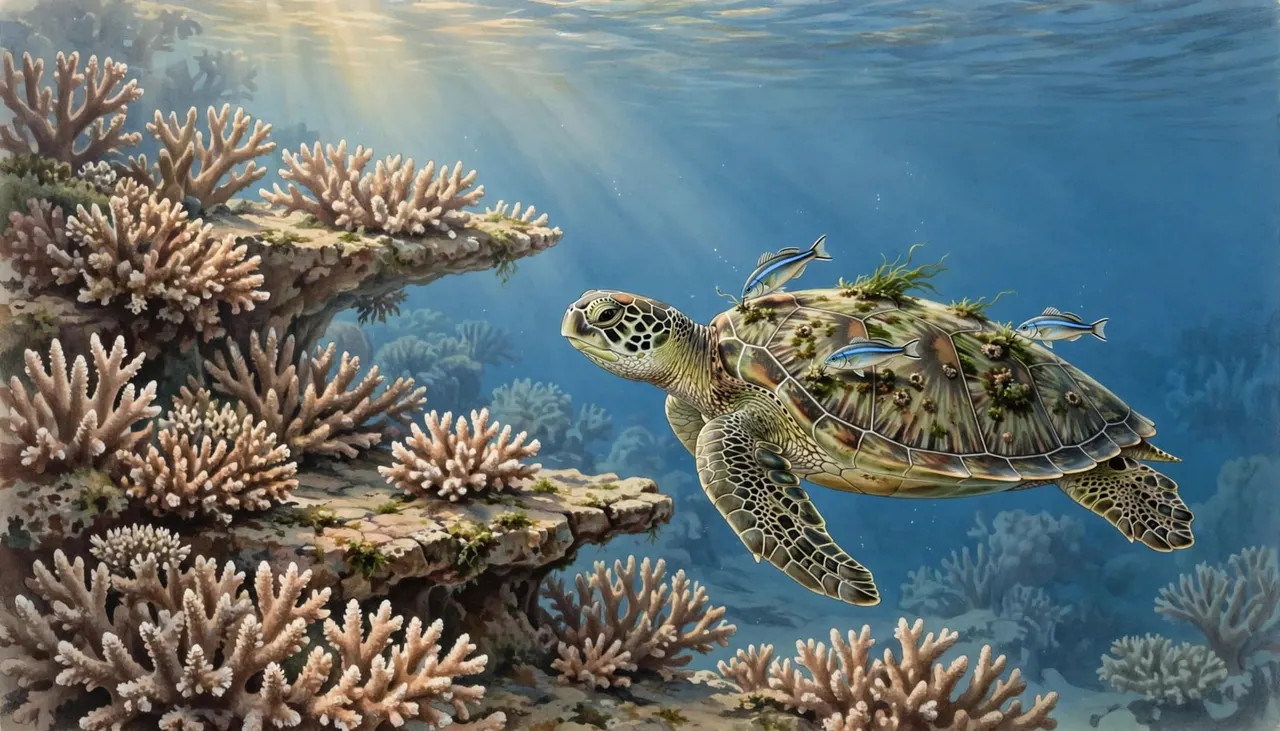
Turtle Canyon, also called Turtle Canyons, is an offshore reef area near Waikiki. You reach it by boat, then look down into habitat used by wild Hawaiian green sea turtles and reef fish.
The area is known for its natural cleaning stations. Turtles may pause while smaller fish pick algae and other material from their shells and skin. You might also see a honu crossing the reef or rising for air.
A Reef Visit Is Part of a Larger Life
A turtle sighting gives you a brief view of an animal that moves through a much larger coastal habitat. Green turtles may use reef areas for rest, food, and cleaning, but they choose when to arrive and leave.
Several turtles near one another don’t necessarily form a group. They may simply be using the same stretch of reef at the same time.
What Makes a Green Turtle Distinctive
The Hawaiian honu is a green turtle, Chelonia mydas. According to NOAA Fisheries’ green turtle profile, it is the world’s largest hard-shelled sea turtle.
Adult green turtles eat mostly algae and other marine plants. At a cleaning station, though, a turtle hovering near fish isn’t necessarily feeding. Watch the whole scene before deciding what the animal is doing.
The Predators Green Turtles Face in Hawaiian Waters
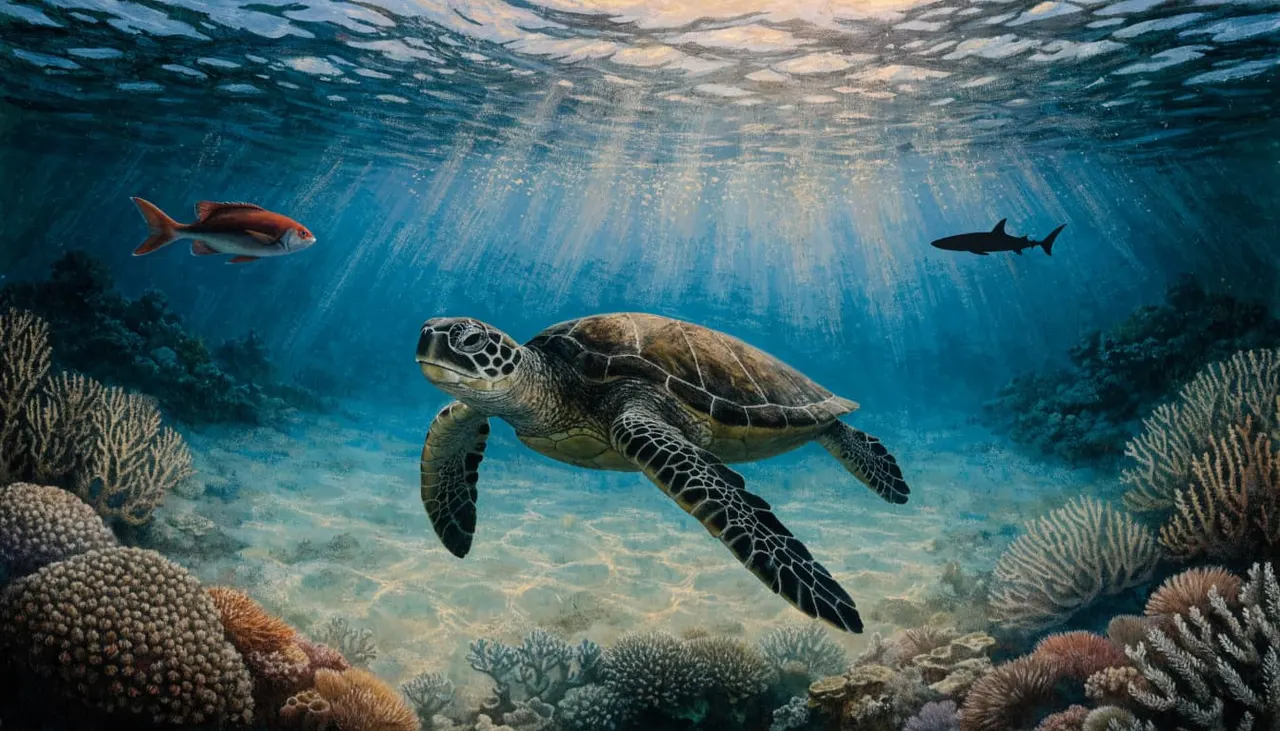
A green turtle’s risk changes as it grows. Small hatchlings face different threats than large adults, and a reef snorkel gives you only a glimpse of that much longer journey.
Hatchlings Face Risks Early
Green turtles begin life in nests on land. Once hatchlings emerge, they make their way toward the ocean, where small turtles can be prey for birds, crabs, and fish.
You won’t see that nesting journey at an underwater cleaning station. A turtle swimming beneath you could be at a very different life stage, and its size alone won’t reveal where it hatched.
Larger Turtles Still Have Predators
In Hawaiian waters, tiger sharks can prey on sea turtles, including larger individuals. A hard shell gives a turtle some physical protection, but it doesn’t make the animal invulnerable.
That general fact doesn’t tell you whether a predator is present during your snorkel. It also doesn’t explain why a particular turtle turns, pauses, or swims out of view. You can appreciate the turtle’s place in the ocean without assigning a cause to every movement.
What a Green Turtle’s Shell Can Tell You
The shell is often the first feature you notice when a honu passes below. Look closely from a respectful distance, and you can see how much of the animal it covers.
A Hard Covering With Exposed Areas
The upper shell is called the carapace. It covers much of the turtle’s body, while the head and flippers extend beyond it. Unlike some land turtles, sea turtles can’t pull those body parts fully inside the shell.
As a turtle swims, its front flippers provide movement through the water. Its shell remains part of its body throughout the trip across the reef.
Marks Aren’t a Diagnosis
A shell may carry algae or other material that attracts reef fish. You may also notice uneven coloring or marks. From the surface, those details don’t tell you how an animal got them or whether it needs help.
If a turtle appears seriously injured or entangled, stay back and tell your guide. Don’t try to handle the animal or remove material yourself. Your guide can help report the situation without putting you or the turtle at risk.
How to Read Turtle Movement Without Guessing
At Turtle Canyon Oahu, the most useful skill is patient observation. A movement can tell you where a turtle is going, but it rarely tells you everything about why.
A Pause Can Mean Several Things
A turtle may hover near the reef while fish approach, or it may remain relatively still without obvious fish nearby. Those sights can look similar through a mask, especially when you see only part of the interaction.
A pause alone doesn’t prove that the animal is asleep or watching for danger. Instead, notice what happens next. The turtle may move away, change position, or begin its trip to the surface.
Surfacing Is Part of Every Dive
Green turtles are reptiles that breathe air. Even when a honu seems settled underwater, it needs an open route to the surface.
If one starts swimming upward near you, stay calm and give it room. Move aside rather than following above it. The turtle can then continue its ascent without a swimmer in its path.
Water clarity and your position also affect what you see. A turtle over a sandy opening may stand out, while one beside darker reef can be harder to notice. Stay with your guide rather than chasing a glimpse beyond the group.
What Happens at a Cleaning Station
A cleaning station is a meeting place for reef animals, not a service with a fixed schedule. Small fish may pick algae and other material from a turtle’s shell and skin. In return, the fish get food.
You might see a turtle remain near fish for a while, then swim away. Another may pass through without stopping. Those choices belong to the animals, and a visit to Turtle Canyon Oahu doesn’t guarantee that you’ll see a cleaning interaction.
Give yourself time to notice the smaller fish as well as the honu. From the surface, you can watch the space around the turtle and see whether fish gather close to its shell.
The cleaning station gives you a view of reef life, but it doesn’t establish how a turtle avoids predators. Enjoy the behavior you can observe without turning it into a survival story you can’t confirm.
How to Snorkel Without Disturbing Honu
Your best view often comes when you settle at the surface and let the reef unfold below. Calm movements also make it easier to keep track of your group and control your fins.
Give Turtles Room to Move
Stay at least 10 feet from every turtle. Never touch, feed, chase, block, or surround one, and don’t try to ride it. If a turtle approaches you, give it room to pass instead of reaching toward it.
Keep the water above a turtle clear, too. It may need to surface for air, and a swimmer directly overhead can obstruct its route.
A camera doesn’t change the distance rule. Use your view from where you are, rather than swimming closer for a photograph. A wider shot can include the fish and reef that make the encounter memorable.
Protect the Reef Under Your Fins
Float above the reef without standing on coral or resting your hands on it. Keep your kicks small and controlled, particularly when you look down or adjust your mask.
If you’re new to snorkeling, tell your guide before entering the water. Flotation support and help with your equipment can make it easier to relax at the surface. Listen to the crew’s instructions, stay with the group, and return to the boat if you need a break.
Snorkel Turtle Canyon Oahu With Our Guides
Our Turtle Canyons Snorkel Excursion departs from Kewalo Basin Boat Harbor near Waikiki. The trip is approximately two hours, with about one hour of snorkeling time. It costs $79 and includes gear, flotation support, and professional in-water guidance.
We’ve recorded about a 95% turtle-sighting success rate on our snorkeling trips. Wildlife sightings are never guaranteed, so each outing is a chance to enjoy the reef on its own terms.
For your turtle snorkeling trip, you can CHECK AVAILABILITY.
You can also read guest reviews of Living Ocean Tours before choosing your trip.
Frequently Asked Questions
Do green turtles have predators in Hawaii?
Yes. Predators vary with a turtle’s life stage, and tiger sharks can prey on larger sea turtles in Hawaiian waters. A snorkel encounter doesn’t reveal whether a particular turtle has recently faced a predator.
Can green turtles hide inside their shells?
No. Sea turtles can’t pull their heads and flippers fully into their shells. You can see those exposed body parts as a turtle swims or rests below you.
Will you always see turtles at Turtle Canyon?
No. Turtles are wild animals, and they choose when to visit the reef. Our snorkeling trips have about a 95% turtle-sighting success rate, but conditions and animal activity vary.
Is Turtle Canyon suitable for beginner snorkelers?
Beginners can enjoy a guided trip with equipment assistance, flotation support, and in-water guidance. Tell your guide about your swimming comfort, follow the crew’s directions, and take your time getting used to your gear.
Give Honu the Space to Be Wild
At Turtle Canyon Oahu, you can see a green turtle’s shell, its movements, and perhaps its interactions with reef fish. You can’t know every reason behind its behavior, and that’s part of watching wildlife.
Keep your distance and let the turtle choose its path. A patient view gives you room to enjoy the whole reef while respecting the animals that live there.


